

David Hays
Author of My Old Man and the Sea: A Father and Son Sail Around Cape Horn
About the Author
David Hays was the set & lighting designer for more than fifty Broadway plays & musicals, thirty ballets for the legendary George Balanchine at the New York City Ballet, & many operas at the Metropolitan Opera. As a second career, he founded & led the National Theatre of the Deaf to appearances on show more seven continents. With his son Daniel, he is the author of "My Old Man & the Sea." Hays lives in Chester, Connecticut. (Bowker Author Biography) show less
Works by David Hays
Light on the Subject: Stage Lighting for Directors and Actors - And the Rest of Us (1988) 63 copies, 2 reviews
They served with honor 1 copy
Associated Works
Tagged
Common Knowledge
- Gender
- male
- Education
- Harvard University
- Short biography
- Founding Artistic Director of the National Theatre of the Deaf.
- Nationality
- USA
- Places of residence
- Chester, Connecticut, USA
- Associated Place (for map)
- Connecticut, USA
Members
Reviews
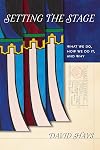
A little too insider-y for me. The book was a mix of descriptions of artistic choices, theater anecdotes, and theater-people anecdotes. I enjoyed the parts about designing for the ballet more than for the theater. I would like to read more, though, about the National Theater of the Deaf, which Hays co-founded and helmed for decades.

Very good introduction to the concept of stage lighting. I like that the book relies on anecdotes, quotes and clear, understandable English rather than specialized technical terms.
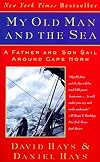
My Old Man and the Sea by David and Daniel Hays is about a father and son (respectively) and the growth of their love and respect for each other, and perhaps not inconsistently, the flowering of their independence. That in itself is not so unusual, but most fathers and sons don't build 25 ft sailing yachts to sail around Cape Horn.
The tip of South America has probably the worst weather for any kind of sea vessel of any place on earth. It can take months to beat and tack back and forth show more against the howling winds that sweep unhindered by any land mass around the bottom of the globe. They were not so foolish as to sail from east to west, so they took a short cut through the Canal on to Easter Island then back around from the west via the Horn. Their voyage covered 17,000 miles and lasted 317 days.
They had an interesting system of reefing the sails for various kinds of weather. It was color-coded with a mnemonic system that related to fear levels. "Red for the first reef stands for 'mere general fear.' [fifteen knot wind] If it blows over twenty, one turns green with nauseating terror, and secures the green line, which is the second reef. Next if it's blowing over thirty knots and shock has set in (the blood has left your extremities), you pull the blue line for the third reef. If the wind picks up more than that, you're scared to death. White is appropriate. That makes the sail tiny."
The voyage continues as father and son explore their past and prior relationship. David remembers Dan's constant pranks at boarding school that necessitated a plea to the headmaster for reinstatement. Dan fears his father's age and other inadequacies - cooking is a jointly recognized incompetence of his, only half-jokingly referred to as "time spent in the galley area, after which, the food scraped out of the utensils and off the walls is served."
David speculates why small boat voyages became a British specialty after the war: " ... the cold and damp and bad food on a tiny boat were indistinguishable from home; they didn't realize that they weren't in their living rooms." show less
The tip of South America has probably the worst weather for any kind of sea vessel of any place on earth. It can take months to beat and tack back and forth show more against the howling winds that sweep unhindered by any land mass around the bottom of the globe. They were not so foolish as to sail from east to west, so they took a short cut through the Canal on to Easter Island then back around from the west via the Horn. Their voyage covered 17,000 miles and lasted 317 days.
They had an interesting system of reefing the sails for various kinds of weather. It was color-coded with a mnemonic system that related to fear levels. "Red for the first reef stands for 'mere general fear.' [fifteen knot wind] If it blows over twenty, one turns green with nauseating terror, and secures the green line, which is the second reef. Next if it's blowing over thirty knots and shock has set in (the blood has left your extremities), you pull the blue line for the third reef. If the wind picks up more than that, you're scared to death. White is appropriate. That makes the sail tiny."
The voyage continues as father and son explore their past and prior relationship. David remembers Dan's constant pranks at boarding school that necessitated a plea to the headmaster for reinstatement. Dan fears his father's age and other inadequacies - cooking is a jointly recognized incompetence of his, only half-jokingly referred to as "time spent in the galley area, after which, the food scraped out of the utensils and off the walls is served."
David speculates why small boat voyages became a British specialty after the war: " ... the cold and damp and bad food on a tiny boat were indistinguishable from home; they didn't realize that they weren't in their living rooms." show less
Not bad. It's a bit uneven, as the narrator bounces back forth between the father and son. Hasn't aged very well, seems to be a bit "of its time". All in all though, a quick enjoyable read. More of a relationship development story than an exploration, man against nature, kind of thing. Long live Tiger!!
Lists
Tom's Bookstore (1)
Awards


You May Also Like


Associated Authors
Statistics
- Works
- 7
- Also by
- 1
- Members
- 614
- Popularity
- #40,945
- Rating
- 3.6
- Reviews
- 11
- ISBNs
- 29
- Languages
- 7