
William F. Buckley, Jr. (1925–2008)
Author of God and Man at Yale: The Superstitions of Academic Freedom
About the Author
Editor and writer William F. Buckley, Jr. was born in New York City on November 24, 1925. While at Yale University, he studied political science, history and economics and graduated with honors. In 1955, he founded the weekly journal National Review where he was editor in chief. He began his show more syndicated newspaper column in 1962 and his weekly television discussion program, Firing Line was syndicated in 1966. Buckley wrote "God and Man at Yale" (1951) which was an indictment of liberal education in the United States, "Up from Liberalism" (1959), "The Unmaking of a Mayor" (1966), which tells of his unsuccessful mayoral campaign as the Conservative Party candidate for New York City in 1965, and "Quotations from Chairman Bill" (1970). Buckley also wrote best selling stories of international intrigue whose titles include "Saving the Queen" (1976), "Stained Glass" (1978), "Who's on First" (1980), "Marco Polo, If You Can" (1981), and "See You Later, Alligator" (1985). He died on February 27, 2008. (Bowker Author Biography) show less
Image credit: Courtesy of the NYPL Digital Gallery (image use requires permission from the New York Public Library)
Series
Works by William F. Buckley, Jr.
The Lexicon: A Cornucopia of Wonderful Words for the Inquisitive Word Lover (1998) 225 copies, 2 reviews
Let Us Talk of Many Things : The Collected Speeches with New Commentary by the Author (2000) 160 copies
Did You Ever See a Dream Walking? American Conservative Thought in the Twentieth Century (1970) — Editor — 86 copies
Athwart History: Half a Century of Polemics, Animadversions, and Illuminations: A William F. Buckley Jr. Omnibus (2010) 70 copies
The committee and its critics; a calm review of the House Committee on Un-American Activities (1962) 22 copies
The Ivory Tower the Early Years: The Complete National Review Writings of William F. Buckley Jr. (2013) 7 copies
The Blackford Oakes Mysteries Volume One: Saving the Queen, Stained Glass, and Who's On First (2018) 5 copies
On faith and religious institutions 4 copies
Firing Line 2 copies
National Review 1 copy
El Vitral 1 copy
Firing Line Program Transcript (No. 70 1972) William F. Buckley, Jr. (Host) Robert Strauss (Guest) "Political Financing" (1972) 1 copy
El vitral 1 copy
Death of a teacher 1 copy
La vetrata gotica 1 copy
Crisis in Space 1 copy
La vetrata gotica 1 copy
Mongoose RIP: Oakes 1 copy
Glashard 1 copy
Associated Works
This I Believe: The Personal Philosophies of Remarkable Men and Women (2006) — Contributor — 1,151 copies, 36 reviews
Climbing Parnassus: A New Apologia for Greek and Latin (2002) — Foreword, some editions — 466 copies, 2 reviews
Booknotes: America's Finest Authors on Reading, Writing, and the Power of Ideas (1997) — Contributor — 459 copies, 5 reviews
Will the Real Jesus Please Stand Up?: A Debate between William Lane Craig and John Dominic Crossan (1995) — Moderator — 279 copies, 3 reviews
The Greatest Sailing Stories Ever Told: Twenty-Seven Unforgettable Stories (2002) — Contributor — 84 copies
Leftism Revisited: From De Sade and Marx to Hitler and Pol Pot (1990) — Preface, some editions — 83 copies, 2 reviews
The Quotable Paul Johnson: A Topical Compilation of His Wit, Wisdom and Satire (1994) — Introduction, some editions — 56 copies
American Spy: My Secret History in the CIA, Watergate and Beyond (2007) — Foreword, some editions — 53 copies
Seeing Through the Eye: Malcolm Muggeridge on Faith (2005) — Introduction, some editions — 32 copies, 1 review
Alger Hiss, Whittaker Chambers, and the Schism in the American Soul (2002) — Contributor — 25 copies, 1 review
Life, Liberty, and the Pursuit of Happiness: Ten Years of the Claremont Review of Books (2012) — Contributor — 17 copies
Titanic Adventure: One Woman's True Life Voyage Down to the Legendary Ocean Liner (1998) — Foreword, some editions — 10 copies
Tagged
Common Knowledge
- Canonical name
- Buckley, William F., Jr.
- Legal name
- Buckley, William Frank, Jr
- Birthdate
- 1925-11-24
- Date of death
- 2008-02-27
- Gender
- male
- Education
- National Autonomous University of Mexico (1943)
Yale College (B.A. ∙ 1950) - Occupations
- editor
publisher
novelist
columnist
television host
lecturer (show all 9)
CIA agent
second lieutenant (U.S. Army)
mayoral candidate - Organizations
- National Review (Founder)
United States Army (2nd Lieutenant)
Public Broadcasting Service
Universal Press Syndicate (columnist)
United Nations
Starr Broadcasting Group, Inc. (show all 15)
Knights of Malta
Young Americans for Freedom
Council on Foreign Relations
Conservative Party of New York
Central Intelligence Agency
New York Yacht Club
Mont Pelerin Society
Skull and Bones
Philadelphia Society - Awards and honors
- Presidential Medal of Freedom (1991)
Gold Medal Award, National Institute of Social Sciences (1992)
Julius Award, University of Southern California (1990)
Lowell Thomas Travel Journalism Award (1989)
Shelby Cullom Davis Award (1986)
Lincoln Literary Award, Union League (1985) (show all 19)
Creative Leadership Award, New York University (1981)
Carmel Award, American Friends of Haifa University (1980)
Americanism Award, Young Republican National Federation (1979)
Bellarmine Medal (1977)
Sigma Delta Chi (1976)
Cleveland Amory Award, TV Guide (1974)
Man of the Decade Award, Young Americans for Freedom (1970)
Emmy Award, National Academy of Television Arts and Sciences (1969)
Liberty Bell Award, New Haven County Bar Association (1969)
Distinguished Achievement Award in Journalism, University of Southern California (1968)
Best Columnist of the Year (1967)
Freedom Award, Order of Lafayette (1966)
National Book Award (1980) - Relationships
- Buckley, Christopher (son)
Buckley, James L. (brother)
Heath, Aloise Buckley (sister)
Buckley, Fergus Reid (brother)
Buckley, Priscilla L. (sister)
Bozell, L. Brent (brother-in-law) (show all 15)
Nabokov, Vladimir (friend)
Buckley, Pat (sister)
Chambers, Whittaker (friend)
Casey, William J. (friend)
Horne, Alistair (friend)
Lowenstein, Allard K. (friend)
Galbraith, John Kenneth (friend)
McGovern, George (friend)
Buckley, Patricia (wife) - Cause of death
- heart attack
- Nationality
- USA
- Birthplace
- New York, New York, USA
- Places of residence
- New York, New York, USA
Mexico
Sharon, Connecticut, USA
Paris, Île-de-France, France
London, Middlesex, England, UK
New Haven, Connecticut, USA - Place of death
- Stamford, Connecticut, USA
- Burial location
- Saint Bernard Cemetery, Sharon, Connecticut, USA
- Associated Place (for map)
- Connecticut, USA
Members
Reviews
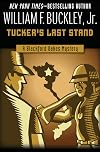
Summary: Blackford Oakes teams up with mercenary Tucker Montana to block troops and arms flowing from North to South Vietnam.
The story opens early in 1964 in the jungles of Laos. Blackford Oakes has teamed up with soldier-of-fortune Tucker Montana to explore the Ho Chi Minh Trail. Ostensibly at this time, the conflict in South Vietnam is a “civil war” between government and rebel forces. But North Vietnam has been supplying men and material with plans to move 20,000 men over the Trail show more every month. These two men have to figure out a way to stop it, and extricate themselves before they are caught and killed, which they barely do.
Montana thinks he knows a way to stop the flow of men and material. In addition to surviving against incredible odds, he has a knack for designing devices that work. He believes he can create sensors at key chokepoints to alert when the North Vietnamese are on the Trail. Eventually, Montana and Oakes will work separately on two supply routes–Tucker on the Trail, Oakes on shipping in the Gulf of Tonkin. Both report to Rufus, their control agent.
Their authority actually comes from much higher, from directives from President Johnson, given on a naked swim in his pool. These two men are caught up in the larger events leading to the later massive escalation of the war. In 1964, blocking the North Vietnamese efforts also play into electoral politics between hawkish Barry Goldwater and Johnson, for whom Vietnam represents the derailing of his Great Society. But he doesn’t want to be the president who “lost Vietnam.”
There is a kind of ticking time bomb in Montana. He was at Los Alamos, and in this version, designed the trigger to actuate the atomic bomb. Not only that, he was on the crew of the Enola Gay. Seeing the destruction, he leaves the Army, and nearly goes crazy, taking refuge in a monastery, before returning to military pursuits, concealing his Los Alamos work. That time bomb is coupled with a healthy sex drive. And he finds a girlfriend in Saigon who turns out to be a spy. The classic honey trap.
Meanwhile, Oakes is up to his own hi-jinks. He’s equipping junks with radar and metal detection equipment. But more than that, he’s part of an effort to go inside North Vietnam;s definition of international waters. Buckley portrays it as a plot worked out at the highest levels, including Johnson friend Abe Fortas. The idea is to trigger an “incident” in the Gulf of Tonkin giving Johnson casus belli to pursue an expanded war.
Both men walk tightropes with their conscience. Do you keep your head down and obey orders? Or must one think of the larger ramifications of what one is doing? In Montana’s case, the girlfriend plays on the hovering cloud of an expanded conflict that could lead to nuclear war, raising the old phantoms for Montana. Oakes faces a situation that is more subtle. He suspects, and Rufus confirms the espionage going on with the girlfriend. But Montana is at a critical point in completing the project and going operational. They don’t want to derail him.
It all comes down to how Montana navigates the pulls of love and duty and conscience. And can Oakes protect both the operation and his friend?
Part of what makes this so interesting is the fusion of history and fictional plot. And even in the fiction, we begin to get a sense of how futile the cleverest U.S. efforts will be to stop a determined enemy. Buckley manages fiction at once instructive and diverting. show less
The story opens early in 1964 in the jungles of Laos. Blackford Oakes has teamed up with soldier-of-fortune Tucker Montana to explore the Ho Chi Minh Trail. Ostensibly at this time, the conflict in South Vietnam is a “civil war” between government and rebel forces. But North Vietnam has been supplying men and material with plans to move 20,000 men over the Trail show more every month. These two men have to figure out a way to stop it, and extricate themselves before they are caught and killed, which they barely do.
Montana thinks he knows a way to stop the flow of men and material. In addition to surviving against incredible odds, he has a knack for designing devices that work. He believes he can create sensors at key chokepoints to alert when the North Vietnamese are on the Trail. Eventually, Montana and Oakes will work separately on two supply routes–Tucker on the Trail, Oakes on shipping in the Gulf of Tonkin. Both report to Rufus, their control agent.
Their authority actually comes from much higher, from directives from President Johnson, given on a naked swim in his pool. These two men are caught up in the larger events leading to the later massive escalation of the war. In 1964, blocking the North Vietnamese efforts also play into electoral politics between hawkish Barry Goldwater and Johnson, for whom Vietnam represents the derailing of his Great Society. But he doesn’t want to be the president who “lost Vietnam.”
There is a kind of ticking time bomb in Montana. He was at Los Alamos, and in this version, designed the trigger to actuate the atomic bomb. Not only that, he was on the crew of the Enola Gay. Seeing the destruction, he leaves the Army, and nearly goes crazy, taking refuge in a monastery, before returning to military pursuits, concealing his Los Alamos work. That time bomb is coupled with a healthy sex drive. And he finds a girlfriend in Saigon who turns out to be a spy. The classic honey trap.
Meanwhile, Oakes is up to his own hi-jinks. He’s equipping junks with radar and metal detection equipment. But more than that, he’s part of an effort to go inside North Vietnam;s definition of international waters. Buckley portrays it as a plot worked out at the highest levels, including Johnson friend Abe Fortas. The idea is to trigger an “incident” in the Gulf of Tonkin giving Johnson casus belli to pursue an expanded war.
Both men walk tightropes with their conscience. Do you keep your head down and obey orders? Or must one think of the larger ramifications of what one is doing? In Montana’s case, the girlfriend plays on the hovering cloud of an expanded conflict that could lead to nuclear war, raising the old phantoms for Montana. Oakes faces a situation that is more subtle. He suspects, and Rufus confirms the espionage going on with the girlfriend. But Montana is at a critical point in completing the project and going operational. They don’t want to derail him.
It all comes down to how Montana navigates the pulls of love and duty and conscience. And can Oakes protect both the operation and his friend?
Part of what makes this so interesting is the fusion of history and fictional plot. And even in the fiction, we begin to get a sense of how futile the cleverest U.S. efforts will be to stop a determined enemy. Buckley manages fiction at once instructive and diverting. show less

William F. Buckley Jr's postmortem of his impossible campaign to become mayor of New York is entertaining, thought-provoking and witty. The Unmaking of a Mayor has no right to continued relevance after the passage of sixty years; the personalities and many of the issues have disappeared like so much subway smoke rising from the grilles of Manhattan's streets. But Buckley's prose (which cascades rather than sparkling) continues to communicate its vital message and delights the reader every show more step of the way. Though many of the battles Buckley was fighting have been won (and lost again) since the 1960s, The Unmaking of a Mayor remains an enduring record of what happens when the critic mounts the hustings. Highly recommended. show less
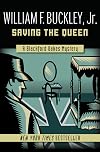
Summary: The first of Buckley's Blackford Oakes espionage novels, covering his recruitment to the CIA and first mission, to ferret out the person high up in British government betraying atomic secrets to the Soviet Union.
Most people know William F. Buckley, Jr. as the founder of the National Review, for his witty and erudite conversations on Firing Line, and maybe for his God and Man at Yale. Inspired by Frederick Forsyth's The Day of the Jackal, he decided to try his hand at the spy novel, show more creating Blackford Oakes, a Yale graduate, World WW II fighter pilot, breaker of rules and conventions who is recruited into the CIA. Saving the Queen is the first of eleven novels that Buckley wrote in this genre. Now, thanks to a collaborative arrangement between Mysterious Press and Open Road Media, the whole series is once again available.
The novel is framed by Oakes being subpoened to testify about the Agency during a congressional witch hunt. Will he tell he truth and possibly betray national secrets and personal friends? Will he "take the Fifth" and bring suspicion down upon himself? Here, as in his life growing up and first mission, Oakes finds a way to go outside the rules.
It began at Greyburn, a British boys school where he lasted only weeks, before a humorous and belittling drawing of a teacher, and a beating by the headmaster in front of his friend, Anthony Trust, results in his willing departure from the school. A brief but successful flight career, studies at Yale, along with time in France and family in London make him an ideal CIA candidate, recruited by his old friend trust.
After his initial training, he learns of his assignment, to insinuate himself into the top circles of British royal life, to discover who it is around young Queen Caroline, who is betraying atomic secrets to the Russians. His cover is as an engineer working for an American foundation. He succeeds beyond his handlers' expectations, first getting invited to a reception where he meets the Queen, who is taken by his tongue in cheek repartee. An invitation to Windsor Castle follows, ostensibly to examine engineering drawings in Windsor's archives. Just how far he succeeds in achieving intimacy with the Queen and her circle, I will leave to the reader, but he discovers the source of the leaks, a relative close to the Queen, who uses her to gain access to the secrets he is passing along to the Russians.
One of his handlers is "Rufus," a legendary operative from the World War II era. As Rufus ponders Oakes intelligence, he recognizes the explosive potential of this revelation, which could bring down the Queen and the throne, unless a way could be found to eliminate the source. In the climax to the novel, Oakes, whose own cover may be compromised, is called upon to finish the job, possibly losing his own life in the process.
Bond, a Catholic and a conservative, is no prude. This is an adult novel, in the vein of Ian Fleming's, Bond. Oakes seems a kind of American counterpart, with perhaps a greater shrewdness and less gadgetry. I suspect their are future Blackford Oakes books in my life. At very least, there are a couple more on my Kindle! show less
Most people know William F. Buckley, Jr. as the founder of the National Review, for his witty and erudite conversations on Firing Line, and maybe for his God and Man at Yale. Inspired by Frederick Forsyth's The Day of the Jackal, he decided to try his hand at the spy novel, show more creating Blackford Oakes, a Yale graduate, World WW II fighter pilot, breaker of rules and conventions who is recruited into the CIA. Saving the Queen is the first of eleven novels that Buckley wrote in this genre. Now, thanks to a collaborative arrangement between Mysterious Press and Open Road Media, the whole series is once again available.
The novel is framed by Oakes being subpoened to testify about the Agency during a congressional witch hunt. Will he tell he truth and possibly betray national secrets and personal friends? Will he "take the Fifth" and bring suspicion down upon himself? Here, as in his life growing up and first mission, Oakes finds a way to go outside the rules.
It began at Greyburn, a British boys school where he lasted only weeks, before a humorous and belittling drawing of a teacher, and a beating by the headmaster in front of his friend, Anthony Trust, results in his willing departure from the school. A brief but successful flight career, studies at Yale, along with time in France and family in London make him an ideal CIA candidate, recruited by his old friend trust.
After his initial training, he learns of his assignment, to insinuate himself into the top circles of British royal life, to discover who it is around young Queen Caroline, who is betraying atomic secrets to the Russians. His cover is as an engineer working for an American foundation. He succeeds beyond his handlers' expectations, first getting invited to a reception where he meets the Queen, who is taken by his tongue in cheek repartee. An invitation to Windsor Castle follows, ostensibly to examine engineering drawings in Windsor's archives. Just how far he succeeds in achieving intimacy with the Queen and her circle, I will leave to the reader, but he discovers the source of the leaks, a relative close to the Queen, who uses her to gain access to the secrets he is passing along to the Russians.
One of his handlers is "Rufus," a legendary operative from the World War II era. As Rufus ponders Oakes intelligence, he recognizes the explosive potential of this revelation, which could bring down the Queen and the throne, unless a way could be found to eliminate the source. In the climax to the novel, Oakes, whose own cover may be compromised, is called upon to finish the job, possibly losing his own life in the process.
Bond, a Catholic and a conservative, is no prude. This is an adult novel, in the vein of Ian Fleming's, Bond. Oakes seems a kind of American counterpart, with perhaps a greater shrewdness and less gadgetry. I suspect their are future Blackford Oakes books in my life. At very least, there are a couple more on my Kindle! show less
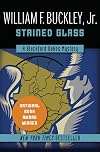
This is the second in William Buckley's series of spy thrillers, and is at least as good as the first. The post-war setting is vividly presented, the characters are interesting and well-rounded, and the plot makes the book hard to put down. The book also looks explicitly at a question that usually lurk well below the surface of spy novels -- what happens when national interest runs into personal morality? On to the next --
Lists
Awards


You May Also Like


Associated Authors
Statistics
- Works
- 113
- Also by
- 29
- Members
- 9,475
- Popularity
- #2,536
- Rating
- 3.8
- Reviews
- 103
- ISBNs
- 405
- Languages
- 6
- Favorited
- 28
