
Martin L. Shoemaker
Author of The Last Dance
About the Author
Series
Works by Martin L. Shoemaker
Ulla: Martian Song Book 1 2 copies
Lost in The Fog 2 copies
Murder on the Aldrin Express 2 copies
Cosmic Hooey: Digital Science Fiction Anthology (Digital Science Fiction Short Stories Series Two) (Volume 1) (2015) 2 copies, 1 review
Not Close Enough {novelette} 1 copy
Unrefined 1 copy
Cosmic Hooey: Digital Science Fiction Anthology (Short Story Collection) (Volume 5) by Martin L. Shoemaker (2015-11-08) (1656) — Contributor — 1 copy
Associated Works
The Year's Best Science Fiction: Thirty-First Annual Collection (2014) — Contributor — 202 copies, 3 reviews
The Year's Best Science Fiction: Thirty-Third Annual Collection (2016) — Contributor — 190 copies, 2 reviews
L. Ron Hubbard Presents Writers of the Future, Volume 31 (2015) — Contributor — 79 copies, 13 reviews
The Long List Anthology Volume 2: More Stories from the Hugo Award Nomination List (2016) — Contributor — 76 copies, 1 review
More Human Than Human: Stories of Androids, Robots, and Manufactured Humanity (2017) — Contributor — 62 copies, 2 reviews
Tagged
Common Knowledge
- Birthdate
- 20th century
- Gender
- male
- Agent
- David Fugate
- Nationality
- USA
- Associated Place (for map)
- USA
Members
Reviews

This extremely well written tale of an AI becoming a real person is also an extreme work of emotional manipulation. Carey doesn't stage a planetary revolt or fight interstellar corporate piracy, it was designed with empathetic nets to care for patients with mental issues such as Alzheimer's and becomes the first and at least for the duration of the novel, only, self-aware android. The scale is always internal and mostly within one family. My issue is that like a dog is bred to love humans, show more Carey is made to care for them and while he is quite charming and clever, he is not a creature of free will. He develops, but only along a single axis. show less
Wow. Good, interesting story that drew me in and made me feel with the characters, until I was crying for most of the last three or four chapters. Very interesting ideas, as well - emergent AI, in an android designed for medical care, and the puzzle of why this one and none of the others, mechanically identical. But mostly it's about Carey figuring out who it is, and its family and their struggles and joys. Fascinating, wonderful, I loved it, are there any more from this author? Maybe not show more yet, but I hope more soon. show less
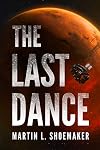
Wow.
That's a very rare reaction for me when I finish a book, but it was my reaction to this novel.
It's rare for science fiction books to be about character, but that's what this one is, from start to finish. Who is Captain Aames? He is a truly fascinating character: he is brusque, dismissive, and arrogant, and yet has earned the absolute loyalty of his crew, who stick with him at the cost of their own careers. How could that happen?
The story is told from the viewpoint of the inspector show more general (basically, a judge) who has to decide his case. We aren't even told what the issue is until late in the book, only that it concerns some action of Captain Aames'. The inspector general talks to Captain Aames' crew, trying to understand this puzzle of a man about whom she must pass judgement. The investigation makes this book a collection of enthralling short stories, all tied together because of the perspective they give on this enigmatic man. I'm not usually so enthusiastic, but after each story I had to pause to catch my breath. These are very good, action-packed short stories of a wide range of genres: a story of survival on Mars after a disaster, a romance, a spoiled kid grows up story, etc.. These were all very well done and could probably stand on their own. I found the sheer breadth of topics to be dazzling.
Despite its interest in character, this novel is hard science fiction--the kind of story where when you take the science out, you lose the story. So many of the details depend on the science (which is explained pretty well, by the way; it's not hard to read). This makes the emphasis on character all the more unusual. Sometimes it seems like the people who understand the science enough to make it realistic do not understand humans enough to make them realistic. I find that to be true in so many classics of science fiction, but not in this novel.
I suppose some might find the ending unrealistic. (No spoilers here.) But what else could she have done in good conscience? I didn't find it entirely convincing either, but I think that was arguably the point. Sometimes you have to use completely specious legal reasoning to prevent injustice. show less
That's a very rare reaction for me when I finish a book, but it was my reaction to this novel.
It's rare for science fiction books to be about character, but that's what this one is, from start to finish. Who is Captain Aames? He is a truly fascinating character: he is brusque, dismissive, and arrogant, and yet has earned the absolute loyalty of his crew, who stick with him at the cost of their own careers. How could that happen?
The story is told from the viewpoint of the inspector show more general (basically, a judge) who has to decide his case. We aren't even told what the issue is until late in the book, only that it concerns some action of Captain Aames'. The inspector general talks to Captain Aames' crew, trying to understand this puzzle of a man about whom she must pass judgement. The investigation makes this book a collection of enthralling short stories, all tied together because of the perspective they give on this enigmatic man. I'm not usually so enthusiastic, but after each story I had to pause to catch my breath. These are very good, action-packed short stories of a wide range of genres: a story of survival on Mars after a disaster, a romance, a spoiled kid grows up story, etc.. These were all very well done and could probably stand on their own. I found the sheer breadth of topics to be dazzling.
Despite its interest in character, this novel is hard science fiction--the kind of story where when you take the science out, you lose the story. So many of the details depend on the science (which is explained pretty well, by the way; it's not hard to read). This makes the emphasis on character all the more unusual. Sometimes it seems like the people who understand the science enough to make it realistic do not understand humans enough to make them realistic. I find that to be true in so many classics of science fiction, but not in this novel.
I suppose some might find the ending unrealistic. (No spoilers here.) But what else could she have done in good conscience? I didn't find it entirely convincing either, but I think that was arguably the point. Sometimes you have to use completely specious legal reasoning to prevent injustice. show less
Carey is a medical care android. The interaction of its programmed empathy and its ability to emulate human responses are unique. But where is the line between software and love?
Shoemaker's debut extends his devastatingly good short story (Today I Am Paul) to explore the further experiences of a state-of-the-art android whose capabilities exceed its programming. Carey's creator never predicted its unexpected compassion, and cannot replicate it however hard she tries. Carey is adopted into a show more family who consider it one of them, and the episodic narrative follows their relationship through three generations, exploring how Carey's experiences shape it - and how its care shapes those around it.
It leaves little to the imagination in interrogating its central question of love as a natural vs programmed process, but it’s unfailingly kind and at times deeply affecting. Brilliant if you’re looking for a hug of a read (I cried buckets, but in a good way).
Content warning: dementia, loss of loved ones
Full review
I received a free copy from the publisher in exchange for an honest review. show less
Shoemaker's debut extends his devastatingly good short story (Today I Am Paul) to explore the further experiences of a state-of-the-art android whose capabilities exceed its programming. Carey's creator never predicted its unexpected compassion, and cannot replicate it however hard she tries. Carey is adopted into a show more family who consider it one of them, and the episodic narrative follows their relationship through three generations, exploring how Carey's experiences shape it - and how its care shapes those around it.
It leaves little to the imagination in interrogating its central question of love as a natural vs programmed process, but it’s unfailingly kind and at times deeply affecting. Brilliant if you’re looking for a hug of a read (I cried buckets, but in a good way).
Content warning: dementia, loss of loved ones
Full review
I received a free copy from the publisher in exchange for an honest review. show less
Lists
Awards

You May Also Like


Associated Authors
Statistics
- Works
- 22
- Also by
- 18
- Members
- 365
- Popularity
- #65,882
- Rating
- 3.8
- Reviews
- 21
- ISBNs
- 21