
Anya von Bremzen
Author of Mastering the Art of Soviet Cooking: A Memoir of Food and Longing
About the Author
Anya Von Bremzen is one of the most accomplished food writers of her generation. She is the winner of three James Beard awards and the author of five acclaimed cookbooks, among them The New Spanish Table. She divides her time between New York City and Istanbul.
Works by Anya von Bremzen
National Dish: Around the World in Search of Food, History, and the Meaning of Home (2023) 155 copies, 2 reviews
Associated Works
Food and Wine Best of the Best Cookbook Recipes 2006 Volume 9 (2006) — Contributor — 113 copies, 2 reviews
Tagged
Common Knowledge
- Birthdate
- 1963
- Gender
- female
- Education
- Juilliard School of Music
- Occupations
- memoirist
food writer - Nationality
- Russia (birth)
USA - Birthplace
- Moscow, Russia, USSR
- Places of residence
- Moscow, Russia, USSR
New York, New York, USA
Istanbul, Turkey
Ulyanovsk, Russia, USSR - Associated Place (for map)
- Moscow, Russia, USSR
Members
Reviews
National Dish: Around the World in Search of Food, History, and the Meaning of Home by Anya Von Bremzen
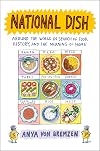
This book does not do what it says on the tin, largely because it's impossible. Von Bremzen set out to find, make, and understand the national dishes of a bunch of countries that I suspect were chosen because she and her partner wanted to spend a month or two in them, and she absolutely failed, because:
1. Nations don't really have national dishes.
2. Food doesn't really respect geopolitical borders.
3. You can't really learn everything there is to know about how citizens of a given country show more think and feel about a specific food in a month that you spend in one town of that country.
So it's important to go into this book knowing that the majority of it (all except the last chapter and the epilogue) is just food-focused travel writing. On that level, it's super enjoyable! I've read people's essays on convenience stores in Japan, but I still was happy to read von Bremzen's. I've read maybe a hundred essays on eating pizza in Naples, but I still liked this one. She can write, and she can write well about food, and that means I am mostly happy when I'm reading her essays.
Then comes the chapter on Turkey and the book changes, and in the process it reveals how facile everything that came before is. (There's a reason someone decided to put this essay at the end of the book: if you read it first, the rest would be wildly disappointing.) Von Bremzen and her partner have lived part-time in Istanbul for decades, so her relationship with and understanding of the city, and of Turkey as a whole, is much deeper.
Then, in the epilogue, it gets more personal and even deeper. Von Bremzen left the USSR when she was eleven, and she (and her mom) still obviously have many family ties in and memories of the USSR and of Russia. The epilogue is about borscht (she says the t is a Yiddish edition, and it is, but I cannot see the word without wanting the t, so I will be true to my roots and put it in) and who it belongs to, and it was written shortly after Russia invaded Ukraine in 2022. In it, she talks about the ruptures in her Russian-speaking community in the US, about the pain the invasion caused, and about identity, and this essay is so much more moving and meaningful than anything that came before it that it puts the Istanbul chapter to shame.
I first became aware of von Bremzen when I read her Mastering the Art of Soviet Cooking, and I loved how she talked about Soviet history, culture, politics, everything through the lens of food. I picked up this book hoping for the same, but in retrospect, that was ridiculous. No one person can know half a dozen cities and countries and cultures well enough to write at that level about them and their foods. So I'm rating this based on my enjoyment, and not on my hopes for an impossible book.
(This book did make me want a food travel book about staples, though: rice, sorghum, cassava, taro, wheat, corn, etc. Staples were at the heart of a lot of the national dishes in this book, which makes sense, and I wanted more!) show less
1. Nations don't really have national dishes.
2. Food doesn't really respect geopolitical borders.
3. You can't really learn everything there is to know about how citizens of a given country show more think and feel about a specific food in a month that you spend in one town of that country.
So it's important to go into this book knowing that the majority of it (all except the last chapter and the epilogue) is just food-focused travel writing. On that level, it's super enjoyable! I've read people's essays on convenience stores in Japan, but I still was happy to read von Bremzen's. I've read maybe a hundred essays on eating pizza in Naples, but I still liked this one. She can write, and she can write well about food, and that means I am mostly happy when I'm reading her essays.
Then comes the chapter on Turkey and the book changes, and in the process it reveals how facile everything that came before is. (There's a reason someone decided to put this essay at the end of the book: if you read it first, the rest would be wildly disappointing.) Von Bremzen and her partner have lived part-time in Istanbul for decades, so her relationship with and understanding of the city, and of Turkey as a whole, is much deeper.
Then, in the epilogue, it gets more personal and even deeper. Von Bremzen left the USSR when she was eleven, and she (and her mom) still obviously have many family ties in and memories of the USSR and of Russia. The epilogue is about borscht (she says the t is a Yiddish edition, and it is, but I cannot see the word without wanting the t, so I will be true to my roots and put it in) and who it belongs to, and it was written shortly after Russia invaded Ukraine in 2022. In it, she talks about the ruptures in her Russian-speaking community in the US, about the pain the invasion caused, and about identity, and this essay is so much more moving and meaningful than anything that came before it that it puts the Istanbul chapter to shame.
I first became aware of von Bremzen when I read her Mastering the Art of Soviet Cooking, and I loved how she talked about Soviet history, culture, politics, everything through the lens of food. I picked up this book hoping for the same, but in retrospect, that was ridiculous. No one person can know half a dozen cities and countries and cultures well enough to write at that level about them and their foods. So I'm rating this based on my enjoyment, and not on my hopes for an impossible book.
(This book did make me want a food travel book about staples, though: rice, sorghum, cassava, taro, wheat, corn, etc. Staples were at the heart of a lot of the national dishes in this book, which makes sense, and I wanted more!) show less
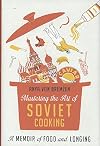
Unlike what you might expect from the title, this book is more of a memoir and a history of the Soviet Union than a guide to cooking, but it is organized around the subject of getting and preparing food, which was a central concern in Soviet Russia. It takes its inspiration from Proust’s Remembrance of Things Past, with his theme of the images and memories evoked by the taste and smell of food.
The author begins cleverly, paraphrasing the famous passage from Russian literature with her show more assertion that “All happy food memories are alike; all unhappy food memories are unhappy after their own fashion.”
She has written some award-winning cookbooks, and so it is only natural that she uses food as a focal point. But she has a further rationale:
"For any ex-citizen of a three-hundred-million-strong Soviet superpower, food is never a mere individual matter. In 1917 bread riots sparked the overthrow of the czar, and seventy-four years later, catastrophic food shortages helped push Gorbachev’s floundering empire into the dustbin. In between, seven million people perished from hunger during Stalin’s collectivization; four million more starved to death during Hitler’s war.”
She observes that food and drinking and the rituals associated with them have been an abiding theme of Soviet political and cultural history. Food, she says, quoting one academic, “defined how Russians endured the present, imagined the future, and connected to their past.”
Her goal, she states, is to show the “epic disjunction,” the “unruly collision of collectivist myths and personal antimyths” that made up the Soviet Union, and she does a splendid job achieving this aim.
She personalizes the story by making it into a memoir of her own family's experiences for the duration of the Soviet Union, starting with the 1910’s, and proceeding by decade increments to the present. This, to me, is the real value of the book, because there are plenty of Soviet histories around, but von Bremzen provides anecdotes about what it was really like for the non-elites who lived through those times. She talks about food a lot, and I admit, most of it is food I wouldn’t want to eat. But most of the time, ordinary citizens in the USSR didn’t have much choice, and the author tells us just how they managed to make do with what they could find.
They used as their bible The Book of Tasty and Healthy Food (or as she calls it “a totalitarian Joy of Cooking"). What is interesting about this book is that the content changed with each new regime. It was first published in 1939, and included didactic commentaries and ideological sermonizing as well as recipes, many of which involved food that none of the proletarian masses could hope to obtain. Von Bremzen writes:
"The wrenching discrepancy between the abundance on the pages and its absence in shops made [the book’s] myth of plenty especially poignant. Long-suffering Homo sovieticus gobbled down the deception; long-suffering H. sovieticus had after all been weaned on socialist realism, an artistic doctrine that insisted on depicting reality ‘in its revolutionary development’ - past and present swallowed up by a triumphant projection of a Radiant Future.”
This paragraph is an excellent summary of what von Bremzen makes her theme, and her goal, in highlighting the contradictions of life in the USSR.
At the end of the book, the author includes one recipe for each decade she covered. The recipes are preceded by very entertaining anecdotes.
Discussion: I love the understated cynicism and humorous sarcasm so common to many who survived the Soviet period, especially among the samizdat writers. If you have read other remembrances of that time, you will recognize this tone, so distinctive to those who daily lived and breathed the hypocrisy of their so-called socialist state. This passage, in which von Bremzen writes of Stalin’s involvement in food policy is a perfect example of her style:
"When [Stalin] wasn’t busy signing execution orders or censoring books or screening [the movie] Volga-Volga], the Standardbearer of Communism opined on fish (‘Why don’t we sell live fish like they did in the old days?’) or Soviet champagne.”
Similarly, her ironic names for the leaders of the USSR are endlessly entertaining as well as revealing, from one of many for Stalin, “The Best Friend of All Children” to “the fossilized lump of Brezhnev,” to Putin: “an obscure midget with a boring KGB past” who established a “petrodollar kleptocracy.”
Evaluation: Although this book wasn’t what I thought it would be, it was actually much better. If you are looking for more of a cookbook, there are certainly many that feature foods of the Russian continent. This book is much more than that, and yet, the subject of food is central to the story. show less
The author begins cleverly, paraphrasing the famous passage from Russian literature with her show more assertion that “All happy food memories are alike; all unhappy food memories are unhappy after their own fashion.”
She has written some award-winning cookbooks, and so it is only natural that she uses food as a focal point. But she has a further rationale:
"For any ex-citizen of a three-hundred-million-strong Soviet superpower, food is never a mere individual matter. In 1917 bread riots sparked the overthrow of the czar, and seventy-four years later, catastrophic food shortages helped push Gorbachev’s floundering empire into the dustbin. In between, seven million people perished from hunger during Stalin’s collectivization; four million more starved to death during Hitler’s war.”
She observes that food and drinking and the rituals associated with them have been an abiding theme of Soviet political and cultural history. Food, she says, quoting one academic, “defined how Russians endured the present, imagined the future, and connected to their past.”
Her goal, she states, is to show the “epic disjunction,” the “unruly collision of collectivist myths and personal antimyths” that made up the Soviet Union, and she does a splendid job achieving this aim.
She personalizes the story by making it into a memoir of her own family's experiences for the duration of the Soviet Union, starting with the 1910’s, and proceeding by decade increments to the present. This, to me, is the real value of the book, because there are plenty of Soviet histories around, but von Bremzen provides anecdotes about what it was really like for the non-elites who lived through those times. She talks about food a lot, and I admit, most of it is food I wouldn’t want to eat. But most of the time, ordinary citizens in the USSR didn’t have much choice, and the author tells us just how they managed to make do with what they could find.
They used as their bible The Book of Tasty and Healthy Food (or as she calls it “a totalitarian Joy of Cooking"). What is interesting about this book is that the content changed with each new regime. It was first published in 1939, and included didactic commentaries and ideological sermonizing as well as recipes, many of which involved food that none of the proletarian masses could hope to obtain. Von Bremzen writes:
"The wrenching discrepancy between the abundance on the pages and its absence in shops made [the book’s] myth of plenty especially poignant. Long-suffering Homo sovieticus gobbled down the deception; long-suffering H. sovieticus had after all been weaned on socialist realism, an artistic doctrine that insisted on depicting reality ‘in its revolutionary development’ - past and present swallowed up by a triumphant projection of a Radiant Future.”
This paragraph is an excellent summary of what von Bremzen makes her theme, and her goal, in highlighting the contradictions of life in the USSR.
At the end of the book, the author includes one recipe for each decade she covered. The recipes are preceded by very entertaining anecdotes.
Discussion: I love the understated cynicism and humorous sarcasm so common to many who survived the Soviet period, especially among the samizdat writers. If you have read other remembrances of that time, you will recognize this tone, so distinctive to those who daily lived and breathed the hypocrisy of their so-called socialist state. This passage, in which von Bremzen writes of Stalin’s involvement in food policy is a perfect example of her style:
"When [Stalin] wasn’t busy signing execution orders or censoring books or screening [the movie] Volga-Volga], the Standardbearer of Communism opined on fish (‘Why don’t we sell live fish like they did in the old days?’) or Soviet champagne.”
Similarly, her ironic names for the leaders of the USSR are endlessly entertaining as well as revealing, from one of many for Stalin, “The Best Friend of All Children” to “the fossilized lump of Brezhnev,” to Putin: “an obscure midget with a boring KGB past” who established a “petrodollar kleptocracy.”
Evaluation: Although this book wasn’t what I thought it would be, it was actually much better. If you are looking for more of a cookbook, there are certainly many that feature foods of the Russian continent. This book is much more than that, and yet, the subject of food is central to the story. show less

Took me a few chapters to get into, but once I did I found a remarkable family history spanning the end of Stalin to Putin. It’s a book that describes the vastness and scope of the USSR the paranoia, the cynicism, the complexity of a truly fucked up, unfree, memory-holed people. Whew. A rough history that Russians still manage to have a nostalgia for. It’s a sad testament to a sort of Stockholm syndrome and mother that would not ask it for herself or daughter. Wonderful book and one show more recipe I will probably try. show less
Food has always been foremost in the Soviet mind, from the desperate aftermath of the Russian Civil War and the crude markets of "war communism", to Stalin's Holodomor genocides, through utopian schemes to make an Earthly Worker's Paradise, to the basic communal reality of the breadline. Anya von Bremzen and her mother, who emigrated to the US in 1974, walk through their family's past and the Soviet experience by the means of a meal-a-decade, walking the bitter-sweet paths of nostalgia.
This show more is an astounding picture of ordinary life in the Soviet Union. Anya and her mother were relatively lucky as dissident intelligentsia, their main crime that of constructing a small fantasy away from the grim reality of cramped communal housing, with the multiple families shoved into one set of apartment, and substandard food that hovered just above absolute starvation. Anya recalls being a junior black marketeer, selling scraps of foreign capitalist candy for kopeks at Kindergarten. Soviet cuisine, a mass of yeasty dough, suspicious sausages, and things which were once vegetables, transforms into sublime symbols in the loving hands of the right chef. show less
This show more is an astounding picture of ordinary life in the Soviet Union. Anya and her mother were relatively lucky as dissident intelligentsia, their main crime that of constructing a small fantasy away from the grim reality of cramped communal housing, with the multiple families shoved into one set of apartment, and substandard food that hovered just above absolute starvation. Anya recalls being a junior black marketeer, selling scraps of foreign capitalist candy for kopeks at Kindergarten. Soviet cuisine, a mass of yeasty dough, suspicious sausages, and things which were once vegetables, transforms into sublime symbols in the loving hands of the right chef. show less
Lists
Awards


You May Also Like


Associated Authors
Statistics
- Works
- 10
- Also by
- 4
- Members
- 1,458
- Popularity
- #17,623
- Rating
- 4.0
- Reviews
- 33
- ISBNs
- 36
- Languages
- 6