
Paula Wolfert
Author of Couscous and Other Good Food from Morocco
About the Author
Paula Wolfert is one of the premier food writers in America
Works by Paula Wolfert
The Cooking of Southwest France: Recipes from France's Magnificent Rustic Cuisine (1983) 350 copies, 2 reviews
The Cooking of the Eastern Mediterranean: 215 Healthy, Vibrant, and Inspired Recipes (1994) 341 copies, 4 reviews
Mediterranean Grains and Greens: A Book of Savory, Sun-Drenched Recipes (1998) 166 copies, 2 reviews
Paula Wolfert's world of food: A collection of recipes from her kitchen, travels, and friends (1988) 100 copies
Mediterranean Clay Pot Cooking: Traditional and Modern Recipes to Savor and Share (2009) 98 copies, 1 review
Mostly Mediterranean: More than 200 Recipes from France, Spain, Greece, Morocco, and Sicily (1996) 20 copies
Cozinha Mediterrânea 2 copies
Associated Works
Alone in the Kitchen with an Eggplant: Confessions of Cooking for One and Dining Alone (2007) — Contributor — 586 copies, 31 reviews
Food and Wine Best of the Best Cookbook Recipes 2006 Volume 9 (2006) — Contributor — 113 copies, 2 reviews
Unforgettable: The Bold Flavors of Paula Wolfert's Renegade Life (2017) — Recipes — 86 copies, 3 reviews
The Artist's Table: A Cookbook by Master Chefs Inspired by Paintings in the National Gallery of Art (1995) — Contributor — 39 copies
Ethnic Chicago Cookbook: Ethnic-Inspired Recipes from the Pages of The Chicago Tribune (1998) — Contributor — 15 copies
Tagged
Common Knowledge
- Canonical name
- Wolfert, Paula
- Birthdate
- 1939
- Gender
- female
- Awards and honors
- Julia Child Award
The James Beard Award
The M.F.K. Fisher Award
The Tastemaker Award - Relationships
- Bayer, William (husband)
- Nationality
- USA
- Birthplace
- Brooklyn, New York, USA
- Places of residence
- San Francisco, California, USA
Sonoma, California, USA - Associated Place (for map)
- California, USA
Members
Reviews
The Cooking of the Eastern Mediterranean: 215 Healthy, Vibrant, and Inspired Recipes by Paula Wolfert
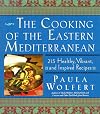
For years I looked for a recipe for something a deli I used to go to called the "Megaderra Sandwich." I knew it was refried lentils and onions, wrapped in a flatbread, but could NOT find a recipe for "megaderra" anywhere. Finally I stumbled upon the connection between "megaderra" and "megadarra" and "mujadarrah," and also found out that about 80% of the recipes online for any of the above led back to this book--which I had owned for several years at that point and had somehow NEVER OPENED. I show more don't even know where I got it.
Anyway, I immediately made the megadarra (which was fantastic), and then started enjoying the book. Paula Wolfert's writing about the food and how she got the recipes through her travels is just wonderful; it's truly an education. The recipes are simple and fresh, often made with only a few ingredients, and the salad recipes are especially a treat. There's a whole chapter on kibbeh, which I don't care for, but I know a couple of kibbeh enthusiasts who would probably be as excited about that as I was about the megadarra.
If you're looking for something different than a "Mediterranean diet"-type cookbook, try to find this book. It's a winner. show less
Anyway, I immediately made the megadarra (which was fantastic), and then started enjoying the book. Paula Wolfert's writing about the food and how she got the recipes through her travels is just wonderful; it's truly an education. The recipes are simple and fresh, often made with only a few ingredients, and the salad recipes are especially a treat. There's a whole chapter on kibbeh, which I don't care for, but I know a couple of kibbeh enthusiasts who would probably be as excited about that as I was about the megadarra.
If you're looking for something different than a "Mediterranean diet"-type cookbook, try to find this book. It's a winner. show less
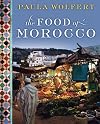
A really pretty book, with mouthwatering photography. The recipes are traditional, uncompromising but well adapted to the modern American kitchen. Authenticity is the goal, not trendy nouvelle fusion. For instance, she allows for the use of readily available instant couscous, but insists that the traditional method of multiple steamings and fluffings be employed.
On the negative side, the bread recipes are volumetric only, with no provisions for weighing. And despite it appearing dozens of show more times throughout the book, there is no recipe for making harissa, only a note to buy an imported jar of it.
Bonus points for multiple shout-outs to Joan Nathan and including her recipes as the expert on Jewish Sephardic cooking rather than trying to muddle through it herself.
She also gets credit for omitting a couple of recipes for foods she talks about, because she wasn't sufficiently satisfied in how they came out to include them in the book. It would have been nice had she figured it out or found a source, but it's brave to not just give in and print it anyway, as happens in too many cookbooks. show less
On the negative side, the bread recipes are volumetric only, with no provisions for weighing. And despite it appearing dozens of show more times throughout the book, there is no recipe for making harissa, only a note to buy an imported jar of it.
Bonus points for multiple shout-outs to Joan Nathan and including her recipes as the expert on Jewish Sephardic cooking rather than trying to muddle through it herself.
She also gets credit for omitting a couple of recipes for foods she talks about, because she wasn't sufficiently satisfied in how they came out to include them in the book. It would have been nice had she figured it out or found a source, but it's brave to not just give in and print it anyway, as happens in too many cookbooks. show less
The cooking of the eastern Mediterranean : 215 healthy, vibrant, and inspired recipes by Paula Wolfert

There are some fine recipes here, I've tried the Beet salad (best I've had yet) and Pomegranate Molasses (very good and simple). I intend to try a few more before I give this cookbook away. Why am I giving it away? Many of the recipes are more complicated than I care to reproduce, call for ingredients or tools which it would be hard and expensive for me to find, or for ingredients I avoid eating (nightshade plants such as tomatoes, potatoes, eggplant).
Assumptions this author makes:
Everyone show more cooks on a gas stove
Everyone lives in a big city with a Middle Eastern market to hand
Everyone has a food processor
That being said, the reading experience was enjoyable, I learned about cooking techniques which I was not familiar with before, and an area of the world I will probably never have the luxury to visit. The only photographs are of women from the area. There is a nice map on the inside cover pages. show less
Assumptions this author makes:
Everyone show more cooks on a gas stove
Everyone lives in a big city with a Middle Eastern market to hand
Everyone has a food processor
That being said, the reading experience was enjoyable, I learned about cooking techniques which I was not familiar with before, and an area of the world I will probably never have the luxury to visit. The only photographs are of women from the area. There is a nice map on the inside cover pages. show less
The Cooking of the Eastern Mediterranean: 215 Healthy, Vibrant, and Inspired Recipes by Paula Wolfert
I found this anecdote-laden book fascinating, but the recipes required too much time or too many exotic ingredients to be really practical. I got very frustrated. I think you need to be something of a food hobbyist to manage these recipes unless you live near a Middle Eastern grocery. BTW, Wolfert's definition of "Eastern Mediterranean" means Slavic Macedonia and northern Greece, Turkey, the Levant, and the Republic of Georgia. It's her book, she can call it whatever she wants.
Lists
Awards


You May Also Like


Associated Authors
Statistics
- Works
- 13
- Also by
- 8
- Members
- 2,054
- Popularity
- #12,514
- Rating
- 3.8
- Reviews
- 12
- ISBNs
- 38
- Languages
- 2
- Favorited
- 7