
Gary M. Burge
Author of John: The NIV Application Commentary
About the Author
Gary M. Burge is professor of New Testament at Wheaton College. Among his many published books are Theology Questions Everyone Asks (with coeditor David Lauber), Jesus and the Land, Jesus the Middle Eastern Storyteller and Interpreting the. Gospel of John.
Series
Works by Gary M. Burge
The New Testament in Antiquity: A Survey of the New Testament within Its Cultural Context (2009) 406 copies, 2 reviews
Whose Land? Whose Promise?: What Christians Are Not Being Told About Israel and the Palestinians (2003) 131 copies
The New Testament in Seven Sentences: A Small Introduction to a Vast Topic (Introductions in Seven Sentences) (2019) 41 copies
Galatians and Ephesians through Old Testament Eyes: A Background and Application Commentary (2025) 11 copies, 1 review
Comentario bíblico con aplicación NVI Cartas de Juan: Del texto bíblico a una aplicación contemporánea (Comentarios bíblicos con… (2013) 6 copies
Getting to the future-- before the future gets to you! : 365 strategies to "loyalize" customers, before your competition does! (1999) 3 copies
Associated Works
Like Birds in a Cage: Christian Zionism's Collusion in Israel's Oppression of the Palestinian People (2021) — Foreword — 19 copies, 6 reviews
Christ at the Checkpoint: Theology in the Service of Justice and Peace (Pentecostals, Peacemaking, and Social Justice) (2012) — Contributor — 5 copies
Challenging Perspectives on the Gospel of John (Wissenschaftliche Untersuchungen Zum Neuen Testament) (2006) — Contributor — 3 copies
Tagged
Common Knowledge
- Other names
- 白基
- Birthdate
- 1952-04-28
- Gender
- male
- Education
- Fuller Theological Seminary (MDiv|1978)
University of Aberdeen (King's College|PhD|1983) - Organizations
- Society of Biblical Literature
Evangelical Theological Society - Nationality
- USA
- Birthplace
- Covina, California, USA
- Associated Place (for map)
- California, USA
Members
Reviews
Summary: A commentary drawing out the Old Testament allusions and references Paul makes.
Galatians and Ephesians sit side by side in our Bibles. But they are so different. Galatians begins harshly. Ephesians glows with a marvelous prayer and thanksgiving. Galatians is unanimously attributed to Paul. The authorship of Ephesians is disputed. But we treasure them both.
Gary M. Burge sees these books as written by an author or authors (he opts for Paul as author for both) steeped in the Jewish show more scriptures and in his commentary on these two books notes the references and illusions that inform the writing. This is one of the distinctive features of the Through Old Testament Eyes series. In addition to the running commentary, “Through Old Testament Eyes” insertions explain references and allusions in the text. There are also periodic insertions on “What the Structure Means” and “Going Deeper.” The latter unpacks implications of the text for present day readers.
Befitting this series, I will focus on some of the Old Testament material discussed in the commentary for each book. In Galatians, the discussions of circumcision, meals, Gentiles and separation, and the material on Abraham and his seed. What is most striking is that Burge sees the promises made to Abraham as applying to all who, by faith are children of Abraham. And the land promise? It is no longer limited to a strip of land on the eastern Mediterranean but extends to the whole world. In Going Deeper discussions, Burge elaborates the significance of this for present day Israel
Turning to Ephesians, Burge first elaborates the Old Testament concept of “blessing,” so much a part of the opening prayer. Several articles elaborate Ephesians 2:11-22, discussing relations of Jews and Gentiles, and the dividing wall of the temple (and Christ’s new temple. In Ephesians 4:20-21, he contrasts Old Testament codes and learning Christ. Then, he sets the household codes not only in their Gentile context but also in terms of Old Testament teaching on marriage and slavery.
In addition, the “Going Deeper: sections move from commentary to challenging implications. He challenges racism and sexism in the church on the basis of Galatians 3:28. Instead of allegiance to an earthly Jerusalem, he calls for allegiance to Christian Israelis and Palestinians and our expectation of the New Jerusalem. His words on our use of words and anger from Ephesians 4:29-32 are much needed as is his calling out of marital abuse and the misuse of Ephesians 5:21-33.
In addition, Burge offers helpful background and timeline material based on and including a well-argued southern Galatia hypothesis. He offers helpful structural observations of Paul’s argument in both books and background on letter-writing conventions, so important given Paul’s breech of those conventions in Galatians. In conclusion, this is a valuable commentary for devotional study, teaching, and preaching.
_______________________
Disclosure of Material Connection: I received a complimentary copy of this book from the publisher for review.
Reviews of other commentaries in this series:
Matthew: https://bobonbooks.com/2024/06/11/review-matthew-through-old-testament-eyes/
Mark: https://bobonbooks.com/2017/12/04/review-mark-through-old-testament-eyes/
John: https://bobonbooks.com/2023/12/18/review-john-through-old-testament-eyes/
Revelation: https://bobonbooks.com/2022/11/28/review-revelation-through-old-testament-eyes/ show less
Galatians and Ephesians sit side by side in our Bibles. But they are so different. Galatians begins harshly. Ephesians glows with a marvelous prayer and thanksgiving. Galatians is unanimously attributed to Paul. The authorship of Ephesians is disputed. But we treasure them both.
Gary M. Burge sees these books as written by an author or authors (he opts for Paul as author for both) steeped in the Jewish show more scriptures and in his commentary on these two books notes the references and illusions that inform the writing. This is one of the distinctive features of the Through Old Testament Eyes series. In addition to the running commentary, “Through Old Testament Eyes” insertions explain references and allusions in the text. There are also periodic insertions on “What the Structure Means” and “Going Deeper.” The latter unpacks implications of the text for present day readers.
Befitting this series, I will focus on some of the Old Testament material discussed in the commentary for each book. In Galatians, the discussions of circumcision, meals, Gentiles and separation, and the material on Abraham and his seed. What is most striking is that Burge sees the promises made to Abraham as applying to all who, by faith are children of Abraham. And the land promise? It is no longer limited to a strip of land on the eastern Mediterranean but extends to the whole world. In Going Deeper discussions, Burge elaborates the significance of this for present day Israel
Turning to Ephesians, Burge first elaborates the Old Testament concept of “blessing,” so much a part of the opening prayer. Several articles elaborate Ephesians 2:11-22, discussing relations of Jews and Gentiles, and the dividing wall of the temple (and Christ’s new temple. In Ephesians 4:20-21, he contrasts Old Testament codes and learning Christ. Then, he sets the household codes not only in their Gentile context but also in terms of Old Testament teaching on marriage and slavery.
In addition, the “Going Deeper: sections move from commentary to challenging implications. He challenges racism and sexism in the church on the basis of Galatians 3:28. Instead of allegiance to an earthly Jerusalem, he calls for allegiance to Christian Israelis and Palestinians and our expectation of the New Jerusalem. His words on our use of words and anger from Ephesians 4:29-32 are much needed as is his calling out of marital abuse and the misuse of Ephesians 5:21-33.
In addition, Burge offers helpful background and timeline material based on and including a well-argued southern Galatia hypothesis. He offers helpful structural observations of Paul’s argument in both books and background on letter-writing conventions, so important given Paul’s breech of those conventions in Galatians. In conclusion, this is a valuable commentary for devotional study, teaching, and preaching.
_______________________
Disclosure of Material Connection: I received a complimentary copy of this book from the publisher for review.
Reviews of other commentaries in this series:
Matthew: https://bobonbooks.com/2024/06/11/review-matthew-through-old-testament-eyes/
Mark: https://bobonbooks.com/2017/12/04/review-mark-through-old-testament-eyes/
John: https://bobonbooks.com/2023/12/18/review-john-through-old-testament-eyes/
Revelation: https://bobonbooks.com/2022/11/28/review-revelation-through-old-testament-eyes/ show less
Summary: Traces the career trajectory of a college professor, identifying the factors that mark the successful passage from one "cohort" to the next, the risks to be negotiated in each season of work, and key resources for career development.
When many of us are young, we give relatively little thought to what the "map" of a career might look like and what differentiates a career that is successful and fulfilling from one that is not. Often, the focus is on landing a good starting position in show more a field for which one has prepared and then advancing within it. Often, though, we think the passage into adulthood is simply one of obtaining a real job, which we do in some form, with promotions and achievements, until we retire. What Gary M. Burge proposes, in this case for the academic career of a college professor, is that there is a discernible course that can be traced for college professors, and certain marks that differentiate successful and fulfilling journeys in academia from those that are not.
He breaks the career trajectory into three "cohorts". Each of the cohorts is discussed in one of the chapters of the book. Each section includes helpful addenda on topics like mentoring, sabbaticals, financial planning, and retirement planning.
Cohort One faculty are those who have completed the doctorate and are pursuing tenure, which defines the key theme of this cohort: security. The chapter assumes those who have been appointed to tenure track positions and may have been more helpful if it included some material for those who have not yet been able to land such positions. It focuses on the formation of one's core identity as a professor, on building strong peer and mentoring relationships, and on experiencing strong student and college validation of one's work. I thought one of the most interesting sections here was his discussion of "toxic anxiety" and the importance of early intervention. This cohort ends with the granting of tenure.
Cohort Two is concerned with the theme of success. Key factors are effective teaching that connects with students, the pursuit of scholarship, often honed to a particular sub-discipline that one becomes "expert" in, for the sheer interest and enjoyment of the work, and the finding of one's own voice, both in one's discipline and institution. The pitfalls here are in not continuing to develop professionally, a type of egocentric disengagement, and unresolved institutional dissonance. Successful faculty are sought after by students, are making a distinctive contribution in their scholarly work, and both speak into and represent well the institutions with which they are affiliated.
The third cohort has to do with significance. These are "senior" faculty moving toward the end of their careers and are in the midst of a redefinition of both themselves as they age, and what is truly important within their work. If they negotiate this well, they become valued mentors to junior faculty and become more focused in their scholarship. If they have indeed grown in wisdom, they are often trusted "adult sages" to students who don't want them as a friend but as a caring adult who listens and mentors. At some point, this stage ends in retirement, with the wise counsel of doing so before one has to.
Burge does not address the question of exernal changes: institutional change, disciplinary change, technological change, and change in student culture. Perhaps this is implicit in the developmental process he charts, but it seems to me that we are in a season of rapid change in higher education and how one negotiates this in the course of an academic career is significant for each of the cohorts, and especially the latter two.
One thing I appreciated was that while written by someone who is clear about his own faith commitments and published by a Christian publisher, the text is written neither for a Christian audience nor laced with Christian jargon or biblical references, other than occasional references to the author's scholarly work in New Testament. This book could be used with any group of faculty concerned with faculty career development. It is generic to concerns all faculty face.
Burge wisely counsels talking with those who are ten years ahead of us to help us understand what's ahead. This book, while no substitute for such personal interactions, is a helpful guide to think about the contours of, and important questions one must address in, the course of an academic career. He points out the dangerous "rabbit trails" academics can pursue that end in disillusionment and disappointment, as well as the essential tasks one must address for growth. This is a helpful handbook for academics at any stage of their careers. show less
When many of us are young, we give relatively little thought to what the "map" of a career might look like and what differentiates a career that is successful and fulfilling from one that is not. Often, the focus is on landing a good starting position in show more a field for which one has prepared and then advancing within it. Often, though, we think the passage into adulthood is simply one of obtaining a real job, which we do in some form, with promotions and achievements, until we retire. What Gary M. Burge proposes, in this case for the academic career of a college professor, is that there is a discernible course that can be traced for college professors, and certain marks that differentiate successful and fulfilling journeys in academia from those that are not.
He breaks the career trajectory into three "cohorts". Each of the cohorts is discussed in one of the chapters of the book. Each section includes helpful addenda on topics like mentoring, sabbaticals, financial planning, and retirement planning.
Cohort One faculty are those who have completed the doctorate and are pursuing tenure, which defines the key theme of this cohort: security. The chapter assumes those who have been appointed to tenure track positions and may have been more helpful if it included some material for those who have not yet been able to land such positions. It focuses on the formation of one's core identity as a professor, on building strong peer and mentoring relationships, and on experiencing strong student and college validation of one's work. I thought one of the most interesting sections here was his discussion of "toxic anxiety" and the importance of early intervention. This cohort ends with the granting of tenure.
Cohort Two is concerned with the theme of success. Key factors are effective teaching that connects with students, the pursuit of scholarship, often honed to a particular sub-discipline that one becomes "expert" in, for the sheer interest and enjoyment of the work, and the finding of one's own voice, both in one's discipline and institution. The pitfalls here are in not continuing to develop professionally, a type of egocentric disengagement, and unresolved institutional dissonance. Successful faculty are sought after by students, are making a distinctive contribution in their scholarly work, and both speak into and represent well the institutions with which they are affiliated.
The third cohort has to do with significance. These are "senior" faculty moving toward the end of their careers and are in the midst of a redefinition of both themselves as they age, and what is truly important within their work. If they negotiate this well, they become valued mentors to junior faculty and become more focused in their scholarship. If they have indeed grown in wisdom, they are often trusted "adult sages" to students who don't want them as a friend but as a caring adult who listens and mentors. At some point, this stage ends in retirement, with the wise counsel of doing so before one has to.
Burge does not address the question of exernal changes: institutional change, disciplinary change, technological change, and change in student culture. Perhaps this is implicit in the developmental process he charts, but it seems to me that we are in a season of rapid change in higher education and how one negotiates this in the course of an academic career is significant for each of the cohorts, and especially the latter two.
One thing I appreciated was that while written by someone who is clear about his own faith commitments and published by a Christian publisher, the text is written neither for a Christian audience nor laced with Christian jargon or biblical references, other than occasional references to the author's scholarly work in New Testament. This book could be used with any group of faculty concerned with faculty career development. It is generic to concerns all faculty face.
Burge wisely counsels talking with those who are ten years ahead of us to help us understand what's ahead. This book, while no substitute for such personal interactions, is a helpful guide to think about the contours of, and important questions one must address in, the course of an academic career. He points out the dangerous "rabbit trails" academics can pursue that end in disillusionment and disappointment, as well as the essential tasks one must address for growth. This is a helpful handbook for academics at any stage of their careers. show less
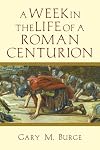
The author, professor of New Testament at Wheaton College, has taken the gospel story [Matthew and Luke] of the healing of the centurion's "grievously tormented" servant, given backstories to the unnamed centurion and his servant, here a young scribe, names, and made them come alive for us. The author has also given the centurion, Appius, a household. The author plausibly explains how and why Appius and his familia might have come to Capernaum and why he has had a synagogue built. Appius is show more the new garrison commander. Then follows the climax to the gospel story and its miracle of healing.
The cover misled me; from the picture on it I assumed it would be about Holy Week. Perhaps one with the centurion and Jesus would have been more suitable. This was a sweet story, simply told, nothing nasty in it. I assume it was written for older teens' Sunday School, anyone wanting an introduction to this story, or even seminary students. The sidebars giving glimpses into Roman and Jewish culture of that time, along with the illustrations, were valuable.
Highly recommended. show less
The cover misled me; from the picture on it I assumed it would be about Holy Week. Perhaps one with the centurion and Jesus would have been more suitable. This was a sweet story, simply told, nothing nasty in it. I assume it was written for older teens' Sunday School, anyone wanting an introduction to this story, or even seminary students. The sidebars giving glimpses into Roman and Jewish culture of that time, along with the illustrations, were valuable.
Highly recommended. show less
Synopsis: In this short book, Burge guides the reader to interpret Jesus as a storyteller - a teacher who uses allegory and hyperbole to make important points within his own social context. The book is filled with beautiful pictures and several examples of Jesus' use of hyperbole to teach an important point. Burge provides historical and cultural insight into what Jesus may have been talking about when telling his parables.
My thoughts: I was surprised at how fun this book was. Although it's show more quite short, and half of it was pictures, it made me look at Jesus from a interesting new perspective. Of course, I already knew that Jesus used parables and hyperbole to make points, but it was really interesting to read Burge's cultural analysis of those parables.
The story I found most enlightening was Burge's interpretation of the fig tree incident - the one where Jesus cursed the tree. Burge pointed out that the fig tree represented the Jewish state and religion. Throughout the New Testament Jesus repeatedly pointed out the hypocrisy of the Pharisees, who made a public spectacle of themselves fasting, praying, and giving alms; but who did not have the spirit of the religion in their hearts. They prayed for the approval of the people, not for the approval of God. Thus, they were not "bearing fruit."
Of course, I realize that this insight about the fig tree and the Pharisees is not uniquely Burge's. What's important is that Jesus, the Middle Eastern Storyteller introduced me to some interesting interpretations that I could look into in more detail later. In that way, this book was a valuable resource for me.
For my full review, go to my blog: Resistance is Futile show less
My thoughts: I was surprised at how fun this book was. Although it's show more quite short, and half of it was pictures, it made me look at Jesus from a interesting new perspective. Of course, I already knew that Jesus used parables and hyperbole to make points, but it was really interesting to read Burge's cultural analysis of those parables.
The story I found most enlightening was Burge's interpretation of the fig tree incident - the one where Jesus cursed the tree. Burge pointed out that the fig tree represented the Jewish state and religion. Throughout the New Testament Jesus repeatedly pointed out the hypocrisy of the Pharisees, who made a public spectacle of themselves fasting, praying, and giving alms; but who did not have the spirit of the religion in their hearts. They prayed for the approval of the people, not for the approval of God. Thus, they were not "bearing fruit."
Of course, I realize that this insight about the fig tree and the Pharisees is not uniquely Burge's. What's important is that Jesus, the Middle Eastern Storyteller introduced me to some interesting interpretations that I could look into in more detail later. In that way, this book was a valuable resource for me.
For my full review, go to my blog: Resistance is Futile show less
Awards

You May Also Like


Associated Authors
Statistics
- Works
- 39
- Also by
- 5
- Members
- 3,014
- Popularity
- #8,471
- Rating
- 4.0
- Reviews
- 15
- ISBNs
- 76
- Languages
- 4