
Patricia Reilly Giff (1935–2021)
Author of Pictures of Hollis Woods
About the Author
Patricia Reilly Giff was born in Brooklyn, New York on April 26, 1935. She knew she wanted to be a writer, even as a little girl. She received a Bachelor's of Arts in Education from Marymount College, a Master's of Arts from St. John's University, and a Professional Diploma in Reading and a show more Doctorate of Humane Letters from Hofstra University. After she graduated from college, she taught in the public schools in New York City until 1960 and then in the public schools in Elmont, New York from 1964 until 1971. She then became a reading consultant before finally, at the age of 40, deciding to write a book. She also worked as an educational consultant for Dell Yearling and Young Yearling Books and as an advisor and instructor to aspiring writers. She is the author of more than 60 children's books, as well as a member of the Society of Children's Book Writers. Together with her husband, Giff opened "The Dinosaur's Paw," a children's bookstore named after one of her own stories. She is the author of the Polk Street School books. Lily's Crossing, about the homefront during World War II, was named a Newberry Honor Book by the American Library Association as well as an ALA Notable Book for Children. The novel also won the Boston Globe-Horn Book Award Honor. Pictures of Hollis Woods was also named a Newberry Honor Book and Nory Ryan's Song was named an ALA Best Book for Young Adults. (Bowker Author Biography) show less
Series
Works by Patricia Reilly Giff
Zigzag Kids Collection: Books 1 and 2: #1: Number One Kid; #2: Big Whopper (2010) 5 copies, 1 review
Watch Out! Man Eating Snake 2 copies
Fish Face 2 copies
Fancy Feet 1 copy
Lily's Grossing 1 copy
Wild Child 1 copy
Spectauclar Stone Soup 1 copy
In the Dinosaur's Paw 1 copy
Snaggle Doodle 1 copy
Fourth Grade Celebrity 1 copy
Associated Works
Tagged
Common Knowledge
- Canonical name
- Giff, Patricia Reilly
- Birthdate
- 1935-04-26
- Date of death
- 2021-06-22
- Gender
- female
- Education
- Marymount College (BA|1956)
St. John's University (MA|1958)
Hofstra University (DHL) - Occupations
- teacher
children's book author - Awards and honors
- Christopher Award (2018)
Newbery Honor (1998, 2003) - Cause of death
- cancer
- Nationality
- USA
- Birthplace
- Brooklyn, New York, USA
- Places of residence
- Brooklyn, New York, USA
Weston, Connecticut, USA
Trumbull, Connecticut, USA - Place of death
- Trumbull, Connecticut, USA
- Map Location
- New York, USA
Members
Discussions
Found: YA Slice of Life in Name that Book (November 2023)
Mystery, title may be where are you + a name, tween girl detective in Name that Book (September 2012)
Reviews
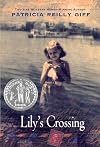
Lily loves to lie. The lies flow fast and easy. Each time she vows not to lie, another one slides right on out of her mouth. Lily just cannot help herself.
The setting is Rockaway, NJ where Lily, her grandmother and father spend idyllic summers. But the summer of 1944 is different and lives are changed because of WWII. Lily's best friend moves to Detroit where her father can build bombs, the seaside boardwalk is empty and Lily's father is going oversees to fight in the war.
Having lost a show more mother in childhood, Lily knows the fear of abandonment and loneliness. When a young Hungarian refugee arrives, Lily learns the unspeakable things Albert experienced in losing his family during Nazi occupation.
Slipping into her habit of pathological lying seems harmless until one places Albert's life in jeopardy.
This 1998 Newbery Honor book is highly recommended. The themes of loss, grief, friendship, the impact of war and the repercussions of actions are all packed into a mere 180 pages. show less
The setting is Rockaway, NJ where Lily, her grandmother and father spend idyllic summers. But the summer of 1944 is different and lives are changed because of WWII. Lily's best friend moves to Detroit where her father can build bombs, the seaside boardwalk is empty and Lily's father is going oversees to fight in the war.
Having lost a show more mother in childhood, Lily knows the fear of abandonment and loneliness. When a young Hungarian refugee arrives, Lily learns the unspeakable things Albert experienced in losing his family during Nazi occupation.
Slipping into her habit of pathological lying seems harmless until one places Albert's life in jeopardy.
This 1998 Newbery Honor book is highly recommended. The themes of loss, grief, friendship, the impact of war and the repercussions of actions are all packed into a mere 180 pages. show less

Hollis Woods is afraid, so she runs. She is afraid of abandonment, she is afraid of feeling and she is afraid of commitment. Hollis has suffered tremendously, but has also been loved, but her suffering would not allow her to feel deeply enough to allow that love in, until someone needed her. Through the frailty of Josie, who has a common interest (art) and an authentic need (she is loosing her memory), Hollis learns that each day holds special moments that create pictures worth holding onto show more for a lifetime. She learns to love, and as importantly, to allow herself to be loved.
When children confuse us, rejecting even the kindest invitations, we would be wise to consider that perhaps there are parts of them and their histories that we simply do not understand. Perhaps the need is not to be invited, but rather to be needed. Hollis Woods can serve to remind us of the power of being needed. show less
When children confuse us, rejecting even the kindest invitations, we would be wise to consider that perhaps there are parts of them and their histories that we simply do not understand. Perhaps the need is not to be invited, but rather to be needed. Hollis Woods can serve to remind us of the power of being needed. show less
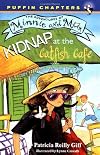
I thought this was a fun little book, not without flaws, but nevertheless engaging, interesting, and entertaining. Minnie is an orphan who lives with her older brother, Orlando, owner of The Catfish Cafe. She's roughly 10 or 12 years old and allowed a tremendous amount of unsupervised wandering - not typical of today's average kid. Having attempted to get a number of "businesses" off the ground, Minnie has currently hung her hopes on being a detective. Since no one will hire a kid, she finds show more a case of her own to solve right in the neighborhood.
I found the characters and the setting of KIDNAP AT THE CATFISH CAFE to be extremely interesting. While the town is never named, it overlooks "Sharkfin Bay" and boasts a large Russian community. It's clear some people are second and third generation while others are more recent immigrants. Oddly, The Catfish Cafe specializes in southern cooking, which to Orlando, proprieter and chef, means each dish includes some form of peaches. There was quite a lot of discussion of amber, where it comes from and how valued it is within the community. The characters are many and varied; I quite liked the sympathetic depiction of Mrs. Vorr, an elderly woman living on her own.
There's a lot of detail, action, and themes in this little book, sometimes too much for middle grade readers and a book of only 80 pages. There's the fact of Minnie being raised by her brother, Orlando; Orlando's failing restaurant, bizarre recipes, and his interest in a mysterious red-headed lady--who really knows how to cook; references to their deceased parents and a story about how this brother and sister came to be named as they are. There's also the aging Mrs. Vorr, abandoned by her beloved Misha and victimized by a purse snatcher; the clumsy undercover cop, Kitty, who becomes a role model for Minnie; and Cash, the young boy who may or may not be behind the recent thefts, as well as Leo the Lazy, a pathetic man who hangs around, asks for handouts, and thinks wearing a necktie over his t-shirt is "sprucing up." Any of these characters or storylines would have been interesting if they were developed further, but they cannot all be contained comfortably within the framework of such a short novel.
Another thing that I had difficulty with were the names used in the story. There are several boats mentioned frequently, The Comet, The Crab's Legs, The Amber Cat, and The Black Dog, as well as a truck called Lumber Jack. On my first reading, I found it hard to keep all the boats straight and remember which one belonged to whom. It was also disconcerting to me to have a human character named "Kitty" in a story in which an actual cat has such prominance. It's kind of funny to me that I felt so overwhelmed and confused by a kid's chapter book, but if it gave me trouble, it's bound to confuse at least some kids!
On the other hand, I really liked this book because the main characters are interesting and fun; sometimes the story even made me giggle. The community in which Minnie lives is populated with friendly personalities who look out for one another, making everyone seem like a member of a huge extended family. And there's more than one mystery solved by the time the reader reaches the (predictably) happy ending.
I read this book twice, once on my own and again with my niece and nephew. It seemed that like me, they were captivated by the characters and storyline, but sometimes got tripped up and "confuzzled." They do want to pick up the second book in this series, MARY MOON IS MISSING. I want to read it, too.
I also want to take a peek at this author's better known and best-selling Kids of the Polk Street School series. Patricia Reilly Giff has also written several historical fiction novels and the Newbury Honor winners PICTURES OF HOLLIS WOODS and LILY'S CROSSING. I'm particulary interested in reading those! show less
I found the characters and the setting of KIDNAP AT THE CATFISH CAFE to be extremely interesting. While the town is never named, it overlooks "Sharkfin Bay" and boasts a large Russian community. It's clear some people are second and third generation while others are more recent immigrants. Oddly, The Catfish Cafe specializes in southern cooking, which to Orlando, proprieter and chef, means each dish includes some form of peaches. There was quite a lot of discussion of amber, where it comes from and how valued it is within the community. The characters are many and varied; I quite liked the sympathetic depiction of Mrs. Vorr, an elderly woman living on her own.
There's a lot of detail, action, and themes in this little book, sometimes too much for middle grade readers and a book of only 80 pages. There's the fact of Minnie being raised by her brother, Orlando; Orlando's failing restaurant, bizarre recipes, and his interest in a mysterious red-headed lady--who really knows how to cook; references to their deceased parents and a story about how this brother and sister came to be named as they are. There's also the aging Mrs. Vorr, abandoned by her beloved Misha and victimized by a purse snatcher; the clumsy undercover cop, Kitty, who becomes a role model for Minnie; and Cash, the young boy who may or may not be behind the recent thefts, as well as Leo the Lazy, a pathetic man who hangs around, asks for handouts, and thinks wearing a necktie over his t-shirt is "sprucing up." Any of these characters or storylines would have been interesting if they were developed further, but they cannot all be contained comfortably within the framework of such a short novel.
Another thing that I had difficulty with were the names used in the story. There are several boats mentioned frequently, The Comet, The Crab's Legs, The Amber Cat, and The Black Dog, as well as a truck called Lumber Jack. On my first reading, I found it hard to keep all the boats straight and remember which one belonged to whom. It was also disconcerting to me to have a human character named "Kitty" in a story in which an actual cat has such prominance. It's kind of funny to me that I felt so overwhelmed and confused by a kid's chapter book, but if it gave me trouble, it's bound to confuse at least some kids!
On the other hand, I really liked this book because the main characters are interesting and fun; sometimes the story even made me giggle. The community in which Minnie lives is populated with friendly personalities who look out for one another, making everyone seem like a member of a huge extended family. And there's more than one mystery solved by the time the reader reaches the (predictably) happy ending.
I read this book twice, once on my own and again with my niece and nephew. It seemed that like me, they were captivated by the characters and storyline, but sometimes got tripped up and "confuzzled." They do want to pick up the second book in this series, MARY MOON IS MISSING. I want to read it, too.
I also want to take a peek at this author's better known and best-selling Kids of the Polk Street School series. Patricia Reilly Giff has also written several historical fiction novels and the Newbury Honor winners PICTURES OF HOLLIS WOODS and LILY'S CROSSING. I'm particulary interested in reading those! show less
Giff’s 1997 Newbery Honor Book opens in June 1944 with ten-year-old Lily Mollahan and her grandmother packing for their annual summer stay at Rockaway Beach, a vast five-mile stretch on the Rockaway peninsula in the borough of Queens, New York. Lily’s father, “Poppy,” an engineer, is to join them for weekends. (Her mother died from a heart condition when Lily was an infant.)
Unfortunately, when Lily arrives in Rockaway she promptly learns that her longtime summer friend, Margaret show more Dillon, is moving away to Michigan, at least for the time being. Her dad has taken a job on a bomber-plane assembly line there. Before leaving, Margaret gives Lily, a budding writer, the key to the Dillon summer place, so she can escape her sometimes bossy grandmother and work on her stories in its wonderful attic room. A worse announcement comes soon after: Poppy is leaving for Europe, not as a soldier, but because his engineering skills are needed. He promises he will write to his daughter and somehow let her know where he is. Lily’s grief is intense, and she angrily refuses to see him off, an act that will haunt her through a very eventful summer.
Most of the action of the novel is concerned with Lily’s growing friendship with a war refugee from Budapest, the nephew of the Mollahan’s neighbours, Mr. and Mrs. Orban. Albert has been through a traumatic time. Two years earlier, his grandmother took charge of him and his little sister, Ruth, just before their parents were arrested for publishing a newspaper that was critical of Hitler, an act which cost them their lives. The children’s grandmother arranged to have them smuggled west across Europe to France and, hopefully, to America. Unfortunately, by the time the siblings reached France, Ruth was seriously ill with measles. She had to be left behind with an order of nuns. Now Albert is deeply distressed by the fact that he did not say goodbye to Ruth.He’s further tormented by the knowledge that he could have stayed in France with her. Instead, because he was so terrified of the Nazis, he'd chosen to leave for North America without her.
The climax of the novel hinges on a lie that Lily tells Albert, which makes him believe he might be able to get himself aboard a troopship to Europe so that he can find Ruth. All of this may sound a little heavy going for young readers, but Giff has a delicate touch; lighter incidents, including the discovery of a marmalade kitten, counterbalance the serious ones.
The many warm and emotionally satisfying moments in the novel also compensate for a few events that might raise the eyebrows of adult readers. Giff’s child characters have a remarkable amount of freedom compared to most of today's kids. When I consider my own and my friends’ childhood experiences, I marvel at, and am grateful for, the benign neglect of our parents, which gave us the freedom to roam. Giff’s main characters have freedom to roam and then some. They glide off in rowboats, sometimes in the middle of the night, and they go swimming in rough water without any adult supervision—things even the relaxed parents I knew would never have permitted, even though their kids were capable swimmers. Some of today’s helicopter parents might be alarmed by the ideas this novel might give to young readers!
These quibbles aside, Giff’s book is generally a rewarding piece of historical fiction about the power of friendship and family love. Recommended.
Rating: 3.5 rounded down show less
Unfortunately, when Lily arrives in Rockaway she promptly learns that her longtime summer friend, Margaret show more Dillon, is moving away to Michigan, at least for the time being. Her dad has taken a job on a bomber-plane assembly line there. Before leaving, Margaret gives Lily, a budding writer, the key to the Dillon summer place, so she can escape her sometimes bossy grandmother and work on her stories in its wonderful attic room. A worse announcement comes soon after: Poppy is leaving for Europe, not as a soldier, but because his engineering skills are needed. He promises he will write to his daughter and somehow let her know where he is. Lily’s grief is intense, and she angrily refuses to see him off, an act that will haunt her through a very eventful summer.
Most of the action of the novel is concerned with Lily’s growing friendship with a war refugee from Budapest, the nephew of the Mollahan’s neighbours, Mr. and Mrs. Orban. Albert has been through a traumatic time. Two years earlier, his grandmother took charge of him and his little sister, Ruth, just before their parents were arrested for publishing a newspaper that was critical of Hitler, an act which cost them their lives. The children’s grandmother arranged to have them smuggled west across Europe to France and, hopefully, to America. Unfortunately, by the time the siblings reached France, Ruth was seriously ill with measles. She had to be left behind with an order of nuns. Now Albert is deeply distressed by the fact that he did not say goodbye to Ruth.
The climax of the novel hinges on a lie that Lily tells Albert, which makes him believe he might be able to get himself aboard a troopship to Europe so that he can find Ruth. All of this may sound a little heavy going for young readers, but Giff has a delicate touch; lighter incidents, including the discovery of a marmalade kitten, counterbalance the serious ones.
The many warm and emotionally satisfying moments in the novel also compensate for a few events that might raise the eyebrows of adult readers. Giff’s child characters have a remarkable amount of freedom compared to most of today's kids. When I consider my own and my friends’ childhood experiences, I marvel at, and am grateful for, the benign neglect of our parents, which gave us the freedom to roam. Giff’s main characters have freedom to roam and then some. They glide off in rowboats, sometimes in the middle of the night, and they go swimming in rough water without any adult supervision—things even the relaxed parents I knew would never have permitted, even though their kids were capable swimmers. Some of today’s helicopter parents might be alarmed by the ideas this novel might give to young readers!
These quibbles aside, Giff’s book is generally a rewarding piece of historical fiction about the power of friendship and family love. Recommended.
Rating: 3.5 rounded down show less
Lists
Newbery Adjacent (9)
Best Young Adult (1)
Tagged Runaways (1)
Five star books (1)
GAL Book Club (1)
4th Grade Books (1)
Sonlight Books (2)
Awards


You May Also Like


Associated Authors
Statistics
- Works
- 162
- Also by
- 1
- Members
- 34,520
- Popularity
- #549
- Rating
- 3.8
- Reviews
- 452
- ISBNs
- 1,073
- Languages
- 12
- Favorited
- 5
