
Neil S. Price
Author of Children of Ash and Elm: A History of the Vikings
About the Author
Image credit: via Royal Society of Edinburgh
Works by Neil S. Price
Tagged
Common Knowledge
- Legal name
- Price, Neil Stuppel
- Birthdate
- 1965
- Gender
- male
- Education
- Institute of Archeology (BA ∙ archaeology ∙ 1988)
University of York (postgraduate study 1988-1992)
Uppsala University (PhD ∙ 2002) - Occupations
- field archaeologist
Professor of Archaeology - Organizations
- University of Uppsala
University of Oslo
Stockholm University
University of Aberdeen
University of the Witwatersrand
Museum of London - Nationality
- UK
- Birthplace
- London England, UK
- Places of residence
- London, England, UK
Sweden
Norway
Aberdeen, Scotland, UK - Associated Place (for map)
- UK
Members
Discussions
Vikings (Gwyn Jones vs Neil Price) in Folio Society Devotees (August 2024)
Reviews
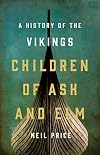
Price relies on the latest academic research to determine what the Vikings were actually like "from the inside looking out". If you were born a Viking and raised in that world, this is a roadmap of what you might know: cosmology, mythology, diet, economics, warfare, sexuality, political organizations, art, architecture, etc.. by looking inside out it humanizes and dispels myths. For example, they were actually neat and cleanly groomed, combed hair, wore colorful dress, the opposite of the show more scary looking icons. In some other ways they were even more violent than supposed.
The society was born in the multicausal catastrophe of the 500s, when over 50% of the population of Scandinavia died, disrupting the old order and giving rise to new hardened local clans who battled one another continually creating a culture that prioritized violence as a means to survive. What triggered the raiding is a matter of debate but it appears to have happened by accident and gradually over time as word spread of success, the Viking nexus originating in south-west Norway. They were traders before becoming raiders with the economy centered on wool and wood, both needed in vast quantities to support the making of ships, sails, ropes and clothing. A walk though a Viking town would smell like a sawmill and wet wool, sheep and sawdust everywhere. It might take 30 people working full-time for 2 years to make a ship, an expensive proposition, however much of the labor was done by slaves who worked under appalling conditions. The Vikings kept a lot of slaves, mostly other Europeans, a practice undermined by Christianity late in the period. The Viking era lasted about 300 years from ca. 750 to 1066, or only about 10 consecutive generations, during which time they changed as rapidly as the change they caused. They were bridge builders similar to the steppe nomads, moving goods and culture between the east, west and north.
Children of Ash and Elm is remarkable. I've been looking for a good history of the Vikings for over a decade and this is the one. It's readable, evocative, detailed and leaves one wanting to learn even more, Price is an enthusiastic teacher. I wish more books about ancient peoples were this well done, it sets a standard. show less
The society was born in the multicausal catastrophe of the 500s, when over 50% of the population of Scandinavia died, disrupting the old order and giving rise to new hardened local clans who battled one another continually creating a culture that prioritized violence as a means to survive. What triggered the raiding is a matter of debate but it appears to have happened by accident and gradually over time as word spread of success, the Viking nexus originating in south-west Norway. They were traders before becoming raiders with the economy centered on wool and wood, both needed in vast quantities to support the making of ships, sails, ropes and clothing. A walk though a Viking town would smell like a sawmill and wet wool, sheep and sawdust everywhere. It might take 30 people working full-time for 2 years to make a ship, an expensive proposition, however much of the labor was done by slaves who worked under appalling conditions. The Vikings kept a lot of slaves, mostly other Europeans, a practice undermined by Christianity late in the period. The Viking era lasted about 300 years from ca. 750 to 1066, or only about 10 consecutive generations, during which time they changed as rapidly as the change they caused. They were bridge builders similar to the steppe nomads, moving goods and culture between the east, west and north.
Children of Ash and Elm is remarkable. I've been looking for a good history of the Vikings for over a decade and this is the one. It's readable, evocative, detailed and leaves one wanting to learn even more, Price is an enthusiastic teacher. I wish more books about ancient peoples were this well done, it sets a standard. show less
The Publisher Says: The definitive history of the Vikings—from arts and culture to politics and cosmology—by a distinguished archaeologist with decades of expertise
The Viking Age—from 750 to 1050—saw an unprecedented expansion of the Scandinavian peoples into the wider world. As traders and raiders, explorers and colonists, they ranged from eastern North America to the Asian steppe. But for centuries, the Vikings have been seen through the eyes of others, distorted to suit the tastes show more of medieval clerics and Elizabethan playwrights, Victorian imperialists, Nazis, and more. None of these appropriations capture the real Vikings, or the richness and sophistication of their culture.
Based on the latest archaeological and textual evidence, Children of Ash and Elm tells the story of the Vikings on their own terms: their politics, their cosmology and religion, their material world. Known today for a stereotype of maritime violence, the Vikings exported new ideas, technologies, beliefs, and practices to the lands they discovered and the peoples they encountered, and in the process were themselves changed.
From Eirík Bloodaxe, who fought his way to a kingdom, to Gudrid Thorbjarnardóttir, the most traveled woman in the world, Children of Ash and Elm is the definitive history of the Vikings and their time.
I RECEIVED A DRC FROM THE PUBLISHER VIA NETGALLEY. THANK YOU.
My Review: Far broader in scope than The Wolf Age (reviewed here, this is the most compact (at under 650 pages) and the most comprehensive overview I've ever read of the "Viking Age" Norse as we here to their South call the multiple groups of Scandinavian traders, slavers, warriors, and rapists who burst the seams of their colossally cold homeland in search of new lands and lots of money. Spoiler alert: they got them.
(italics in the original)
There is so much to unpack in that passage...it's shockingly obvious that appeasement is seldom a worthwhile strategy, and is always an expensive one; the reputation of the Norse people as warriors was such that they merely needed to show up to be given boatloads of money to go away again; and the tribute in kind, not just the cash they brought home, kept the balance of hunger on the rightful owners of the land and food not the invaders. The Frankish kingdom, then, was more changed by its experience of Viking invasion than was even England, though both countries saw significant influxes of Norse population, arriving to make the country their home...with variable amounts of success. (See St. Brice's Massacre.)
That is all part of the middle, or "Viking" era that this volume is divided into. The first part of the text is called the "Migration" era. It is the time that saw huge cultural and climatic changes in Europe. There was pressure to find land to farm and patches of sea to exploit during this time, as well as the successor states to the Roman Empire arising and contending with each other for influence and territory. And ending the book is a kind of summation of the influence this phenomenally active and successful force in the world.
I was delighted to have the maps to help me interpret the movements and stations of Norse cultural expansion. I was also impressed wt the copiousness of the in-line illustrations. It is expensive to make a book this attractive and it's not a terribly pricey purchase at $35 for a hardcover. Basic Books has done a creditable job of this without making it a coffee-table book or a category-gift book.
Author Neil Price is a professional archaeologist. It is evident from the tone and tenor of his writing that his primary interest is in making you aware of the facts; he doesn't make the same amount of effort with the storytelling aspects of his writing. I've excerpted one of the typical passages where he's clearly making the effort to show the reader how phenomenally effective the Vikings were at their chosen task of redistributing others' wealth back to themselves. It's a fact, presented factually, that conveys a gigantic emotive affect of the Viking warriors. It is laudably clear; it is admirably placed for effect within the text (you'll have to trust me on that one); but it doesn't rise as high into the rhetorical clouds as Author Tore's book does.
It is, as a gift item, a good value; as a gift received, a real pleasure on all levels. It's a hefty tome, though, so for your friends whose needs are more for thinner reads, the ebook is a dead cheap choice!
Either way anyone wanting an accessible, enjoyable, and thoroughgoing overview of the Vikings as historical actors is in luck this Yule. show less
The Viking Age—from 750 to 1050—saw an unprecedented expansion of the Scandinavian peoples into the wider world. As traders and raiders, explorers and colonists, they ranged from eastern North America to the Asian steppe. But for centuries, the Vikings have been seen through the eyes of others, distorted to suit the tastes show more of medieval clerics and Elizabethan playwrights, Victorian imperialists, Nazis, and more. None of these appropriations capture the real Vikings, or the richness and sophistication of their culture.
Based on the latest archaeological and textual evidence, Children of Ash and Elm tells the story of the Vikings on their own terms: their politics, their cosmology and religion, their material world. Known today for a stereotype of maritime violence, the Vikings exported new ideas, technologies, beliefs, and practices to the lands they discovered and the peoples they encountered, and in the process were themselves changed.
From Eirík Bloodaxe, who fought his way to a kingdom, to Gudrid Thorbjarnardóttir, the most traveled woman in the world, Children of Ash and Elm is the definitive history of the Vikings and their time.
I RECEIVED A DRC FROM THE PUBLISHER VIA NETGALLEY. THANK YOU.
My Review: Far broader in scope than The Wolf Age (reviewed here, this is the most compact (at under 650 pages) and the most comprehensive overview I've ever read of the "Viking Age" Norse as we here to their South call the multiple groups of Scandinavian traders, slavers, warriors, and rapists who burst the seams of their colossally cold homeland in search of new lands and lots of money. Spoiler alert: they got them.
If the data from the Continental written sources is combined, the protection money paid to the Vikings during the ninth century totalled about thirty thousand pounds' weight of silver, most of it in cash: a sum equivalent to seven million silver pennies over a period when the estimated total output of the Frankish mints was in the region of fifty million coins. This equates to approximately 14 percent of the entire monetary output of the Frankish empire—for a century—evaporated in the payment of extortion demands that produced no tangible positive gain, and, in many cases, failed to appease the Vikings anyway.
(italics in the original)
There is so much to unpack in that passage...it's shockingly obvious that appeasement is seldom a worthwhile strategy, and is always an expensive one; the reputation of the Norse people as warriors was such that they merely needed to show up to be given boatloads of money to go away again; and the tribute in kind, not just the cash they brought home, kept the balance of hunger on the rightful owners of the land and food not the invaders. The Frankish kingdom, then, was more changed by its experience of Viking invasion than was even England, though both countries saw significant influxes of Norse population, arriving to make the country their home...with variable amounts of success. (See St. Brice's Massacre.)
That is all part of the middle, or "Viking" era that this volume is divided into. The first part of the text is called the "Migration" era. It is the time that saw huge cultural and climatic changes in Europe. There was pressure to find land to farm and patches of sea to exploit during this time, as well as the successor states to the Roman Empire arising and contending with each other for influence and territory. And ending the book is a kind of summation of the influence this phenomenally active and successful force in the world.
I was delighted to have the maps to help me interpret the movements and stations of Norse cultural expansion. I was also impressed wt the copiousness of the in-line illustrations. It is expensive to make a book this attractive and it's not a terribly pricey purchase at $35 for a hardcover. Basic Books has done a creditable job of this without making it a coffee-table book or a category-gift book.
Author Neil Price is a professional archaeologist. It is evident from the tone and tenor of his writing that his primary interest is in making you aware of the facts; he doesn't make the same amount of effort with the storytelling aspects of his writing. I've excerpted one of the typical passages where he's clearly making the effort to show the reader how phenomenally effective the Vikings were at their chosen task of redistributing others' wealth back to themselves. It's a fact, presented factually, that conveys a gigantic emotive affect of the Viking warriors. It is laudably clear; it is admirably placed for effect within the text (you'll have to trust me on that one); but it doesn't rise as high into the rhetorical clouds as Author Tore's book does.
It is, as a gift item, a good value; as a gift received, a real pleasure on all levels. It's a hefty tome, though, so for your friends whose needs are more for thinner reads, the ebook is a dead cheap choice!
Either way anyone wanting an accessible, enjoyable, and thoroughgoing overview of the Vikings as historical actors is in luck this Yule. show less
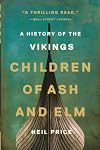
Vikings might be the most mis-represented “ancient” people, in that what we hear about their culture and society is often filtered through the lenses of others so that the Vikings will fit into an image that conforms to those groups’ agendas. First the Victorian Romantics, then the Nazis, and finally Marvel Studios – all had a vision of what they wanted the Vikings to be that wasn’t exactly accurate.
Part of the reason they’re so misunderstood is that they didn’t really write show more much about themselves; most of what’s written about them is recorded by the people they came into contact with (i.e. raided, pillaged, plundered, and occasionally just traded with) so it’s hard to find an unbiased source. One of the best surviving accounts is by Ahmad ibn Fadlan of Baghdad, who records, among other things, a Viking funeral in straight-up horrifying detail. But this book takes that into account, as well as corroborating everything with archaeological evidence, historical accounts, environmental studies, and DNA records whenever possible. Every source is explored to get as close to the unbiased truth as possible.
The most unfortunate myth about them today is probably a result of how they’ve been fetishized by the white supremacist types, that they hearken back to a bygone era of racial purity or some such nonsense. Examining the oldest graves, sites, and DNA records, we see that they were NEVER not a diverse community. In fact, concerning the most lavish grave site yet discovered, which contains two women (one in her 80s and one in her 50s, who both ate quite well), it says: “Recent DNA analyses have suggested the younger woman had quite close family descent from the Middle East, possibly Persia, a testament to the realities of long-distance travel and contact, and an important reminder that—to put it mildly—not everyone in the North was blonde-haired and blue-eyed.”
So yes, full of interesting surprises like that. If you’re interested in Vikings I say give it a read. show less
Part of the reason they’re so misunderstood is that they didn’t really write show more much about themselves; most of what’s written about them is recorded by the people they came into contact with (i.e. raided, pillaged, plundered, and occasionally just traded with) so it’s hard to find an unbiased source. One of the best surviving accounts is by Ahmad ibn Fadlan of Baghdad, who records, among other things, a Viking funeral in straight-up horrifying detail. But this book takes that into account, as well as corroborating everything with archaeological evidence, historical accounts, environmental studies, and DNA records whenever possible. Every source is explored to get as close to the unbiased truth as possible.
The most unfortunate myth about them today is probably a result of how they’ve been fetishized by the white supremacist types, that they hearken back to a bygone era of racial purity or some such nonsense. Examining the oldest graves, sites, and DNA records, we see that they were NEVER not a diverse community. In fact, concerning the most lavish grave site yet discovered, which contains two women (one in her 80s and one in her 50s, who both ate quite well), it says: “Recent DNA analyses have suggested the younger woman had quite close family descent from the Middle East, possibly Persia, a testament to the realities of long-distance travel and contact, and an important reminder that—to put it mildly—not everyone in the North was blonde-haired and blue-eyed.”
So yes, full of interesting surprises like that. If you’re interested in Vikings I say give it a read. show less
This is an engrossing doorstopper of a book that covers pretty much every aspect of Viking-Age Scandinavian culture that you can think of. Since the author, Neil Price, is an archaeologist, The Children of Ash and Elm is particularly strong on material culture: ships and spindles, the remnants of textiles and the remains of houses and cow byres and more. I found the chapter on death rituals and practices to be the most fascinating, as Price grapples with what the archaeological remains can show more tell us about long-lost beliefs: why were some dead buried in boats with the bodies of headless hawks cradled in their arms? Why cut a pair of horses in half, swap the halves, and bury them like that? why the whole line of burials “in which every corpse clasps a smooth, white pebble in their hand”? From details like this whole novels could be spawned.
However, since Price is an archaeologist, he’s on less sure ground when it comes to the interpretation of textual evidence. There were more than a few times when I doodled question marks in the margins because I wasn’t quite convinced by his use of the literary or documentary evidence. The claim that the Norse gods made sacrifices to some other, mysterious, higher deities appears to be based on a misreading of the Hávamál, for instance; Price’s reading of Ibn Fadlan on the Rus’ seems overly positivistic/simplistic. (Judith Jesch takes a deeper dive into some of the source issues over at her blog.) You can sometimes see Price leaning ever so slightly towards what makes the better story than the likelier truth. I also found the organisation of the last third of the book to be somewhat jumbled, with chapters whose titles didn’t quite match their topics and whose overarching goals perhaps weren’t as clearly defined as they could be.
These caveats taken into account, this is still a vibrant account of a fascinating period, cinematic in its scope but still human in its focus. Price is an engaging guide to the Viking Age, and if that’s something you’re at all interested in, I do recommend this as a read.
(One last point, about something that’s under the control of the press rather than of the author: the lack of footnotes or even proper endnotes is deeply frustrating. It reduces both the utility of the book and makes the author’s research process less transparent to the reader. Please, publishers, realise that while reducing a book’s page count may reduce costs for you somewhat, it’s a definite case of penny wise, pound foolish.) show less
However, since Price is an archaeologist, he’s on less sure ground when it comes to the interpretation of textual evidence. There were more than a few times when I doodled question marks in the margins because I wasn’t quite convinced by his use of the literary or documentary evidence. The claim that the Norse gods made sacrifices to some other, mysterious, higher deities appears to be based on a misreading of the Hávamál, for instance; Price’s reading of Ibn Fadlan on the Rus’ seems overly positivistic/simplistic. (Judith Jesch takes a deeper dive into some of the source issues over at her blog.) You can sometimes see Price leaning ever so slightly towards what makes the better story than the likelier truth. I also found the organisation of the last third of the book to be somewhat jumbled, with chapters whose titles didn’t quite match their topics and whose overarching goals perhaps weren’t as clearly defined as they could be.
These caveats taken into account, this is still a vibrant account of a fascinating period, cinematic in its scope but still human in its focus. Price is an engaging guide to the Viking Age, and if that’s something you’re at all interested in, I do recommend this as a read.
(One last point, about something that’s under the control of the press rather than of the author: the lack of footnotes or even proper endnotes is deeply frustrating. It reduces both the utility of the book and makes the author’s research process less transparent to the reader. Please, publishers, realise that while reducing a book’s page count may reduce costs for you somewhat, it’s a definite case of penny wise, pound foolish.) show less
Lists
Awards


You May Also Like


Associated Authors
Statistics
- Works
- 9
- Members
- 1,648
- Popularity
- #15,585
- Rating
- 4.2
- Reviews
- 42
- ISBNs
- 47
- Languages
- 11