
Marc Morris (1) (1973–)
Author of A Great and Terrible King: Edward I and the Forging of Britain
For other authors named Marc Morris, see the disambiguation page.
About the Author
Marc Morris is a historian specializing in the Middle Ages. He is also the author of A Great and Terrible King, King John, and the Wall Street Journal and USA Today bestselling The Norman Conquest. Marc lives in England.
Works by Marc Morris
Associated Works
Thirteenth Century England IX: Proceedings of the Durham Conference, 2001 (2003) — Contributor — 4 copies
Tagged
Common Knowledge
- Canonical name
- Morris, Marc
- Legal name
- Morris, Marc Gerard
- Birthdate
- 1973-09-14
- Gender
- male
- Education
- King's College, London (history) (1996)
University of Oxford - Occupations
- historian
- Nationality
- UK
- Places of residence
- England, UK
- Associated Place (for map)
- England, UK
Members
Reviews
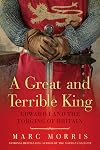
I came close to setting this book aside at the start, as the opening tone was so jocular that it seemed inappropriate to the subject at hand. However, Morris firms up quickly, and launches on a step-by-step journey through Edward's life, as one follows the path to the man's great mistake; the attempt to impose a strong over-lordship on Scotland, in the wake of that nation's experience of dynastic collapse.
Early on though, through conflicts with his parents, the fight with the party of Simon show more de Montfort, the wars with the Welsh, and the conflicts Edward had with his own nominal overlord, the King of France, Morris is essentially tracing two key characteristics of Edward's personality. One, a strong sense of having to fight for his entitlements as King of England; particularly when it came to control of land and wealth. Two, Edward's feeling that there were "final solutions" available to his problems; though the latter tendency seems to have moderated for a bit in the man's prime, Edwards displaying a knack for diplomacy when it mattered.
Still, though Morris has to conclude that Edward was a man of his age, and that most of his acts likely would have been committed by any English king, particularly in regards to the expulsion and expropriation of the Jews, the grand play for Scotland was the start of nothing but trouble which led to Edward's long-term legacy of violence for the British Isles.
As for my other main thought having finished this biography, I particularly like the way Morris uses fiscal matters as a backbone for his narrative. Let's just say that Edward would have agreed with the modern quip that the answer to all your questions is money. show less
Early on though, through conflicts with his parents, the fight with the party of Simon show more de Montfort, the wars with the Welsh, and the conflicts Edward had with his own nominal overlord, the King of France, Morris is essentially tracing two key characteristics of Edward's personality. One, a strong sense of having to fight for his entitlements as King of England; particularly when it came to control of land and wealth. Two, Edward's feeling that there were "final solutions" available to his problems; though the latter tendency seems to have moderated for a bit in the man's prime, Edwards displaying a knack for diplomacy when it mattered.
Still, though Morris has to conclude that Edward was a man of his age, and that most of his acts likely would have been committed by any English king, particularly in regards to the expulsion and expropriation of the Jews, the grand play for Scotland was the start of nothing but trouble which led to Edward's long-term legacy of violence for the British Isles.
As for my other main thought having finished this biography, I particularly like the way Morris uses fiscal matters as a backbone for his narrative. Let's just say that Edward would have agreed with the modern quip that the answer to all your questions is money. show less
King John: Treachery, Tyranny and the Road to Magna Carta by Morris, Marc (2015) Hardcover by Marc Morris
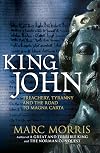
King John is most famous in popular culture as a bad guy in Robin Hood movies (although the Robin Hood tales weren’t written down until hundreds of years after John) and as the king who was forced to sign the Magna Carta. According to this scholarly yet readable biography by historian Marc Morris, John really was pretty unpleasant; he seems to have been personally cowardly, fleeing from battles; he is reputed to have personally murdered his nephew Arthur to gain the throne; and he could be show more viciously cruel; his favorite execution method seems to have been starvation – simply locking enemies in a cell and leaving them there. In a particularly ugly case, he imprisoned the noblewoman Matilda de Briouze (aka Maud de Braose, if you’re googling) and her son William together; when the cell was eventually opened it was found Matilda had eaten her son’s face before dying herself.
John proved craftily devious. In 1207, he demanded one tenth the value of all loans by Jews; debtors who had been carried on the books for years now suddenly found the Exchequer demanding immediate payment – with royal power has enforcement. In 1213, beset by rebellious nobles, he made England a fief of the Papacy and did homage for it – meaning that rebels against John were also rebels against the Holy See and could be excommunicated.
He started his reign as the most powerful monarch in Europe, controlling land from the Scots border across the Channel to the Pyrenees, plus the east coast of Ireland; by alienating his nobles and his own military incompetence he’d lost almost all his continental holdings before his death.
Morris notes there is a lot more information about John than about earlier English rulers, since it was under his reign that the Chancery Office began keeping and storing duplicate copies of records. This is an easy read, well referenced and footnoted. Maps of England, Ireland, and Angevin France; a family tree; and other appropriate illustrations. My only mild criticism is Morris jumps around chronologically at the beginning; chapter’s start dates go from 1203 to 1120 to 1204 to 1189 to 1205 to 1194 to 1207 to 1202, but the last chapters are in sequence from 1208 to 1216. I found this a little confusing at first. The index seems sparse; I had trouble finding some things I wanted to look up. This is just minor nitpicking, though; I found the book educational and entertaining. show less
John proved craftily devious. In 1207, he demanded one tenth the value of all loans by Jews; debtors who had been carried on the books for years now suddenly found the Exchequer demanding immediate payment – with royal power has enforcement. In 1213, beset by rebellious nobles, he made England a fief of the Papacy and did homage for it – meaning that rebels against John were also rebels against the Holy See and could be excommunicated.
He started his reign as the most powerful monarch in Europe, controlling land from the Scots border across the Channel to the Pyrenees, plus the east coast of Ireland; by alienating his nobles and his own military incompetence he’d lost almost all his continental holdings before his death.
Morris notes there is a lot more information about John than about earlier English rulers, since it was under his reign that the Chancery Office began keeping and storing duplicate copies of records. This is an easy read, well referenced and footnoted. Maps of England, Ireland, and Angevin France; a family tree; and other appropriate illustrations. My only mild criticism is Morris jumps around chronologically at the beginning; chapter’s start dates go from 1203 to 1120 to 1204 to 1189 to 1205 to 1194 to 1207 to 1202, but the last chapters are in sequence from 1208 to 1216. I found this a little confusing at first. The index seems sparse; I had trouble finding some things I wanted to look up. This is just minor nitpicking, though; I found the book educational and entertaining. show less
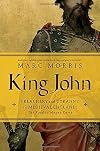
I knew a little about King John from old movies, the disgruntled usurper who had to face his brother, Richard the Lionhearted, when Richard returned from captivity after returning from Crusade, who was eventually forced to sign the Magna Carta by rebellious nobles. In preparation for a trip to England, I decided it was time to learn more. In Marc Morris’ “King John” I found an avenue to its title subject as well as to the England and France of his day.
John was one of the kings “who show more never should have been king.” Born in 1166, the fourth son of Henry II, he appeared to be destined for a minor post until the deaths of his older brothers moved him up the line of succession. Succeeding his brother, King Richard I, in 1199, John embarked in a disastrous reign until his death in 1216. John presided over years of seemingly interminable dynastic and international warfare.
Author Marc Morris has crafted an intensively researched book. His writing style draws readers into trusting his conclusions and statements by supporting them with facts and logic. Instead of making bald assertions, Morris leads with “there is no good reason to believe” and “there are good reasons for supposing” followed by evidence that leads the reader to the author’s conclusion.
This work can be appreciated on at least two planes. One familiar with medieval England may revel in the dates, persons, events documented on these pages. Others, like me, who would be overwhelmed with minutiae, can benefit from a broader understanding of the era. In school I learned that dynastic states were influenced by consanguinity and marriages. The diplomacy and wars prosecuted by John were driven by an empire of England, Wales and what is now western France which his mother, Eleanor of Aquitaine, was instrumental in assembling and protecting. The concept that a king’s legacy may be divided among sons, rather than being passed exclusively through male primogeniture, perhaps necessitated by communication limitations, provides a contrast to modern times. The steps by which John lost his continental lands deepens my knowledge about how they were lost. I had understood that the barons were dissatisfied before the Magna Carta was promulgated, but I now know that they were in a state of rebellion and England in virtual civil war with French intervention. I now see the Charter more in the nature of a peace treaty than a political constitutional advance.
I recommend “King John” for Middle Ages students seeking an intense focus on John’s role and reign and for general readers desiring a broader appreciation of diplomatic and military history of the epoch.
I did receive a free copy of this book without an obligation to post a review. show less
John was one of the kings “who show more never should have been king.” Born in 1166, the fourth son of Henry II, he appeared to be destined for a minor post until the deaths of his older brothers moved him up the line of succession. Succeeding his brother, King Richard I, in 1199, John embarked in a disastrous reign until his death in 1216. John presided over years of seemingly interminable dynastic and international warfare.
Author Marc Morris has crafted an intensively researched book. His writing style draws readers into trusting his conclusions and statements by supporting them with facts and logic. Instead of making bald assertions, Morris leads with “there is no good reason to believe” and “there are good reasons for supposing” followed by evidence that leads the reader to the author’s conclusion.
This work can be appreciated on at least two planes. One familiar with medieval England may revel in the dates, persons, events documented on these pages. Others, like me, who would be overwhelmed with minutiae, can benefit from a broader understanding of the era. In school I learned that dynastic states were influenced by consanguinity and marriages. The diplomacy and wars prosecuted by John were driven by an empire of England, Wales and what is now western France which his mother, Eleanor of Aquitaine, was instrumental in assembling and protecting. The concept that a king’s legacy may be divided among sons, rather than being passed exclusively through male primogeniture, perhaps necessitated by communication limitations, provides a contrast to modern times. The steps by which John lost his continental lands deepens my knowledge about how they were lost. I had understood that the barons were dissatisfied before the Magna Carta was promulgated, but I now know that they were in a state of rebellion and England in virtual civil war with French intervention. I now see the Charter more in the nature of a peace treaty than a political constitutional advance.
I recommend “King John” for Middle Ages students seeking an intense focus on John’s role and reign and for general readers desiring a broader appreciation of diplomatic and military history of the epoch.
I did receive a free copy of this book without an obligation to post a review. show less
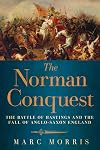
One fascinating, well-written book. Of course every educated person is aware of the significance of the date: 1066, but few know much about the human drama, cruelty, and suffering which ensued ... far beyond that fateful year. I have to confess that it was only a late recognition on my part that practically all the major participants in the affair are distant relatives ... that finally prompted me to purchase and read The Norman Conquest by Marc Morris.
It's one thing to read about anonymous show more people living a thousand years ago, but discovering that Norwegian King Harold Hardradde, evidently my 25th Great Grandfather, was killed at Stamford Bridge by King Harold Godwineson ... another 25th Great Grandfather from another branch of the same family (my paternal Grandfather) ... and that he in turn was apparently brutally killed at the Battle of Hastings by the forces of William the Conqueror ... a Great Uncle through my paternal Grandmother's family, truly makes the entire scenario a family affair. A person would have to be an unfeeling cad to pretend he isn't affected above and beyond the norm by the brutality of those events, and the suffering of distant member of his own family.
We read of William's brutal "Harrying of the North" almost as though they were akin to the passing of a storm, but in truth the consequences were not unlike events occurring during WWII, when entire communities were made to suffer, however innocent they were of the actions of others. The Norman Conquest was a barbarous affair ... the result of an overly ambitious, egotistical, self-centered individual who believed he had a right to rule over everyone else. Truth is .... others ... Harold Hardradde, Godwineson, indeed, William's own sons, seemed to believe the same things about themselves.
The consequences for most people of the Conquest went far beyond the simple matter of language, and it took at least 150 years before England began to absorb the Norman assault, which in truth was nothing more than a family quarrel gone wrong. show less
It's one thing to read about anonymous show more people living a thousand years ago, but discovering that Norwegian King Harold Hardradde, evidently my 25th Great Grandfather, was killed at Stamford Bridge by King Harold Godwineson ... another 25th Great Grandfather from another branch of the same family (my paternal Grandfather) ... and that he in turn was apparently brutally killed at the Battle of Hastings by the forces of William the Conqueror ... a Great Uncle through my paternal Grandmother's family, truly makes the entire scenario a family affair. A person would have to be an unfeeling cad to pretend he isn't affected above and beyond the norm by the brutality of those events, and the suffering of distant member of his own family.
We read of William's brutal "Harrying of the North" almost as though they were akin to the passing of a storm, but in truth the consequences were not unlike events occurring during WWII, when entire communities were made to suffer, however innocent they were of the actions of others. The Norman Conquest was a barbarous affair ... the result of an overly ambitious, egotistical, self-centered individual who believed he had a right to rule over everyone else. Truth is .... others ... Harold Hardradde, Godwineson, indeed, William's own sons, seemed to believe the same things about themselves.
The consequences for most people of the Conquest went far beyond the simple matter of language, and it took at least 150 years before England began to absorb the Norman assault, which in truth was nothing more than a family quarrel gone wrong. show less
Lists
Awards
You May Also Like


Associated Authors
Statistics
- Works
- 9
- Also by
- 1
- Members
- 3,184
- Popularity
- #8,024
- Rating
- 4.1
- Reviews
- 52
- ISBNs
- 60
- Languages
- 1
- Favorited
- 4