
Thomas Asbridge
Author of The Crusades: The Authoritative History of the War for the Holy Land
About the Author
Thomas Asbridge is Senior Lecturer in Medieval History at Queen Mary, University of London
Works by Thomas Asbridge
The Crusades: The Authoritative History of the War for the Holy Land (2010) 1,301 copies, 16 reviews
The greatest knight : the remarkable life of William Marshal, the power behind five English thrones (2014) 756 copies, 13 reviews
Cruciadele 1 copy
Associated Works
Tagged
Common Knowledge
- Canonical name
- Asbridge, Thomas
- Birthdate
- 1969-04-16
- Gender
- male
- Education
- Cardiff University (B.A.|Ancient and Medieval History)
Royal Holloway, University of London (Ph.D.|Medieval History) - Occupations
- Reader in Medieval History, Queen Mary, University of London
television presenter - Organizations
- University of London
- Agent
- Andrew Gordon
George Lucas - Relationships
- Asbridge, Per (brother)
- Short biography
- Thomas Asbridge is Reader in Medieval History at Queen Mary, University of London. He studied for a BA in Ancient and Medieval History at Cardiff University, and then gained his PhD in Medieval History at Royal Holloway, University of London.
Thomas wrote and presented a BBC documentary, 'The Greatest Knight: William Marshal', and a landmark three-part documentary series 'The Crusades' for the BBC, filmed on location across the Near East and Europe. He has also appeared in many other internationally broadcast television documentaries and radio programs, and has worked as a historical consultant for HBO and Company Pictures. He now lives in southern England. [adapted from Amazon.com Author Page, 5/11/2017] - Nationality
- UK
- Places of residence
- Southern England, UK
- Associated Place (for map)
- Southern England, UK
Members
Reviews

Asbridge’s book was in many ways a welcome contrast to The Crusades by Henry Treece.
Two books. Same title. Same subject matter. Big difference.
Thomas Asbridge has the audacity to subtitle his book “The [! sic ] Authoritative History…”. I have read a few books about the Crusades in the last 60+ years, including Steven Runciman’s 3 volume A History Of The Crusades (published 1951-1954), but none of them were as comprehensive or, for that matter, fair-minded, as Asbridge’s. So as show more far as I can tell, his apparent hubris is justified.
In contrast, Henry Treece’s The Crusades (1962) is terse, witty, opinionated, dated, a little racist, and full of sweeping generalizations, but still fun to read.
Nowhere do the two books contrast more than in their treatment of Saladin, the sultan who did more than anyone else to drive the Christians out of the Holy Land. Asbridge treats Saladin as one of several Muslim leaders who successfully opposed the crusaders. To Asbridge, Saladin is a complex character who may or may not have been deeply religious, but in any event he was an opportunist who could use the religiousness of his followers to his advantage. On the other hand, Treece writes about Saladin the way Trump would write (if he could write) about Putin— all starry-eyed and hero-worshiping.
In any event, the crusades were a multifaceted phenomenon that took place over a period of two centuries. Our memory of that history has reverberations even today. Asbridge concludes by warning against our use of crusading language and tropes. That language can be a potent, alarming, and dangerous and and has been used to describe an "unbroken line of hatred and discord connecting the medieval contest for control of the Holy Land to today's struggles in the Near and Middle East.” To avoid being manipulated for political ends, read Asbridge’s thorough and dispassionate account of that complex series of events.
(JAB) show less
Two books. Same title. Same subject matter. Big difference.
Thomas Asbridge has the audacity to subtitle his book “The [! sic ] Authoritative History…”. I have read a few books about the Crusades in the last 60+ years, including Steven Runciman’s 3 volume A History Of The Crusades (published 1951-1954), but none of them were as comprehensive or, for that matter, fair-minded, as Asbridge’s. So as show more far as I can tell, his apparent hubris is justified.
In contrast, Henry Treece’s The Crusades (1962) is terse, witty, opinionated, dated, a little racist, and full of sweeping generalizations, but still fun to read.
Nowhere do the two books contrast more than in their treatment of Saladin, the sultan who did more than anyone else to drive the Christians out of the Holy Land. Asbridge treats Saladin as one of several Muslim leaders who successfully opposed the crusaders. To Asbridge, Saladin is a complex character who may or may not have been deeply religious, but in any event he was an opportunist who could use the religiousness of his followers to his advantage. On the other hand, Treece writes about Saladin the way Trump would write (if he could write) about Putin— all starry-eyed and hero-worshiping.
In any event, the crusades were a multifaceted phenomenon that took place over a period of two centuries. Our memory of that history has reverberations even today. Asbridge concludes by warning against our use of crusading language and tropes. That language can be a potent, alarming, and dangerous and and has been used to describe an "unbroken line of hatred and discord connecting the medieval contest for control of the Holy Land to today's struggles in the Near and Middle East.” To avoid being manipulated for political ends, read Asbridge’s thorough and dispassionate account of that complex series of events.
(JAB) show less
The Greatest Knight: The Remarkable Life of William Marshal, the Power Behind Five English Thrones by Thomas Asbridge
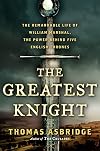
The greatest Medieval knight of the High Middle Ages (1000-1300), what is not to love. Asbridge does a yeoman's job filling in the story of Marshal, and the broader context of the period in France and England. Marshal lived through the death of 5 kings so there is a lot of famous history of the second half of the 12th century and first few decades of the 13th. Barons Wars and rebellions, Magna Carta, Second and Third Crusades, Richard the Lionheart, King Henry II and III. King Stephen and show more John. Rise and fall of the Angevin Empire. Tournaments. This was the high of the High, a golden age that later generations would try to recapture and emulate, even to this day. I usually find Medieval political history to be a series of dry contingencies, but when told through the eyes of a single individual main character, and with proper context and writing skill, it's possible to appreciate in a way that is understandable and immediate. Recommended even for the non-Medievalist. show less
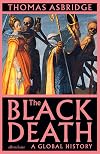
The global pandemic known as the Black Death was a devastating event that took place in the mid 13th century but its effects rippled on for centuries. In this book Asbridge looks at the antecedents, including the Justinian Plague, and the effects of the plague on society. The book itself is split into several sections which provide an excellent structure. The progress of the disease from the East is tracked using a huge variety of sources, the research into levels of will-writing is great. show more The implications for individuals, families and everyday life is moving. What sets this apart from a standard history book is that there is a section looking at the tracing of pathogen and alternative theories as to the course. Finally the book considers the impacts on the human race, about the fall of empires, the progress in global exploration, changes in religion and a shift in agriculture and commerce.
It is a book with huge scope but the individual stories make it really interesting and accessible. The acknowledgements show the profound effect the story had on the author as he lived through a more recent global pandemic and that sense of humanity runs through the whole thing. show less
It is a book with huge scope but the individual stories make it really interesting and accessible. The acknowledgements show the profound effect the story had on the author as he lived through a more recent global pandemic and that sense of humanity runs through the whole thing. show less
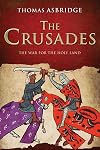
Signed with the Cross - "The Crusades" by Thomas Asbridge
location: London
mood: impressed
music: Toxic Valentine - All Time Low
I've frequently whinged about the rather dispiriting lack of anything resembling a proper popular cultural history of the Middle Ages. There's loads of great Tudor era material, but not much from earlier. I have my much-loved copy of The Time Traveller's Guide to Medieval England by Ian Mortimer, which is an utter life-saver, but unfortunately it concentrates on the show more Fourteenth Century, and the character in Sleepwalker is actually from the Thirteenth. Furthermore, he's a Crusader; specifically a Knight Templar.
I had of course done some reading on the Crusades just out of general interest before I started writing Sleepwalker (they'd been a matter of personal fascination to me since I'd visited Jerusalem as a student), and I'd particularly enjoyed The New Knighthood by Malcolm Barber, the multi-volume History of the Crusades by Steve Runciman, and also the very populist but no less fun and interesting The Crusades by Alan Ereira and Terry Jones.
So I was happy to get a chance to look at Thomas Asbridge's forthcoming book The Crusades (published by Simon and Schuster, who very kindly set me up with access to an except), and I was very glad I bothered. It proved a fast and yet authoritative read and distinguished itself on two fronts - through the device of giving equal time and consideration to the Muslim view of events (Saladin's tactics are analysed and critiqued - it's clear that Asbridge feels that it's a downhill slide for the Islamic champion after Hattin) and the book also offers more than a passing treatment of what it might actually be like to be fighting in the Siege of Acre.
Though bound to be a straightforward military history by its very nature, it's actually spiked through with lively storytelling and wonderful anecdotes, such as the scandalised Muslim historian reporting on "300 young and lovely Frankish maidens" who arrive to earn a living servicing the Crusaders (and, it is implied, Muslims) besieging Acre, who "brought their silver anklets up to touch their golden earrings [and:] made themselves targets for men’s darts". Ingenious jihadis get a supply ship to the beleaguered city of Acre by shaving their beards off and filling the decks with pigs and crosses, fooling the Christian sailors manning the cordon. An emir caught transporting the hated and feared "Greek Fire" (which features in Sleepwalker, so I was delighted to see it) is captured trying to get into the city, and a Latin knight ‘stretched him out on the ground, emptying the contents of the phial on his private parts, so that his genitals were burned’.
But it's not all (admittedly grisly) fun and games: there is also the horror of starvation, disease, of being surrounded by rotting corpses which are constantly being replenished with fresh ones to the tune of up to 200 a day.
There's also a very human treatment of the main actors - Saladin is passionate, determined, but maybe a little too cautious; Richard the Lionheart is flamboyant, canny, and vain, but capable of ruthless acts of massacre. The use of evidence, historical context, and personal supposition is mingled convincingly and their characterisations drawn with an elegant economy of language. The political history is delivered with the same sprightly verve as the military history, and from the point of view of an interested amateur, this treatment worked well for me.
Apparently the word "crusader" comes from the Latin portmanteau crucesignatus - "signed by the Cross". One can forward social and political reasons that render the Crusades a matter of mere expediency, but those reasons on their own are insufficient - ultimately the genesis of the Crusades is ideological. Sadly, in the last couple of decades, the Crusades and their troubling questions of religious fanaticism and grasping political adventurism are closer in spirit to us than they have ever been. Asbridge's accessible and above all humane take on them is thus an entirely welcome approach to this very topical subject. show less
location: London
mood: impressed
music: Toxic Valentine - All Time Low
I've frequently whinged about the rather dispiriting lack of anything resembling a proper popular cultural history of the Middle Ages. There's loads of great Tudor era material, but not much from earlier. I have my much-loved copy of The Time Traveller's Guide to Medieval England by Ian Mortimer, which is an utter life-saver, but unfortunately it concentrates on the show more Fourteenth Century, and the character in Sleepwalker is actually from the Thirteenth. Furthermore, he's a Crusader; specifically a Knight Templar.
I had of course done some reading on the Crusades just out of general interest before I started writing Sleepwalker (they'd been a matter of personal fascination to me since I'd visited Jerusalem as a student), and I'd particularly enjoyed The New Knighthood by Malcolm Barber, the multi-volume History of the Crusades by Steve Runciman, and also the very populist but no less fun and interesting The Crusades by Alan Ereira and Terry Jones.
So I was happy to get a chance to look at Thomas Asbridge's forthcoming book The Crusades (published by Simon and Schuster, who very kindly set me up with access to an except), and I was very glad I bothered. It proved a fast and yet authoritative read and distinguished itself on two fronts - through the device of giving equal time and consideration to the Muslim view of events (Saladin's tactics are analysed and critiqued - it's clear that Asbridge feels that it's a downhill slide for the Islamic champion after Hattin) and the book also offers more than a passing treatment of what it might actually be like to be fighting in the Siege of Acre.
Though bound to be a straightforward military history by its very nature, it's actually spiked through with lively storytelling and wonderful anecdotes, such as the scandalised Muslim historian reporting on "300 young and lovely Frankish maidens" who arrive to earn a living servicing the Crusaders (and, it is implied, Muslims) besieging Acre, who "brought their silver anklets up to touch their golden earrings [and:] made themselves targets for men’s darts". Ingenious jihadis get a supply ship to the beleaguered city of Acre by shaving their beards off and filling the decks with pigs and crosses, fooling the Christian sailors manning the cordon. An emir caught transporting the hated and feared "Greek Fire" (which features in Sleepwalker, so I was delighted to see it) is captured trying to get into the city, and a Latin knight ‘stretched him out on the ground, emptying the contents of the phial on his private parts, so that his genitals were burned’.
But it's not all (admittedly grisly) fun and games: there is also the horror of starvation, disease, of being surrounded by rotting corpses which are constantly being replenished with fresh ones to the tune of up to 200 a day.
There's also a very human treatment of the main actors - Saladin is passionate, determined, but maybe a little too cautious; Richard the Lionheart is flamboyant, canny, and vain, but capable of ruthless acts of massacre. The use of evidence, historical context, and personal supposition is mingled convincingly and their characterisations drawn with an elegant economy of language. The political history is delivered with the same sprightly verve as the military history, and from the point of view of an interested amateur, this treatment worked well for me.
Apparently the word "crusader" comes from the Latin portmanteau crucesignatus - "signed by the Cross". One can forward social and political reasons that render the Crusades a matter of mere expediency, but those reasons on their own are insufficient - ultimately the genesis of the Crusades is ideological. Sadly, in the last couple of decades, the Crusades and their troubling questions of religious fanaticism and grasping political adventurism are closer in spirit to us than they have ever been. Asbridge's accessible and above all humane take on them is thus an entirely welcome approach to this very topical subject. show less
Lists
Awards


You May Also Like


Associated Authors
Statistics
- Works
- 14
- Also by
- 2
- Members
- 3,127
- Popularity
- #8,173
- Rating
- 4.0
- Reviews
- 47
- ISBNs
- 65
- Languages
- 8
- Favorited
- 3
