

Christopher Tyerman
Author of God's War : A New History of the Crusades
About the Author
Christopher Tyerman is Lecturer in Medieval History at Hertford College and New College, Oxford.
Image credit: via University of Oxford
Series
Works by Christopher Tyerman
Associated Works
Byzantines, Latins, and Turks in the Eastern Mediterranean World after 1150 (2012) — Contributor — 8 copies, 1 review
Transactions of the Royal Historical Society - Fifth Series, Volume 32 (1982) — Contributor, some editions — 7 copies
Thirteenth Century England I: Proceedings of the Newcastle upon Tyne Conference 1985 (1986) — Contributor — 3 copies
Tagged
Common Knowledge
- Canonical name
- Tyerman, Christopher
- Legal name
- Tyerman, Christopher J.
- Birthdate
- 1953-05-22
- Gender
- male
- Education
- New College, Oxford (BA|1974|D.Phil|1981)
- Occupations
- historian
professor - Organizations
- Hertford College, University of Oxford
- Awards and honors
- Fellow, Royal Historical Society
Alexander Prize Medal (1981) - Agent
- Jonathan Lloyd (Curtis Brown Group)
- Nationality
- UK
- Places of residence
- Oxford, Oxfordshire, England, UK
- Associated Place (for map)
- England, UK
Members
Reviews
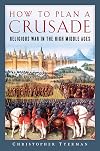
There are any number of things to appreciate about this book but it's not quite the general study of the Crusades that the somewhat jaunty title and opening anecdote of the introduction (concerning a lecture given by the author back in the day that went hilariously wrong) might suggest. In particular, the reader will get the most out of this work if they're already somewhat familiar with the cultural & political history of the period. That said, if you have the necessary background, Tyerman show more will give you a good grounding in the organizational machinery that was needed to launch a crusade in terms of social agitation, finance, military organization, logistics and the like with the basic point being made that for all the forlorn romance of beggars' crusades these were imperial expeditions of the highest order and very much the sport of popes & kings. As for those who would make the argument that all this reasoned effort was in the pursuit of an irrational end Tyerman dryly notes that one could say the same of today's religious wars; it doesn't mean that they can't be militarily successful. show less
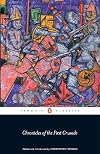
A great collection of original sources, first-hand accounts and multiple perspectives —religiously and politically. Reveals the complexity of motives and aspirations that created the events and the strategies of the various commanders involved. Anna Comnena's account is insightful, as she makes a distinction between the Latin and Greek Christians and the "Celts" that often accompanied the former; Turks and Muslims, etc. I found keeping a notebook of the "players" as I read was helpful.
If show more nothing else, these accounts reveal the reality that there were black-hats and white-hats all mixed up in the Crusader's troops, as even the Christian armies sought one another's destruction at various times. The Greek emperor's attempts to minimise losses when engaged by Latin Christians is heartening; he sought to injure and dissuade their attacks rather than destroy them utterly. The reality of war is that not all motives are for the "cause", and the opportunities presented by the chaos means that "bad-men" are going to try and profit from the plans of the good-guys. But the good-guys shine that much brighter because of it.
Ignore the commentary —if you tire of the now-popular approach to paint every action of the West as wholly evil or misguided (Crusades = all bad)—, although some of the explanatory footnotes are helpful. A book like this would profit from more maps with detailed movements of the troops during key battles and skirmishes. Maps are always a bonus when dealing with very complex confrontations. show less
If show more nothing else, these accounts reveal the reality that there were black-hats and white-hats all mixed up in the Crusader's troops, as even the Christian armies sought one another's destruction at various times. The Greek emperor's attempts to minimise losses when engaged by Latin Christians is heartening; he sought to injure and dissuade their attacks rather than destroy them utterly. The reality of war is that not all motives are for the "cause", and the opportunities presented by the chaos means that "bad-men" are going to try and profit from the plans of the good-guys. But the good-guys shine that much brighter because of it.
Ignore the commentary —if you tire of the now-popular approach to paint every action of the West as wholly evil or misguided (Crusades = all bad)—, although some of the explanatory footnotes are helpful. A book like this would profit from more maps with detailed movements of the troops during key battles and skirmishes. Maps are always a bonus when dealing with very complex confrontations. show less
Basically a very sad story of misplaced religious zeal and what St. Paul calls "a certain fearful looking for of judgment". (The role of indulgences is astonishing.) It must be quite a task to write a long (over 900 pages) synthetic and chronological account such as this, of a truly depressing series of events, depressing not so much because they happened as because they were countenanced and encouraged by the representatives of the Christian religion--these wars seem not to have been fought show more in spite of the Church, but because of it.. I think the author should get due credit for accomplishing this task. I also think it would be impossible for any writer to tell this story without having his presentation determined to a considerable extent by acknowledged or unconscious religious/philosophical commitments. This book is quite evidently written from a bias, but I have had great difficulty figuring out just what the bias is. Throughout the whole book one is reminded of the presence of highly critical observers, who are presented in the text as (generally nameless) contemporaries of the events described, but I wondered at many points whether these were just stand-ins for the author's own (and our) contemporaries. The horrifying viewpoints of the crusade enthusiasts are expressed by quotations with, names and citations. The critics seems suspiciously anonymous. It's not that I don't agree with the critical standpoint. It is difficult to understand how some, including writers and thinkers of ability, have praised and glorified the crusades and the crusading spirit. Still, even granting that the Bible was honored a great deal more than it was read, could this whole episode in the history of the West, surely one of the greatest follies that has ever occupied the mind and strength of Europe, been successfully carried out if there had been such a consistent opposition as seems to appear in these pages?.
Worth reading but not uplifting. show less
Worth reading but not uplifting. show less
I must admit I got lost amidst the details of names and places of the Near East, the Baltics, Iberia, North Africa and Anatolia. But one comes away with the realization that the Middle Ages was a time of constant turmoil and war; did they do anything else? And the *massive* waste of lives and treasure is overwhelming.
One insight: the Teutonic Knights conquered and ruled Prussia as an independent state. This explains why the tradition of the military was so strong in that region, reflected in show more modern times.
This book is a necessary adjunct to any general history of the 12th-15th centuries for a balanced view of all that was going on. One of the reasons everything is so confusing is that society in Europe was coalescing into nation-states and here we see the beginning of that process as the nobility competed for power, treasure and land. It also shows the dominance the Church had -- not just political or "religious" -- but embedded in the culture, values and identity of every person, small or great. show less
One insight: the Teutonic Knights conquered and ruled Prussia as an independent state. This explains why the tradition of the military was so strong in that region, reflected in show more modern times.
This book is a necessary adjunct to any general history of the 12th-15th centuries for a balanced view of all that was going on. One of the reasons everything is so confusing is that society in Europe was coalescing into nation-states and here we see the beginning of that process as the nobility competed for power, treasure and land. It also shows the dominance the Church had -- not just political or "religious" -- but embedded in the culture, values and identity of every person, small or great. show less
Lists
Awards

You May Also Like


Associated Authors
Statistics
- Works
- 26
- Also by
- 4
- Members
- 2,377
- Popularity
- #10,799
- Rating
- 3.5
- Reviews
- 15
- ISBNs
- 73
- Languages
- 8