
Works by Lynn Knight
The Button Box: The Story of Women in the 20th Century Told Through the Clothes They Wore (2016) 66 copies, 1 review
Associated Works
Tagged
Common Knowledge
- Canonical name
- Knight, Lynn
- Legal name
- Knight, Lynn Margarita
- Birthdate
- 1958-05-29
- Gender
- female
- Occupations
- editorial director (Virago)
lecturer
writer
editor - Nationality
- England
- Birthplace
- Derbyshire, England, UK
- Places of residence
- Derbyshire, England, UK
London, England, UK - Associated Place (for map)
- England, UK
Members
Reviews
The button box : the story of women in the 20th century told through the clothes they wore by Lynn Knight

I marked down the rating because this book just cries out for illustrations of the clothes, not just a few buttons. Another thing that I didn't like was the lack of order or continuity between chapters.
This is about fashion in the 20th century. It is not really about the buttons. They are just an excuse for an essay on some aspect of 20th century women's fashion.
This is about fashion in the 20th century. It is not really about the buttons. They are just an excuse for an essay on some aspect of 20th century women's fashion.
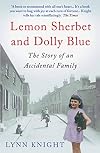
Lemon Sherbet and Dolly Blue The Story of an Accidental Family
by Lynn Knight
Set in a part of Derbyshire (Chesterfield), the home to the Nash family and their corner shop, which served a small mining community. However this is no ordinary family. It’s a story about how three lost children of different generations found love and a home with people who had big hearts. The story starts with her great-grandfather, a fairground boy, given away when his parents left for America in 1865, then how show more her great aunt, who was rescued from an industrial school in 1909 and finally of her own mother was adopted as a baby in 1930 via the NCAA (National Children Adoption Association) and bought from London to Chesterfield.
The story spans three generations of attitudes regarding adoption and two world wars. Through the delightful story we learn from a social history point of view our changing attitudes to adoption, poverty, and what it is to be of a certain class. We learn about the tales of how the miners lived, the poverty, how they treated their wives and how the families survived. Along the way we get to know about how accepting often already a poor society can be regarding different people such as gypsies, teachers, bakers.
We also get a snippet of attitudes of people during the Great War from a family perspective, of how families, wives and children coped with the restrictions, loss, injuries and aftermath of the both wars.
The tale itself trots along at the pace of life, at a rate to keep the reader interested but not so fast you think you have missed chunks of time. All characters are accounted for and no threads are left untied which is also nice. As with all families there are a lot of members to put into place, and it is necessary to remember who uncle_ is related to and therefore who auntie _ is married to, however by careful reading and remembering a few names this is not impossible.
There was sufficient depth to the book to make it a really good quality read and although I normally steer away from ‘memoirs’ I thoroughly enjoyed this and would recommend it to anyone who has an interest in this period.
The Commuting Bookworm 13/07/12 show less
by Lynn Knight
Set in a part of Derbyshire (Chesterfield), the home to the Nash family and their corner shop, which served a small mining community. However this is no ordinary family. It’s a story about how three lost children of different generations found love and a home with people who had big hearts. The story starts with her great-grandfather, a fairground boy, given away when his parents left for America in 1865, then how show more her great aunt, who was rescued from an industrial school in 1909 and finally of her own mother was adopted as a baby in 1930 via the NCAA (National Children Adoption Association) and bought from London to Chesterfield.
The story spans three generations of attitudes regarding adoption and two world wars. Through the delightful story we learn from a social history point of view our changing attitudes to adoption, poverty, and what it is to be of a certain class. We learn about the tales of how the miners lived, the poverty, how they treated their wives and how the families survived. Along the way we get to know about how accepting often already a poor society can be regarding different people such as gypsies, teachers, bakers.
We also get a snippet of attitudes of people during the Great War from a family perspective, of how families, wives and children coped with the restrictions, loss, injuries and aftermath of the both wars.
The tale itself trots along at the pace of life, at a rate to keep the reader interested but not so fast you think you have missed chunks of time. All characters are accounted for and no threads are left untied which is also nice. As with all families there are a lot of members to put into place, and it is necessary to remember who uncle_ is related to and therefore who auntie _ is married to, however by careful reading and remembering a few names this is not impossible.
There was sufficient depth to the book to make it a really good quality read and although I normally steer away from ‘memoirs’ I thoroughly enjoyed this and would recommend it to anyone who has an interest in this period.
The Commuting Bookworm 13/07/12 show less
AFAIK, the only comprehensive biography of the famous potter Clarice Cliff.
Very interesting.
Very interesting.
Lists
Awards

You May Also Like


Associated Authors
Statistics
- Works
- 6
- Also by
- 2
- Members
- 192
- Popularity
- #113,796
- Rating
- 3.7
- Reviews
- 3
- ISBNs
- 23