
Elizabeth Wayland Barber
Author of Women's Work: The First 20,000 Years Women, Cloth, and Society in Early Times
About the Author
Elizabeth Wayland Barber is the author of six books, including Women's Work The First 20,000 Years and The Mummies of rmchi. A professor emerita at Occidental College and a research associate at the Cotsen Institute of Archaeology, UCLA, she also teaches and choreographs for Occidental's Folk and show more Historical Dance Troupe, which she founded in 1971. show less
Image credit: Elizabeth Wayland Barber
Works by Elizabeth Wayland Barber
Women's Work: The First 20,000 Years Women, Cloth, and Society in Early Times (1994) 1,384 copies, 30 reviews
The Dancing Goddesses: Folklore, Archaeology, and the Origins of European Dance (2013) 83 copies, 2 reviews
Tales of modern days 1 copy
Associated Works
The Bog People; Iron Age Man Preserved (1965) — Introduction, some editions — 747 copies, 10 reviews
Reconfiguring the Silk Road: New Research on East-West Exchange in Antiquity (2014) — Contributor — 5 copies
Varia on the Indo-European Past: Papers in Memory of Marija Gimbutas (Journal of Indo-European Studies Monograph Series No. 19) (1997) — Contributor — 4 copies
Tagged
Common Knowledge
- Other names
- Barber, E. J. W.
- Birthdate
- 1940-12-02
- Gender
- female
- Education
- Yale University (PhD|Linguistics|1968)
Bryn Mawr College (BA|Archaeology|1963) - Occupations
- linguist
scholar of textiles
choreographer
archaeologist
college professor - Organizations
- Occidental College
American Costume Society - Awards and honors
- Guggenheim Fellowship for Humanities, US & Canada
Millia Davenport Publication Award (2000)
Mary Lowther Ranney Distinguished Alumna Award, Westridge, School
Albert Nelson Marquis Lifetime Achievement Award - Relationships
- Barber, Paul T. (spouse)
- Short biography
- Elizabeth is professor emerita at Occidental College and author of several books, including the award-winning, Women’s Work: The First 20,00 Years, named one of the “100 Best Science Books of the Century” by Sigma Xi and her most recent, When They Severed Earth from Sky: How the Human Mind Shapes Myth. She is the pre-eminent authority on prehistoric textiles and acclaimed in the fields of linguistics and archeology. “Betchen,” as she is known, received her Bachelor’s Degree in Archeology and Greek from Bryn Mawr College and her doctorate in Linguistics from Yale University.
- Nationality
- USA
- Places of residence
- Los Angeles, California, USA
- Associated Place (for map)
- California, USA
Members
Discussions
Women's Work: The First 20,000 Years : Women, Cloth, and Society in Early Times in One Book One Thread (February 2020)
Reviews
Women's Work: The First 20,000 Years Women, Cloth, and Society in Early Times by Elizabeth Wayland Barber

In contemporary western society, fiber arts are practiced mostly by women. And, it turns out, that’s the way it’s been for thousands of years. But crafts like spinning and weaving were more than just hobbies. Textiles were integral to the economy as far back as paleolithic times. In this book, Elizabeth Wayland Barber describes why women came to be responsible for making cloth. Then she describes the various types of cloth, production methods, and end uses from the invention of string show more and sewing over 20,000 years ago, up to Classical Greece around 500 BCE.
Because textiles naturally degrade over time, researchers cannot rely solely on archaeological evidence. Barber found several other avenues of inquiry which she used to develop a picture of these early societies. For example, she obtained a great deal of insight from studying early language. If language included a word for cloth or a garment, then that item must have existed even if no physical remains have been found. The geographic scope is limited to what is now Europe and the Middle East, not because these were the only societies producing cloth, but for practical reasons: a broader scope would have made for a larger and possibly less accessible book.
I appreciated the way this book not only outlined the evolution of fiber arts, but validated the role of women and their contributions to society. show less
Because textiles naturally degrade over time, researchers cannot rely solely on archaeological evidence. Barber found several other avenues of inquiry which she used to develop a picture of these early societies. For example, she obtained a great deal of insight from studying early language. If language included a word for cloth or a garment, then that item must have existed even if no physical remains have been found. The geographic scope is limited to what is now Europe and the Middle East, not because these were the only societies producing cloth, but for practical reasons: a broader scope would have made for a larger and possibly less accessible book.
I appreciated the way this book not only outlined the evolution of fiber arts, but validated the role of women and their contributions to society. show less
Women's Work: The First 20,000 Years - Women, Cloth, and Society in Early Times by Elizabeth Wayland Barber
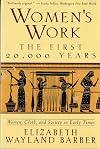
This is basically the Guns, Germs, and Steel of textiles, fabrics, and the women who weave with them. My entry point in this book was Gregory Clark's excellent Big History book A Farewell to Alms, where he discussed how in large part the first phase of the Industrial Revolution was almost entirely driven by productivity improvements in the textile industry. Weaving being then as now a primarily female-dominated industry, I was interested to learn more about the sociological effects of that show more revolution, and though this book wasn't what I was expecting at all, covering "only" from the Paleolithic to the Iron Age, there's still lots that should be right up the alley of anyone looking for something in the intersection of archaeology, textiles, and the feminization of labor.
There are probably many different economic rationales for why some professions have been considered "women's work" for tens of thousands of years, but the most basic one is pretty straightforward: if some relatively simple task is compatible with having to take care of children, it will probably be women who are doing it. Barber quotes a researcher who lists the following characteristic of such jobs: "they do not require rapt concentration and are relatively dull and repetitive; they are easily interruptible [I see a rueful smile on every care giver's face!] and easily resumed once interrupted; they do not place the child in potential danger; and they do not require the participant to range very far from home." There's a lot to ponder in that description. It's interesting that even in the 21st century it seems like knitting is still almost exclusively a female hobby, even when the woman in question doesn't have kids. Barber doesn't go into why that is, but she does discuss the question of why, given that women dominated the ranks of knitters, most labor-saving technology like the spinning jenny was invented by men. Barber's explanation is that women were so busy trying to keep up with demand that didn't have the time to sit around and play with technology. That sounds plausible, although it seems like even in ancient times enough clothing was being made for luxury use that at least one woman would have the time to think "There's got to be a better way."
Regardless of how weaving came to be considered women's work, it's obvious that most of the women who did the work took pride in it and developed traditions around it. Barber discusses how the basic style of string skirt that survives today in Eastern European peasant garb has been almost unchanged for nearly 20,000 years, which is pretty mindblowing. Fascinatingly, it appears that certain more advanced weaving concepts like the heddle were so conceptually difficult that they were only actually invented once - thus allowing archaeologists to roughly date when various tribes split off from each other by whether they possessed the advanced concepts or not. In between defining important terms like carding, twill, or worsted, Barber follows weavers from the earliest records of the Paleolithic through the Neolithic and the agricultural revolution, to Bronze Age societies like the Minoans, Middle Kingdom Egyptians, and Myceneans, and finally to the Iron Age and classical Greek civilization. There's lots of good discussion behind things like the storytelling-through-fabric tradition that includes the famous Bayeux Tapestry, or why different types of looms were adopted in some places but not others, or how class structure did or did not affect weaving (a surprising number of powerful queens wove just like commoners, albeit with higher-quality fabrics), leavened with citations from all over the place, such as the Odyssey, Greek mythology, and peasant folklore like the stories in Grimm's.
I was disappointed that she ended two thousand years before the vast changes of the Industrial Revolution (even aside from the economic impact of the women in the textile industry then, surely the cultural impact of tricoteuses such as Madame Defarge in Dickens' A Tale of Two Cities would have been worth a mention), and even today, women in the garment trade are a vital part of the development of countries like Bangladesh. Probably the additional scope would have resulted in a book several times the size, but even with its limits, this is a very well-researched and interesting look at the history of weaving and its role in the world from a primarily female perspective. Barber is funny too; here's her relating a story from Xenophon about Socrates' friend Aristarchos buying a bunch of wool to keep his female houseguests busy:
"As a result, resources were found, and wool was bought. The women ate their noon meal while they worked, and quit working only at suppertime; and they were cheerful instead of gloomy. Presently Aristarchos returned to tell Socrates how splendidly everything was working out. But, he adds, the ladies are displeased at one thing - namely, that he himself is idle. The story ends with Socrates suggesting that Aristarchos tell them that he is like the apparently idle sheepdog, who gets better treatment than the sheep because his protection is what allows them all to prosper.
We do not hear how that fable went over with the women, but we know how it would be received today." show less
There are probably many different economic rationales for why some professions have been considered "women's work" for tens of thousands of years, but the most basic one is pretty straightforward: if some relatively simple task is compatible with having to take care of children, it will probably be women who are doing it. Barber quotes a researcher who lists the following characteristic of such jobs: "they do not require rapt concentration and are relatively dull and repetitive; they are easily interruptible [I see a rueful smile on every care giver's face!] and easily resumed once interrupted; they do not place the child in potential danger; and they do not require the participant to range very far from home." There's a lot to ponder in that description. It's interesting that even in the 21st century it seems like knitting is still almost exclusively a female hobby, even when the woman in question doesn't have kids. Barber doesn't go into why that is, but she does discuss the question of why, given that women dominated the ranks of knitters, most labor-saving technology like the spinning jenny was invented by men. Barber's explanation is that women were so busy trying to keep up with demand that didn't have the time to sit around and play with technology. That sounds plausible, although it seems like even in ancient times enough clothing was being made for luxury use that at least one woman would have the time to think "There's got to be a better way."
Regardless of how weaving came to be considered women's work, it's obvious that most of the women who did the work took pride in it and developed traditions around it. Barber discusses how the basic style of string skirt that survives today in Eastern European peasant garb has been almost unchanged for nearly 20,000 years, which is pretty mindblowing. Fascinatingly, it appears that certain more advanced weaving concepts like the heddle were so conceptually difficult that they were only actually invented once - thus allowing archaeologists to roughly date when various tribes split off from each other by whether they possessed the advanced concepts or not. In between defining important terms like carding, twill, or worsted, Barber follows weavers from the earliest records of the Paleolithic through the Neolithic and the agricultural revolution, to Bronze Age societies like the Minoans, Middle Kingdom Egyptians, and Myceneans, and finally to the Iron Age and classical Greek civilization. There's lots of good discussion behind things like the storytelling-through-fabric tradition that includes the famous Bayeux Tapestry, or why different types of looms were adopted in some places but not others, or how class structure did or did not affect weaving (a surprising number of powerful queens wove just like commoners, albeit with higher-quality fabrics), leavened with citations from all over the place, such as the Odyssey, Greek mythology, and peasant folklore like the stories in Grimm's.
I was disappointed that she ended two thousand years before the vast changes of the Industrial Revolution (even aside from the economic impact of the women in the textile industry then, surely the cultural impact of tricoteuses such as Madame Defarge in Dickens' A Tale of Two Cities would have been worth a mention), and even today, women in the garment trade are a vital part of the development of countries like Bangladesh. Probably the additional scope would have resulted in a book several times the size, but even with its limits, this is a very well-researched and interesting look at the history of weaving and its role in the world from a primarily female perspective. Barber is funny too; here's her relating a story from Xenophon about Socrates' friend Aristarchos buying a bunch of wool to keep his female houseguests busy:
"As a result, resources were found, and wool was bought. The women ate their noon meal while they worked, and quit working only at suppertime; and they were cheerful instead of gloomy. Presently Aristarchos returned to tell Socrates how splendidly everything was working out. But, he adds, the ladies are displeased at one thing - namely, that he himself is idle. The story ends with Socrates suggesting that Aristarchos tell them that he is like the apparently idle sheepdog, who gets better treatment than the sheep because his protection is what allows them all to prosper.
We do not hear how that fable went over with the women, but we know how it would be received today." show less
The Dancing Goddesses: Folklore, Archaeology, and the Origins of European Dance by Elizabeth Wayland Barber
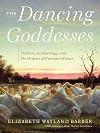
Elizabeth Wayland Barber writes about much more than dance in this surprisingly fascinating book. I expected it would be a quick read, glancing at the many figures and skimming a few passages. Instead, I read it through, entertained and enlightened about history, anthropology, folkways, language, the lives of women, and dance.
Barber takes us from current-day Balkan people back through medieval times to the Romans and Greeks back to Neolithic and Paleolithic times. She piles on evidence from show more linguistics and folktales and archeology and anthropology, showing how belief in spirit aids was important to herders and farmers all over the world.
The book concentrates on beliefs in Willies, the dancing goddesses, who were invoked to help nurture crops. Much of the work is theory, and Barber admits she does not yet have the whole story, but it is a very nice trip to follow all the strands of her reasoning.
The book ends with sections about how the mind is wired for narrative and rhythm and how important dance has been in making us the kind of humans we are. show less
Barber takes us from current-day Balkan people back through medieval times to the Romans and Greeks back to Neolithic and Paleolithic times. She piles on evidence from show more linguistics and folktales and archeology and anthropology, showing how belief in spirit aids was important to herders and farmers all over the world.
The book concentrates on beliefs in Willies, the dancing goddesses, who were invoked to help nurture crops. Much of the work is theory, and Barber admits she does not yet have the whole story, but it is a very nice trip to follow all the strands of her reasoning.
The book ends with sections about how the mind is wired for narrative and rhythm and how important dance has been in making us the kind of humans we are. show less
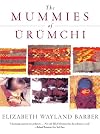
Not really about the mummies of Ürümchi but interesting nevertheless. Ürümchi is where the museum displaying the mummies is, not where they were found; the museum is in the Xinjiang Uyghur Autonomous Region in northwest China, and things are kind of dicey there; the Uyghurs and the ethnic Chinese are not on the best of terms. The mummies are not artificially prepared bodies like Egyptian mummies but naturally preserved by cold, salty soil; author Elizabeth Wayland Barber doesn’t get to show more examine the mummies scientifically but just gets to see them in glass cases, just like any other museum visitor. She does get to examine textiles found with the mummies – she’s a textile specialist – and that’s pretty fascinating; the people of the time were excellent and artistic weavers. And they weren’t Chinese, but Caucasian -whatever that means – and they used an Indo-European language.
Barber spins this into a fascinating narrative, incorporating the history of weaving, the history of Indo-European language, and the history of the Western and Chinese exploration of the Tarim Basin. She tiptoes around the problems between Uyghurs and ethnic Chinese; I imagine she probably wants to continue to do research in the area and doesn’t want to get in trouble with the Chinese government.
Lots of illustrations- line drawings, historic photographs, and color plates. The illustrations do an excellent job of explaining the weaving techniques. And lots of good maps – almost every chapter leads off with a map that covers the subject under discussion. End notes and a thorough bibliography. Recommended. show less
Barber spins this into a fascinating narrative, incorporating the history of weaving, the history of Indo-European language, and the history of the Western and Chinese exploration of the Tarim Basin. She tiptoes around the problems between Uyghurs and ethnic Chinese; I imagine she probably wants to continue to do research in the area and doesn’t want to get in trouble with the Chinese government.
Lots of illustrations- line drawings, historic photographs, and color plates. The illustrations do an excellent job of explaining the weaving techniques. And lots of good maps – almost every chapter leads off with a map that covers the subject under discussion. End notes and a thorough bibliography. Recommended. show less
Lists
Awards


You May Also Like


Associated Authors
Statistics
- Works
- 15
- Also by
- 4
- Members
- 2,577
- Popularity
- #9,974
- Rating
- 4.2
- Reviews
- 49
- ISBNs
- 26
- Languages
- 1
- Favorited
- 10
