
George Clayton Johnson (1929–2015)
Author of Logan's Run
About the Author
Disambiguation Notice:
Do not combine George C. Johnson and George Clayton Johnson. They are different authors.
Image credit: From the Wikipedia Page
Works by George Clayton Johnson
The Man with the Hoe 2 copies
Devlin's Dream 1 copy
The Ring of Truth 1 copy
The Obedient Child 1 copy
Associated Works
Tagged
Common Knowledge
- Birthdate
- 1929-07-10
- Date of death
- 2015-12-25
- Gender
- male
- Education
- Alabama Polytechnic Institute (now Auburn University)
- Occupations
- writer
screenwriter
telegraph operator
draftsman - Organizations
- U.S. Army
- Cause of death
- bladder cancer
cancer, prostate - Nationality
- USA
- Birthplace
- Cheyenne, Wyoming, USA
- Place of death
- North Hills, California, USA
- Burial location
- Riverside National Cemetery, Riverside, Riverside County, California, USA
- Disambiguation notice
- Do not combine George C. Johnson and George Clayton Johnson. They are different authors.
- Associated Place (for map)
- California, USA
Members
Reviews
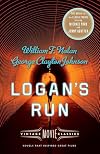
I have a long-running, tongue-in-cheek battle with my wife about the quality of the film version for this story - of course, it's the best sci-fi movie ever produced. Seriously, while the campy effects and stilted writing abound in the film, this is a wonderful and over-looked science fiction classic. Nihilism gone to seed in an apocalypse driven by over-population and under-resourced world. This one deserves a place in the cannon.
5 bones!!!!!
5 bones!!!!!
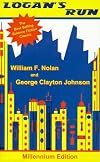
Real Rating: 2.5* of five
I remembered this book fondly. The summer the film came out, I drove my licenseless buds to the Village Multiplex in Pygge, my 1968 Bonneville. (We'd passed the book around our Scooby-group, drinking it in.) There Michael York cheekboned his way into my, um, heart shall we say, and the rest of the film...and the entirety of the book...faded into insignificance.
Netflix loses the film on January 1st. I figured I'd rewatch it, while I give the book another go; after show more all, they're part of my formative years, so as I enter the last laps let's look back to the track, eh what?
You would think that, by now, I'd know better.
The book is just plain bad. The prose rises to the dizzying heights of serviceability a couple times, all the way up the slope of passable; the bulk of the 150pp are spent on the Plains of Puerility. A pair of fortyish numpties wrote about a world in which they'd be dead twenty years. It went about as well as that makes it sound. It's sexist, of course; it was ground-breaking for its day because the hedonism of its society isn't particularly concerned about who you do since there are no children born of sexual congress. Makes the property base of marriage pretty useless, so marriage simply isn't.
But the big draw, the martial arts bits, are tame and tedious 50 years on. (It came out in 1967, the film in 1976.) The action scenes are mildly fun. The story's versions of Logan and Francis are in a whole father/son dynamic that never gets much of anywhere because, well, you did see the page count, right? The ending takes place in Space. I won't say why, but it is the trippiest piece of dumbfuckery I can imagine. These guys were tripping when they wrote the ending, there's no other excuse. End it does, however, so I shook my head and started streaming the film.
Rob was here that day. He hadn't heard of the book or the film. He flipped through the book a bit and quietly reshelved it after about ten minutes. "Ready to see the film?" I asked; "not really" was the honest reply. Luckily Michael York is there from the get-go, cheekbones a-jut and body firmly and revealingly encased in a spiffy dark costume. I heard no further nose-sighs from little spoon...until a scene where Logan/Michael dials up a sex worker and gets, on his first try, a man.
"...?!!?..."
"Hey, even *I* had older mentors," I said. "Wait for the robot butcher scene. That's when we get to see Logan and Jessica naked!"
And that is pretty much it. The naked scene isn't him naked, it's just her, and some artfully obscured extras who earned that paycheck; a bit disappointing, but obscured by the fact that the film takes a turn for the idiotic from there on out. We ended up wondering what the hell was the point of this exercise, how far breaking ground can go in keeping a creative endeavor in active circulation. I think it's time to let this one slide into the background and we should pack it away in shredded copies of the awful book it was inspired by but doesn't much resemble. show less
I remembered this book fondly. The summer the film came out, I drove my licenseless buds to the Village Multiplex in Pygge, my 1968 Bonneville. (We'd passed the book around our Scooby-group, drinking it in.) There Michael York cheekboned his way into my, um, heart shall we say, and the rest of the film...and the entirety of the book...faded into insignificance.
Netflix loses the film on January 1st. I figured I'd rewatch it, while I give the book another go; after show more all, they're part of my formative years, so as I enter the last laps let's look back to the track, eh what?
You would think that, by now, I'd know better.
The book is just plain bad. The prose rises to the dizzying heights of serviceability a couple times, all the way up the slope of passable; the bulk of the 150pp are spent on the Plains of Puerility. A pair of fortyish numpties wrote about a world in which they'd be dead twenty years. It went about as well as that makes it sound. It's sexist, of course; it was ground-breaking for its day because the hedonism of its society isn't particularly concerned about who you do since there are no children born of sexual congress. Makes the property base of marriage pretty useless, so marriage simply isn't.
But the big draw, the martial arts bits, are tame and tedious 50 years on. (It came out in 1967, the film in 1976.) The action scenes are mildly fun. The story's versions of Logan and Francis are in a whole father/son dynamic that never gets much of anywhere because, well, you did see the page count, right? The ending takes place in Space. I won't say why, but it is the trippiest piece of dumbfuckery I can imagine. These guys were tripping when they wrote the ending, there's no other excuse. End it does, however, so I shook my head and started streaming the film.
Rob was here that day. He hadn't heard of the book or the film. He flipped through the book a bit and quietly reshelved it after about ten minutes. "Ready to see the film?" I asked; "not really" was the honest reply. Luckily Michael York is there from the get-go, cheekbones a-jut and body firmly and revealingly encased in a spiffy dark costume. I heard no further nose-sighs from little spoon...until a scene where Logan/Michael dials up a sex worker and gets, on his first try, a man.
"...?!!?..."
"Hey, even *I* had older mentors," I said. "Wait for the robot butcher scene. That's when we get to see Logan and Jessica naked!"
And that is pretty much it. The naked scene isn't him naked, it's just her, and some artfully obscured extras who earned that paycheck; a bit disappointing, but obscured by the fact that the film takes a turn for the idiotic from there on out. We ended up wondering what the hell was the point of this exercise, how far breaking ground can go in keeping a creative endeavor in active circulation. I think it's time to let this one slide into the background and we should pack it away in shredded copies of the awful book it was inspired by but doesn't much resemble. show less

This short novel was the basis for the 1976 film, subsequent television show, and sequel novels: a dystopian action-adventure in the twenty-second century very much along lines laid down by Huxley's Brave New World. The principal addition to the scenario is the idea of dealing with population pressure by using the global technocratic state to impose a maximum lifespan of twenty-one years. The protagonist Logan is a "Sandman": a policeman/executioner assigned to eliminate "Runners" who fail show more to report for their scheduled euthanasia. Contrary to the jacket copy and many synopses, Logan is not a desperate Runner himself, but is in fact a thoroughly ambivalent character, attracted to a Runner whom he accompanies in order to infiltrate the Runner network and reach the rumored Runner destination of Sanctuary and its architect Ballard.
A sense of impending climax is structured into the novel with chapter numbers that count down from ten. There are two plot twists at the end of the book, neither of which was ever translated into the screen adaptations. One concerns the location of Sanctuary, and the other is about the identity of Ballard. The first works fine, but the second I did not find compelling after the contrary setup.
The book is very fast-moving, with plenty of sex and violence -- though not quite so much that it seems like a mere pretext for them -- and seems to have been written with the intention of inspiring screen adaptations. The film and television show actually made from it were toned down by setting it another century further into the future, and raising the age of "Lastday" from twenty-one to thirty. They also added the spectacular euthanasia ceremony of Carousel, to replace the simpler "Sleepshops" of the novel. Another film version is apparently in the works with a projected release date of 2014, and rumor has it that they've brought several points of the scenario (most notably the maximum personal age) back in line with that of the book.
This is not a philosophical work by any stretch of the imagination, and yet it includes interesting material for meditation. The idea of engineered neoteny as a response to socio-economic and political stresses is not so very far-fetched. Certainly, in the 1970s wake of the youth counterculture it must have seemed very credible. It is doubtless one of several such programs available to the Crowned and Conquering Child. show less
A sense of impending climax is structured into the novel with chapter numbers that count down from ten. There are two plot twists at the end of the book, neither of which was ever translated into the screen adaptations. One concerns the location of Sanctuary, and the other is about the identity of Ballard. The first works fine, but the second I did not find compelling after the contrary setup.
The book is very fast-moving, with plenty of sex and violence -- though not quite so much that it seems like a mere pretext for them -- and seems to have been written with the intention of inspiring screen adaptations. The film and television show actually made from it were toned down by setting it another century further into the future, and raising the age of "Lastday" from twenty-one to thirty. They also added the spectacular euthanasia ceremony of Carousel, to replace the simpler "Sleepshops" of the novel. Another film version is apparently in the works with a projected release date of 2014, and rumor has it that they've brought several points of the scenario (most notably the maximum personal age) back in line with that of the book.
This is not a philosophical work by any stretch of the imagination, and yet it includes interesting material for meditation. The idea of engineered neoteny as a response to socio-economic and political stresses is not so very far-fetched. Certainly, in the 1970s wake of the youth counterculture it must have seemed very credible. It is doubtless one of several such programs available to the Crowned and Conquering Child. show less
Aaaaghhhh I have such mixed feelings about this book.
I remember watching Logan's Run with my dad growing up and being fascinated by the dystopian world. I came across this book randomly on my classic dystopia spree last year and decided to add it to my collection. And in many ways, I'm glad I read it. But it's all hot/cold, yes/no with this book.
1. Back in the 1960s, the world wasn't brimming with dystopias. In fact, science-fiction mostly regulated itself to the B-rated films even then. show more Star Wars changed that in the 70s and Marvel again in the 2000s, but at the time, there wasn't the populous overload of science-fiction that we have today. Logan's Run is a fascinating and original dystopia way before its time.
2. But on the other hand, the era during which Logan's Run was written is clearly visible in its pages. Sensitivity was far less important in the 1960s, and while this book is certainly not the strongest example of racism, Logan runs into a group of "gypsies". This would be more tolerable if the word were just used, but the group strongly resembles the vision of Native Americans circa Disney's Peter Pan and it's pretty inexcusable. From the dialect to the drug-induced haze (requiring an antidote or you'll die!) this story could have gone entirely without that scene.
3. The world building here otherwise is pretty good. Considering the fact that this is written 50 years ago, Logan's world doesn't feel old-fashioned or disjointed. Writing a futuristic science-fiction novel where the world building holds up half a century later is no small feat.
4. But I do have one nitpick with a world building choice - the way Logan's Run works is that all individuals are euthanized at age 21. I understand that within this context, maturity is different and laws would be different... but we don't live that way in our society, so looking in felt sort of uncomfortable at times. For example: very uncomfortable when Logan goes to a brothel and is propositioned by a thirteen-year-old. Again, within the laws of this world's aging design, Logan would have been the equivalent of an 88-year-old and she would have been 52, in comparing to actual human life expectancies verses their controlled environment... but still... no.
5. The complexities of Logan's character are interesting, and we get a great sense of his inner struggle between finding purpose and survival. This train of thought makes for a decent twist near the end, actually.
6. But in comparison, Jessica is a useless pile of dead weight that Logan carries along only because she was also running and had a key? Through the entire book, I couldn't come up with a better reason for him to keep this character along. Johnson and Nolan certainly didn't waste any time giving her depth or interest, so she might as well be a robot.
7. Considering the fact that this book is about a run - a journey - the pacing is incredibly fast and you are bulleted into a lot of different, fascinating worlds. This is awesome to keep interest to the story and further explore the world building. The zig-zag nature of their travels is also important to the falling structure of society. I personally enjoyed the Molly stop the best, and wanted to see more there.
8. But also because of this fast pacing, you barely have time to acclimate to one setting before - BAM! - you're shot off across from the depths of the Pacific Ocean to the Black Hills of Dakota and I don't really understand how the maze works or how the cars can move that quickly through the elements without danger when the platforms themselves are falling apart? I felt like I was on a rollercoaster ride and I just needed to breathe and unravel the threads but NOPE, off again.
9. At the end, the authors threw in three character twists and the best and my absolute favorite was that of Ballard's identity. This was definitely not in the film and something I didn't expect at ALL. Literally, the twist came in the last five pages and I was really, really pleased with it.
10. But the OTHER twist (I think this was supposed to be a twist) was so underwhelming that I'm simply going to reveal it to you. It was so inconsequential that I just sort of shrugged and shooed Jessica off to go do things somewhere else. Right at the end, while Logan is dealing with his twist, Jessica announces in a whine that she cannot leave because she loves Logan. So, um, I guess that was supposed to be a romantic subplot? The romantic subplot did not work.
So, can you see my dilemma? It was a good story, but it was hindered by the authors and the period in which it was written. The entire time I was reading this, all I could think was that it really needed to be rewritten in a modern voice with the same world and concept because the idea and the story were good, but there were ruinous moments and flat characters and I am all sorts of frustrated with how good/bad this was. show less
I remember watching Logan's Run with my dad growing up and being fascinated by the dystopian world. I came across this book randomly on my classic dystopia spree last year and decided to add it to my collection. And in many ways, I'm glad I read it. But it's all hot/cold, yes/no with this book.
1. Back in the 1960s, the world wasn't brimming with dystopias. In fact, science-fiction mostly regulated itself to the B-rated films even then. show more Star Wars changed that in the 70s and Marvel again in the 2000s, but at the time, there wasn't the populous overload of science-fiction that we have today. Logan's Run is a fascinating and original dystopia way before its time.
2. But on the other hand, the era during which Logan's Run was written is clearly visible in its pages. Sensitivity was far less important in the 1960s, and while this book is certainly not the strongest example of racism, Logan runs into a group of "gypsies". This would be more tolerable if the word were just used, but the group strongly resembles the vision of Native Americans circa Disney's Peter Pan and it's pretty inexcusable. From the dialect to the drug-induced haze (requiring an antidote or you'll die!) this story could have gone entirely without that scene.
3. The world building here otherwise is pretty good. Considering the fact that this is written 50 years ago, Logan's world doesn't feel old-fashioned or disjointed. Writing a futuristic science-fiction novel where the world building holds up half a century later is no small feat.
4. But I do have one nitpick with a world building choice - the way Logan's Run works is that all individuals are euthanized at age 21. I understand that within this context, maturity is different and laws would be different... but we don't live that way in our society, so looking in felt sort of uncomfortable at times. For example: very uncomfortable when Logan goes to a brothel and is propositioned by a thirteen-year-old. Again, within the laws of this world's aging design, Logan would have been the equivalent of an 88-year-old and she would have been 52, in comparing to actual human life expectancies verses their controlled environment... but still... no.
5. The complexities of Logan's character are interesting, and we get a great sense of his inner struggle between finding purpose and survival. This train of thought makes for a decent twist near the end, actually.
6. But in comparison, Jessica is a useless pile of dead weight that Logan carries along only because she was also running and had a key? Through the entire book, I couldn't come up with a better reason for him to keep this character along. Johnson and Nolan certainly didn't waste any time giving her depth or interest, so she might as well be a robot.
7. Considering the fact that this book is about a run - a journey - the pacing is incredibly fast and you are bulleted into a lot of different, fascinating worlds. This is awesome to keep interest to the story and further explore the world building. The zig-zag nature of their travels is also important to the falling structure of society. I personally enjoyed the Molly stop the best, and wanted to see more there.
8. But also because of this fast pacing, you barely have time to acclimate to one setting before - BAM! - you're shot off across from the depths of the Pacific Ocean to the Black Hills of Dakota and I don't really understand how the maze works or how the cars can move that quickly through the elements without danger when the platforms themselves are falling apart? I felt like I was on a rollercoaster ride and I just needed to breathe and unravel the threads but NOPE, off again.
9. At the end, the authors threw in three character twists and the best and my absolute favorite was that of Ballard's identity. This was definitely not in the film and something I didn't expect at ALL. Literally, the twist came in the last five pages and I was really, really pleased with it.
10. But the OTHER twist (I think this was supposed to be a twist) was so underwhelming that I'm simply going to reveal it to you. It was so inconsequential that I just sort of shrugged and shooed Jessica off to go do things somewhere else. Right at the end, while Logan is dealing with his twist, Jessica announces in a whine that she cannot leave because she loves Logan. So, um, I guess that was supposed to be a romantic subplot? The romantic subplot did not work.
So, can you see my dilemma? It was a good story, but it was hindered by the authors and the period in which it was written. The entire time I was reading this, all I could think was that it really needed to be rewritten in a modern voice with the same world and concept because the idea and the story were good, but there were ruinous moments and flat characters and I am all sorts of frustrated with how good/bad this was. show less
Lists
Best Dystopias (1)
um actually (1)
Awards


You May Also Like
Associated Authors
Statistics
- Works
- 17
- Also by
- 15
- Members
- 1,496
- Popularity
- #17,172
- Rating
- 3.5
- Reviews
- 45
- ISBNs
- 31
- Languages
- 4