

Jeff Kurtti
Author of Since the World Began: Walt Disney World, The First 25 Years
About the Author
Jeff Kurtti is an author of numerous books about Disney animated features.
Image credit: via Babelio
Works by Jeff Kurtti
Walt Disney's Imagineering Legends and the Genesis of the Disney Theme Park (2008) 114 copies, 3 reviews
The Art of Disney Costuming: Heroes, Villains, and Spaces Between (Disney Editions Deluxe) (2019) 79 copies, 1 review
Disneyland--From Once Upon a Time to Happily Ever After (Disneyland custom pub) (2010) 46 copies, 2 reviews
Practically Poppins in Every Way: A Magical Carpetbag of Countless Wonders (Disney Editions Deluxe (Film)) (2018) 37 copies
Travels with Walt Disney: A Photographic Voyage Around the World (Disney Editions Deluxe) (2018) 31 copies, 1 review
The Magic Begins with Me: A Happiest Celebration on Earth Keepsake (A Disney Parks Souvenir Book) (2005) 28 copies
Disney Cruise Line: Welcome Aboard! the Creation of the Disney Dream (Walt Disney Parks and Resorts Merchandise Custom Pub) (2011) 18 copies, 2 reviews
Walt Disney Snow White and the Seven Dwarfs, Story book and the Making of a Masterpiece (Collector's Book) (2009) 5 copies
The Art of Disneyland 1 copy
Tagged
Common Knowledge
- Gender
- male
- Education
- Burnley School of Professional Art (Graphic Design)
Shoreline Community College (Communications) - Occupations
- writer
Disney historian - Nationality
- USA
- Birthplace
- Seattle, Washington, USA
- Places of residence
- Arrow Rock, Missouri, USA
Claremont, California, USA - Associated Place (for map)
- USA
Members
Reviews
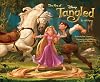
Most of the time I really enjoy art books based on movies, but I found this one to be quite underwhelming.
The best part of any art book is seeing how the look and style of the artwork develops over time, but this book contained mostly finished versions of the characters and settings. The only two characters who were different from their final versions (and who the animators experimented with) are Mother Gothel and Flynn Rider. I noticed that the sketches that were drastically different than show more the final versions were from artists who weren't as involved in the final versions, which seems to imply that some effort to consult outside the regular art staff was made. I figured for sure that there would be lots of interesting early sketches of Rapunzel (she is the main character, and they could have done a million different ideas with her), but her looks are basically a combination of Ariel's and Cinderella's. Yes, this is a nod to the continuity of Disney style, but it's just too easy! I would have liked to see how far they pushed the character at the early stages, and some of the concepts that did not make it as influences for the final art direction, if only to prove that Disney (the company, not the artists) is capable of thinking outside the box. show less
The best part of any art book is seeing how the look and style of the artwork develops over time, but this book contained mostly finished versions of the characters and settings. The only two characters who were different from their final versions (and who the animators experimented with) are Mother Gothel and Flynn Rider. I noticed that the sketches that were drastically different than show more the final versions were from artists who weren't as involved in the final versions, which seems to imply that some effort to consult outside the regular art staff was made. I figured for sure that there would be lots of interesting early sketches of Rapunzel (she is the main character, and they could have done a million different ideas with her), but her looks are basically a combination of Ariel's and Cinderella's. Yes, this is a nod to the continuity of Disney style, but it's just too easy! I would have liked to see how far they pushed the character at the early stages, and some of the concepts that did not make it as influences for the final art direction, if only to prove that Disney (the company, not the artists) is capable of thinking outside the box. show less
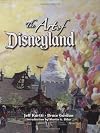
Released to commemorate the fiftieth anniversary of Disneyland, The Art of Disneyland is a visually stunning and historically amazing work. The large scale of the book (almost 11" X 13") forces you to turn the book sideways to enjoy the art. This is by no means an issue. More page space set aside for the artwork is what makes the book truly shine.
Paintings, concept art, layouts and sketches fill out this impressive volume. What I truly love about The Art of Disneyland is the amazing show more conceptual art. The book starts with Main St and ends with Tomorrowland. And yes, it does include Mickey's Toontown!
The Imagineering roll call is inspiring: Ken Anderson, Claude Coats, Mary Blair, John Hench, Harper Goff, Marc Davis, Peter Ellenshaw, Sam McKim, Herbert Ryman and so many more. Seeing all of this artwork in one place, by so many different artists, is like having a conversation about what Disneyland might have been. But then we actually know how it turned out. Most of the artwork is so true to what was developed, though. If you have ever spent any time at Disneyland, you will enjoy this book.
My favorite section would actually end up as a fist fight between Fantasyland and Tomorrowland. The artwork for both sections is astounding and they both have the unique honor of being the two lands at Disneyland to have been re-done, so to speak. In the case of Tomorrowland, it has had several minor revisions, including the big mid-1990's re-do. The famous Mary Blair Tomorrowland murals are also reproduced in the book.
The front endpaper of the book presents the Fun Map of Disneyland done in 1957 by Sam KcKim. The rear endpaper has the Fun Map of Disneyland by Nina Rae Vaughn in 2000. They hug the book; reverently and figuratively.
The Art of Disneyland is filled with beautiful paintings, ride concept sketches and amazing bird's eye views of the various lands. At $49.99 retail, it is rather expensive, but you can find it on Amazon much cheaper. This is a great addition to any Disney Geeks library collection. show less
Paintings, concept art, layouts and sketches fill out this impressive volume. What I truly love about The Art of Disneyland is the amazing show more conceptual art. The book starts with Main St and ends with Tomorrowland. And yes, it does include Mickey's Toontown!
The Imagineering roll call is inspiring: Ken Anderson, Claude Coats, Mary Blair, John Hench, Harper Goff, Marc Davis, Peter Ellenshaw, Sam McKim, Herbert Ryman and so many more. Seeing all of this artwork in one place, by so many different artists, is like having a conversation about what Disneyland might have been. But then we actually know how it turned out. Most of the artwork is so true to what was developed, though. If you have ever spent any time at Disneyland, you will enjoy this book.
My favorite section would actually end up as a fist fight between Fantasyland and Tomorrowland. The artwork for both sections is astounding and they both have the unique honor of being the two lands at Disneyland to have been re-done, so to speak. In the case of Tomorrowland, it has had several minor revisions, including the big mid-1990's re-do. The famous Mary Blair Tomorrowland murals are also reproduced in the book.
The front endpaper of the book presents the Fun Map of Disneyland done in 1957 by Sam KcKim. The rear endpaper has the Fun Map of Disneyland by Nina Rae Vaughn in 2000. They hug the book; reverently and figuratively.
The Art of Disneyland is filled with beautiful paintings, ride concept sketches and amazing bird's eye views of the various lands. At $49.99 retail, it is rather expensive, but you can find it on Amazon much cheaper. This is a great addition to any Disney Geeks library collection. show less
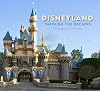
This is the type of Disney book that is, really, meant for the tourists. It is published to be sold in the park. It is heavy on pictures (nothing wrong with that) and goes over ground many of us have already traveled. Of course it makes sense for Disney to put out new versions every few years – the park changes, and there is always a new group of tourist waiting to buy. So, it is easy for the more fervent fan to assume this will be just another rehash. But do not quickly dismiss this book show more (as I did after one quick perusal) as more of the same. There is a little more here than might first meet the eye.
The pictures are the quality one would expect of any Disney publication. However, there is also a nice selection of vintage photos which add to the “photo candy” contained herein. But it is the words which may surprise you. In the introduction, Kurtti indicates that he talked the problem over with Disney Legend Marty Sklar (who also writes a foreword). Among other points, Sklar reminds him that the world does not need just another history of Disneyland. So Kurtti takes the concept of this type of book and changes it – ever so slightly, but successfully – by using sources from history. And, he uses those sources to allow for a different focus than we have seen. So, you wind up with a section from the original Disneyland proposal outlining what the different lands might have been, an article from the New York Times (1958) on the Disney difference, a piece on the plants of Disneyland from a 1965 book published by Disney, and a piece on the different “characters” of Disneyland from a 1976 Disney News article. And those are just samples.
In other words, rather than an author just writing (one more time) his impressions of what Disneyland was, is, and will be; the author has also served as editor by having writers from the past tell the story. While this may not be enough to allow the book to stand out on its own, it is enough to make it different, an enjoyable read, and a decent complement to any collection of Disneyland focused books. show less
The pictures are the quality one would expect of any Disney publication. However, there is also a nice selection of vintage photos which add to the “photo candy” contained herein. But it is the words which may surprise you. In the introduction, Kurtti indicates that he talked the problem over with Disney Legend Marty Sklar (who also writes a foreword). Among other points, Sklar reminds him that the world does not need just another history of Disneyland. So Kurtti takes the concept of this type of book and changes it – ever so slightly, but successfully – by using sources from history. And, he uses those sources to allow for a different focus than we have seen. So, you wind up with a section from the original Disneyland proposal outlining what the different lands might have been, an article from the New York Times (1958) on the Disney difference, a piece on the plants of Disneyland from a 1965 book published by Disney, and a piece on the different “characters” of Disneyland from a 1976 Disney News article. And those are just samples.
In other words, rather than an author just writing (one more time) his impressions of what Disneyland was, is, and will be; the author has also served as editor by having writers from the past tell the story. While this may not be enough to allow the book to stand out on its own, it is enough to make it different, an enjoyable read, and a decent complement to any collection of Disneyland focused books. show less
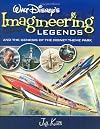
Every book about Disneyland - about its history, about how it was built, about how it became what it is today - has to contend with the fact that it will be evaluated by readers who have widely divergent interest in the parks. The first is the casual read – the individual who may pick up the book as a souvenir of the park or just see it in a bookstore and think it is pretty. The next is the one who has an interest in the parks – has discovered there is a history and is just beginning to show more explore it. The final is the Disneyland geek – the type that can bore you to tears as you go through Disneyland explaining each excruciating iota of useless information. (I fall in that last group).
This book does almost as good a job as any in fulfilling the needs of each of these readers. The book is about the Imagineers who helped Walt build Disneyland. (If you don’t know, Imagineers represent the combination of imagination and engineering that allow Disney to do just about anything it wants.) For the person who is new to Disneyland’s history (or just the casual reader), it is an excellent introduction about the men who made the land we love to visit. However, there is a good chance the detail is going to be just a little too “wonky” and will turn the newbies off. However, for the rest of us, from those of us who are just learning to enjoy the history to the full-fledge geek, there are treasures within. For any big fan of Disneyland, this is a veritable roll-call of the great we have all come to know. Many of the stories have been told before, but there are new ones – revelations we may not have heard elsewhere. In addition, any good book on Disneyland history has pictures and, while there may not be many that are earth-shatteringly new, there are some good ones in here.
Two things keep this from being the perfect book. The first is very picky, but I couldn’t figure out the numbering system used for footnotes and I found it distracting. The second is a more important issue. With each Imagineer there is a description of his or her upbringing, about their previous jobs, and how he or she got involved in Disneyland. Then it takes strange turn by focusing on how the person worked with Walt, and how Walt helped make Disneyland what it is. It is as if the focus of the mini-biographies changes from the Imagineer to Walt himself. Finally, the book goes back to describing “Where are they now?” I know this helps tell the stories better, and it is meant to satisfy those who want to hear the Walt stories, but because it happens again and again it becomes too transparent and becomes a bit of a distraction.
However, there is a great deal of great detail in this book. And almost anyone will find some tidbit they never realized before. And all of it told in a nice-enough manner that, even if you already know it all, it is still fun to read it again. show less
This book does almost as good a job as any in fulfilling the needs of each of these readers. The book is about the Imagineers who helped Walt build Disneyland. (If you don’t know, Imagineers represent the combination of imagination and engineering that allow Disney to do just about anything it wants.) For the person who is new to Disneyland’s history (or just the casual reader), it is an excellent introduction about the men who made the land we love to visit. However, there is a good chance the detail is going to be just a little too “wonky” and will turn the newbies off. However, for the rest of us, from those of us who are just learning to enjoy the history to the full-fledge geek, there are treasures within. For any big fan of Disneyland, this is a veritable roll-call of the great we have all come to know. Many of the stories have been told before, but there are new ones – revelations we may not have heard elsewhere. In addition, any good book on Disneyland history has pictures and, while there may not be many that are earth-shatteringly new, there are some good ones in here.
Two things keep this from being the perfect book. The first is very picky, but I couldn’t figure out the numbering system used for footnotes and I found it distracting. The second is a more important issue. With each Imagineer there is a description of his or her upbringing, about their previous jobs, and how he or she got involved in Disneyland. Then it takes strange turn by focusing on how the person worked with Walt, and how Walt helped make Disneyland what it is. It is as if the focus of the mini-biographies changes from the Imagineer to Walt himself. Finally, the book goes back to describing “Where are they now?” I know this helps tell the stories better, and it is meant to satisfy those who want to hear the Walt stories, but because it happens again and again it becomes too transparent and becomes a bit of a distraction.
However, there is a great deal of great detail in this book. And almost anyone will find some tidbit they never realized before. And all of it told in a nice-enough manner that, even if you already know it all, it is still fun to read it again. show less
You May Also Like


Associated Authors
Statistics
- Works
- 32
- Members
- 1,884
- Popularity
- #13,655
- Rating
- 4.2
- Reviews
- 24
- ISBNs
- 44
- Languages
- 1
- Favorited
- 6