
Charles Solomon (1) (1950–)
Author of The Art of Frozen
For other authors named Charles Solomon, see the disambiguation page.
Works by Charles Solomon
The Disney That Never Was: The Stories and Art of Five Decades of Unproduced Animation (1995) 113 copies, 1 review
Tale as Old as Time: The Art and Making of Beauty and the Beast (Disney Editions Deluxe (Film)) (2010) 111 copies, 1 review
Once Upon a Dream: From Perrault's Sleeping Beauty to Disney's Maleficent (Disney Editions Deluxe (Film)) (2014) 59 copies, 1 review
A Wish Your Heart Makes: From the Grimm Brothers' Aschenputtel to Disney's Cinderella (Disney Editions Deluxe (Film)) (2015) 50 copies
Disney Lost and Found: Exploring the Hidden Artwork from Never-Produced Animation (Disney Editions Deluxe (Film)) (2008) 46 copies
The Art and Making of Peanuts Animation: Celebrating Fifty Years of Television Specials (2012) 33 copies
Associated Works
Excerpts from the Ring Cycle in Royal Albert Hall: The Third Leonard & Larry Collection (2000) — Introduction — 38 copies
Tagged
Common Knowledge
- Birthdate
- 1950-08-08
- Gender
- male
- Nationality
- USA
- Places of residence
- Los Angeles, California, USA
- Associated Place (for map)
- California, USA
Members
Reviews
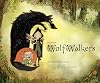
Cartoon Saloon’s latest feature, Wolfwalkers, is one of my favourite animated movies of recent years and is undoubtedly the culmination of their Irish folklore trilogy, so I was super excited to see that they wanted to give the film its due attention with a full “art of” book. Touring us through the various aspects of the film, author Charles Solomon explores everything from the initial inspiration for the film (Irish folklore, obviously) to the unsung heroes of the film’s back end show more production (final lines, colours, etc) as well as every aspect in between. The film has its own innate magic that is clearly the result of incredibly hard and innovative work from the entire team, so it was a treat to discover the production design details, concept artwork, and individual stories behind the film. Solomon’s text reveals his depth of knowledge in the field of animation (it’s far more complex than we viewers have any real idea), and while it may not always be easily entertaining to read, the section divisions emphasise major themes of note that are unique to Wolfwalkers and cover expected technical details admirably. Expectedly, the visual material that went into the film is absolutely luscious, so it takes the place of honour and easily dominates the entire layout of the book from cover to cover - giving us a taste of the rough storyboards, colour visualisation, and the evolution of the characters. As we revel (once again) in the dichotomous setting of Kilkenny and the wild Irish forest alongside Mebh and Robyn, we’re brought back to the film itself and can’t wait to be fellow wolves again. show less
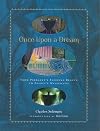
Sleeping Beauty is my favorite Disney films and one if my top 5 film favorites. So I was delifhted to come across this book. It's an excellent behind the scenes look at the evolution of the tale through to Disney's film adaptations. This oversized book covers a lot of material from folk lore, to Perrault's defining first-written version, through the ballet set to Tchaikovsky's classic music. Disney's animated movie pulled a majority of the melodies from that famous score, adapted and show more rearranged to suit Disney's new take on the story. A vision brought to life by Eyvind Earle.
The book describes how Walt was dusappointed how prior films had lost the initial style concept by the time they were completed. He was adamant that would not happen with this one, and everyone from the animators to the directors, to actors had to keep to Earle's style.
One of the highlights of this book is an exploration of the animation work: the challenge of drawing for a 70mm wide screen format (the only Disney animated film to use it); the role of clean-up artists; and which animators created the definitive version of each character. I found it hilarious that "nobody wants to do the prince"!! Straight characters are the hardest characters to draw and make come to life. Unlike stretchy, squishy comic character. Aurora and Philip came to life thanks to Milt Kahl and Marc Davis. One million drawings and five years later Disney had his Sleeping Beauty.
This book is beautiful, with thick paper suited to showcasing a lot of full color artwork, including historical paintings used as research/inspiration and a wealth of concept art for both films. And, every piece has a citation. There are also a lot if film stills.
One of my favorite sections covers Maleficent's dargon form in the animated film. How they kept so much of her within the drafon so viewers knew it was Maleficent; how the eagon is snake-like in movement and pupil-less eyes. It made for a frightening sequence.
One minor quibble I had qas tgat some wuestions were left unexored, like why Fauna's color changed from yellow to green or Maleficent's from red to purple.
This is an oustanding book for fans of the Disney films, but also for art aficionados. Highly recommended. show less
The book describes how Walt was dusappointed how prior films had lost the initial style concept by the time they were completed. He was adamant that would not happen with this one, and everyone from the animators to the directors, to actors had to keep to Earle's style.
One of the highlights of this book is an exploration of the animation work: the challenge of drawing for a 70mm wide screen format (the only Disney animated film to use it); the role of clean-up artists; and which animators created the definitive version of each character. I found it hilarious that "nobody wants to do the prince"!! Straight characters are the hardest characters to draw and make come to life. Unlike stretchy, squishy comic character. Aurora and Philip came to life thanks to Milt Kahl and Marc Davis. One million drawings and five years later Disney had his Sleeping Beauty.
This book is beautiful, with thick paper suited to showcasing a lot of full color artwork, including historical paintings used as research/inspiration and a wealth of concept art for both films. And, every piece has a citation. There are also a lot if film stills.
One of my favorite sections covers Maleficent's dargon form in the animated film. How they kept so much of her within the drafon so viewers knew it was Maleficent; how the eagon is snake-like in movement and pupil-less eyes. It made for a frightening sequence.
One minor quibble I had qas tgat some wuestions were left unexored, like why Fauna's color changed from yellow to green or Maleficent's from red to purple.
This is an oustanding book for fans of the Disney films, but also for art aficionados. Highly recommended. show less
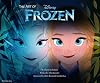
I have still never watched Frozen and don’t know if I ever will, BUT I love learning about the behind-the-scenes process for anything creative. It’s interesting to read about the inspirations with characters and designs, the Sisters Summit, and all the beautiful architecture. Gosh, so much work goes into the process of these full-scale animated films like rigging lights, sound design, personalized body movements, themes, what you want the audience to feel, and trying to make everything show more as realistic as possible in a 3D- cartoon world. There’s especially ample planning in these Disney movies, which is why it sort of irks me when an adult animation think weed and sex-jokes are all it has to offer. Back on topic, I enjoyed the Art of Frozen. show less
Frozen is so weird. I really do love it but now that we're beyond the crazy days of fighting about it online...like...I can admit a little louder that producing Frozen was an exercise in choosing the worst design option EVERY SINGLE TIME. (Except Elsa's hair.) It's almost infuriating to see all these interesting concepts for Elsa that made her not an Anna clone, these neat silhouettes for the Queen, Kristoff clothes that were just pushed a LITTLE more and look a trillion times more show more authentic...and then they went for the bland equivalent of Elsa's piercing blue monochrome dress over and over and over again.
It's also a little tiring to read Disney straight-up say they're doing designs and environments here that've never been done before but like you guys didn't invent snow
That aside, Frozen also does have some of the coolest studies and concept art. Most of the paintings created for lighting tests and environments are honestly stunning, and it's fascinating to read the bits about what needs to be considered when translating storyboard to rigs. There was a little bit in there of them talking about how someone drew Kristoff taking off his hat, but to move it into animation they had to consider the fabric, how it attaches to his head, everything that would move with it, so on. And the amount of considerations with how snow and lighting interact will certainly make me keep a closer eye on the environments next time I watch it! show less
It's also a little tiring to read Disney straight-up say they're doing designs and environments here that've never been done before but like you guys didn't invent snow
That aside, Frozen also does have some of the coolest studies and concept art. Most of the paintings created for lighting tests and environments are honestly stunning, and it's fascinating to read the bits about what needs to be considered when translating storyboard to rigs. There was a little bit in there of them talking about how someone drew Kristoff taking off his hat, but to move it into animation they had to consider the fabric, how it attaches to his head, everything that would move with it, so on. And the amount of considerations with how snow and lighting interact will certainly make me keep a closer eye on the environments next time I watch it! show less
Lists
Awards

You May Also Like


Associated Authors
Statistics
- Works
- 18
- Also by
- 4
- Members
- 1,125
- Popularity
- #22,838
- Rating
- 4.2
- Reviews
- 13
- ISBNs
- 50
- Languages
- 4
- Favorited
- 1