
Ernest E. Wood (1883–1965)
Author of Concentration: An Approach to Meditation (Quest Books)
About the Author
Image credit: Cropped scan of back cover of Pelican Original A448
Works by Ernest E. Wood
Practical Yoga, Ancient and Modern: Being a New, Independent Translation of Patanjali's Yoga Aphorisms, Interpreted in the Light of Ancient and Modern Psychological Knowledge and… (1976) 46 copies, 1 review
The Glorious Presence; The Vedanta Philosophy Including Shankara's Ode to the South-Facing Form. (A Quest book) (1974) 28 copies
The pinnacle of Indian thought; being a new, independent translation of the Viveka Chūdāmani (Crest jewel of discrimination) with commentaries (1967) 11 copies
The Bhagavad Gita Explained 7 copies
Vedanta dictionary 7 copies
The Intuition of the Will 6 copies
A Guide to Theosophy 3 copies
Intuition of Will 1 copy
Natural Theosophy 1 copy
Science of Brotherhood 1 copy
Science of Prayer 1 copy
Secret of Success 1 copy
The Dancing Shiva 1 copy
Tagged
Common Knowledge
- Legal name
- Wood, Ernest Egerton
- Birthdate
- 1883
- Date of death
- 1965
- Gender
- male
- Education
- Manchester College of Technology
- Occupations
- Headmaster
educational administrator
President (American Academy of Asian Studies, San Francisco) - Nationality
- UK
- Birthplace
- Manchester, England, UK
- Places of residence
- India
San Francisco, California, USA - Associated Place (for map)
- Manchester, England, UK
Members
Reviews

An interesting little volume. To me it seemed more of a mini-encyclopedia than a dictionary, but hey. Provides interesting tidbits of information on philosophy, legend, literature, terms, and even a few poses. Not very in-depth, but interesting.
Experiments in Reading
Experiments in Reading
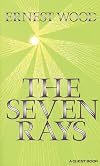
An intriguing examination of the subtle spiritual impulses that dominate and motivate each of us-that lead us to be: poiticians-teachers-ministers-artists-philosophers-writers-scientists.
Humanity, occultism teaches us, is divided into seven distinct groups called 'rays.' Generally speaking, your strongest motivations indicate to which of the 'ray' groupings you belong. You are influenced by all seven rays, occultism suggests, but one of the seven predominates. Would you like to know which of show more the seven rays is yours? 'With such knowledge,' writes the author, 'we are in a position to choose what games we will play in this life ouf ours.' For instance, if your ray is number one, you are inclined to be independent in spirit and strong in intuition. Is this your ray?
Study this book. Learn, not only what your ray is, but the ratioinale behind the entire concept.
Very few writers have dared to examine this deeply esoteric concept. Ernest Wood has taken the dare. Author of the Quest books Concentration and Seven Schools of Yoga, former President of the Sind National College and of Mandapalle College in India, Wood was subsequently Dean of the American Academy of Asian Studies.
Contents
Part I The source of the rays
Preface
Chapter I The pillar of light
Chapter II Consciousness
Chapter III Thought-power
Chapter IV Love-power
Chapter V Will-power
Chapter VI Matter, energy and law
Chapter VII The divine and the material
Chapter VIII Harmony
Chapter IX The seven principles
Chapter X Inter-relations
Part II The seven rays
Chapter XI The first ray
Chapter XII The second ray
Chapter XIII The third ray
Chapter XIV The fourth ray
Chapter XV The fifth ray
Chapter XVI The sixth ray
Chapter XVII The seventh ray
Chapter XVIII A master's table
Part III The great use and danger of knowledge of the rays
Chapter XIX Your ray
Chapter XX Progress without danger
Chapter XXI Stages of self-realization
Glossary of principal Sanskrit words used in this book show less
Humanity, occultism teaches us, is divided into seven distinct groups called 'rays.' Generally speaking, your strongest motivations indicate to which of the 'ray' groupings you belong. You are influenced by all seven rays, occultism suggests, but one of the seven predominates. Would you like to know which of show more the seven rays is yours? 'With such knowledge,' writes the author, 'we are in a position to choose what games we will play in this life ouf ours.' For instance, if your ray is number one, you are inclined to be independent in spirit and strong in intuition. Is this your ray?
Study this book. Learn, not only what your ray is, but the ratioinale behind the entire concept.
Very few writers have dared to examine this deeply esoteric concept. Ernest Wood has taken the dare. Author of the Quest books Concentration and Seven Schools of Yoga, former President of the Sind National College and of Mandapalle College in India, Wood was subsequently Dean of the American Academy of Asian Studies.
Contents
Part I The source of the rays
Preface
Chapter I The pillar of light
Chapter II Consciousness
Chapter III Thought-power
Chapter IV Love-power
Chapter V Will-power
Chapter VI Matter, energy and law
Chapter VII The divine and the material
Chapter VIII Harmony
Chapter IX The seven principles
Chapter X Inter-relations
Part II The seven rays
Chapter XI The first ray
Chapter XII The second ray
Chapter XIII The third ray
Chapter XIV The fourth ray
Chapter XV The fifth ray
Chapter XVI The sixth ray
Chapter XVII The seventh ray
Chapter XVIII A master's table
Part III The great use and danger of knowledge of the rays
Chapter XIX Your ray
Chapter XX Progress without danger
Chapter XXI Stages of self-realization
Glossary of principal Sanskrit words used in this book show less

i like this book alot i Understand the nature of mind and how to appy four roads to thinking.
i discover that i need the mind thatwill dwell long enough on a chosen subject to see it from every point of view, before it begins the varied explorations of thought in connexion with it that it should make upon different lines cleaning,lubrication,and control
i discover that i need the mind thatwill dwell long enough on a chosen subject to see it from every point of view, before it begins the varied explorations of thought in connexion with it that it should make upon different lines cleaning,lubrication,and control

Product Description:
Contents: The Ten Oriental Yogas; Patanjali's Raja Yoga; Shri Krishna's Gita Yoga; Shankaracharya's Gnyana Yoga; The Hatha and Laya Yogas; The Bhakti and Mantra Yogas.
About the Author:
"Professor Ernest Egerton Wood (18 August 1883 in Manchester, England; - 17 September 1965 in Houston, United States) was a noted yogi, theosophist and author of numerous books, including Concentration - An Approach to Meditation and Yoga. He was also a Sanskrit scholar. Wood received his show more education at the Manchester College of Technology, where he studied chemistry, physics and geology. Because of an early interest in Buddhism and Yoga, he also started to learn the Sanskrit language. As a young man, Wood became interested in Theosophy after listening to lectures by the theosophist Annie Besant, whose personality impressed him greatly. He consequently joined the society's Manchester lodge, then one of the world's largest, and in 1908 followed Annie Besant to India after she had become President of the Theosophical Society Adyar. Wood soon became one of her assistants, working in close contact with both Annie Besant and Charles Webster Leadbeater, who had arrived in Adyar in 1909. Due to his close working relationship with Leadbeater, Wood was in a position to observe the discovery of the boy Jiddu Krishnamurti by Leadbeater, who soon declared him to be the vehicle for the "coming World Teacher". Wood's own eyewitness account of the events surrounding this discovery is detailed in his autobiography, Is this Theosophy...?, published in 1936, and in two articles written after that. At the suggestion of Annie Besant, Wood became deeply engaged in educational work. Since 1910, he served as headmaster of several schools and colleges founded by the Theosophical Society. He became Professor of Physics, Principal and President of the Sind National College and the Madanapalle College, both teaching colleges of the Bombay and Madras Universities. He actively promoted theosophical ideas by conducting lecturing tours and publishing numerous articles, essays and books on a variety of theosophical subjects, among them a Digest of Helena P. Blavatsky's Secret Doctrine. His lecturing led him to places all over India, and he also traveled to many countries in Asia, Europe, and the Americas. India stayed his place of residence until the close of World War II, when he relocated to the United States. It was only after becoming disillusioned about the future of the Theosophical Society that Wood started to devote himself primarily to a thorough study of the yoga ..." (Quote from sacred-texts.com) show less
Contents: The Ten Oriental Yogas; Patanjali's Raja Yoga; Shri Krishna's Gita Yoga; Shankaracharya's Gnyana Yoga; The Hatha and Laya Yogas; The Bhakti and Mantra Yogas.
About the Author:
"Professor Ernest Egerton Wood (18 August 1883 in Manchester, England; - 17 September 1965 in Houston, United States) was a noted yogi, theosophist and author of numerous books, including Concentration - An Approach to Meditation and Yoga. He was also a Sanskrit scholar. Wood received his show more education at the Manchester College of Technology, where he studied chemistry, physics and geology. Because of an early interest in Buddhism and Yoga, he also started to learn the Sanskrit language. As a young man, Wood became interested in Theosophy after listening to lectures by the theosophist Annie Besant, whose personality impressed him greatly. He consequently joined the society's Manchester lodge, then one of the world's largest, and in 1908 followed Annie Besant to India after she had become President of the Theosophical Society Adyar. Wood soon became one of her assistants, working in close contact with both Annie Besant and Charles Webster Leadbeater, who had arrived in Adyar in 1909. Due to his close working relationship with Leadbeater, Wood was in a position to observe the discovery of the boy Jiddu Krishnamurti by Leadbeater, who soon declared him to be the vehicle for the "coming World Teacher". Wood's own eyewitness account of the events surrounding this discovery is detailed in his autobiography, Is this Theosophy...?, published in 1936, and in two articles written after that. At the suggestion of Annie Besant, Wood became deeply engaged in educational work. Since 1910, he served as headmaster of several schools and colleges founded by the Theosophical Society. He became Professor of Physics, Principal and President of the Sind National College and the Madanapalle College, both teaching colleges of the Bombay and Madras Universities. He actively promoted theosophical ideas by conducting lecturing tours and publishing numerous articles, essays and books on a variety of theosophical subjects, among them a Digest of Helena P. Blavatsky's Secret Doctrine. His lecturing led him to places all over India, and he also traveled to many countries in Asia, Europe, and the Americas. India stayed his place of residence until the close of World War II, when he relocated to the United States. It was only after becoming disillusioned about the future of the Theosophical Society that Wood started to devote himself primarily to a thorough study of the yoga ..." (Quote from sacred-texts.com) show less
You May Also Like


Associated Authors
Statistics
- Works
- 45
- Members
- 704
- Popularity
- #35,973
- Rating
- 3.1
- Reviews
- 7
- ISBNs
- 54
- Languages
- 3
- Favorited
- 1