
Annie Besant (1847–1933)
Author of Thought-Forms, 2nd edition
About the Author
In the 1870s Annie Besant had already gained notoriety as an estranged Anglican priest's wife who had rejected Christianity and embraced atheism. She was a famous orator who spoke on behalf of the Freethought movement, social reform, the right to publish information on contraception, improved show more education, and Fabian socialism. Besant perplexed her critics and admirers when, in 1889, she abandoned her atheistic stance and embraced Theosophy. The Theosophical Society had been founded in 1875 by Madame Helena Blavatsky and Colonel Henry S. Olcott and had its international headquarters in India. Theosophy's outlook affirmed the mystical components of each of the world's religions, but it was influenced especially by Hindu and Buddhist thought. By the mid-1890s, Annie Besant had made India her home, and she was elected the second president of the Theosophical Society subsequent to the death of Olcott in 1907. In India, Besant made it her special mission to uplift Hindu self-esteem, which had been severely battered by British imperialism and Christian missionaries. She founded the Central Hindu College, which later was incorporated into the new Benares Hindu University. She spoke out for social reform, and from 1913 onward she undertook political agitation for Indian home rule. She was elected president of the Indian National Congress in 1918, and she was the first person to make that position an active, year-round job. Immediately thereafter, she lost her popularity because of the rise to prominence in Indian politics of Mohandas K. Gandhi. Until the end of her life, Besant increasingly turned her attention to the promotion of a young Indian boy, Jiddu Krishnamurti, as the coming World-Teacher, a messiah who would bring about a collective human transformation resulting in unity and peace among all peoples. Despite the apparently contradictory stages of Besant's life, continuity can be detected in her consistent attempts to discover the means by which human suffering could be eliminated. Besant's books and lectures were an important factor in the popularization of Eastern, particularly Hindu, religious and philosophical thought in the West. Her books continue to have an international impact, and several of them are kept in print by the Theosophical Publishing House known in the United States as Quest Books. Bescant died in 1933. (Bowker Author Biography) show less
Disambiguation Notice:
Full name: Annie Wood Besant
Image credit: Courtesy of the NYPL Digital Gallery (image use requires permission from the New York Public Library)
Works by Annie Besant
Occult Chemistry: Investigations by Clairvoyant Magnification Into the Structure of the Atoms of the Periodic Table and Some Compounds (1996) 85 copies, 1 review
The Secret Doctrine: The Synthesis of Science, Religion, and Philosophy: Volume 3 - Occultism (1980) 32 copies
The changing world, and lectures to theosophical students : fifteen lectures delivered in London during May, June, and July 1909 (2009) 11 copies
Formas e Pensamentos. Criações Mentais por Meio de Matéria Fluídica (Em Portuguese do Brasil) (2015) 10 copies, 1 review
The pedigree of man: Four lectures delivered at the twenty-eighth anniversary meetings of the Theosophical Society, at Adyar, December, 1903 (1908) 10 copies
Evolution of Life and Form Four lectures delivered at the twenty-third anniversary meeting of the Theosophical Society at Adyar, Madras, 1898 (2014) 10 copies, 1 review
The Lives of Alcyone 7 copies
Lives of Alcyone 6 copies
Evolution and Man's Destiny 6 copies
Is the Bible indictable? : being an enquiry whether the bible comes within the ruling of the Lord Chief Justice as to obscene literature (1877) 5 copies
Civilisation's deadlocks and the keys : five lectures delivered in London, June 1924 (2011) 4 copies
Evolution and Occultism 4 copies
Brahmavidya (Divine Wisdom) 4 copies
Hypnotism and mesmerism 4 copies
The Ancient Wisdom 4 copies
Man's Life in Three Worlds 4 copies
Daily Meditations 4 copies
India 4 copies
How A World Teacher Comes 3 copies
Our Elder Brethren 3 copies
The Three World Movements 3 copies
Annie Besant Collection Volume One: Ten Books on Theosophy (Timeless Wisdom Collection) (2016) 3 copies
El sendero del discipulado 3 copies
The Three Paths and Dharma 3 copies
Annie Besant Collection Volume Three: Seven Books on Man (Timeless Wisdom Collection) (2016) 3 copies
Theosophy in relation to human life 3 copies
Tara's Secret Book 3 copies
Shr�i R�ama Chandra; the ideal king. Some lessons from the R�am�ayana, for the use of Hindu students in the scho (1905) 3 copies
The three paths, and Dharma 3 copies
Esipihassa 3 copies
The law of population, its consequences and its bearing upon human conduct and morals (2017) 2 copies
Annie Besant Collection Vol.6. Life, Death & Reincarnation (Timeless Wisdom Collection) (2016) 2 copies
La construcción del Kosmos 2 copies
India: A Nation 2 copies
Le secret de la Vie 2 copies
Annie Besant Collection Vol.4. Masters and Disciples (seven books) (Timeless Wisdom Collection) (2016) 2 copies
Algunos problemas de la vida 2 copies
Occultism, semi-occultism, and pseudo-occultism : a lecture delivered on Thursday, June 30th, 1898, at the Blavatsky Lodge, London (2009) 2 copies
There Is No Death 2 copies
Esoteric christianity. Lecture 2 copies
Lectures On Political Science 2 copies
The Necessity for Reincarnation 2 copies
Sikhism: A Convention Lecture 2 copies
THE ETERNAL NOW 2 copies
Shall India Live or Die? 2 copies
Tara's Day Out 2 copies
Leer des harten 2 copies
Het pad ter volmaking 2 copies
... Light, heat, and sound 2 copies
Study and practice 2 copies
How India wrought for freedom, the story of the National congress told from official records (2010) 2 copies
Annie Besant Collection Volume Two: Seven Books on Christianity (Timeless Wisdom Collection) (2016) 2 copies
El Yoga 2 copies
Theosophical Essays 2 copies
Rincarnazione: legge dell'eterno ritorno: un testo chiaro, tecnico, completo dal 1892 (1996) 2 copies
World Problems of Today 2 copies
Children of the Motherland 2 copies
Avatāra-s 1 copy
Australian lectures, 1908 1 copy
Theosophy and Christianity 1 copy
The Annie Besant calendar 1 copy
A Sabedoria Antiga 1 copy
A Sabedoria dos Upanixades 1 copy
Sabedoria Antiga, A. 1 copy
The mind of Annie Besant 1 copy
Potęga myśli 1 copy
Messages, 1913-1931 1 copy
In Defence Of Hinduism 1 copy
Legends and Tales 1 copy
Indian Ideals 1 copy
The Great War 1 copy
Hindu Ideals 1 copy
The French Revolution 1 copy
Immediate Future 1 copy
In Defense of Hinduism 1 copy
In the World's Service 1 copy
Five Sermonettes 1 copy
Problems of Reconstruction 1 copy
Questions On Hinduism 1 copy
Religious Problems in India 1 copy
Some American Lectures 1 copy
Future of Indian Politics 1 copy
Rose and Rocky go green 1 copy
Yogaya Giriş 1 copy
il cristianesimo esoterico 1 copy
O cristianismo esotérico 1 copy
Mala 's Silver Anklets 1 copy
BHAGAVAD GÎTÂ 1 copy
in the outer court 1 copy
FUQIA E MENDIMIT 1 copy
Islam, a Convention Lecture 1 copy
Theosophical Christianity 1 copy
Lectures 1 copy
um estudo sobre o karma 1 copy
Tara Cooks Up a Surprise 1 copy
Theosophy and World Problems 1 copy
The Secret Doctrine Vol III 1 copy
Annie Besant 1 copy
The Story of the Great War: Some Lessons from the Mahabharata for the Use of Hindu Students in the Schools of India (2017) 1 copy
Legends & Tales 1 copy
Theosophical Lectures 1907 1 copy
Theosophy & New Psychology 1 copy
Theosophy As the Basic Unity 1 copy
War Articles and Notes 1 copy
War and Its Lessons 1 copy
Three Great Truths 1 copy
Principles of Education 1 copy
India: Bond or Free ? 1 copy
Rents in the Veil of Time 1 copy
New Civilization 1 copy
Three Paths 1 copy
The place of peace 1 copy
La vida después de la muerte 1 copy
Bhagavad gita (canto del Señor) : noble canto de poema épico "Mahâbrâta" [sic] : diálogo entre Krishna y Arjuna (1989) 1 copy
Homem e os seus corpos, O 1 copy
What theosophy is 1 copy
The value of devotion 1 copy
There are no dead 1 copy
Jälleensyntyminen 1 copy
Το καθήκον 1 copy
Qué es la teosofía 1 copy
The Secret of Evolution 1 copy
Sam's Christmas Present 1 copy
Rodoslovlje čovjeka 1 copy
The Coming of the World-Teacher: A Lecture given at the Queen's Hall, London, on November 1, 1925 1 copy
El sendero de iniciación 1 copy
MAN'S LIFEINTHREE WORLDS 1 copy
Why I Do Not Believe in God 1 copy
Marriage, As It Was, As It Is, And As It Should Be: A Plea For Reform: The Historic And Revolutionary Document. (2014) 1 copy
Fabian Essays in Socialism 1 copy
The Path of Discipleship P/B 1 copy
Η ζωή μετά τον θάνατο 1 copy
Initiation 1 copy
Aspects of the Christ 1 copy
Introdução ao Ioga 1 copy
Os Sete Princípios do Homem 1 copy
The Bhagavad-Gītā 1 copy
AIKAIN VIISAUS 1 copy
Associated Works
Wise Women: Over Two Thousand Years of Spiritual Writing by Women (1996) — Contributor — 228 copies, 1 review
Tagged
Common Knowledge
- Legal name
- Besant, Annie Wood
- Birthdate
- 1847-10-01
- Date of death
- 1933-09-20
- Gender
- female
- Occupations
- women's rights activist
writer
lecturer
theosophist - Organizations
- Fabian Society
London School Board
Secular Society
Social Democratic Federation
Theosophical Society - Relationships
- Besant, Walter (brother-in-law)
- Short biography
- Annie Besant was a leading women's rights activist, writer and orator, and supporter of Irish and Indian self-rule. She was also a prominent socialist and Theosophist.
- Nationality
- UK
- Birthplace
- Clapham, London, England, UK
- Place of death
- India
- Map Location
- England, UK
- Disambiguation notice
- Full name: Annie Wood Besant
Members
Reviews
This autobiography disturbed and intrigued me in equal measures. For my sins, I knew Annie Besant as a leading figure in the Bryant and May match girl strike. I, therefore, approached this book as the story of a political leader: this was only partially true. Besant was a good Christian girl who after marrying a parson, started to doubt her faith. Sadly, she did not meet with sympathetic help but with scorn from a nineteenth century English society which, thought that, anything other than show more complete orthodoxy was so heinous a crime, that the perpetrator must be crushed. Annie was too strong a lady to crush, but she did lose her faith altogether. I cannot think of a greater crime than taking a person's faith from them. With that strange quirk that is apt to happen, I was reading this book at the time of the trial and committal of the Russian punk band, Pussy Riot. It is depressing to see that the same bigotry still exists today; does nothing really change?
Besant clearly held her fight with the moral bigots as the most important issue in her life because she devotes far more of her biography to the story of this loss and her eventual adoption of the curious Theosophy, at the hands of H. P. Blavatsky, than she does to her sterling work for the poor and downtrodden in society. When she does speak about these people, it is amazing that a well brought up lady of the 1880's should be able to speak with such care and lack of condescension.
I have long respect Annie Besant, in an age when it was not just acceptable, but the norm, to treat women as a sub-species, Annie effectively showed us chaps how to fight against oppression: not only did she fight for the match girls, she set up what was, effectively, the first trade union. Typical of the lady, this was not a movement to drive a wedge between 'us and them', but a union that brought benefits to both the workers and the factory owners.
It says something of our reluctance, even today, to admit that a woman could have achieved so much in the birth of the Labour movement, that Annie Besant is not a more widely revered figure. This autobiography is one of many excellent books available free, gratis and for nothing on the excellent Amazon Kindle. If you own such a device and do not download a copy of this book, then shame on you and, if you do not have a Kindle, then buy it in book form! show less
Besant clearly held her fight with the moral bigots as the most important issue in her life because she devotes far more of her biography to the story of this loss and her eventual adoption of the curious Theosophy, at the hands of H. P. Blavatsky, than she does to her sterling work for the poor and downtrodden in society. When she does speak about these people, it is amazing that a well brought up lady of the 1880's should be able to speak with such care and lack of condescension.
I have long respect Annie Besant, in an age when it was not just acceptable, but the norm, to treat women as a sub-species, Annie effectively showed us chaps how to fight against oppression: not only did she fight for the match girls, she set up what was, effectively, the first trade union. Typical of the lady, this was not a movement to drive a wedge between 'us and them', but a union that brought benefits to both the workers and the factory owners.
It says something of our reluctance, even today, to admit that a woman could have achieved so much in the birth of the Labour movement, that Annie Besant is not a more widely revered figure. This autobiography is one of many excellent books available free, gratis and for nothing on the excellent Amazon Kindle. If you own such a device and do not download a copy of this book, then shame on you and, if you do not have a Kindle, then buy it in book form! show less
I loved this book!
Annie Besant lived a passionate life: passionate about truth, justice, compassion, and loyalty. Her descriptions of a sheltered girlhood, traumatic transition to married life, spiritual passages from devotion to atheism and then to Theosophy, commitment to education, service, and idealism, and lively involvement with the spiritual and political issues of her day make for exciting, inspiring reading.
Personally, I have never before read an account of the journey of devotion show more through existential crisis, principled atheism (although her stance today would probably be labeled agnosticism), and then to a new, deeper spirituality, that so closely resembled my own experience.
Besant was absolutely committed to truth -- and she was always willing to let go of old opinions when she learned something new. Beyond that, she was willing to go to jail, lose custody of her daughter, lose friends, and be reviled by society as a consequence of her unpopular but steadfast commitments.
I think she is a role model for intellectual and spiritual engagement, courage, and integrity, and it's a shame more people don't know about her life and writings. show less
Annie Besant lived a passionate life: passionate about truth, justice, compassion, and loyalty. Her descriptions of a sheltered girlhood, traumatic transition to married life, spiritual passages from devotion to atheism and then to Theosophy, commitment to education, service, and idealism, and lively involvement with the spiritual and political issues of her day make for exciting, inspiring reading.
Personally, I have never before read an account of the journey of devotion show more through existential crisis, principled atheism (although her stance today would probably be labeled agnosticism), and then to a new, deeper spirituality, that so closely resembled my own experience.
Besant was absolutely committed to truth -- and she was always willing to let go of old opinions when she learned something new. Beyond that, she was willing to go to jail, lose custody of her daughter, lose friends, and be reviled by society as a consequence of her unpopular but steadfast commitments.
I think she is a role model for intellectual and spiritual engagement, courage, and integrity, and it's a shame more people don't know about her life and writings. show less

Njeriu e sheh veten të ndarë nga e gjithë shoqëria dhe bota, por përmes këtij libri do të kuptojmë se nuk jemi të ndarë nga asgjë dhe se jemi të ldihur me gjithçka. Fija e artë e cila na lidh me çdo gjë është Darma dhe mënyra me të cilën ajo funksion është Karma. Për secilin lexues ky libër është një portë që të fton të njohësh vetveten dhe rolin tënd në këtë botë dh njëkohësisht merr rolin e një manuali i cili na tregon përmes miteve dhe shembujve show more në praktikë se çfarë do të thotë të jetojë dikush me të vërtetë, të gjejë arsyen e jetës së tij duke u bërë kështu një me Darmën show less
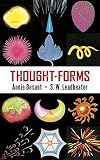
Thought-Forms by Annie Besant and CW Leadbeater is both a classic of theosophy and an explanation of how, for those attune to it, those thoughts present themselves.
While I am not fully convinced (because I haven't experienced it rather than denying the possibility) of the ability to see thoughts in quite this way, I also accept that we emit far more than most of us realize. This book offers some guidance for what we might see/look for. As for how one opens oneself to the possibility of show more seeing these I don't know, though I would be interested in finding out.
This work, along with the excellent illustrations and explanations, took me in a slightly different direction because of my interests. I think it would be interesting to reread both works of fiction and biographical books (especially autobiographies and memoirs) and pay close attention to how people are portrayed. Perhaps without conscious realization writers known for wonderful descriptions are in fact seeing some elements of these thought-forms. Again, just the direction my mind took, I may in fact be misusing these ideas.
I would recommend this to readers who like intellectual history as well as those seeking ways to better exist in the here and now.
Reviewed from a copy made available by the publisher via NetGalley. show less
While I am not fully convinced (because I haven't experienced it rather than denying the possibility) of the ability to see thoughts in quite this way, I also accept that we emit far more than most of us realize. This book offers some guidance for what we might see/look for. As for how one opens oneself to the possibility of show more seeing these I don't know, though I would be interested in finding out.
This work, along with the excellent illustrations and explanations, took me in a slightly different direction because of my interests. I think it would be interesting to reread both works of fiction and biographical books (especially autobiographies and memoirs) and pay close attention to how people are portrayed. Perhaps without conscious realization writers known for wonderful descriptions are in fact seeing some elements of these thought-forms. Again, just the direction my mind took, I may in fact be misusing these ideas.
I would recommend this to readers who like intellectual history as well as those seeking ways to better exist in the here and now.
Reviewed from a copy made available by the publisher via NetGalley. show less
Awards

You May Also Like


Associated Authors
Statistics
- Works
- 497
- Also by
- 4
- Members
- 2,965
- Popularity
- #8,601
- Rating
- 4.0
- Reviews
- 77
- ISBNs
- 689
- Languages
- 16
- Favorited
- 2


