
Thich Nhat Hanh (1926–2022)
Author of The Miracle of Mindfulness
About the Author
Thich Nhat Hanh was born in central Vietnam on October 11, 1926. He entered Tu Hieu Temple as a novice monk at the age of sixteen. During the Vietnam War, he was part of a movement called "engaged Buddhism", which combines traditional practices with nonviolent civil disobedience. For this, he was show more exiled by both the Communist and non-Communist governments and was nominated by Martin Luther King, Jr. for the Nobel Peace Prize in 1967 for his efforts to reconcile North and South Vietnam. He is a teacher, author, poet, and peace activist. He has written over 100 titles on meditation, mindfulness and Engaged Buddhism, as well as poems, children's stories, and commentaries on ancient Buddhist texts. His books include The Heart of the Buddha's Teaching: An Introduction to Buddhism, Peace Is Every Step, The Miracle of Mindfulness, The Art of Power, True Love and Anger, Vietnam: Lotus in a Sea of Fire, and Living Buddha, Living Christ. He founded a retreat in France called Plum Village. (Bowker Author Biography) show less
Image credit: Thich Nhat Hanh, ABC Home, New York City, September 2013
Series
Works by Thich Nhat Hanh
The Heart of the Buddha's Teaching: Transforming Suffering into Peace, Joy, and Liberation (1998) 2,291 copies, 22 reviews
The Art of Mindful Living: How to Bring Love, Compassion, and Inner Peace into Your Daily Life (2000) 2,288 copies, 2 reviews
Old Path White Clouds: Walking in the Footsteps of the Buddha (1987) — Author — 871 copies, 21 reviews
The Heart of Understanding: Commentaries on the Prajnaparamita Heart Sutra (1988) 646 copies, 7 reviews
Creating True Peace: Ending Violence in Yourself, Your Family, Your Community, and the World (2003) 383 copies, 5 reviews
Transformation and Healing : The Sutra on the Four Establishments of Mindfulness (1990) 369 copies, 5 reviews
Taming the Tiger Within: Meditations on Transforming Difficult Emotions (2004) 339 copies, 4 reviews
The Diamond That Cuts Through Illusion: Commentaries on the Prajnaparamita Diamond Sutra (1992) 306 copies, 3 reviews
Cultivating the Mind of Love: The Practice of Looking Deeply in the Mahayana Buddhist Tradition (1995) 198 copies, 1 review
Your True Home: The Everyday Wisdom of Thich Nhat Hanh: 365 days of practical, powerful teachings from the beloved Zen teacher (2011) 169 copies, 1 review
The Raft Is Not the Shore: Conversations Toward a Buddhist-Christian Awareness (1975) 165 copies, 5 reviews
At Home in the World: Stories and Essential Teachings from a Monk's Life (2016) 128 copies, 5 reviews
The Other Shore: A New Translation of the Heart Sutra with Commentaries (2017) 115 copies, 2 reviews
Happy Teachers Change the World: A Guide for Cultivating Mindfulness in Education (2017) 84 copies, 1 review
Is Nothing Something?: Kids' Questions and Zen Answers About Life, Death, Family, Friendship, and Everything in Between (2014) 73 copies, 2 reviews
The Sutra on the Eight Realizations of the Great Beings: A Buddhist Scripture on Simplicity, Genrosity and Compassion (1987) 47 copies, 2 reviews
Hermitage Among the Clouds: An Historical Novel of Fourteenth Century Vietnam (Thich Nhat Hanh) (1993) 46 copies, 2 reviews
A Lifetime of Peace: Essential Writings by and about Thich Nhat Hanh (2003) — Author — 30 copies, 1 review
The Blooming of a Lotus REVISED & EXPANDED: Essential Guided Meditations for Mindfulness, Healing, and Transformation (2022) 28 copies
Wisdom from Peace Is Every Step: The Path of Mindfulness in Everyday Life (Charming Petite Series) (2005) 26 copies
Living Without Stress or Fear: Essential Teachings on the True Source of Happiness (2009) 17 copies, 1 review
Mindful Living: A Collection of Teachings on Love, Mindfulness, and Meditation (1998) 16 copies, 1 review
Walking Meditation 13 copies
The Ultimate Dimension: An Advanced Dharma Retreat on the Avatamsaka and Lotus Sutras (2004) 12 copies
The Admonitions and Encouraging Words of Master Guishan: Text and Commentary (2022) 9 copies, 1 review
Go Slowly, Breathe and Smile: Dharma Art by Rashani Réa with the Wisdom of Thich Nhat Hanh (Life lessons, Positive thinking) (2022) 6 copies
Chanting from the Heart Vol I: Sutras and Chants for Recitation from the Plum Village Community (2023) 5 copies
Present Moment Wonderful Moment (Revised Edition): Verses for Daily Living-Updated Third Edition (2022) 4 copies
L'art du pouvoir véritable : Se libérer des dépendances, de la peur et du désespoir (2017) 4 copies, 1 review
Thich Nhat Hanh : essential writings 4 copies
Het hart van Boeddha's leer van pijn en verdriet naar vreugde, inzicht en zelfkennis (2016) 3 copies
Chanting from the Heart Vol II: Ceremonies and Practices from the Plum Village Community (2023) 3 copies
Du bist ein Geschenk für die Welt: Achtsam leben jeden Tag - Ein Begleiter für alle Wochen des Jahres (2010) 3 copies
Reincarnation (Zen Doors) 2 copies
Quyền Lực Đích Thực 2 copies
Bước Tới Thảnh Thơi 2 copies
Fare pace con se stessi 2 copies
Engaged Buddhism in the 21st century 2 copies
Insegnanti felici cambiano il mondo : una guida per coltivare la consapevolezza nell'educazione (2018) 2 copies
Coffret méditer en marchant livre 1 CD [ Walking Meditation Boxed Set book 1 CD ] (Spiritualité-Philosophie) (French Edition) (2015) 2 copies, 1 review
Corpo e Mente em Harmonia 2 copies
Making Space 1 copy
Silence 1 copy
Body and Mind Are One 1 copy
Gieo trồng hạnh phúc 1 copy
The Art of Living 1 copy
Giận 1 copy
නිහැඬියාව 1 copy
Con đường chuyển hóa 1 copy
Being Peace 1 copy
MUỐN AN ĐƯỢC AN 1 copy
Being Love 1 copy
සංහිඳිගිය හදින් 1 copy
A Energia da Oração 1 copy
Rong Chơi Trời Phương Ngoại 1 copy
CON ĐƯỜNG CHUYỂN HÓA 1 copy
The Art of Power 1 copy
Am Mây Ngủ 1 copy
The Art of Mindful Living 1 copy
Nema straha, nema smrti 1 copy
සංහිඳියාව කරා පියවරක් 1 copy
Il sentiero dell'eroe 1 copy
Living Buddha, living Christ 1 copy
Trái tim của Bụt 1 copy
Il nocciolo della vacuità 1 copy
Lebendiger Buddha, lebendiger Christus verbindende Elemente der christlichen und buddhistischen Lehren (1996) 1 copy
Con đã có đường đi 1 copy
How to Enjoy Your Practice 1 copy
Total Relaxation 1 copy
In de geest van liefde 1 copy
Oro chuvadum santhi 1 copy
Miracle of Being Awake 1 copy
Skriget fra Vietnam : digte 1 copy
La mia casa è il mondo 1 copy
Mindfulness Practice for Joy 1 copy
Por nourrir notre joie au Village des Pruniers - Un guide pour les pratiques et les activités 1 copy
Els educadors feliços canvien el món: Una guia per cultivar la plena consciència a l´educació (Psicologia) (2019) 1 copy
Instant présent instant précieux : Le bonheur... dans l'instant, tout simplement... (2012) 1 copy, 1 review
A Raiva 1 copy
Clefs pour le Zen 1 copy
Thanh Bo Tat Long Tho 1 copy
Walk With Me in Sound: A Mindfulness Soundscape with Zen Buddhist master Thich Nhat Hanh (2021) 1 copy, 1 review
Ölüm Yok Korku Yok 1 copy
Phep La cua Su Tinh Thuc 1 copy
Medo: Como Usar o Mindfulness para Enfrentar os Nossos Maiores Temores (Portuguese Edition) (2021) 1 copy
Zitten 1 copy
The Art of The Living 1 copy
Dix exercices pour bouger et méditer : la méditation en pleine conscience pour les enfants (2021) 1 copy
El corazón del cosmos: Lecciones sobre el Sutra del loto (Biblioteca Thich Nhat Hanh) (Spanish Edition) (2018) 1 copy
Vita di Siddharta il BUDDHA 1 copy
Phép lạ của sự tỉnh thức 1 copy
අවබෝධයේ හදවත 1 copy
Cesta osvobození 1 copy
සෙන් දහමට ප්රවේශයක් 1 copy
The Pine Gate 1 copy
Giọt Nước Cành Dương 1 copy
Innerer Frieden – äußerer Frieden: Zum wahren Selbst finden und Liebe in die Welt bringen. (2023) 1 copy
Bez bahna lotos nevykvete 1 copy
Associated Works
In the Footsteps of Gandhi: Conversations With Spiritual Social Activists (1990) — Contributor — 147 copies, 1 review
The Life of Meaning: Reflections on Faith, Doubt, and Repairing the World (2007) — Contributor — 132 copies, 5 reviews
Leading from Within: Poetry That Sustains the Courage to Lead (2007) — Contributor — 115 copies, 3 reviews
Unmuzzled Ox 13 — Contributor — 7 copies
Walk with me : a journey into mindfulness with Thich Nhat Hanh [2016 Documentary] (2017) — Featured — 7 copies
Peace Is Every Step-Meditation In Action: The Life and Work of Thich Nhat Hanh (2000) — Commentator — 4 copies
Mindful Living Every Day: Practicing in the Tradition of Thich Nhat Hanh (2010) — Featured — 2 copies
Tagged
Common Knowledge
- Legal name
- Nguyen Xuan Bao
- Other names
- Nhất Hạnh, Thích
Nguyen Xuan Bao (birth name)
Nhat Hanh, Thich - Birthdate
- 1926-10-11
- Date of death
- 2022-01-22
- Gender
- male
- Education
- Bao Quoc Buddhist Academy, Vietnam
Princeton Theological Seminary (Fulbright Fellow) - Occupations
- Buddhist monk
teacher
peace activist
human rights activist
author
Lecturer, Columbia University - Organizations
- Order of Interbeing
Plum Village
School of Youth Social Service
Buddhist University - Nationality
- Vietnam
- Birthplace
- Thừa Thiên Huế, Vietnam
- Places of residence
- Tha Tien, Vietnam
Dordogne, France
Plum Village, France - Place of death
- Tu Hieu Temple, Huế, Vietnam
- Associated Place (for map)
- Vietnam
Members
Discussions
Happy Birthday Thich Nhat Hanh in Book talk (October 2025)
Thich Nhat Hanh dies aged 95 in Let's Talk Religion (January 2022)
Reviews
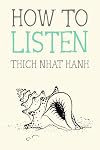
Rating: 4.5* of five
The Publisher Says: In a time of great division and discord, our capacity to listen deeply and with compassion is paramount to solving pressing issues—across the realms of global politics, interpersonal relationships, and our own hearts and minds.
In How to Listen, Zen Master Thich Nhat Hanh demonstrates how deep listening is a fundamental building block of good communication. But perhaps more fundamentally, listening is central to our practice, a basic ingredient to show more strengthen our capacity for mindfulness, concentration, insight, and compassion. Learning how to listen with equanimity to life itself, we generate insight into the true nature of our deep connection to all things. And from this place of understanding—when we know that we aren’t separate—our capacity to listen deepens even further.
With clear and gentle guidance from Thich Nhat Hanh, we learn how truly listening—to ourselves, to each other, to Mother Earth, and to the many “bells of mindfulness” that are available to us in each moment—is the foundation of our practice, an expression of love, and a solution to our deepest and most urgent large-scale conflicts.
I RECEIVED A DRC FROM THE PUBLISHER VIA EDELWEISS+. THANK YOU.
My Review: "Everyone thinks of changing the world, but no one thinks of changing himself," said Tolstoy, and that truth has never faded or lost relevance.
When confronted by disagreement, wisdom says to listen first, then react. As a goal, that is very admirable, but largely unattainable, I hear everyone saying. I said it, too. Truth is it's hard, it's challenging, and you will fail in practicing it.
Zen practices are the butt of many jokes in the Western overculture, unsurprisingly. Google "zen koan" and imagine being presented with it sans context or preparation for the simple existence of a context where this is not intended to be humorous. Mindfulness is not natural to homo sapiens occidentalis. We're fed a constant media diet of covetousness, triumphalism, and valorized ignorance. These are the antithesis of mindfulness, its very opposite both in worldview and in the practices promoted therein.
The author was a vocal peace and mindfulness advocate most of his near-century of life. This book, charmingly illustrated by Jason DeAntonis, offers up practical steps towards a practice of mindful listening. In reading the ideas I was forcefully struck by the way they could be read: I've been at the mindfulness game for quite a while now, and began my own journey from a more or less Buddhist perspective. (My sexual preference has always been "more," so Buddhism, with its emphasis on renunciation, and I were destined to part.) These pages are full of advice for practices that can be read and applied by the novice through to the student of Buddhism. No one is left out of the benefits because there is no presumption of an expert audience.
So I hope, like the departed author, that you'll start a journey to becoming a real listener by reading and heeding his words. From the 1975 publication of The Miracle of Mindfulness through to this posthumous publication (he died in 2022), he's been making steady inroads into US and Western culture with his interlocking message of listening as a practice, and mindful existence in the modern world, in place of mere passivity and disengagement.
There is no better way to transform one's experience of the world than to be fully present in it. Starting here is not a bad idea at all. show less
The Publisher Says: In a time of great division and discord, our capacity to listen deeply and with compassion is paramount to solving pressing issues—across the realms of global politics, interpersonal relationships, and our own hearts and minds.
In How to Listen, Zen Master Thich Nhat Hanh demonstrates how deep listening is a fundamental building block of good communication. But perhaps more fundamentally, listening is central to our practice, a basic ingredient to show more strengthen our capacity for mindfulness, concentration, insight, and compassion. Learning how to listen with equanimity to life itself, we generate insight into the true nature of our deep connection to all things. And from this place of understanding—when we know that we aren’t separate—our capacity to listen deepens even further.
With clear and gentle guidance from Thich Nhat Hanh, we learn how truly listening—to ourselves, to each other, to Mother Earth, and to the many “bells of mindfulness” that are available to us in each moment—is the foundation of our practice, an expression of love, and a solution to our deepest and most urgent large-scale conflicts.
I RECEIVED A DRC FROM THE PUBLISHER VIA EDELWEISS+. THANK YOU.
My Review: "Everyone thinks of changing the world, but no one thinks of changing himself," said Tolstoy, and that truth has never faded or lost relevance.
When confronted by disagreement, wisdom says to listen first, then react. As a goal, that is very admirable, but largely unattainable, I hear everyone saying. I said it, too. Truth is it's hard, it's challenging, and you will fail in practicing it.
Zen practices are the butt of many jokes in the Western overculture, unsurprisingly. Google "zen koan" and imagine being presented with it sans context or preparation for the simple existence of a context where this is not intended to be humorous. Mindfulness is not natural to homo sapiens occidentalis. We're fed a constant media diet of covetousness, triumphalism, and valorized ignorance. These are the antithesis of mindfulness, its very opposite both in worldview and in the practices promoted therein.
The author was a vocal peace and mindfulness advocate most of his near-century of life. This book, charmingly illustrated by Jason DeAntonis, offers up practical steps towards a practice of mindful listening. In reading the ideas I was forcefully struck by the way they could be read: I've been at the mindfulness game for quite a while now, and began my own journey from a more or less Buddhist perspective. (My sexual preference has always been "more," so Buddhism, with its emphasis on renunciation, and I were destined to part.) These pages are full of advice for practices that can be read and applied by the novice through to the student of Buddhism. No one is left out of the benefits because there is no presumption of an expert audience.
So I hope, like the departed author, that you'll start a journey to becoming a real listener by reading and heeding his words. From the 1975 publication of The Miracle of Mindfulness through to this posthumous publication (he died in 2022), he's been making steady inroads into US and Western culture with his interlocking message of listening as a practice, and mindful existence in the modern world, in place of mere passivity and disengagement.
There is no better way to transform one's experience of the world than to be fully present in it. Starting here is not a bad idea at all. show less
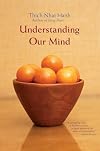
In this book, Thich Nhat Hanh unpacks fifty fifth-century Buddhist verses on the nature of consciousness and relates them to modern life. This is pretty heady stuff, and a lot more technical and philosophical than my other dabblings into Buddhism, but I really enjoyed it. The translations of the verses themselves are beautiful, simple, and moving, and Thich Nhat Hanh's usual clear and compassionate writing style makes the complicated nature of reality stuff land more smoothly than it would show more in the hands of another author. I particularly liked his advice in the introduction to read just a bit each day, don't worry too much if you aren't understanding every word, and to "Allow the teachings to enter you as you might listen to music, or in the way the earth allows the rain to permeate it." By following his advice, I feel like I got a perspective on my own mind and existence that I didn't have before. Maybe don't start here if you have never read anything about Buddhism, but don't be put off by the complexity of the content if this is something you'd like to dig into a little more deeply. show less
Originally published in 1987, Being Peace outlasts its post-Vietnam, Reagan-Era milieu for the most part. No doubt the many references to nuclear proliferation will seem a bit dated, but the wisdom is that suffering is indeed universal and timeless, so we need not jump far to find the proliferations and crises of our own time. Further, anyone aware of Nhat Hanh's work with the Vietnamese boat people will understand that this is not some monastic who sat on a cushion away from society, but show more instead a powerfully invested human being. For those skeptical about Buddhism, this book does much to explain that one should not be looking for "a Buddha from the outside" but instead, " it is our "own Buddha that calls us."
Thich Nhat Hanh is surprisingly witty at moments, slipping in a surreptitious lesson in a parenthetical comment: "The technique (if we must speak of a technique), is to be alive...". His blend of storytelling, poetry, and prose, makes this primer on some basic sutras and concepts of Buddhism extremely accessible. There are definitely worldly pleasures about which he has some strong feelings, and initially I rolled my eyes a bit at his disdain for television. However, when he says "telling the television to come colonize us"--that language made me understand. It isn't television, but how we use it to escape from the present, or rather WHEN we use it to escape from the present. He doesn't soapbox on this particular point, but I did find myself wondering what he thought of audiobooks...
Nhat Hanh died in January (2022), and we lost a voice that managed to move beyond dogma toward a practical understanding of being, really. In a rather slim volume (or short audiobook, if you prefer), he offers precepts (or rather "mindfulness trainings") of Thiền Buddhism, parsing (a bit) that which is monastic and that which can be followed by the layperson. I struggled a bit with his explanation regarding awareness of injustice, but not taking sides. His point, if I understand it, is that it isn't about absolution or even forgiveness, but to understand the universality of suffering and existence of compassion. This may be something I never quite internalize. However, I was very much struck by Mindfulness Training no. 11, wherein he compares compassion to a North Star---it is there to light the way and we move toward it, but like the North Star, we do not arrive AT it. This may seem like a more fanciful way to espouse "it is the journey, not the destination", and it is, but the poetry of his language seems more meaningful than your typical inspirational poster or Pinterest meme. His poem "Please call me by my true names" is a powerful moment, and I'd invite anyone to go to the Plum Village website to listen to him read it: https://plumvillage.org/articles/plea...
"I still arrive, in order to laugh and to cry,/to fear and to hope" he tells us in the poem. He quips later in the book "Don't just do something, sit there." And by the time we reach that point of learning, we get that it isn't some sort of cutesy verbal trinket because he has put much spirit and energy into explaining what "sit" means in the meditation tradition. We understand that a smile is a gift of the spirit, not an indication of happiness. Edoardo Ballerini captures the spirit of Nhat Hanh's voice, which truly smiles at us, like a Buddha. In fact, he tells us that if we must bring a Buddha home to adorn our breathing space, to be sure to find one that is smiling and relaxed. If we do not find such a beautiful Buddha, he tells us, then we should find a flower instead, because the flower is a Buddha.
This is not a book for someone looking for a guide to serious practice. It is, however, a book full of wisdom and grace, that can make connections for us if we just take the time to listen. show less
Thich Nhat Hanh is surprisingly witty at moments, slipping in a surreptitious lesson in a parenthetical comment: "The technique (if we must speak of a technique), is to be alive...". His blend of storytelling, poetry, and prose, makes this primer on some basic sutras and concepts of Buddhism extremely accessible. There are definitely worldly pleasures about which he has some strong feelings, and initially I rolled my eyes a bit at his disdain for television. However, when he says "telling the television to come colonize us"--that language made me understand. It isn't television, but how we use it to escape from the present, or rather WHEN we use it to escape from the present. He doesn't soapbox on this particular point, but I did find myself wondering what he thought of audiobooks...
Nhat Hanh died in January (2022), and we lost a voice that managed to move beyond dogma toward a practical understanding of being, really. In a rather slim volume (or short audiobook, if you prefer), he offers precepts (or rather "mindfulness trainings") of Thiền Buddhism, parsing (a bit) that which is monastic and that which can be followed by the layperson. I struggled a bit with his explanation regarding awareness of injustice, but not taking sides. His point, if I understand it, is that it isn't about absolution or even forgiveness, but to understand the universality of suffering and existence of compassion. This may be something I never quite internalize. However, I was very much struck by Mindfulness Training no. 11, wherein he compares compassion to a North Star---it is there to light the way and we move toward it, but like the North Star, we do not arrive AT it. This may seem like a more fanciful way to espouse "it is the journey, not the destination", and it is, but the poetry of his language seems more meaningful than your typical inspirational poster or Pinterest meme. His poem "Please call me by my true names" is a powerful moment, and I'd invite anyone to go to the Plum Village website to listen to him read it: https://plumvillage.org/articles/plea...
"I still arrive, in order to laugh and to cry,/to fear and to hope" he tells us in the poem. He quips later in the book "Don't just do something, sit there." And by the time we reach that point of learning, we get that it isn't some sort of cutesy verbal trinket because he has put much spirit and energy into explaining what "sit" means in the meditation tradition. We understand that a smile is a gift of the spirit, not an indication of happiness. Edoardo Ballerini captures the spirit of Nhat Hanh's voice, which truly smiles at us, like a Buddha. In fact, he tells us that if we must bring a Buddha home to adorn our breathing space, to be sure to find one that is smiling and relaxed. If we do not find such a beautiful Buddha, he tells us, then we should find a flower instead, because the flower is a Buddha.
This is not a book for someone looking for a guide to serious practice. It is, however, a book full of wisdom and grace, that can make connections for us if we just take the time to listen. show less
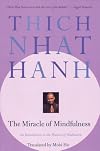
I love this book! The Miracle of Mindfulness is a gentle, beautiful guide to meditation and living fully in the present. Thich Nhat Hanh’s writing is calm, clear, and profoundly grounding. The exercises are simple but effective, making it easy to incorporate mindfulness into even the busiest days.
That said, some sections felt repetitive, and readers looking for a highly structured or step-by-step meditation manual might wish for more detailed guidance. The book is more reflective and show more philosophical than technical.
Still, it’s deeply inspiring. Reading it felt like having a patient teacher guiding me toward awareness and peace in everyday life. It’s a small book with a big impact, one I find myself returning to again and again. show less
That said, some sections felt repetitive, and readers looking for a highly structured or step-by-step meditation manual might wish for more detailed guidance. The book is more reflective and show more philosophical than technical.
Still, it’s deeply inspiring. Reading it felt like having a patient teacher guiding me toward awareness and peace in everyday life. It’s a small book with a big impact, one I find myself returning to again and again. show less
Lists
Awards


You May Also Like


Associated Authors
Statistics
- Works
- 496
- Also by
- 16
- Members
- 42,751
- Popularity
- #401
- Rating
- 4.1
- Reviews
- 625
- ISBNs
- 1,564
- Languages
- 24
- Favorited
- 85


