
About the Author
Disambiguation Notice:
This is not the same person as Rick Maybury the technology journalist.
Series
Works by Richard J. Maybury
Whatever Happened to Penny Candy? A Fast, Clear, and Fun Explanation of the Economics You Need For Success in Your Career, Business, and Investments (1993) 1,816 copies, 7 reviews
The Money Mystery: The Hidden Force Affecting Your Career, Business, and Investments (1997) 408 copies
Evaluating Books: What Would Thomas Jefferson Think About This? Guidelines for Selecting Books Consistent With the Principles of America's Founders (An Uncle Eric Book) (1994) 271 copies, 2 reviews
Uncle Eric Talks About Personal, Career, and Financial Security (An Uncle Eric Book) (1994) 253 copies, 1 review
World War I: The Rest of the Story and How It Affects You Today, 1870 to 1935 (2002) 244 copies, 1 review
The Clipper Ship Strategy: For Success in Your Career, Business, and Investments (1997) 203 copies, 1 review
Time to Bail Out? What to do with Your Money: The Bernanke Bomb (The Great Monetary Calamity Series, Vol. II) (2012) 2 copies
Failure of the Global Socialist Experiment: Why I'm Optimistic Long Term (The Great Monetary Calamity Series, Vol. III) (2012) 2 copies
The New Austrian View of Your World: The Economy is Not a Machine: Battle of the Paradigms (The Great Monetary Calamity Series, Vol. IV) (2012) 2 copies
Tagged
Common Knowledge
- Canonical name
- Maybury, Richard J.
- Legal name
- Maybury, Richard J.
- Other names
- Uncle Eric
- Birthdate
- 1946-10-10
- Gender
- male
- Occupations
- editor
author
lecturer
geopolitical analyst
business consultant
teacher - Organizations
- MoneyWorld (Global Affairs Editor)
- Short biography
- Richard Maybury, also known as Uncle Eric, is a world renowned author, lecturer and geopolitical analyst. He consults with business firms in the U.S. and Europe. Richard is the former Global Affairs editor of MoneyWorld and widely regarded as one of the finest free-market writers in America. Mr. Maybury's articles have appeared in The Wall Street Journal, USA Today, and other major publications.
Richard Maybury has penned eleven books in the Uncle Eric series. His books have been endorsed by top business leaders including former U.S. Treasure Secretary William Simon, and he has been interviewed on more than 250 radio and TV shows across America.
He has been married to Marilyn for more the 35 years, has lived abroad, traveled around the world, and visited 48 states and 40 countries.
He is truly a teacher for all ages. - Nationality
- USA
- Places of residence
- USA
- Disambiguation notice
- This is not the same person as Rick Maybury the technology journalist.
- Associated Place (for map)
- USA
Members
Reviews
Whatever Happened to Penny Candy? A Fast, Clear, and Fun Explanation of the Economics You Need For Success in Your Career, Business, and Investments (An Uncle Eric Book) by Richard J. Maybury
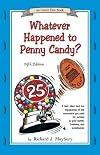
For a polemic, it's not bad. There are some bits that are just presented clearly and succinctly.
But there's a difference between cause & effect, effect & cause, and correlation that Maybury either doesn't understand or refuses to examine. And there's no reference here to minimum wage at all. And I wish there was some advice about how to 'fix' Medicare rather than a blanket statement to the effect that it's going to implode catastrophically.
Nor is mention made of choices. Supposedly voters show more always want more services and lower taxes. No, we're not that stupid. What we want is less corruption and waste. And while we're at it, fewer fighter jets and other war-expenses.... Maybury just never seems to look at the other sides of any issue.
So, no, I didn't read every word. Maybe I missed something great, so I shan't rate. Still, the only bit I actually recommend is the two page appendix of "Measures of Money Supply." Currency vs. monetary base vs. MZM vs. M36 etc. I'll photocopy that spread from my library copy of this book and then do more research later.
But I will not read more by the author nor will I recommend his works. show less
But there's a difference between cause & effect, effect & cause, and correlation that Maybury either doesn't understand or refuses to examine. And there's no reference here to minimum wage at all. And I wish there was some advice about how to 'fix' Medicare rather than a blanket statement to the effect that it's going to implode catastrophically.
Nor is mention made of choices. Supposedly voters show more always want more services and lower taxes. No, we're not that stupid. What we want is less corruption and waste. And while we're at it, fewer fighter jets and other war-expenses.... Maybury just never seems to look at the other sides of any issue.
So, no, I didn't read every word. Maybe I missed something great, so I shan't rate. Still, the only bit I actually recommend is the two page appendix of "Measures of Money Supply." Currency vs. monetary base vs. MZM vs. M36 etc. I'll photocopy that spread from my library copy of this book and then do more research later.
But I will not read more by the author nor will I recommend his works. show less
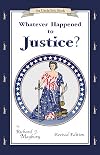
Once again, Uncle Eric explains clearly and concisely the fundamentals we have forgotten. He focuses this time on our system of justice, especially the abandonment of common and higher law. If more people understood these concepts, our world would improve. He addresses that there are some unresolved problems, and offers some direction toward solving them (example: capital punishment completely ignores the tradition of restitution). This book reminds us that democracy can easily become a show more tyranny of the majority. The French Revolution exemplifies this in horrific form. show less
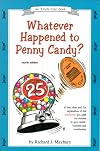
This is an explanation of economics and the monetary system that even a middle school student can understand. Maybury writes this as a series of letters from “Uncle Eric.” In each letter he carefully explains one principle, beginning with “what is money.” My favorite principle has to be tanstaafl = There Ain’t No Such Thing As A Free Lunch! A couple of hours reading Maybury is easily equal to countless dinner table conversations over 20+ years with my husband (an economist). I show more highly recommend this to everyone. show less
World War I: The Rest of the Story and How It Affects You Today, 1870 to 1935 (Uncle Eric Book) by Richard J. Maybury
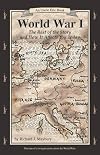
This book is more of a general review of the various ideologies that lead to a world war rather than a detailing of the specific instances that led to World War I. That being said, it it is still an interesting book, and the history surrounding the Spanish American War - often neglected if at all mentioned in the public school system here in the States - was quite enlightening if tragic and sad. Good for an alternative perspective to more common narratives surrounding WWI and WWII.
Lists
You May Also Like


Statistics
- Works
- 22
- Members
- 5,416
- Popularity
- #4,603
- Rating
- 4.4
- Reviews
- 16
- ISBNs
- 28
- Favorited
- 2