
Sherri L. Smith
Author of Flygirl
About the Author
Sherri L. Smith was born in Chicago, Illinois. Her first book, Lucy the Giant, was an American Library Association Best Book for Young Adults in 2003. Her other books include Sparrow, Orleans, The Toymaker's Apprentice, and Hot, Sour, Salty, Sweet. Flygirl won the California Book Award Gold Medal. show more (Bowker Author Biography) show less
Image credit: Photo: K. Mao By Sherri L. Smith - Own work, CC BY-SA 4.0, https://commons.wikimedia.org/w/index.php?curid=65754307
Series
Works by Sherri L. Smith
American Wings: Chicago's Pioneering Black Aviators and the Race for Equality in the Sky (2024) 48 copies, 1 review
James Cameron's Avatar / Briggs Land: Free Comic Book Day 2017 (2017) — Author — 5 copies, 2 reviews
Avatar: Tsu'tey's Path #1 1 copy
Disney Villains: Ursula #3 1 copy
Disney Villains: Ursula #2 1 copy
Disney Villains: Ursula #1 1 copy
Avatar: Tsu'tey's Path #5 1 copy
Avatar: Tsu'tey's Path #2 1 copy
Avatar: Tsu'tey's Path #6 1 copy
Avatar: Tsu'tey's Path #4 1 copy
Avatar: Tsu'tey's Path #3 1 copy
Associated Works
Tagged
Common Knowledge
- Birthdate
- 1971
- Gender
- female
- Nationality
- USA
- Birthplace
- Chicago, Illinois, USA
- Places of residence
- Los Angeles, California, USA
- Associated Place (for map)
- USA
Members
Reviews
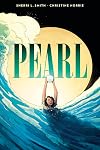
First sentence: My great-grandmother was an ama, a pearl diver from the shores of Honshu in Japan. I loved the stories my family would tell about her. Of mermaids and pirates and cities underwater...and the pearl she found when she was a girl--it was round and perfect, the size of her fist. I knew the stories were only half true, but I loved them just the same.
Premise/plot: Amy, our heroine, was born and raised in Hawaii to Japanese-American parents. When her great-grandmother becomes show more ill--thought to be dying--her family sends her in their place. Then Pearl Harbor happens and it changes everything. Amy finds herself 'stuck' in a country that "her" country is at war with. But as she spends the war years growing up in Japan with her family, she struggles with the idea of home. Which country feels more like home? Where does she belong? Can she be both Japanese and American? Can she forgive America for dropping nuclear bombs on Japan?
My thoughts: This one is a HISTORICAL, coming-of-age story set mainly in Japan during the Second World War and its immediate aftermath. It is told in graphic novel format. It is told primarily in blue, black, gray, white. I didn't love that jacket flap description of the book and the author and illustration information was blue ink on black background. Fortunately the graphic novel itself was more accessible. show less
Premise/plot: Amy, our heroine, was born and raised in Hawaii to Japanese-American parents. When her great-grandmother becomes show more ill--thought to be dying--her family sends her in their place. Then Pearl Harbor happens and it changes everything. Amy finds herself 'stuck' in a country that "her" country is at war with. But as she spends the war years growing up in Japan with her family, she struggles with the idea of home. Which country feels more like home? Where does she belong? Can she be both Japanese and American? Can she forgive America for dropping nuclear bombs on Japan?
My thoughts: This one is a HISTORICAL, coming-of-age story set mainly in Japan during the Second World War and its immediate aftermath. It is told in graphic novel format. It is told primarily in blue, black, gray, white. I didn't love that jacket flap description of the book and the author and illustration information was blue ink on black background. Fortunately the graphic novel itself was more accessible. show less
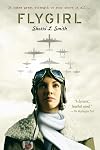
This book was interesting to say the least. I enjoyed getting to read about Ida Mae and her struggles with her identity as a really light-skinned Black person as well as being a woman who wants to fly. I don't often read things where skin color is a big thing for the main character and I have to say that it's almost eye opening to read about Ida Mae's challenges in those regards, especially when she has to deal with her mother's anger and Jolene's jealousy about her (Ida
The scene with Ida Mae when she goes to buy the awl for her grandfather made me worry for her, especially when the elderly farmer recognized that she was just light-skinned and there was a chance that the (White) store helper might have overheard the comment.
The extra challenges of being a woman were just as intriguing and they angered me a little too. The fact that women were that looked down upon and constantly had barriers thrown in their way is appalling. The scene where Ida Mae and Lilly were thrown into the B-29 plane, which was still experimental and had earned the name "Widow Maker", without being told any details of why, is infuriating. When 2 engines gave out, one catching on fire, I truly feared for Ida Mae and Lilly and couldn't help but think of what happened to Patsy.
In the end when I learned that the WASP program was disbanded rather than given military status, I was angry too.

A lot less fraught and complicated than the last book I read about WWII but it has women flying aeroplanes (or airplanes, as the Americans will insist on calling them) and more diversity. In 1943, Ida Mae Jones from Louisiana applies to join the Women Airforce Service Pilots, knowing that she will only be allowed to fly if she can pass for a white girl.
The WASP are another part of history I didn’t know very much about, so I enjoyed seeing what their training process involved. There’s the show more appeal of boarding school/training school stories: young people living and training together, teamwork and camaraderie, friends supporting each other, standing up to bullies, and so on.
But what I found most interesting was how passing as white is an everyday concern for Ida -- it’s not just about getting through the initial interview. She doesn’t want to risk that someone will get suspicious, so she has to be vigilant about things like what she says about her family and avoiding a tan. And what does it mean for her future, for going home when the war ends, that she’s put so much effort into making a place for herself in a white world where she can’t reveal her true identity?
I wish the army had taught us how to navigate feelings as easily as they did a starless night sky. show less
The WASP are another part of history I didn’t know very much about, so I enjoyed seeing what their training process involved. There’s the show more appeal of boarding school/training school stories: young people living and training together, teamwork and camaraderie, friends supporting each other, standing up to bullies, and so on.
But what I found most interesting was how passing as white is an everyday concern for Ida -- it’s not just about getting through the initial interview. She doesn’t want to risk that someone will get suspicious, so she has to be vigilant about things like what she says about her family and avoiding a tan. And what does it mean for her future, for going home when the war ends, that she’s put so much effort into making a place for herself in a white world where she can’t reveal her true identity?
I wish the army had taught us how to navigate feelings as easily as they did a starless night sky. show less
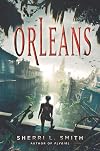
This book reminded me in all the best ways of Alexandra Duncan's books, :Salvage and Sound: it's beautifully feminist, paints a gorgeously detailed world with complementary clashing cultures, and avoids the oversimplified "post-apocalyptic" genre by exploring a not-so-distant future based on events that are already happening (as opposed, for example, to The Wolf Road's unspecified nuclear holocaust).
Fen is a wonderful main character, tough but with her softer places showing even in the show more beginning in the way that she interacts with Lydia and anticipates the needs and wants of a young child. She's practical but not ashamed of her feelings--there's no attempt to bury her emotions in a mask of "masculine" passiveness that's being held up as the template for humanity. Yes, there are a couple places where women are referred to as being less competent then men, but since there were only one or two and this speculative future is so much closer to our time than the books mentioned previously, they fit in the environment...especially given just how many complex women there are leading the tribes and factions great and small in Orleans.
One thing I appreciated especially was Smith's deft switching from first-person for Fen to third-person for Daniel. It's not a move that most writers would think to make: it seems instinctual that if one character is going to tell us their story, the other(s) will do so, too. But having Fen narrate her own life mirrors her perspective: all she has is herself, her actions, her survival. Daniel comes from a world that allows him the luxury of thinking beyond himself: he thinks in the context of peer reviews, academic collaboration, and a world that will look over his shoulder to study his work. We approach Daniel the way he approaches science, with the illusion of objectivity granted by distance--in this case, physical and psychological distance from the realty of life and death in the Delta for Daniel, and narrative and metaphorical distance provided by the use of third person for the reader. It also makes the sneaky, guilt-inducing "so-there" part of my feminist heart a little smug that, for once, the woman gets to tell her own story directly while the man's story is being filtered.
Also, and I cannot believe I can actually say this--NO ROMANCE!!! WOOHOO!!!
So...why not full stars? There are a couple narrative gaps too conveniently covered over by deus ex machina--the one that stood out most for me wasthe late revelation that Fen's sponsor family didn't have children but wanted them. This fact isn't shared with the reader until well into the book, by which point I was convinced that their horror at the thought of accepting a child from the Delta was going to be a key plot point .
My interdisciplinary side loved the anthropological and sociological aspects of world building, some of which were referenced in the book: the power of blood type to rewrite the rules of discrimination (p 74); the reality of trying to make political alliances in an anarchic environment (hint: it doesn't always work out for the hero); the different measures of intelligence and skill and their relative values in the Delta; the mix of the selfless and the selfish, not only in side-by-side divisions like the Ursuline sisters and the AB tribe, but in single individuals such as Mama Gentille and including the main characters.
There are plenty of little things I would love to mention, but I'm a bit more strapped for time than I used to be. Long story short: good book, would recommend, and should appeal to the gender-inclusive audience of The Hunger Games. (Why on earth that book managed to have a gender-inclusive audience when it had a stupid romance plot is a speculative rant for another time...)
Two quick quotes, one elaborating on a point mentioned above.
207) "He ain't interested in the Fever. He studying tribes."
>>Daniel frown. "Ending racism," he say. "For the most part, the rules of blood make race irrelevant. Blood types cross all ethnicities."
>>I nod. "If folks stop hating each other 'cause of skin color, the only difference be blood type."
>>"A new form of racism," Daniel say. His face go pale. "It's like Tuskegee all over again. They never wanted a cure."
254) "Is it any wonder that Orleans is a wasteland today? As much as Nature takes back and rebuilds, it is in her own image, and not those of the people of New Orleans. ... What is a day in the life of a live oak tree, Daniel? What is one human day in the life of an ecosystem? Nothing." show less
Fen is a wonderful main character, tough but with her softer places showing even in the show more beginning in the way that she interacts with Lydia and anticipates the needs and wants of a young child. She's practical but not ashamed of her feelings--there's no attempt to bury her emotions in a mask of "masculine" passiveness that's being held up as the template for humanity. Yes, there are a couple places where women are referred to as being less competent then men, but since there were only one or two and this speculative future is so much closer to our time than the books mentioned previously, they fit in the environment...especially given just how many complex women there are leading the tribes and factions great and small in Orleans.
One thing I appreciated especially was Smith's deft switching from first-person for Fen to third-person for Daniel. It's not a move that most writers would think to make: it seems instinctual that if one character is going to tell us their story, the other(s) will do so, too. But having Fen narrate her own life mirrors her perspective: all she has is herself, her actions, her survival. Daniel comes from a world that allows him the luxury of thinking beyond himself: he thinks in the context of peer reviews, academic collaboration, and a world that will look over his shoulder to study his work. We approach Daniel the way he approaches science, with the illusion of objectivity granted by distance--in this case, physical and psychological distance from the realty of life and death in the Delta for Daniel, and narrative and metaphorical distance provided by the use of third person for the reader. It also makes the sneaky, guilt-inducing "so-there" part of my feminist heart a little smug that, for once, the woman gets to tell her own story directly while the man's story is being filtered.
Also, and I cannot believe I can actually say this--NO ROMANCE!!! WOOHOO!!!
So...why not full stars? There are a couple narrative gaps too conveniently covered over by deus ex machina--the one that stood out most for me was
My interdisciplinary side loved the anthropological and sociological aspects of world building, some of which were referenced in the book: the power of blood type to rewrite the rules of discrimination (p 74); the reality of trying to make political alliances in an anarchic environment (hint: it doesn't always work out for the hero); the different measures of intelligence and skill and their relative values in the Delta; the mix of the selfless and the selfish, not only in side-by-side divisions like the Ursuline sisters and the AB tribe, but in single individuals such as Mama Gentille and including the main characters.
There are plenty of little things I would love to mention, but I'm a bit more strapped for time than I used to be. Long story short: good book, would recommend, and should appeal to the gender-inclusive audience of The Hunger Games. (Why on earth that book managed to have a gender-inclusive audience when it had a stupid romance plot is a speculative rant for another time...)
Two quick quotes, one elaborating on a point mentioned above.
207) "He ain't interested in the Fever. He studying tribes."
>>Daniel frown. "Ending racism," he say. "For the most part, the rules of blood make race irrelevant. Blood types cross all ethnicities."
>>I nod. "If folks stop hating each other 'cause of skin color, the only difference be blood type."
>>"A new form of racism," Daniel say. His face go pale. "It's like Tuskegee all over again. They never wanted a cure."
254) "Is it any wonder that Orleans is a wasteland today? As much as Nature takes back and rebuilds, it is in her own image, and not those of the people of New Orleans. ... What is a day in the life of a live oak tree, Daniel? What is one human day in the life of an ecosystem? Nothing." show less
Lists
Awards


You May Also Like


Associated Authors
Statistics
- Works
- 39
- Also by
- 1
- Members
- 3,396
- Popularity
- #7,505
- Rating
- 3.8
- Reviews
- 118
- ISBNs
- 143
- Languages
- 5
- Favorited
- 1