
Ellen Wittlinger (1948–2022)
Author of Hard Love
About the Author
Image credit: Photo by Sonya Sones
Series
Works by Ellen Wittlinger
Good News Bad News 1 copy
Associated Works
13: Thirteen Stories That Capture the Agony and Ecstasy of Being Thirteen (2003) — Contributor — 243 copies, 4 reviews
Twice Told: Original Stories Inspired by Original Artwork (2006) — Contributor — 123 copies, 4 reviews
Girl Meets Boy: Because There Are Two Sides to Every Story (2011) — Contributor — 103 copies, 26 reviews
Tagged
Common Knowledge
- Birthdate
- 1948-10-21
- Date of death
- 2022-11-17
- Gender
- female
- Education
- Millikin University
University of Iowa Writers' Workshop - Occupations
- librarian
- Organizations
- Emerson College
Simmons University
Swampscott Public Library - Nationality
- USA
- Birthplace
- Belleville, Illinois, USA
- Places of residence
- Belleville, Illinois, USA
Decatur, Illinois, USA
Ashland, Oregon, USA
Provincetown, Massachusetts, USA - Place of death
- Williamsburg, Massachusetts, USA
- Associated Place (for map)
- USA
Members
Discussions
YA Fiction set in Cape Cod in Name that Book (July 2012)
Reviews
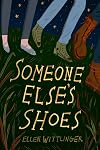
Tackling issues of suicide, depression, divorce, and step-parenting with warmth, sensitivity, and even humor, Someone Else's Shoes chronicles a road trip across the Northeast that unites three young people in search of family and acceptance.
Twelve-year-old Izzy, a budding stand-up comic, is already miserable about her father's new marriage and the new baby on the way. Then ten-year-old cousin Oliver and his father, Uncle Henderson, move in with Izzy and her mom because Oliver's mother show more committed suicide only a few months ago. And to make matters worse, Ben, the rebellious 16-year-old son of Izzy's mother's boyfriend, winds up staying with them, too.
But when Uncle Henderson--who has been struggling with depression after his wife's suicide--disappears, Ben, Izzy, and Oliver set aside their differences and hatch a plan to find him. As the threesome travels in search of Henderson, they find a surrogate family in each other. publisher show less
Twelve-year-old Izzy, a budding stand-up comic, is already miserable about her father's new marriage and the new baby on the way. Then ten-year-old cousin Oliver and his father, Uncle Henderson, move in with Izzy and her mom because Oliver's mother show more committed suicide only a few months ago. And to make matters worse, Ben, the rebellious 16-year-old son of Izzy's mother's boyfriend, winds up staying with them, too.
But when Uncle Henderson--who has been struggling with depression after his wife's suicide--disappears, Ben, Izzy, and Oliver set aside their differences and hatch a plan to find him. As the threesome travels in search of Henderson, they find a surrogate family in each other. publisher show less
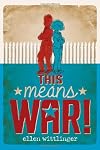
This book brings the anxiety of the Cuban Missile Crisis for both the adults and the children of 1962 alive for the reader, but it first focuses on the smaller world of Juliet, a 10-year-old who can’t understand why her best friend, Lowell, is rejecting her to hang out with boys. The boys, Juliet, and a few other girls decide they will have a ten day contest to see who is superior, boys or girls, and it gets out of hand just as the events of the Cuban Missile Crisis heat up and absorbs the show more nation. Ellen Wittlinger, the author, does a good job of portraying the bewilderment of Juliet, who can’t understand why anyone, kids or nations, wants to fight each other, as well as her all-consuming fear of war and being blown up by the Russians. This is a book that got better and better as it went along, and by the end I was totally caught up in the story and also quite impressed with how the author blended the themes so effectively. Furthermore, all of the characters, kids and adults, were well drawn and multi-dimensional. show less

While dealing with emotional trauma from growing up in a broken home, John falls in love for the first time with Marisol, a lesbian.
For some reason I expected this book to be gritty, but I actually found it rather sweet, or maybe bittersweet. I can relate to John's romantic angst, as I imagine most people could -- I've certainly been there, more than once, loving somebody who couldn't or wouldn't love me back. This is a Printz honor book, and though I don't always love the Printz committee's show more selections, I agree with them in this case. Recommended. show less
For some reason I expected this book to be gritty, but I actually found it rather sweet, or maybe bittersweet. I can relate to John's romantic angst, as I imagine most people could -- I've certainly been there, more than once, loving somebody who couldn't or wouldn't love me back. This is a Printz honor book, and though I don't always love the Printz committee's show more selections, I agree with them in this case. Recommended. show less

Sandpiper is about a teenage girl, dealing with her new step-family-to-be, her difficulties talking to her father and her reputation for being promiscuous.
The first thing I noticed about Sandpiper was the writing - it has a strong, unique voice - and the second thing was Sandpiper's poetry. Each chapter ends with one of her poems - which reflect on what she's going through, and often retell (parody?) other poems. I loved Piper's poetry. It's convincing as the poetry of an almost-16 year show more old, without being terrible Teen Angst "I am alone and no one understands my pain" poems.
Sandpiper is full of real complications, and genuine emotions, and conclusions which are not reached easily. I realise these are nebulous qualities I'm struggling to define and describe, but as I read this, I thought, Yes, yes, this is what I want from contemporary YA! I love how important Piper's relationships with her family are to the story, and I love Piper's growing friendship with 'Walker', an enigmatic teenage boy who walks around town and who is even more messed up than Piper is.
(And as far as "potential love interests" go, enigmatic is much more interesting defining characteristic than cute, any day...)
The Love Song of Piper H. Ragsdale
(with apologies to T.S. Eliot)
Let us go then, you and I,
When the morning mist is our ally,
And leave our parents, dead, divorced,
Or endlessly depressed, behind us.
Let us go with the intent
Of disallowing accidental blows
To make us life's no-shows.
I will not ask, 'Do you?'
It matters only that I do.
In the room where doctors come and go,
Talking of scars and vertigo. show less
The first thing I noticed about Sandpiper was the writing - it has a strong, unique voice - and the second thing was Sandpiper's poetry. Each chapter ends with one of her poems - which reflect on what she's going through, and often retell (parody?) other poems. I loved Piper's poetry. It's convincing as the poetry of an almost-16 year show more old, without being terrible Teen Angst "I am alone and no one understands my pain" poems.
Sandpiper is full of real complications, and genuine emotions, and conclusions which are not reached easily. I realise these are nebulous qualities I'm struggling to define and describe, but as I read this, I thought, Yes, yes, this is what I want from contemporary YA! I love how important Piper's relationships with her family are to the story, and I love Piper's growing friendship with 'Walker', an enigmatic teenage boy who walks around town and who is even more messed up than Piper is.
(And as far as "potential love interests" go, enigmatic is much more interesting defining characteristic than cute, any day...)
The Love Song of Piper H. Ragsdale
(with apologies to T.S. Eliot)
Let us go then, you and I,
When the morning mist is our ally,
And leave our parents, dead, divorced,
Or endlessly depressed, behind us.
Let us go with the intent
Of disallowing accidental blows
To make us life's no-shows.
I will not ask, 'Do you?'
It matters only that I do.
In the room where doctors come and go,
Talking of scars and vertigo. show less
Lists
Awards


You May Also Like


Associated Authors
Statistics
- Works
- 21
- Also by
- 10
- Members
- 3,408
- Popularity
- #7,475
- Rating
- 3.7
- Reviews
- 113
- ISBNs
- 119
- Languages
- 2
- Favorited
- 7