
Douglas Bond
Author of Duncan's War
About the Author
Douglas Bond, father of six, is the author of a number of successful books. He directs the Oxford Creative Writing Master Class, speaks at conferences, and leads historical tours.
Image credit: Douglas Bond, Author
Series
Works by Douglas Bond
De leermeester 2 copies
INFANT HOLY INFANT LOWLY: Advent Family Worship with the Carols of Christmas (2025) 2 copies, 1 review
Tagged
Common Knowledge
- Birthdate
- 1958
- Gender
- male
- Education
- Washington Baptist College
St. Martin's College
Saint Martin's University (MA) - Occupations
- author
teacher (history ∙ high school ∙ Covenant High School)
tour leader - Organizations
- ACSI
Presbyterian Church in America (PCA)(ruling elder) - Awards and honors
- Teacher Award (Pierce County Library Foundation | 2005)
- Relationships
- Bond, Brittany (daughter)
Bond, Rhodri Douglas (son)
Bond, Cedric (child)
Bond, Desmond (child)
Bond, Giles
Bond, Gillian - Short biography
- Douglas Bond, author of more than a dozen books, lives with his wife and six children in Washington State
- Nationality
- USA
- Places of residence
- Tacoma, Washington, USA
- Associated Place (for map)
- Washington, USA
Members
Reviews
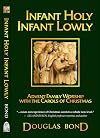
Infant Holy Infant Lowly
Unique to my experience is a book designed to usher in Advent that uses Christmas Carols as a framework for the undertaking. In “Infant Holy Infant Lowly -Advent Family Worship with the Carols of Christmas,” Douglas Bond does just this, and in a way that is touching and inspiring like no other advent book.
Introducing each day of the Advent season with the text of a carol, a brief biography of the author (where it is known), and the background and impetus of the show more work, the author explores the meaning and content of the carol, often examining the poetry and aesthetics of it and what led the author(s) to compose it, always driving at its relevance to the advent of Christ.
There is something in the genesis of a composition that enriches its meaning to us and augments our experience in the hearing of it, especially in the context of its purpose.
Who would have known that during the devastating trench warfare of World War I, a spontaneous truce was prompted by the singing of Silent Night by a German officer who had previously been a soloist with the Berlin Opera? And who would have known that this event that uneasily brought 100,000 soldiers on both sides out of their trenches to exchange gifts, sing carols and play a round of soccer, was denigrated by a then Corporal Adolph Hitler who asked, “Have you no German sense of honor?”
This and so much more enriches the pages of “Infant Holy Infant Lowly.” It is a wonderful addition to the library of any family who celebrates Advent.
Mr. Ron Johnson show less
Unique to my experience is a book designed to usher in Advent that uses Christmas Carols as a framework for the undertaking. In “Infant Holy Infant Lowly -Advent Family Worship with the Carols of Christmas,” Douglas Bond does just this, and in a way that is touching and inspiring like no other advent book.
Introducing each day of the Advent season with the text of a carol, a brief biography of the author (where it is known), and the background and impetus of the show more work, the author explores the meaning and content of the carol, often examining the poetry and aesthetics of it and what led the author(s) to compose it, always driving at its relevance to the advent of Christ.
There is something in the genesis of a composition that enriches its meaning to us and augments our experience in the hearing of it, especially in the context of its purpose.
Who would have known that during the devastating trench warfare of World War I, a spontaneous truce was prompted by the singing of Silent Night by a German officer who had previously been a soloist with the Berlin Opera? And who would have known that this event that uneasily brought 100,000 soldiers on both sides out of their trenches to exchange gifts, sing carols and play a round of soccer, was denigrated by a then Corporal Adolph Hitler who asked, “Have you no German sense of honor?”
This and so much more enriches the pages of “Infant Holy Infant Lowly.” It is a wonderful addition to the library of any family who celebrates Advent.
Mr. Ron Johnson show less
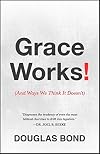
Grace is a big deal! It is also a lightning rod for controversy and attack--even in pulpits, congregations, and denominations that purport to be centered on the good news of God’s amazing, sovereign grace. Douglas Bond jumps headfirst into the deep end of grace and shows the reader that grace is, if I might borrow some imagery from John Mark McMillan, an ocean worthy of sinking in.
Bond begins by diagnosing the tendency to abandon grace, for multiple reasons, and the overwhelming likelihood show more that the reader will see this in themselves, their congregation, or someone of prominence. It can happen to us and, historically speaking, it is more than likely. Bond shows how “law creep” and synergism have affected Reformed congregations and denominations throughout history.
He deals with a number of issues including: the necessity of a proper ordo salutis to minimize the creep of law into the Gospel, the fact that we often sing greater theological truth than we actually articulate, the pushback in Reformed circles on the primacy and centrality of Christ in all the Scriptures, the analogy of faith when interpreting Scripture and the danger of letting that which could be present implicitly erode what is actually present explicitly, and much more.
Bond brings up the dialetic method of interpretation and…well, he left me in the dust with that chapter! While I didn’t fully understand how the dialectic method practically works, I agree greatly with Bond that, “(l)ike Paul, we too must renounce any interpretive method—by whatever name—that does violence to the unity of Scripture, that makes the Bible say opposite things, and that facilitates a doctrinal framework that diminishes Christ and his saving faithfulness.”
His section on the need and benefits of confessional theology and practice is encouraging and convicting. He guides the reader in looking at the necessity of confessional standards and the hazards of abandoning them for “no Creed but Christ” or whatever we can come up with at breakfast after the evangelism seminar. Bond offers a perfect summary of his position when he quotes a brand new believer, infant in his faith but displaying wisdom beyond many, in saying, “(i)f we just stuck with the old confessions (in reference to the Westminster Standards and the 3 Forms of Unity), the church wouldn’t constantly drift away from the Gospel.”
This minimization of grace leads directly to the dangerous practice of relegating the Gospel to the unbeliever—that is, treating the Gospel as a springboard into the Christian life that has little-to-no relevance in the life of a believer. It is a gateway or an entry card, but once you are in it is of relatively little importance, other than as a means of helping others to get in. This method of starting the Christian life by grace alone through faith alone and progressing by works of the law is an error that may not often be explicitly articulated, but it is quite often lived and assumed. This is also an error that leads many believers to “live lives of quiet desperation” or grow in arrogant, yet baseless, confidence. In short, it is dangerous if not deadly. And it must be confronted with the truth that the Christian life is “all of grace”.
I am glad that Douglas Bond and P&R put this together for those of us who desperately need grace in a world full of consistent and constant forces seeking to, even when well-intentioned, pull us away from this grace we so mightily need. Bond reveals his heart beautifully when he says, “I’ll leave the minutia of the theological arguments to the theologians, but I’m far more concerned with what the congregation hears, how words like these [and an overall neglect/opposition to grace] affect the minds and hearts of the flock.” Bond’s heart is not about academic exercises and trivial controversy. It is about the everyday life of the professing believer who is so quickly driven to despair when overdosed on law and starved of grace. Grace Works! makes a great case that for just that—that grace works!
I received review copy from P&R Publishing through NetGalley to provide a review. show less
Bond begins by diagnosing the tendency to abandon grace, for multiple reasons, and the overwhelming likelihood show more that the reader will see this in themselves, their congregation, or someone of prominence. It can happen to us and, historically speaking, it is more than likely. Bond shows how “law creep” and synergism have affected Reformed congregations and denominations throughout history.
He deals with a number of issues including: the necessity of a proper ordo salutis to minimize the creep of law into the Gospel, the fact that we often sing greater theological truth than we actually articulate, the pushback in Reformed circles on the primacy and centrality of Christ in all the Scriptures, the analogy of faith when interpreting Scripture and the danger of letting that which could be present implicitly erode what is actually present explicitly, and much more.
Bond brings up the dialetic method of interpretation and…well, he left me in the dust with that chapter! While I didn’t fully understand how the dialectic method practically works, I agree greatly with Bond that, “(l)ike Paul, we too must renounce any interpretive method—by whatever name—that does violence to the unity of Scripture, that makes the Bible say opposite things, and that facilitates a doctrinal framework that diminishes Christ and his saving faithfulness.”
His section on the need and benefits of confessional theology and practice is encouraging and convicting. He guides the reader in looking at the necessity of confessional standards and the hazards of abandoning them for “no Creed but Christ” or whatever we can come up with at breakfast after the evangelism seminar. Bond offers a perfect summary of his position when he quotes a brand new believer, infant in his faith but displaying wisdom beyond many, in saying, “(i)f we just stuck with the old confessions (in reference to the Westminster Standards and the 3 Forms of Unity), the church wouldn’t constantly drift away from the Gospel.”
This minimization of grace leads directly to the dangerous practice of relegating the Gospel to the unbeliever—that is, treating the Gospel as a springboard into the Christian life that has little-to-no relevance in the life of a believer. It is a gateway or an entry card, but once you are in it is of relatively little importance, other than as a means of helping others to get in. This method of starting the Christian life by grace alone through faith alone and progressing by works of the law is an error that may not often be explicitly articulated, but it is quite often lived and assumed. This is also an error that leads many believers to “live lives of quiet desperation” or grow in arrogant, yet baseless, confidence. In short, it is dangerous if not deadly. And it must be confronted with the truth that the Christian life is “all of grace”.
I am glad that Douglas Bond and P&R put this together for those of us who desperately need grace in a world full of consistent and constant forces seeking to, even when well-intentioned, pull us away from this grace we so mightily need. Bond reveals his heart beautifully when he says, “I’ll leave the minutia of the theological arguments to the theologians, but I’m far more concerned with what the congregation hears, how words like these [and an overall neglect/opposition to grace] affect the minds and hearts of the flock.” Bond’s heart is not about academic exercises and trivial controversy. It is about the everyday life of the professing believer who is so quickly driven to despair when overdosed on law and starved of grace. Grace Works! makes a great case that for just that—that grace works!
I received review copy from P&R Publishing through NetGalley to provide a review. show less

“Can’t recommend this historical novel strongly enough. It is a sweeping account of Calvin’s life from the perspective of an enemy. I was just thinking that just about every unbeliever has a negative impression of Calvin. Almost every believer who adheres to an arminian soteriology has a negative impression of John Calvin and even Christians who hold to the Five Solas usually fault him in the l’affair Servetus. Please give the book a read to learn more about this weak vessel God used show more so powerfully in the Reformation.” show less
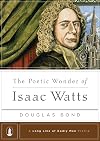
Highly readable -- and enjoyable -- biography of the "Father of English Hymnody," with discussions of different aspects of Watts's work -- as a pastor, as an educator of children, as a poet. At first, I was troubled by author's propensity for breaking down the 'fourth wall,' in inviting readers, for example, to imagine what it might have been like to be Watts -- a short, geeky, rather ugly man. But I gradually realized that this was part of Bond's purpose: to make Watts real to contemporary show more readers, as well as an exemplar of godly living to follow. In short, I loved this book -- and found my already strong admiration for Isaac Watts further strengthened. show less
Lists
TBR Insta (1)
You May Also Like


Associated Authors
Statistics
- Works
- 38
- Members
- 5,182
- Popularity
- #4,799
- Rating
- 4.1
- Reviews
- 24
- ISBNs
- 75
- Languages
- 3
- Favorited
- 4


