
Cara Natterson
Author of The Care and Keeping of You 2: The Body Book for Older Girls
About the Author
Works by Cara Natterson
Your Newborn: Head to Toe: Everything You Want to Know About Your Baby's Health through The First Year (2004) 25 copies, 2 reviews
Dangerous or Safe?: Which Foods, Medicines, and Chemicals Really Put Your Kids at Risk (2009) 11 copies
Tagged
Common Knowledge
- Gender
- female
Members
Reviews
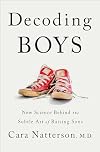
This spring, my 13-year-old's voice suddenly dropped an octave (maybe more). My neighbor/friend was slightly alarmed when it sounded like his stepdaughter (who I often refer to as my third child, because she's so tight with my sons) was video-chatting (the preferred form of communication in a pandemic) with a 40-year-old man. Luckily, gaming with his younger brother keeps him in common living spaces during some of his free time, but his bedroom door is often closed. Knocking often elicits a show more response of "What?," although I express my appreciation when he says, "Yes?" instead. Left to his own devices, he will sleep well past noon. (I won't mention the state of his T-zone.) We have definitely entered the world of puberty.
Dr. Cara Natterson breaks down all the scientific explanations for the deep voice, the acne, the nocturnal schedule (and nocturnal emissions), and all the other "fun" changes that come with puberty. More than that, she stresses the importance of talking to boys about what's happening to them physically and socially/emotionally (relationships, porn, peer pressure, etc.) even when it seems like they don't want to talk. I like how she emphasizes that there's no "one and done" version of "the talk," that it needs to be an ongoing conversation. I'm a huge advocate of open communication with kids and taking advantage of "teachable moments." Those awkward conversations are so much easier to have when there's an opener, even if you don't feel entirely prepared. Even if it's super awkward for both of you. "Hey, did you know that 80% of men report having experienced wet dreams?" (I cannot wait to bust that statistic out!)
This book is a great resource for parents. Dr. Natterson covers everything in detail, but then summarizes each subject with main points you should be covering with your son. (A lot of the material is relevant to daughters, too, but she points out that there's a lot more information available about female puberty.)
My son is scheduled to read [b:American Medical Association Boy's Guide to Becoming a Teen|204095|American Medical Association Boy's Guide to Becoming a Teen|Kate Gruenwald Pfeifer|https://i.gr-assets.com/images/S/compressed.photo.goodreads.com/books/1388181802l/204095._SX50_.jpg|197488] next semester for school. Leafing through, it seems to cover a lot of the same material in a middle-school-friendly format, making it a good companion piece for this book.
Book #4 for Nonfiction November 2020 show less
Dr. Cara Natterson breaks down all the scientific explanations for the deep voice, the acne, the nocturnal schedule (and nocturnal emissions), and all the other "fun" changes that come with puberty. More than that, she stresses the importance of talking to boys about what's happening to them physically and socially/emotionally (relationships, porn, peer pressure, etc.) even when it seems like they don't want to talk. I like how she emphasizes that there's no "one and done" version of "the talk," that it needs to be an ongoing conversation. I'm a huge advocate of open communication with kids and taking advantage of "teachable moments." Those awkward conversations are so much easier to have when there's an opener, even if you don't feel entirely prepared. Even if it's super awkward for both of you. "Hey, did you know that 80% of men report having experienced wet dreams?" (I cannot wait to bust that statistic out!)
This book is a great resource for parents. Dr. Natterson covers everything in detail, but then summarizes each subject with main points you should be covering with your son. (A lot of the material is relevant to daughters, too, but she points out that there's a lot more information available about female puberty.)
My son is scheduled to read [b:American Medical Association Boy's Guide to Becoming a Teen|204095|American Medical Association Boy's Guide to Becoming a Teen|Kate Gruenwald Pfeifer|https://i.gr-assets.com/images/S/compressed.photo.goodreads.com/books/1388181802l/204095._SX50_.jpg|197488] next semester for school. Leafing through, it seems to cover a lot of the same material in a middle-school-friendly format, making it a good companion piece for this book.
Book #4 for Nonfiction November 2020 show less
The Care and Keeping of You 2: The Body Book for Older Girls (American Girl® Wellbeing) by Cara Natterson
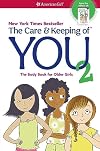
This sequel book reviews some things covered in the first book, goes a lot more in-depth on some topics, and addresses other topics on growing up that the first book didn’t cover. It also has a good glossary at the end with terms/topics covered in the book.
I give it 3 stars for a number of reasons. First, because even though it’s over a decade newer than the original book, it still doesn’t address the pain points I had with book one: reduces period products to only pads and tampons show more when many others exist, and not discussing gender identity and sexual orientation even though it is incredibly important when someone’s going through massive changes with their body and mind.
Although I appreciated how there was a big emphasis on the connection to family because of the support they can give, at times it felt a bit overly forced. For example pages 80-81 Family Dynamics, has significant time carved out daily just dedicated for family time with themed activities, which is a LOT when there’s work and housework for the parents, and school, extracurriculars, and homework for the kids. I think I get what the authors are going for here - that finding a little family bonding time is valuable for everyone, but the message came through quite muddled.
The other issue I have is with the whole “always go to your parents with everything” theme. A LOT of kids don’t have traditional families and traditional family dynamics. There are a number of scenarios where going to the parents is not the best choice or even an option. It seemed like the authors tried to acknowledge this a little with the “or a trusted adult” phrase plopped in multiple places, but I think more value could have been had by simply addressing the fact that if you don’t have a “normal” relationship with your parents/family, that there are other ways to find support.
If “a trusted adult” gives this book to a kid, I think it would be a great supplement to opening up important conversations. The trusted adult should also make sure to have conversations that aren’t covered in the book, such as other forms of period products, gender identity and sexual orientation, and who else inside and outside of their circle can be trusted with similar conversations. show less
I give it 3 stars for a number of reasons. First, because even though it’s over a decade newer than the original book, it still doesn’t address the pain points I had with book one: reduces period products to only pads and tampons show more when many others exist, and not discussing gender identity and sexual orientation even though it is incredibly important when someone’s going through massive changes with their body and mind.
Although I appreciated how there was a big emphasis on the connection to family because of the support they can give, at times it felt a bit overly forced. For example pages 80-81 Family Dynamics, has significant time carved out daily just dedicated for family time with themed activities, which is a LOT when there’s work and housework for the parents, and school, extracurriculars, and homework for the kids. I think I get what the authors are going for here - that finding a little family bonding time is valuable for everyone, but the message came through quite muddled.
The other issue I have is with the whole “always go to your parents with everything” theme. A LOT of kids don’t have traditional families and traditional family dynamics. There are a number of scenarios where going to the parents is not the best choice or even an option. It seemed like the authors tried to acknowledge this a little with the “or a trusted adult” phrase plopped in multiple places, but I think more value could have been had by simply addressing the fact that if you don’t have a “normal” relationship with your parents/family, that there are other ways to find support.
If “a trusted adult” gives this book to a kid, I think it would be a great supplement to opening up important conversations. The trusted adult should also make sure to have conversations that aren’t covered in the book, such as other forms of period products, gender identity and sexual orientation, and who else inside and outside of their circle can be trusted with similar conversations. show less
~ review copy provided
Back about 2012 I began looking for a book for boys about puberty and growing up. I looked EVERYWHERE. It was strange but while I had no problem finding a book for his older sister when I needed one, I could not find a great book for guys.
What I ended up with was [book:The Boys Body Book: Everything You Need to Know for Growing Up YOU|1857784]. And while it covered most of the material I wanted, I loathed the negative approach that included suggesting to boys that it's show more normal to not want to talk to the adults in their life. (That might be true for some kids, but I assure you that there are plenty of young guys who talk to their moms and dads, aunts and uncles... about everything.)
So I read the book and didn't give it our son.
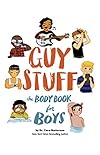
Now, rocket forward to 2017. My now 15 year-old dude doesn't need this book anymore, but I now have in hand a book I can work with. GUY STUFF by Dr. Natterson is upbeat and formatted to be fun with goofy artwork in places, and lots of discussions about all the changes that are in the works.
GUY STUFF covers everything from the hair explosion, to growth patterns, diet, sports safety, and how to deal with embarrassing topics. IT IS NOT a perfect book, but it is absolutely the best out there at this time. It's not, for example, a book for a 15 year old, but it should be great for pre- and early teens.
Which makes it good for parents. I remember at the time one of the things I wanted from a book was how to approach these topics. What I found is that sometimes our boy would approach me and sometimes his dad when he had a question. With a book like this you will find yourself more prepared and organized. And you can leave the book around for sisters and younger brothers to read, not just the boy that needs it to get his 'head around' what is coming in the near future.
RECOMMEND. Best book our family has found. show less
Back about 2012 I began looking for a book for boys about puberty and growing up. I looked EVERYWHERE. It was strange but while I had no problem finding a book for his older sister when I needed one, I could not find a great book for guys.
What I ended up with was [book:The Boys Body Book: Everything You Need to Know for Growing Up YOU|1857784]. And while it covered most of the material I wanted, I loathed the negative approach that included suggesting to boys that it's show more normal to not want to talk to the adults in their life. (That might be true for some kids, but I assure you that there are plenty of young guys who talk to their moms and dads, aunts and uncles... about everything.)
So I read the book and didn't give it our son.
Now, rocket forward to 2017. My now 15 year-old dude doesn't need this book anymore, but I now have in hand a book I can work with. GUY STUFF by Dr. Natterson is upbeat and formatted to be fun with goofy artwork in places, and lots of discussions about all the changes that are in the works.
GUY STUFF covers everything from the hair explosion, to growth patterns, diet, sports safety, and how to deal with embarrassing topics. IT IS NOT a perfect book, but it is absolutely the best out there at this time. It's not, for example, a book for a 15 year old, but it should be great for pre- and early teens.
Which makes it good for parents. I remember at the time one of the things I wanted from a book was how to approach these topics. What I found is that sometimes our boy would approach me and sometimes his dad when he had a question. With a book like this you will find yourself more prepared and organized. And you can leave the book around for sisters and younger brothers to read, not just the boy that needs it to get his 'head around' what is coming in the near future.
RECOMMEND. Best book our family has found. show less
Your Newborn: Head to Toe: Everything You Want to Know About Your Baby's Health through The First Year by Cara Familian Natterson
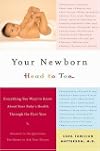
*Checked out from the Arlington Public Library*Your Newborn Head to Toe is an interesting reference. When we first got here (to Arlington, Tennessee) and all my books were boxed up, we went to check out the library and I found a few interesting titles on the shelves to peruse. One of which was this book. For quick reference in reading a little in depth about specific issues dealing with very anatomical systems this is a good book. I would not necessarily buy a copy, but for checking out from show more the library for a reference it is good. show less
Lists
You May Also Like


Statistics
- Works
- 14
- Members
- 1,087
- Popularity
- #23,625
- Rating
- 3.9
- Reviews
- 6
- ISBNs
- 41