
Robie H. Harris (1940–2024)
Author of It's Perfectly Normal: Changing Bodies, Growing Up, Sex, and Sexual Health
About the Author
Series
Works by Robie H. Harris
It's Perfectly Normal: Changing Bodies, Growing Up, Sex, and Sexual Health (1994) 1,182 copies, 24 reviews
It's Not the Stork! A Book About Girls, Boys, Babies, Bodies, Families, and Friends (2006) 606 copies, 11 reviews
Sweet Jasmine, Nice Jackson: What It's Like To Be 2--And To Be Twins! (Growing Up Stories: What It's Like to Be a Baby) (2004) 17 copies, 1 review
Se lo Comio un oso 2 copies
Bebês!: da cabeça aos pés 1 copy
Associated Works
You Can't Say That! Writers for Young People Talk About Censorship, Free Expression, and the Stories They Have to Tell (2021) — Contributor — 85 copies, 21 reviews
Tagged
Common Knowledge
- Legal name
- Harris, Robie H.
- Other names
- Heilbrun, Robie (birth)
- Birthdate
- 1940
- Date of death
- 2024-01-06
- Gender
- female
- Education
- Wheaton College (BA, English)
Bank Street College of Education (MA, Teaching) - Occupations
- elementary school teacher
children's book author - Organizations
- Bank Street School for Children
National Coalition Against Censorship - Relationships
- Levy, Elizabeth (cousin)
- Nationality
- USA
- Birthplace
- Buffalo, New York, USA
- Places of residence
- New York, New York, USA
- Place of death
- Manhattan, New York, New York, USA
- Associated Place (for map)
- New York, USA
Members
Reviews
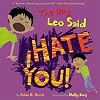
I liked this book for many reasons. First, the illustrations are incredible. The illustrator changed the colors/sizes of the text and characters to fit the mood, and I think that enhanced the story immensely. For example, when Leo finally says, "I HATE YOU", his face is blood red, and his words take up the entire page. This adds emphasis on how the author wants the reader to feel throughout this book. Second, the writing is very well done. The dialogue had between Leo and his mom is show more realistic and flows well. Lastly, Leo is a very believable character. I think that everybody has said something they regret, so being able to relate to his situation makes the message even stronger. The message I took away from this book is think about what you say before you say it because you never know how it can make someone feel. show less
It's Perfectly Normal: Changing Bodies, Growing Up, Sex, and Sexual Health (The Family Library) by Robie H. Harris
I can see why this book may be deemed "offensive" by some. It is very blunt in how it addresses sexuality. There are many drawings of naked people of all ages and shapes and races; I don't see this as a bad thing, though. Everything builds towards the message of the very title of the book--it's perfectly normal to have a body with these parts, and have them do certain things, or to have intense dreams with bodily responses, etc. This is intended for a middle grade audience, and offers a show more simply-stated approach to try to alleviate kids' fears.
Even when the artwork shows people straddling each other, it's the kind of thing you'll see on midday TV these days, only this book introduces information about sexual consequences like STD and pregnancy, too. I see It's Perfectly Normal as a good starting point for an honest conversation where a family can then discuss their beliefs and answer questions. This book was certainly more informative and honest than the sex ed course I took back in high school (which came too late for a lot of kids, anyway). show less
Even when the artwork shows people straddling each other, it's the kind of thing you'll see on midday TV these days, only this book introduces information about sexual consequences like STD and pregnancy, too. I see It's Perfectly Normal as a good starting point for an honest conversation where a family can then discuss their beliefs and answer questions. This book was certainly more informative and honest than the sex ed course I took back in high school (which came too late for a lot of kids, anyway). show less
It's Not the Stork!: A Book About Girls, Boys, Babies, Bodies, Families and Friends by Robie H. Harris
I minored in human sexuality, and have read through many books about sex and sexuality, including a few explaining "how babies are made" for kids. This book is hands-down one of the BEST that I have seen; not only was it written through a collaborative process with doctors, educators, parents/grandparents, scientists/researchers, and coordinators of all kinds of children's programs, amongst other individuals, but it is the first in a series of books designed to grow with your child in terms show more of their questions concerning babies, bodies, and sexuality. This is the first book (the second is "It's So Amazing," for ages 7 and up; the third is "It's Perfectly Normal," for ages 10 and up.) and answers the question of where babies come from in a way that doesn't center on one specific gender or ethnicity - both boys' and girls' bodies are illustrated in a very simple and factual manner, and all races and body types are illustrated. There are also chapters titled "All Kinds of Families" (discusses different numbers of children, parents, adoption, stepparents, foster parents, divorce, same-sex parents, etc.) and "Okay Touches, Not Okay Touches" (what/where your "privates" are and who can/can't touch them, etc.).
I bought this book for my nieces a few years ago, as they were coming up on that age when they were starting to have questions about the differences between boys and girls (as far as they were concerned, "girls have eyelashes, and boys have none!"). I've also re-examined the resources our parents used for when we were their ages, and was kind of horrified to see what they used (pretty misogynistic) and what was available at that time. For full disclosure as well, I worked in a bookstore, and was able to look through some of what was available and at hand, and I really couldn't find anything better than this book! For a topic that is as important to a child's development as this one, I would personally purchase this one for my children (if I had them).
I know that for some, the matter of circumcision is important, and the entirety of the discussion in the book is short, and is as follows: "The loose skin at the end of the penis is called the "foreskin." Some baby boys' foreskins are removed a few days after they are born. Some baby boys' foreskins are not removed. That's why some penises look different from other penises."
These authors also have other books that explain other life lessons in a "Let's Talk About You and Me" series that I haven't read but would only assume to be just as great as the others: "Who Has What?: All About Girls' Bodies and Boys' Bodies," "Who's In My Family?: All About Our Families," "What's in There?: All About Before You Were Born," and "What's So Yummy?: All About Eating Well and Feeling Good." show less
I bought this book for my nieces a few years ago, as they were coming up on that age when they were starting to have questions about the differences between boys and girls (as far as they were concerned, "girls have eyelashes, and boys have none!"). I've also re-examined the resources our parents used for when we were their ages, and was kind of horrified to see what they used (pretty misogynistic) and what was available at that time. For full disclosure as well, I worked in a bookstore, and was able to look through some of what was available and at hand, and I really couldn't find anything better than this book! For a topic that is as important to a child's development as this one, I would personally purchase this one for my children (if I had them).
I know that for some, the matter of circumcision is important, and the entirety of the discussion in the book is short, and is as follows: "The loose skin at the end of the penis is called the "foreskin." Some baby boys' foreskins are removed a few days after they are born. Some baby boys' foreskins are not removed. That's why some penises look different from other penises."
These authors also have other books that explain other life lessons in a "Let's Talk About You and Me" series that I haven't read but would only assume to be just as great as the others: "Who Has What?: All About Girls' Bodies and Boys' Bodies," "Who's In My Family?: All About Our Families," "What's in There?: All About Before You Were Born," and "What's So Yummy?: All About Eating Well and Feeling Good." show less
What's So Yummy?: All About Eating Well and Feeling Good (Let's Talk about You and Me) by Robie Harris
Harris' and Westcott's latest in the Let's Talk About You and Me series has a lot going for it. I love that the family is biracial, that there's the person in a wheelchair in the garden, and the content about eating well is a bit deeper than food pyramids. The book solidly couples the notion of eating well and feeling well; it also raises issues of food allergies. What doesn't work is that the dialogue in the speech bubbles, as I noted (and School Library Journal's review noted as well) is show more "more didactic than realistic." I indeed found myself wondering if kids really talked that way; I am not often in the company of kids these days, so I don't know, but it was hard to picture.
What irked me most were the pictures of the gardens, where carrots, lettuce, tomatoes, pumpkins, cauliflower are all ready to be harvested at the same time. Assuming that Robie Harris is from New York, Nadine Westcott from Massachusetts, I checked out their hardiness zones, and it doesn't look any more likely in the Northeast that all these veggies would be harvested at the same time. Their acknowledgment credits that they consulted nutritionists, child care experts and many more regarding the content -- no acknowledgment of gardeners. That's misinformation and not what you should find in a nonfiction book. I'd take the book as a research project waiting to happen. Look up hardiness zones for NY and MA. Look up planting times and harvesting times and see what they got right and what may be off in terms of timing. show less
What irked me most were the pictures of the gardens, where carrots, lettuce, tomatoes, pumpkins, cauliflower are all ready to be harvested at the same time. Assuming that Robie Harris is from New York, Nadine Westcott from Massachusetts, I checked out their hardiness zones, and it doesn't look any more likely in the Northeast that all these veggies would be harvested at the same time. Their acknowledgment credits that they consulted nutritionists, child care experts and many more regarding the content -- no acknowledgment of gardeners. That's misinformation and not what you should find in a nonfiction book. I'd take the book as a research project waiting to happen. Look up hardiness zones for NY and MA. Look up planting times and harvesting times and see what they got right and what may be off in terms of timing. show less
Lists
B-B to Get (2)
Youth: DEI (1)
Awards


You May Also Like


Associated Authors
Statistics
- Works
- 42
- Also by
- 1
- Members
- 6,421
- Popularity
- #3,834
- Rating
- 4.1
- Reviews
- 357
- ISBNs
- 208
- Languages
- 10

