

Victor Villaseñor
Author of Rain of Gold
About the Author
Victor Villasenor lives in California, on the ranch where he was raised. He is the author of numerous bestselling and critically acclaimed works, including Rain of Gold, Jury: The People vs. Juan Corona, and Macho!
Works by Victor Villaseñor
Associated Works
Tagged
Common Knowledge
- Canonical name
- Villaseñor, Victor
- Birthdate
- 1940-05-11
- Gender
- male
- Nationality
- USA
- Birthplace
- Carlsbad, California, USA
- Places of residence
- Oceanside, California, USA
- Associated Place (for map)
- California, USA
Members
Reviews
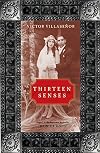
Thirteen Senses is Victor Villaseñor’s second installment in his family history. The first, Rain of Gold, ended with his parents’ 1929 wedding; the second covers the wedding and all that proceeds. This volume continues the unfolding of family wisdom, as told by its women—most particularly, Doña Marguerita, Villaseñor’s paternal grandmother.
Midst exploding stills and other dangers of life as a 1920s bootlegger, Villaseñor’s father, Salvadore, repeats the teachings of his Indian show more mother. In this continuation of his life story, Villaseñor reveals that Doña Marguerita was a curandera, a native healer. It seems an odd thing to have omitted from his first book, in which Doña Marguerita also plays a major role. This and a few other seeming inconsistencies cause me to suspect that his grandmother may not be the source of all the wisdom that he seeks to impart. And in the end, it doesn’t make any difference. He offers a worthwhile teaching, while spinning a rip-snorting yarn of living on the edge of the law during the era when California’s barrios were first being formed and a new culture was being created from the melding of the ways of Old Mexico and gringo America.
Villaseñor reveals the secret of why many men lie—because they can’t have things the way they need them to be if they tell the truth. This is the conundrum of Salvadore when faced with the choice of telling his fiancée the truth about the source of his wealth (as his mother advises) or denying that he is a bootlegger, a lie to ensure that Lupe will not call off the wedding. He chooses the lie. The truth can wait, he reasons, until the marriage is consummated and she dares not to leave him. Lupe is consoled with her mother’s advice: “No man can ever break a woman’s heart, if she has entrusted her heart—not to the man—but to her home.” This ancient rule of motherhood is a revelation to a modern woman who grew up in a world of romantic love and divorces fueled by disappointment. “So always know, mi hijita,” Lupe’s mother tells her, “that you are una lluvia de oro, a rain of gold, sent by God to do your work for the survival of all humankind. We are the power, we women are el eje, the center, the hub de nuestras familias, and in this knowledge, then our hearts are INDESTRUCTIBLE!”
Villaseñor is a great storyteller and a sharp witness to human foibles. Thirteen Senses is a family history, an introduction to Mexican American culture, and a sojourn into the world of a mystic. show less
Midst exploding stills and other dangers of life as a 1920s bootlegger, Villaseñor’s father, Salvadore, repeats the teachings of his Indian show more mother. In this continuation of his life story, Villaseñor reveals that Doña Marguerita was a curandera, a native healer. It seems an odd thing to have omitted from his first book, in which Doña Marguerita also plays a major role. This and a few other seeming inconsistencies cause me to suspect that his grandmother may not be the source of all the wisdom that he seeks to impart. And in the end, it doesn’t make any difference. He offers a worthwhile teaching, while spinning a rip-snorting yarn of living on the edge of the law during the era when California’s barrios were first being formed and a new culture was being created from the melding of the ways of Old Mexico and gringo America.
Villaseñor reveals the secret of why many men lie—because they can’t have things the way they need them to be if they tell the truth. This is the conundrum of Salvadore when faced with the choice of telling his fiancée the truth about the source of his wealth (as his mother advises) or denying that he is a bootlegger, a lie to ensure that Lupe will not call off the wedding. He chooses the lie. The truth can wait, he reasons, until the marriage is consummated and she dares not to leave him. Lupe is consoled with her mother’s advice: “No man can ever break a woman’s heart, if she has entrusted her heart—not to the man—but to her home.” This ancient rule of motherhood is a revelation to a modern woman who grew up in a world of romantic love and divorces fueled by disappointment. “So always know, mi hijita,” Lupe’s mother tells her, “that you are una lluvia de oro, a rain of gold, sent by God to do your work for the survival of all humankind. We are the power, we women are el eje, the center, the hub de nuestras familias, and in this knowledge, then our hearts are INDESTRUCTIBLE!”
Villaseñor is a great storyteller and a sharp witness to human foibles. Thirteen Senses is a family history, an introduction to Mexican American culture, and a sojourn into the world of a mystic. show less
The Stranger and the Red Rooster/ El forastero y el gallo rojo (English and Spanish Edition) by Victor Villaseñor
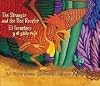
At first, I thought it was mean that all the children ran in their homes because a stranger with scarring on his face comes walking down the road of a close neighborhood. Then, I thought most people would be concerned if a stranger walked through not because of the scarring, but because it's a stranger. In the end, the neighborhood welcomed the new stranger and forgot about the scarring on his face. I love the author included that this story was told by his father. His father said that show more laughter can help us see past the awful twists and turns of life. I thought that was really moving and true. We can share similarities even though we are all very different. show less
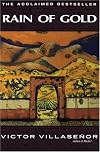
Finished it and then cried all through the Author’s Notes! A testament to the strength and perseverance of the author’s family, as they fled the Mexican Revolution and struggled to make their way in the US against so many odds (extreme poverty, labor exploitation, racism, etc.), yet truly lived their lives with passion, joy, and faith....which carried them through generations.
There are some aspects of nostalgia and longing that are universal to most immigrants that touched me as an show more immigrant myself...the longing for a home or past that is no more and yet still feeling like a fish out of water in your new home!
There were some sections on the last 3rd of the book that dragged a bit too much for me, but other than that, a rewarding read. show less
There are some aspects of nostalgia and longing that are universal to most immigrants that touched me as an show more immigrant myself...the longing for a home or past that is no more and yet still feeling like a fish out of water in your new home!
There were some sections on the last 3rd of the book that dragged a bit too much for me, but other than that, a rewarding read. show less
A story of nonviolence – amazingly. This is not a meek nonviolence, but a full-throated, bloody one. It’s about faith, too, and family and the consequences of losing faith and arching struggle to keep it. This is how we die: by loving.
To read these 500 pages is to immerse oneself in a different culture. I love the descriptions of Juan’s uneasiness when he dares another culture and his courage to dare it nonetheless. Venture into the particular (and true) story of a Mexican family show more crossing the border and you will feel your own uneasiness rise! Take courage! Love is to be gained. show less
To read these 500 pages is to immerse oneself in a different culture. I love the descriptions of Juan’s uneasiness when he dares another culture and his courage to dare it nonetheless. Venture into the particular (and true) story of a Mexican family show more crossing the border and you will feel your own uneasiness rise! Take courage! Love is to be gained. show less
Lists
Awards


You May Also Like


Associated Authors
Statistics
- Works
- 28
- Also by
- 2
- Members
- 1,662
- Popularity
- #15,459
- Rating
- 4.0
- Reviews
- 40
- ISBNs
- 96
- Languages
- 3
- Favorited
- 4
