
About the Author
Adam Gordon edits the Cygnus Review, the magazine for the UK's leading spiritual book club.
Works by Adam Gordon
Future Savvy: Identifying Trends to Make Better Decisions, Manage Uncertainty, and Profit from Change (2008) 31 copies, 3 reviews
SSCP (ISC)2 Systems Security Certified Practitioner Official Study Guide and SSCP CBK Kit (2016) 1 copy
Tagged
Common Knowledge
There is no Common Knowledge data for this author yet. You can help.
Members
Reviews
Future savvy : identifying trends to make better decisions, manage uncertainty, and profit from change by Adam Gordon
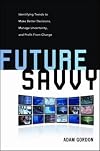
Future Savvy was the most stimulating futures book I read in 2009. I was put off at first; it sets itself up as a book about forecasting, and I am sceptical about this (you learn early in futures work that all forecasts are wrong, except for the ones which are right for the wrong reasons). But businesses and governments live by forecasts, and as you go further in, you discover that Adam Gordon’s intent is to make us appreciate the limits of forecasting.
There are good chapters on the nature show more of bias (social and personal), on why technology-led forecasts are so often wrong, and a reminder that the ‘blockers’ of change can be as influential as the ‘drivers of change’. Unlike some futures books, it is also clear and well-written.
It ends with a couple of chapters which are designed to improve the quality of our thinking about the future. The first takes some actual forecasts and interrogates their assumptions and gaps. (The forecast for the US housing market to 2013 by the US Homeownership Alliance is self-serving and spectacularly wrong). The second has a useful set of questions the reader can use to test the value of a forecast. As he concludes,
"Good forecasting is as much about seeing what won’t change in the future. Even in fast-moving situations, not everything will change."
Review by Andrew Curry from The Futures Company blog: http://blog.thefuturescompany.com show less
There are good chapters on the nature show more of bias (social and personal), on why technology-led forecasts are so often wrong, and a reminder that the ‘blockers’ of change can be as influential as the ‘drivers of change’. Unlike some futures books, it is also clear and well-written.
It ends with a couple of chapters which are designed to improve the quality of our thinking about the future. The first takes some actual forecasts and interrogates their assumptions and gaps. (The forecast for the US housing market to 2013 by the US Homeownership Alliance is self-serving and spectacularly wrong). The second has a useful set of questions the reader can use to test the value of a forecast. As he concludes,
"Good forecasting is as much about seeing what won’t change in the future. Even in fast-moving situations, not everything will change."
Review by Andrew Curry from The Futures Company blog: http://blog.thefuturescompany.com show less
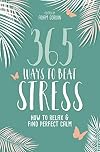
Many thanks to NetGalley, Watkins Publishing and Adam Gordon for providing me with an ARC in exchange for an honest review. All opinions are 100% my own and independent of receiving an advance copy.
This is a much better selection than the 365 Ways for Peace that I recently reviewed. I found that these selections were much more useful and more meaningful ways to decrease stress in your life. These are not quotations or selections from famous thinkers but rather concrete ideas on what you can show more do tomorrow to affect change. In the introduction, Gordon states that he thought it impossible that there could be 365 ways to destress, but now he realizes there are hundreds of ways. I found that an odd statement, but yes, I agree, there are so many small things you can do that really can have a profound impact. Obviously some are easier than others, some easier for some people and harder for others, some short term and some long term, but I found lots that I could implement into my life.
There are lots of groupings from how to start your day, things you can do at work, dealing with emotions, past traumas, ways to destress your body. How to put ease your mind, create a calm home, ideas to become more creative and how to end your day. Some are obvious and I have heard many times before in other sources and some are good reminders. Some of the ones I loved are: imagine six impossible things before breakfast, wake up as if you have amnesia and can’t remember any of your past mistakes, etc., think how you can give joy to at least one person today. Some are quiet simple like breath (a yoga breath) ten times before you get out of bed, open the window and take a breath of fresh air, walk a pretty route. Some are very practical like be mindful of money, or choose one day a week to not spend any money. So overall not a bad selection, I think there’s something for everyone, but nothing earth shattering or groundbreaking. show less
This is a much better selection than the 365 Ways for Peace that I recently reviewed. I found that these selections were much more useful and more meaningful ways to decrease stress in your life. These are not quotations or selections from famous thinkers but rather concrete ideas on what you can show more do tomorrow to affect change. In the introduction, Gordon states that he thought it impossible that there could be 365 ways to destress, but now he realizes there are hundreds of ways. I found that an odd statement, but yes, I agree, there are so many small things you can do that really can have a profound impact. Obviously some are easier than others, some easier for some people and harder for others, some short term and some long term, but I found lots that I could implement into my life.
There are lots of groupings from how to start your day, things you can do at work, dealing with emotions, past traumas, ways to destress your body. How to put ease your mind, create a calm home, ideas to become more creative and how to end your day. Some are obvious and I have heard many times before in other sources and some are good reminders. Some of the ones I loved are: imagine six impossible things before breakfast, wake up as if you have amnesia and can’t remember any of your past mistakes, etc., think how you can give joy to at least one person today. Some are quiet simple like breath (a yoga breath) ten times before you get out of bed, open the window and take a breath of fresh air, walk a pretty route. Some are very practical like be mindful of money, or choose one day a week to not spend any money. So overall not a bad selection, I think there’s something for everyone, but nothing earth shattering or groundbreaking. show less
Future Savvy: Identifying Trends to Make Better Decisions, Manage Uncertainty, and Profit from Change by Adam Gordon
Great book. The author clearly teaches how to properly select a forecasting method based upon the context of the forecasting effort.
Future Savvy: Identifying Trends to Make Better Decisions, Manage Uncertainty, and Profit from Change by Adam Gordon
Simplistic but fairly specific approach to forecasting.
Awards

Statistics
- Works
- 12
- Members
- 86
- Popularity
- #213,012
- Rating
- 3.2
- Reviews
- 5
- ISBNs
- 30