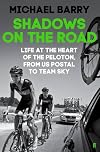
Shadows on the Road is book-ended by Barry agreeing to testify to his previous use of drugs. I'm pleased that he is candid about this, and I am also pleased that it's not the most interesting part of the book. Barry is illuminating on how the social and business relationships of the peleton shape behaviours and attitudes within it. The pro career is short and can be ended at any time by a crash; teams win races by working together; trust is an essential part of riding with 200 others in tight groups at speeds of 45kph and more. From the outside, they look like a band of brothers. Yet contracts are short and any rider is only one or two bad results from being dropped from the team. This is one of the most illuminating accounts of life as a domestique in the professional peloton that I have read.
More at: https://wp.me/pcKvP-1yd
More at: https://wp.me/pcKvP-1yd
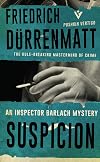
Suspicion looks as if it was first published in instalments in a Swiss newspaper in 1951–2, and then in book form a year later. It is set in late 1948 and early 1949, and trades in that grey world of the post-war war criminal. Is the doctor running a prestigious Zurich clinic really a notorious doctor from a concentration camp?
I’m not going to try to convey the plot, since I’ll give something away, but it’s fair to say that it is equal parts noir and metaphysics. It also has that now-familar trope (small spoiler) of the detective who puts himself in danger to catch his quarry, only to realise that his quarry is two or three steps ahead of him. As tropes go, it would have been a lot less familiar in 1951.
More at: https://wp.me/pcKvP-1Jc
I’m not going to try to convey the plot, since I’ll give something away, but it’s fair to say that it is equal parts noir and metaphysics. It also has that now-familar trope (small spoiler) of the detective who puts himself in danger to catch his quarry, only to realise that his quarry is two or three steps ahead of him. As tropes go, it would have been a lot less familiar in 1951.
More at: https://wp.me/pcKvP-1Jc
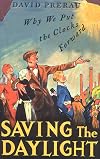
To mark the clocks going back in the UK last week, I read Saving the Daylight, a history of the daylight saving movement. It’s an interesting read for a number of reasons – one being that social institutions which seem mundane were fiercely contested when they were introduced. (More at the blog below).
http://thenextwavefutures.wordpress.com/2007/11/02/saving-daylight/
http://thenextwavefutures.wordpress.com/2007/11/02/saving-daylight/
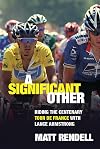
Domestiques are the team riders who can’t win for themselves, but ride for their leaders, preventing breakaways, chasing them down, keeping the pace high in the mountains, and so on. A Significant Other by Matt Rendell (based on Victor de la Pena’s diaries of the 2003 Tour) catches this better than any other. There’s a splendidly geeky section on the physics of the peloton, and a fine chapter in which de la Pena explains his team role in detail on one particular stage.
http://aroundtheedges.wordpress.com/2009/07/05/some-of-the-best-books-on-bike-ra...
http://aroundtheedges.wordpress.com/2009/07/05/some-of-the-best-books-on-bike-ra...
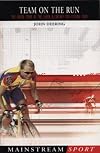
Team on the Run is written by John Deering, the press guy of the Linda McCartney team, funded by the vegetarian food company, and by Paul, who comes out of the story well. There are some highs – an unexpected win in the Giro d’Italia, for example – before the money goes astray.
http://aroundtheedges.wordpress.com/2009/07/05/some-of-the-best-books-on-bike-ra...
http://aroundtheedges.wordpress.com/2009/07/05/some-of-the-best-books-on-bike-ra...

In Wide Eyed and Legless, Jeff Connor (a former fell-running champion-turned-journalist) is sent to ride the Tour stages ahead of the race and also report on the ill-fated ANC-Halfords team, under-prepared and under-financed, as it falls apart during the race. One of the best accounts of a team on a tour. The sprinter Malcolm Elliott - one of the three who made it to Paris - said later that he signed for a Spanish team so he'd never have to ride the Tour de France again.
http://aroundtheedges.wordpress.com/2009/07/05/some-of-the-best-books-on-bike-ra...
http://aroundtheedges.wordpress.com/2009/07/05/some-of-the-best-books-on-bike-ra...
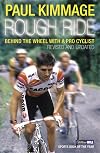
Paul Kimmage’s book A Rough Ride. Kimmage, now a sports journalist, was a successful amateur who never won a race as a professional. His book, published in 1990, was the first to break ranks on the sport’s drugs culture in the ’80s, and he was ostracised for most of the ’90s. But the book does more than this; it gives a feel for the life of the journeyman pro (in the same way, say as Eamonn Dunphy’s Only A Game did for football in the ’70s).
http://aroundtheedges.wordpress.com/2009/07/05/some-of-the-best-books-on-bike-ra...
http://aroundtheedges.wordpress.com/2009/07/05/some-of-the-best-books-on-bike-ra...
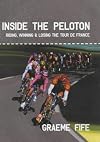
Inside the Peloton by Graeme Fife. Fife – a prolific cycling writer – manages to combine both the sense of the sport and how it works, as well as the history of the race and most of the ‘grands’, the riders who have dominated it.
http://aroundtheedges.wordpress.com/2009/07/05/some-of-the-best-books-on-bike-ra...
http://aroundtheedges.wordpress.com/2009/07/05/some-of-the-best-books-on-bike-ra...
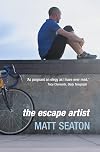
The Escape Artist by Matt Seaton is a wonderful account of the slightly obsessive nature of the amateur rider. It sets the tone with a well-judged description of a tricky but exhilarating part of a favourite training run, and also of his first experience of riding fixed wheel at the Herne Hill velodrome (which ends calamitously). This is about cycling as a way of life – which comes up hard, later, against his wife’s illness and early death. I’d say it’s the best of all of these books.
http://aroundtheedges.wordpress.com/2009/07/05/some-of-the-best-books-on-bike-ra...
http://aroundtheedges.wordpress.com/2009/07/05/some-of-the-best-books-on-bike-ra...

When you learn about screenwriting, as I did a few years back, you learn that most Hollywood films, and many others, follow a three act structure, with critical events diverting the story at the end of each act. As I read the biography of the great screenwriter Emeric Pressburger, written by his grandson Kevin MacDonald (who is also a documentary film-maker), it was striking the way in which his life also played itself out in three acts after he had arrived in pre-war Germany. MacDonald emphasises this by prefacing sections of the book with Pressburger’s changing versions of his name.
Read the rest of this review here: http://aroundtheedges.wordpress.com/2010/01/04/from-imre-to-imrie/
Read the rest of this review here: http://aroundtheedges.wordpress.com/2010/01/04/from-imre-to-imrie/
Lewis says that an eighth of the people in the gulag were there for ‘telling anecdotes’, a figure that he finds small but I thought sizeable enough. The joke about the notorious White Sea canal project, built by prison labour, goes as follows:
Who built the White Sea canal?
The right bank was dug by those who told jokes…
And the left bank?
By those who listened.
The point of punishing joke-tellers was to demonstrate that the state would tolerate not the smallest or most casual expression of dissent, as Roy Medvedev tells Lewis. There’s a joke about that as well:
What is the difference between Stalin and Roosevelt?
Roosevelt collects the jokes that people tell about him, and Stalin collects the people that tell jokes about him.
More here: http://aroundtheedges.wordpress.com/2010/05/20/the-seven-wonders-of-communism/
Who built the White Sea canal?
The right bank was dug by those who told jokes…
And the left bank?
By those who listened.
The point of punishing joke-tellers was to demonstrate that the state would tolerate not the smallest or most casual expression of dissent, as Roy Medvedev tells Lewis. There’s a joke about that as well:
What is the difference between Stalin and Roosevelt?
Roosevelt collects the jokes that people tell about him, and Stalin collects the people that tell jokes about him.
More here: http://aroundtheedges.wordpress.com/2010/05/20/the-seven-wonders-of-communism/
I was in Belfast and Derry last year on holiday, and while I was there read Kevin Myers' fairly recent memoir of reporting the Troubles in the north of Ireland 35 years ago, first for RTE and later as a freelance. You realise, some way in, that you are watching a man coming to terms with post-traumatic stress. He never says it, of course, and my saying it here is not intended to diminish a well-written and compelling book. But about half way through Watching the Door, he admits us to a dream he had, every night for several years, even after he has left the city.
Read the rest of the review here: http://aroundtheedges.wordpress.com/2010/06/13/watching-the-door/
Read the rest of the review here: http://aroundtheedges.wordpress.com/2010/06/13/watching-the-door/
Future savvy : identifying trends to make better decisions, manage uncertainty, and profit from change by Adam Gordon
Future Savvy was the most stimulating futures book I read in 2009. I was put off at first; it sets itself up as a book about forecasting, and I am sceptical about this (you learn early in futures work that all forecasts are wrong, except for the ones which are right for the wrong reasons). But businesses and governments live by forecasts, and as you go further in, you discover that Adam Gordon’s intent is to make us appreciate the limits of forecasting.
There are good chapters on the nature of bias (social and personal), on why technology-led forecasts are so often wrong, and a reminder that the ‘blockers’ of change can be as influential as the ‘drivers of change’. Unlike some futures books, it is also clear and well-written.
It ends with a couple of chapters which are designed to improve the quality of our thinking about the future. The first takes some actual forecasts and interrogates their assumptions and gaps. (The forecast for the US housing market to 2013 by the US Homeownership Alliance is self-serving and spectacularly wrong). The second has a useful set of questions the reader can use to test the value of a forecast. As he concludes,
"Good forecasting is as much about seeing what won’t change in the future. Even in fast-moving situations, not everything will change."
Review by Andrew Curry from The Futures Company blog: http://blog.thefuturescompany.com
There are good chapters on the nature of bias (social and personal), on why technology-led forecasts are so often wrong, and a reminder that the ‘blockers’ of change can be as influential as the ‘drivers of change’. Unlike some futures books, it is also clear and well-written.
It ends with a couple of chapters which are designed to improve the quality of our thinking about the future. The first takes some actual forecasts and interrogates their assumptions and gaps. (The forecast for the US housing market to 2013 by the US Homeownership Alliance is self-serving and spectacularly wrong). The second has a useful set of questions the reader can use to test the value of a forecast. As he concludes,
"Good forecasting is as much about seeing what won’t change in the future. Even in fast-moving situations, not everything will change."
Review by Andrew Curry from The Futures Company blog: http://blog.thefuturescompany.com
Although I love professional cycling, despite its flaws, I have delayed reading Matt Rendell’s biography of the Italian climber Marco Pantani, who won the Tour de France and the Giro in 1998, and died of a massive cocaine overdose in a hotel room six years later, dogged by (well-founded) drugs scandals. The book got fine reviews, and Rendell knows the sport well.The reason I put off reading it was that I knew it would depress me.
The best way to summarise this is through a couple of lines in the final chapter:
"Looking back, Marco’s successes, like any number of world records, gold medals, and winning sequences in recent sporting history have a phantom quality. … They weren’t events at all, but phantasmagorical experiences with no clearly definable reality that existed chiefly in the emotions they caused in millions of indivdual minds. The emotion most associated with Marco is euphoria, yet we know now that it was triggered by the poisons that flowed through his veins and made his flamboyant style possible."
It’s worth exploring this further. One of the most exciting sights in cycling is a climber attacking the field and gaining the minutes he needs to win - and Pantani’s stage win at Les Deux Alpes in 1998, when he attacked on a climb in atrocious conditions, descended recklessly, then climbed again, to make enough time on Ullrich to seal his Tour victory - was one of the most exciting days of racing in my lifetime.
But in a (literally) forensic analysis, show more Rendell demonstrates that Pantani had been blood doping through the use of EPO almost from the start of his professional career. At the same time, he kicks away one of the cycling fans’ supports. Almost all of the successful cyclists in the 1990s used EPO. So the fan’s defence is that EPO use must have levelled the playing field. Rendell suggests that athletes respond differently to EPO, and that Pantani’s success might just suggest that his body was better attuned to the drug.
More at:
http://aroundtheedges.wordpress.com/2009/02/27/reaching-the-heights-touching-the... show less
The best way to summarise this is through a couple of lines in the final chapter:
"Looking back, Marco’s successes, like any number of world records, gold medals, and winning sequences in recent sporting history have a phantom quality. … They weren’t events at all, but phantasmagorical experiences with no clearly definable reality that existed chiefly in the emotions they caused in millions of indivdual minds. The emotion most associated with Marco is euphoria, yet we know now that it was triggered by the poisons that flowed through his veins and made his flamboyant style possible."
It’s worth exploring this further. One of the most exciting sights in cycling is a climber attacking the field and gaining the minutes he needs to win - and Pantani’s stage win at Les Deux Alpes in 1998, when he attacked on a climb in atrocious conditions, descended recklessly, then climbed again, to make enough time on Ullrich to seal his Tour victory - was one of the most exciting days of racing in my lifetime.
But in a (literally) forensic analysis, show more Rendell demonstrates that Pantani had been blood doping through the use of EPO almost from the start of his professional career. At the same time, he kicks away one of the cycling fans’ supports. Almost all of the successful cyclists in the 1990s used EPO. So the fan’s defence is that EPO use must have levelled the playing field. Rendell suggests that athletes respond differently to EPO, and that Pantani’s success might just suggest that his body was better attuned to the drug.
More at:
http://aroundtheedges.wordpress.com/2009/02/27/reaching-the-heights-touching-the... show less
The poet Michael Donaghy died suddenly, and relatively young, in 2004 at the age of 50. He was a gifted poet, and now Picador Books has published both a Collected Poems and a ‘collected prose’ - a volume of criticism and articles.
One of my favourites from his work is Machines, which, brilliantly, links a technical explanation of why we stay up on a bicycle with our emotional experience of music.
http://aroundtheedges.wordpress.com/2009/03/09/michael-donaghys-machines/
One of my favourites from his work is Machines, which, brilliantly, links a technical explanation of why we stay up on a bicycle with our emotional experience of music.
http://aroundtheedges.wordpress.com/2009/03/09/michael-donaghys-machines/
The notion of Raymond Chandler’s mean Los Angeles streets being translated to Aberystwyth seems far-fetched, but Malcolm Pryce’s Aberystwyth is not the small seaside town that some of us know.
Instead, it is more like a part of a Wales from an alternative history, where the druids are a mafia-like organisation, where religion - extreme chapel - still holds sway, where women still wear stovepipe hats, and where Wales lost control of Patagonia in a disastrous colonial war in the mid-1960s. The plots tick over relentlessly, and the private eye, Louie Knight - like other PIs, from Philip Marlowe to Harry Moseby - is usually several steps behind the action. The body count is high and the writing often hilarious.
Instead of magical realism, this is more like magical noir. The clue may lie in the author’s biography, which may be true: Pryce, brought up in Shrewsbury and Aberystwyth, has lived and worked abroad since the early 1990s, and currently lives in Bangkok. His Wales is the parts distilled through a haze of memory.
The fourth in the series, Don’t Cry For Me Aberystwyth, connects Adolf Eichmann to Butch Cassidy and the Sundance Kid, without leaving the town - or at least the immediate area. The first, Aberystwyth Mon Amour, is probably the most ‘Welsh’ of the books, and culminates in a parody of the dambusters’ raid over a Welsh reservoir. And I promise that knowing this about the plot will not be a spoiler.
Instead, it is more like a part of a Wales from an alternative history, where the druids are a mafia-like organisation, where religion - extreme chapel - still holds sway, where women still wear stovepipe hats, and where Wales lost control of Patagonia in a disastrous colonial war in the mid-1960s. The plots tick over relentlessly, and the private eye, Louie Knight - like other PIs, from Philip Marlowe to Harry Moseby - is usually several steps behind the action. The body count is high and the writing often hilarious.
Instead of magical realism, this is more like magical noir. The clue may lie in the author’s biography, which may be true: Pryce, brought up in Shrewsbury and Aberystwyth, has lived and worked abroad since the early 1990s, and currently lives in Bangkok. His Wales is the parts distilled through a haze of memory.
The fourth in the series, Don’t Cry For Me Aberystwyth, connects Adolf Eichmann to Butch Cassidy and the Sundance Kid, without leaving the town - or at least the immediate area. The first, Aberystwyth Mon Amour, is probably the most ‘Welsh’ of the books, and culminates in a parody of the dambusters’ raid over a Welsh reservoir. And I promise that knowing this about the plot will not be a spoiler.
To mark the clocks going back in the UK last week, I read Saving the Daylight, a history of the daylight saving movement. It's an interesting read for a number of reasons - one being that social institutions which seem mundane were fiercely contested when they were introduced.
Read the rest: http://thenextwavefutures.wordpress.com/2007/11/02/saving-daylight/
Read the rest: http://thenextwavefutures.wordpress.com/2007/11/02/saving-daylight/

Brave New World 75 yeas on
For those of you interested in the literature of utopias, and dystopias, there’s an interesting article in a recent issue of The New Atlantis (’a journal of technology and society’) looking back at Aldous Huxley’s Brave New World, and how it was received on publication and afterwards.
I don’t think I’ve read Brave New World since my late teens (so not recently), and certainly not since I became professionally involved in futures work. Caitrin Nicol’s article is quite long and quite literary, exploring, for example, the connections between Brave New World, Doestoevsky, Alexander Zamyatin’s dystopian novel, We, and of course 1984. All I’m going to do here is to pick up three thoughts; about the futures in Brave New World, the critical response (and the reasons for it), and an intriguingly oblique quote by Huxley.
The rest is at: http://thenextwavefutures.wordpress.com/2007/06/20/brave-new-world-75-years-on/
For those of you interested in the literature of utopias, and dystopias, there’s an interesting article in a recent issue of The New Atlantis (’a journal of technology and society’) looking back at Aldous Huxley’s Brave New World, and how it was received on publication and afterwards.
I don’t think I’ve read Brave New World since my late teens (so not recently), and certainly not since I became professionally involved in futures work. Caitrin Nicol’s article is quite long and quite literary, exploring, for example, the connections between Brave New World, Doestoevsky, Alexander Zamyatin’s dystopian novel, We, and of course 1984. All I’m going to do here is to pick up three thoughts; about the futures in Brave New World, the critical response (and the reasons for it), and an intriguingly oblique quote by Huxley.
The rest is at: http://thenextwavefutures.wordpress.com/2007/06/20/brave-new-world-75-years-on/
I’ve meant to write before about the Transition Initiative, which is in my view one of the most radical things happening in the UK at the moment - radical because it is local and community-oriented, radical because it is a thought-through response to both impending energy shortage and climate change. (If only the government was as coherent). Now the movement’s ‘founder’, Rob Hopkins, has written a book which is a combination of handbook, textbook, and manifesto.
Read the rest at:
http://thenextwavefutures.wordpress.com/2008/04/09/making-the-transition-locally...
Read the rest at:
http://thenextwavefutures.wordpress.com/2008/04/09/making-the-transition-locally...
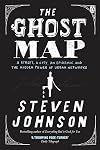
I’ve been reading Steven Johnson’s book The Ghost Map, about the 1854 cholera epidemic in Soho, London, that proved to be the breakthrough in linking cholera to infected drinking water, partly though John Snow’s famous map. The book - which is wonderfully readable - is interesting for several reasons; as a social history of Victorian England; second, in tracing the battle between competing scientific and medical explanations of cholera; and third, for some reflections on the vulnerability of the modern city.
Full review at: http://thenextwavefutures.wordpress.com/2008/10/19/lessons-for-the-city-from-the...
Full review at: http://thenextwavefutures.wordpress.com/2008/10/19/lessons-for-the-city-from-the...
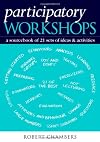
There may be better books out there on workshop facilitation, but not better value books.
Participatory Workshops,which was published seven years ago, is described as a ’sourcebook’, and its organising conceit is that it is divided into 21 sets of ideas and activities, and within each set, in a suitably holonic fashion, there are 21 ideas or activities. Perhaps for this reason one review described it as being like a cookbook.
Read the full review at
Participatory Workshops,which was published seven years ago, is described as a ’sourcebook’, and its organising conceit is that it is divided into 21 sets of ideas and activities, and within each set, in a suitably holonic fashion, there are 21 ideas or activities. Perhaps for this reason one review described it as being like a cookbook.
Read the full review at
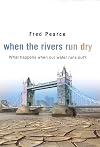
Fred Pearce is a reporter (for New Scientist, among others) and When The Rivers Run Dry is a reporter’s book (he visits places) rather than a work of theory, but he’s been following the subject for long enough to have a strong understanding of the issues. This is close to essential reading for anyone interested in the future of the planet.
Full review at
Full review at

Donella (’Dana’) Meadows was almost certainly the most influential systems thinker of her generation. At barely thirty, she was the lead author of ‘Limits to Growth‘ and she remained an influential voice in the sustainability movement until her relatively early death in 2001 - which for me at least recalled an Adrian Mitchell couplet, ‘And God killed Aneurin Bevan/ And let Harold Wilson survive’.
The manuscript of ‘Thinking in systems‘ has been around in draft since the early ’90s, but never completed. Now her colleague Diana Wright has edited it for publication. In the circumstances, it ought to be something of a publishing event, even if a niche one. It is, I’d say, the best single introduction to systems work that is available, especially for non-specialists. But the book seems to have surfaced with little fanfare, and barely a review.
Full review at
The manuscript of ‘Thinking in systems‘ has been around in draft since the early ’90s, but never completed. Now her colleague Diana Wright has edited it for publication. In the circumstances, it ought to be something of a publishing event, even if a niche one. It is, I’d say, the best single introduction to systems work that is available, especially for non-specialists. But the book seems to have surfaced with little fanfare, and barely a review.
Full review at