
Margot Badran
Author of Opening the Gates: A Century of Arab Feminist Writing
About the Author
Margot Badran is a Senior Fellow at the Center for Muslim Christian Understanding, Georgetown University, US. She is also currently a fellow at the Woodrow Wilson International Center for Scholars, Washington, D.C. She has written several works on Feminism in Islam, including Feminists, Islam and show more Nation: Gender and the Making of Modern Egypt. show less
Image credit: from Georgetown University faculty page
Works by Margot Badran
Associated Works
Tagged
Common Knowledge
- Birthdate
- 1936
- Gender
- female
- Education
- Oxford University, PhD
Harvard University (MA)
Trinity College (BA) - Occupations
- Senior Scholar, Woodrow Wilson Center
Senior Fellow, Prince Alwaleed ibn Talal Center for Muslim-Christian Understanding, Georgetown University
Women's Studies and History Professor, Oberlin College - Nationality
- USA
- Birthplace
- New York, USA
- Map Location
- USA
Members
Reviews
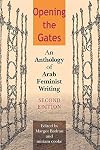
A collection of Arab feminist writing, from the 1920s through the 1980s. I rarely enjoy translated works (the language so often feels stilted and unnatural), and sadly, these were no exception. There were a couple pieces I liked:
--Wadida Wassef's "Hasan's Wives," a short story about a rowdy neighborhood family in Alexandria. A great deal of humor packed into a story that is also about what it was like to live back then--where aristocrats lived side-by-side with the people who raised their show more cattle.
--Marie-Aimee Helie-Lucas's examination of women's roles in the Algerian revolution against French rule. Some quotes I loved from her piece: "Nor was she considered a fighter when she collected fuel or food for the fighters, or carried their guns, or guided them through the mountains. She was merely helping the men. Only the French army acknowledged her action by imprisoning and torturing her in concentration camps and killing her."
"We are caught between two legitimacies: belonging to our people or identifying with other oppressed women...We are not even aware of the differences between one Muslim country and another. Let Muslim women step out of their national ghettos. Let them see that the clitoridectomy practiced in Africa is unthinkable in Asia, that the veil worn in Arab countries is absent in sub-Saharan Africa, that none of these practices are based on religious precepts, but that religion everywhere backs such practices whenever they allow for greater control over women.
Let us dream of secular states. Let us dream of the separation of religion and state. Let us dream of the end of using nationalism to further oppress the already oppressed."
I didn't learn much from these works, but they were clearly very important when they were written. It's just that the arguments are so sad and basic: maybe women aren't less moral than men, perhaps we could teach women to read, perhaps women should not be legally beaten to death by their relatives. I don't know history very well, certainly not Middle Eastern or African history, but this book didn't teach me anything about that, either. Really, I think this book was a good reminder, but not something people should seek out. show less
--Wadida Wassef's "Hasan's Wives," a short story about a rowdy neighborhood family in Alexandria. A great deal of humor packed into a story that is also about what it was like to live back then--where aristocrats lived side-by-side with the people who raised their show more cattle.
--Marie-Aimee Helie-Lucas's examination of women's roles in the Algerian revolution against French rule. Some quotes I loved from her piece: "Nor was she considered a fighter when she collected fuel or food for the fighters, or carried their guns, or guided them through the mountains. She was merely helping the men. Only the French army acknowledged her action by imprisoning and torturing her in concentration camps and killing her."
"We are caught between two legitimacies: belonging to our people or identifying with other oppressed women...We are not even aware of the differences between one Muslim country and another. Let Muslim women step out of their national ghettos. Let them see that the clitoridectomy practiced in Africa is unthinkable in Asia, that the veil worn in Arab countries is absent in sub-Saharan Africa, that none of these practices are based on religious precepts, but that religion everywhere backs such practices whenever they allow for greater control over women.
Let us dream of secular states. Let us dream of the separation of religion and state. Let us dream of the end of using nationalism to further oppress the already oppressed."
I didn't learn much from these works, but they were clearly very important when they were written. It's just that the arguments are so sad and basic: maybe women aren't less moral than men, perhaps we could teach women to read, perhaps women should not be legally beaten to death by their relatives. I don't know history very well, certainly not Middle Eastern or African history, but this book didn't teach me anything about that, either. Really, I think this book was a good reminder, but not something people should seek out. show less
Lists
You May Also Like


Associated Authors
Statistics
- Works
- 5
- Also by
- 1
- Members
- 190
- Popularity
- #114,773
- Rating
- 3.9
- Reviews
- 1
- ISBNs
- 18
- Languages
- 2