
Dian Fossey (1932–1985)
Author of Gorillas in the Mist
About the Author
Dian Fossey was born in San Francisco in 1932. She began observing gorillas in Zaire in 1967 & later moved to Rwanda, where she lived for almost eighteen years. Fossey, who was the first person to have voluntary contact with a gorilla, was found murdered in her cabin on December 26, 1985. Her death show more is still unsolved. (Bowker Author Biography) show less
Image credit: Dian Fossey in November 1985; photograph by Yann Arthus-Bertrand.
Works by Dian Fossey
Gorilla in the Mist 1 copy
Associated Works
Reader's Digest Auswahlbücher 171 - Daddy / Gorillas im Nebel / Rückenflug / Mrs. Pollifax und das Goldene Dreieck (1990) 3 copies
Het Beste Boek 150: Narcose / Ben / De vrouw die op Greta Garbo leek / Gorilla's in de mist (1991) — Author — 2 copies, 1 review
Tagged
Common Knowledge
- Birthdate
- 1932-01-16
- Date of death
- 1985-12-26
- Gender
- female
- Education
- San Jose State University
University of Cambridge - Occupations
- zoologist
primatologist - Relationships
- Carr, Rosamond Halsey (friend)
- Cause of death
- murder
- Nationality
- USA
- Birthplace
- San Francisco, California, USA
- Places of residence
- San Francisco, California, USA (Birth)
- Place of death
- Volcanoes National Park, Rwanda
- Burial location
- Karisoke, Rwanda
- Associated Place (for map)
- USA
Members
Reviews
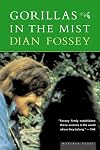
Much like when I reviewed Jane Goodall's In the Shadow of Man, I quickly fell in love with the gorillas that Dian Fossey describes in exquisite detail in her book Gorillas in the Mist. (You may have heard of it.) Dr. Fossey moved to the Virungas of Africa (Zaire, Uganda, and Rwanda) to study the mountain gorillas that lived there. That study ended up taking nearly 20 years. However, she wasn't only studying the habits of the gorillas but also the parasites, environment (rainfall), show more vegetation, and the other animals that lived there (elephants, buffalo, duiker). (Basically, whatever she and her team could study they did to increase their chances of getting more grant money and lengthening their stay.) One of the things that Fossey stressed was that it would take more than passive conservation (tourism) to keep the mountain gorillas alive and thriving. She found that active conservation was the only way to go which meant that she had to employ staff to track down poacher's lairs and destroy their supplies and traps. Basically, she was a bada$$ of the highest caliber and the surrounding villagers had a nickname for her (it wasn't sweet lady of the mountain either). She quickly earned a reputation for not backing down and for doing everything within her power to protect these creatures from imminent extinction (which is looking more and more likely). Between poachers, population encroachment, and decreasing territory for the different gorilla groups there were only 242 mountain gorillas left at the end of her nearly two decade study. There are even less now. Fossey's fervent desire was that governments and the people governed by them would want to conserve these animals because they lived in the area providing the only fresh water source for the region. However, deforestation to make way for increasing numbers of people and farms continued no matter what arguments she put forth. I had heard about this book and its movie adaptation before but it wasn't until I saw Ellen DeGeneres talking about it (on her birthday episode) that I decided to finally pick up the book. I am so glad that I did. Even if you only read the appendices (which are absolutely phenomenal) you'd learn so much about these amazing animals and the land they inhabit. You'd also bear witness to the dedication and passion which Fossey had for her research. I highly recommend you pick up a copy of Gorillas in the Mist and afterward that you do further research into Fossey because it makes it all the more poignant and meaningful (at least it did for me). 10/10 show less

A very interesting (if somewhat more scientific than I was expecting!) book about several groups of mountain gorillas studied by Dian Fossey in the 70s and 80s.
Prior to reading this book, I knew nothing about mountain gorillas or their habitat and had no particular interest in the subject. Despite that, this book more than held my attention.
Dian Fossey comes across as a very strong, opinionated, determined and brave woman, yet its easy to see how she could have easily made enemies. I was show more saddened to discover that she was murdered in Rwanda a few years after writing this book. show less
Prior to reading this book, I knew nothing about mountain gorillas or their habitat and had no particular interest in the subject. Despite that, this book more than held my attention.
Dian Fossey comes across as a very strong, opinionated, determined and brave woman, yet its easy to see how she could have easily made enemies. I was show more saddened to discover that she was murdered in Rwanda a few years after writing this book. show less
Legendary anthropologist Louis Leakey believed that field study of the great apes, our closet living relatives, could yield important insights into the behavior of early hominids. He recruited Jane Goodall to study chimpanzees in the wild. Dian Fossey was his "gorilla girl" and in this memoir she "recounts some of the events of the thirteen years... spent with the mountain gorillas in their natural habitat." Two years after publishing this book in 1983, Fossey was murdered--the case still show more remains unsolved. I had read Jane Goodall's memoir, Reason for Hope, just before reading Fossey's book. With Goodall, I rather wished for more on the chimpanzees, and less on her spiritual and political beliefs. I certainly didn't have that complaint with Fossey, although in the end her book is less accessible and engaging. Much of Fossey's book is too detailed and dry for a layman and reads more like a scientific report complete with appendixes, bibliography and index. She was less willing to speculate than Goodall about what her observations of gorillas suggested about human nature. I learned far more about such things as the dung of the gorilla than I ever wanted to know. At the same time, the various gorillas she observed, such as Pablo, Puck and especially Digit, do come through as endearing personalities. And if you're not moved by the stories of Coco and Pucker in "Wild Orphans" you have no beating heart.
The probable reason for her murder also chillingly comes through. I don't recall Goodall having had much of a problem with poaching in Tanzania. Fossey's situation was quite different. One of three subspecies of gorilla, the mountain gorilla inhabits a narrow band of territory consisting of six dormant volcanoes running through Zaire, Rwanda and Uganda. Mountain gorillas had been discovered in 1902 and were expected to become extinct by the end of the same century. When Fossey wrote the preface to her book, she estimated the population of mountain gorillas at less than 250 individuals. As soon as Fossey hit the ground, she went to war with the hunters and herders using the reserve. She released caught prey, cut traplines, destroyed hunting equipment, confiscated weapons and helped capture men who then received long prison sentences for poaching. At one point she even kidnapped the ten-year-old son of a "leading poacher" to force him to stop. A cynical part of me wondered when I read that if Fossey would have become such a beloved heroine in the Western world had she done that to a European or American child. She deliberately "mixed herds...thus destroying long-cherished bloodlines between familial herds" of cattlemen whose families had been grazing in those areas for "at least four hundred years." And when her dog was taken, she stole and held hostage the cattle of herders who had nothing to do with it, threatening to kill one of the cattle each day until her dog was returned. That's what she admitted to.
After reading the book and wondering what had happened in the nearly 30 years since--and to find out what she hadn't told me--I went a-googling. I found this article from Entertainment Weekly about Hayes' The Dark Romance of Dian Fossey, based on over 200 interviews. The article, quoting Hayes, claimed that in "pursuit of her singular goal, the protection of the endangered mountain gorilla, Fossey had shot at her enemies, kidnapped their children, whipped them about the genitals, smeared them with ape dung, killed their cattle, [and] burned their property." Moreover, the article notes: "Had Fossey not been lucky enough to publicize the plight of the apes by getting her book on the best-seller lists, her efforts on behalf of these magnificent creatures could have done more harm than good. Hardly anybody in Rwanda, for example, doubts that some apes were slaughtered less for profit than as acts of revenge against the scientist herself." The good news at least is that, according to the Wiki, as "of Spring 2010, the estimated total number of mountain gorillas worldwide is 790." Not out of danger--but not extinct--and with a population that's grown three-fold in the last three decades. The irony is that as the Entertainment Weekly article pointed out, it's the success of the tourism Fossey opposed "that has protected the mountain apes, by making them worth infinitely more to Rwandans than the value of their habitat as crop land."
I can't help but compare Fossey's legacy--and the impression she made on me in her book--to that of Jane Goodall. In her opposition to animal research, Goodall didn't just hurl bricks, rhetorical or otherwise, from outside the walls. She didn't abuse those on the other side of the debate. She visited laboratories and sat down with researchers to convince them--to work with them to better the condition of experimental animals, and she tried to find common ground with those who disagreed with her. I have a very different worldview than Jane Goodall--but I ended her memoir feeling for her liking, respect, even admiration. With Fossey, by the end of her memoir and a little follow-up, it was a very different story. show less
The probable reason for her murder also chillingly comes through. I don't recall Goodall having had much of a problem with poaching in Tanzania. Fossey's situation was quite different. One of three subspecies of gorilla, the mountain gorilla inhabits a narrow band of territory consisting of six dormant volcanoes running through Zaire, Rwanda and Uganda. Mountain gorillas had been discovered in 1902 and were expected to become extinct by the end of the same century. When Fossey wrote the preface to her book, she estimated the population of mountain gorillas at less than 250 individuals. As soon as Fossey hit the ground, she went to war with the hunters and herders using the reserve. She released caught prey, cut traplines, destroyed hunting equipment, confiscated weapons and helped capture men who then received long prison sentences for poaching. At one point she even kidnapped the ten-year-old son of a "leading poacher" to force him to stop. A cynical part of me wondered when I read that if Fossey would have become such a beloved heroine in the Western world had she done that to a European or American child. She deliberately "mixed herds...thus destroying long-cherished bloodlines between familial herds" of cattlemen whose families had been grazing in those areas for "at least four hundred years." And when her dog was taken, she stole and held hostage the cattle of herders who had nothing to do with it, threatening to kill one of the cattle each day until her dog was returned. That's what she admitted to.
After reading the book and wondering what had happened in the nearly 30 years since--and to find out what she hadn't told me--I went a-googling. I found this article from Entertainment Weekly about Hayes' The Dark Romance of Dian Fossey, based on over 200 interviews. The article, quoting Hayes, claimed that in "pursuit of her singular goal, the protection of the endangered mountain gorilla, Fossey had shot at her enemies, kidnapped their children, whipped them about the genitals, smeared them with ape dung, killed their cattle, [and] burned their property." Moreover, the article notes: "Had Fossey not been lucky enough to publicize the plight of the apes by getting her book on the best-seller lists, her efforts on behalf of these magnificent creatures could have done more harm than good. Hardly anybody in Rwanda, for example, doubts that some apes were slaughtered less for profit than as acts of revenge against the scientist herself." The good news at least is that, according to the Wiki, as "of Spring 2010, the estimated total number of mountain gorillas worldwide is 790." Not out of danger--but not extinct--and with a population that's grown three-fold in the last three decades. The irony is that as the Entertainment Weekly article pointed out, it's the success of the tourism Fossey opposed "that has protected the mountain apes, by making them worth infinitely more to Rwandans than the value of their habitat as crop land."
I can't help but compare Fossey's legacy--and the impression she made on me in her book--to that of Jane Goodall. In her opposition to animal research, Goodall didn't just hurl bricks, rhetorical or otherwise, from outside the walls. She didn't abuse those on the other side of the debate. She visited laboratories and sat down with researchers to convince them--to work with them to better the condition of experimental animals, and she tried to find common ground with those who disagreed with her. I have a very different worldview than Jane Goodall--but I ended her memoir feeling for her liking, respect, even admiration. With Fossey, by the end of her memoir and a little follow-up, it was a very different story. show less

The legendary autobiographical account of Dian Fossey and her passionate quest to study and save the few remaining mountain gorillas from extinction. I am glad that I read this book AFTER our own mountain gorilla trek, because I was able to connect with her commentary regarding the jungle, the local culture, and the trekking experience more completely. The book is a bit confusing with regards to timeline, but Fossey's strength of character and heroism clearly showed through. I would show more recommend this to anyone interested in zoology, botany, and especially, conservation ecology. show less
Lists
Awards


You May Also Like


Associated Authors
Statistics
- Works
- 4
- Also by
- 5
- Members
- 1,257
- Popularity
- #20,409
- Rating
- 3.9
- Reviews
- 16
- ISBNs
- 39
- Languages
- 8
- Favorited
- 2
