
Frans de Waal (1948–2024)
Author of Are We Smart Enough to Know How Smart Animals Are?
About the Author
Frans De Waal has been named one of Time magazine's 100 Most Influential People. The author of The Bonobo and the Atheist, among many other works, he is the C. H. Candler Professor in Emory University's Psychology Department and director of the Living Links Center at the Yerkes National Primate show more Research Center. He lives in Atlanta, Georgia. show less
Works by Frans de Waal
Mama's Last Hug: Animal Emotions and What They Tell Us about Ourselves (2019) 543 copies, 17 reviews
Good Natured: The Origins of Right and Wrong in Humans and Other Animals (1996) 345 copies, 1 review
Tree of Origin: What Primate Behavior Can Tell Us about Human Social Evolution (2001) — Editor; Contributor — 94 copies, 1 review
Animal Social Complexity: Intelligence, Culture, and Individualized Societies (2003) — Editor — 12 copies
Emotions Inside Out: 130 Years After Darwin's the Expression of the Emotions in Man and Animals (Annals of the New York (2003) 9 copies
Journal: Bonobo Dialogues 1 copy
Simian Sympathy 1 copy
Le duel 1 copy
Associated Works
Bird Brain: An Exploration of Avian Intelligence (2016) — Preface, some editions — 66 copies, 1 review
Tagged
Common Knowledge
- Canonical name
- de Waal, Frans
- Legal name
- de Waal, Fransiscus Bernardus Maria
- Birthdate
- 1948-10-29
- Date of death
- 2024-03-14
- Gender
- male
- Education
- Radboud University
University of Groningen
Utrecht University (Ph.D|1977) - Occupations
- zoologist
ethologist
primatologist
psychologist
biologist
professor - Organizations
- Emory University
Yerkes National Primate Research Center
Wisconsin National Primate Research Center - Awards and honors
- PEN / EO Wilson Literary Science Writing Award (2020)
ASP Distinguished Primatologist (2015)
Premio Letterario Galileo (2014)
Edward O. Wilson Biodiversity Technology Pioneer Award (2013)
Foreign Member, Royal Holland Society of Sciences and Humanities (2013)
Ig Nobel Prize winner in Anatomy (2012) (show all 15)
Order of the Netherlands Lion (2010)
Medal, Società di Medicina & Scienze Naturali (2009)
Ariëns Kappers Medal, Royal Netherlands Academy of Arts and Sciences (2009)
American Academy of Arts & Sciences (2008)
American Philosophical Society (2005)
Arthur W. Staats Award (2005)
National Academy of Sciences (2004)
Corresponding Member, Royal Netherlands Academy of Arts and Sciences (1993)
Los Angeles Times Book Award 91989) - Agent
- Michelle Tessler
- Relationships
- Marin, Catherine (spouse)
- Cause of death
- stomach cancer
- Nationality
- Netherlands (birth)
USA (naturalized 2008) - Birthplace
- 's-Hertogenbosch, Netherlands
- Places of residence
- Utrecht, Netherlands
Atlanta, Georgia, USA - Place of death
- Stone Mountain, Georgia, USA
- Associated Place (for map)
- Netherlands
Members
Reviews
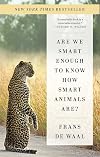
Frans de Waal wants to change our understanding of our place in the world of living things. The tradition, and the bias supporting it, is that human beings are uniquely intelligent, enabling unique abilities to plan, coordinate, and adapt our behavior, our physical environment, and our social organizations. De Waal supports a “continuity” theory, stressing commonalities between human and animal cognitive capabilities. This is the latest in a series of books to that purpose.
De Waal cites show more convincing instances of intelligent behavior across a pretty wide variety of species — apes, monkeys, dogs, aquatic mammals, octopuses, elephants, crows and other corvids, even insects. Not all exhibit all kinds of cognition, but planning, tool use, tool fashioning, social structuring and maintenance, and more show up in degrees across so many species that it’s hard to come away thinking that the difference between human intelligence and that of other animals is sharp at all. And there are certainly cognitive tasks on which animals outperform humans.
One especially interesting experiment that de Waal cites involves a memory task (recalling a flashed sequence of numbers) that seems designed for human intelligence. But chimpanzees not only do better than humans, they continue to do better even when human subjects are given an unfair training advantage.
But the point isn’t what species is smarter than what other species. This is a core point in the book — intelligence, or cognition, is not one thing. Intelligence is diverse— the intelligent planning a chimpanzee displays in carrying tools to situations of anticipated usefulness, the intelligence of a female chimpanzee in diagnosing and suppressing conflicts within a chimp group, the collection and transportation of coconut shells by octopuses to use as hiding places, the use of a mirror by an elephant to examine parts of its body it can’t otherwise see, . . . Even within a single category like tool use, cognitive behavior takes different forms — the ability to recognize a useful tool in or out of the context of its use, the ability to modify a tool given the resources at hand, and on and on.
Instead of a scale of intelligence with species placed upon it, de Waal urges us to think in terms of a bush — with branches sprouting in all different directions, diversity and variety rather than more and less or higher and lower.
One key to knowing intelligence, or cognition, when we see it, according to de Waal, is that intelligence is ecologically bound. As he says, animals are as smart as they need to be. Each has developed the capacities it needs to meet the challenges of its ecological niche. If you are going to apply tests to determine whether or not an animal can behave intelligently, you need to construct the test to accord with the relevant ecological context. If you don’t you’ll get a false negative.
For example, De Waal cites an experiment to determine whether different species are able to use an available tool to bring a treat (a banana) within reach. The animal is placed behind bars, with the banana just out of reach. A stick lies nearby, and the task is to recognize that it can be used to pull the banana closer. Chimps pass the test easily. Gibbons, close relatives to chimps, do not. Why? Gibbons are almost exclusively arboreal, while chimps spend time both in trees and on the ground. Picking objects up off the ground is not something natural to gibbons (and their hands aren’t well suited to it). But when the experiment is reconstructed, using a suspended string as the potential tool, the gibbon readily passes the test. A stick on the ground is not a potential tool, but a suspended string is. It’s not a matter of being smart or not, it’s a matter of what elicits intelligence, given the species’ adaptation to the challenges of its environmental niche.
One response to the instances of apparently intelligent behavior that de Waal and others cite is that, yes, various species perform well at these tasks and even exhibit complex behaviors of these sorts in the wild, but they do it differently than we do it. They don’t consciously think through problems and come up with solutions. Their behavior is mechanical or instinctive, perhaps genetically programmed, whereas only ours is truly intelligent.
That argument is available to opponents of animal intelligence. De Waal’s response to it is a kind of extended Occam’s Razor — similar behavior indicates that similar processes and mechanisms are at work to produce it. If the chimpanzee, or other species, does what, for us, would involve thinking through a problem and devising a solution, then that’s likely what the chimp is doing, too.
Like Occam’s Razor, such a principle is not foolproof. De Waal cites an example himself. Paperwasps, like humans and other primates, are very good at facial recognition — they can readily distinguish one individual of their species from another. But the neurological structures of primates and wasps are sufficiently different that the similar behavior looks to be a matter of “convergent evolution” rather than shared evolutionary path.
In other instances, though, the neuroscience seems to support De Waal’s principle. Areas of the brains of monkeys and humans, for example, seem similarly activated in situations involving facial recognition and other task types.
De Waal’s big message should not get lost in the details. The details do seem to support his general claim that there is more continuity than discontinuity between human cognition and animal cognition. The degree of abstraction and flexibility in human intelligence may make us think we have something that animals have none of, but we didn’t get it in a bolt of evolutionary lightning. And when we realize that “we are not alone” as an intelligent species, we may find ourselves, as we have grudgingly done ever since Darwin’s time, changing both our regard for ourselves and our regard for other species. show less
De Waal cites show more convincing instances of intelligent behavior across a pretty wide variety of species — apes, monkeys, dogs, aquatic mammals, octopuses, elephants, crows and other corvids, even insects. Not all exhibit all kinds of cognition, but planning, tool use, tool fashioning, social structuring and maintenance, and more show up in degrees across so many species that it’s hard to come away thinking that the difference between human intelligence and that of other animals is sharp at all. And there are certainly cognitive tasks on which animals outperform humans.
One especially interesting experiment that de Waal cites involves a memory task (recalling a flashed sequence of numbers) that seems designed for human intelligence. But chimpanzees not only do better than humans, they continue to do better even when human subjects are given an unfair training advantage.
But the point isn’t what species is smarter than what other species. This is a core point in the book — intelligence, or cognition, is not one thing. Intelligence is diverse— the intelligent planning a chimpanzee displays in carrying tools to situations of anticipated usefulness, the intelligence of a female chimpanzee in diagnosing and suppressing conflicts within a chimp group, the collection and transportation of coconut shells by octopuses to use as hiding places, the use of a mirror by an elephant to examine parts of its body it can’t otherwise see, . . . Even within a single category like tool use, cognitive behavior takes different forms — the ability to recognize a useful tool in or out of the context of its use, the ability to modify a tool given the resources at hand, and on and on.
Instead of a scale of intelligence with species placed upon it, de Waal urges us to think in terms of a bush — with branches sprouting in all different directions, diversity and variety rather than more and less or higher and lower.
One key to knowing intelligence, or cognition, when we see it, according to de Waal, is that intelligence is ecologically bound. As he says, animals are as smart as they need to be. Each has developed the capacities it needs to meet the challenges of its ecological niche. If you are going to apply tests to determine whether or not an animal can behave intelligently, you need to construct the test to accord with the relevant ecological context. If you don’t you’ll get a false negative.
For example, De Waal cites an experiment to determine whether different species are able to use an available tool to bring a treat (a banana) within reach. The animal is placed behind bars, with the banana just out of reach. A stick lies nearby, and the task is to recognize that it can be used to pull the banana closer. Chimps pass the test easily. Gibbons, close relatives to chimps, do not. Why? Gibbons are almost exclusively arboreal, while chimps spend time both in trees and on the ground. Picking objects up off the ground is not something natural to gibbons (and their hands aren’t well suited to it). But when the experiment is reconstructed, using a suspended string as the potential tool, the gibbon readily passes the test. A stick on the ground is not a potential tool, but a suspended string is. It’s not a matter of being smart or not, it’s a matter of what elicits intelligence, given the species’ adaptation to the challenges of its environmental niche.
One response to the instances of apparently intelligent behavior that de Waal and others cite is that, yes, various species perform well at these tasks and even exhibit complex behaviors of these sorts in the wild, but they do it differently than we do it. They don’t consciously think through problems and come up with solutions. Their behavior is mechanical or instinctive, perhaps genetically programmed, whereas only ours is truly intelligent.
That argument is available to opponents of animal intelligence. De Waal’s response to it is a kind of extended Occam’s Razor — similar behavior indicates that similar processes and mechanisms are at work to produce it. If the chimpanzee, or other species, does what, for us, would involve thinking through a problem and devising a solution, then that’s likely what the chimp is doing, too.
Like Occam’s Razor, such a principle is not foolproof. De Waal cites an example himself. Paperwasps, like humans and other primates, are very good at facial recognition — they can readily distinguish one individual of their species from another. But the neurological structures of primates and wasps are sufficiently different that the similar behavior looks to be a matter of “convergent evolution” rather than shared evolutionary path.
In other instances, though, the neuroscience seems to support De Waal’s principle. Areas of the brains of monkeys and humans, for example, seem similarly activated in situations involving facial recognition and other task types.
De Waal’s big message should not get lost in the details. The details do seem to support his general claim that there is more continuity than discontinuity between human cognition and animal cognition. The degree of abstraction and flexibility in human intelligence may make us think we have something that animals have none of, but we didn’t get it in a bolt of evolutionary lightning. And when we realize that “we are not alone” as an intelligent species, we may find ourselves, as we have grudgingly done ever since Darwin’s time, changing both our regard for ourselves and our regard for other species. show less
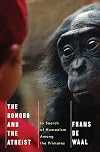
De Waal's goal in this book is to show that, contrary to "top down" theories of morality that require a god or some other entity to lay out and enforce moral rules, morality has its roots in our biology. To do so, he cites observations and studies of animals, notably bonobos and other primates, that show moral characteristics such as empathy or community welfare.
De Waal makes his own position pretty clear from the beginning. He says, "Perhaps it's just me, but I am wary of any persons whose show more belief system is the only thing standing between them and repulsive behavior. Why not assume that our humanity, including the self-control needed for a livable society, is built into us?"
He allies himself with Hume's moral theory, which takes "moral sentiments" as its starting point. The Humean argument, as against Kantian moralists, is that without such moral sentiments as sympathy or empathy, morality can never get off the ground -- you cannot construct moral rules or any kind of compelling force for morality out of reason alone. Reason serves to help us construct moral standards, but in doing so it serves those moral sentiments.
De Waal then cites animal behaviors that exhibit exactly the kind of moral sentiments that Humean theory calls for. Some of the examples are observations in the wild -- e.g., chimps, both male and female, who adopt unrelated orphaned young. Others are from controlled experiments -- e.g., chimps again, who prefer options in which they share rewards with another chimp rather than being the only one rewarded for their actions.
Not surprisingly these behaviors are more prevalent among primates than among other animals. But de Waal does cite examples from other mammal species, e.g., elephants, dogs, whales, etc.
He resists the temptation to suppose some mechanism completely different from human moral thinking is at work -- "I personally adhere to a different law of parsimony, according to which, if two closely related species act the same under similar circumstances, the mental processes behind their behavior are likely the same, too." And he cites evidence of such complex cognitive behavior as planning and problem-solving to counter any blithe claim that animals are acting only out of "blind instinct."
He doesn't claim though that any animals show morality at human level. Specifically, he excludes complex concerns for the community, especially at the level of considering how "anyone" should be treated in a given set of circumstances -- the kind of universality that moral theory is typically built around. That seems a level of complexity and abstraction that non-human animals do not display.
Of course we could accept that animals, like bonobos and others, behave morally without accepting that human morality can be independent of religious belief. It simply could be that among the differences in human morality (and de Waal certainly admits that there are differences) is the role of religious belief in providing a kind of seal of righteousness or validity to human moral codes, beyond the emotion-driven behaviors of animals.
But even that position is one that narrows the difference, to accept that animal behavior is in any sense moral. Perhaps the defender of religion's role would argue that, even granting everything de Waal observes and says, we should only grant the title of "morality" to codes that are ordained by religious beliefs.
De Waal's opponents here are certainly religious fundamentalists. But he is no friend of the "new atheists", like Sam Harris. He rejects even the program itself that Harris proposes in The Moral Landscape. As so many others have also pointed out, there are many scientific facts about human evolution and behavior -- their factualness is no guarantee of their moral validity. De Waal also is suspicious of the kind of militant atheism of scientists like Harris and Richard Dawkins. Granting the evils of religious fundamentalism, why the fervent attacks on religious belief altogether? And why get so worked up in proselytizing a negative, a non-belief? De Waal is himself an atheist, but he doesn't see good reason to be a militant atheist. And he expresses respect for a broader spiritual aspect to human life. show less
De Waal makes his own position pretty clear from the beginning. He says, "Perhaps it's just me, but I am wary of any persons whose show more belief system is the only thing standing between them and repulsive behavior. Why not assume that our humanity, including the self-control needed for a livable society, is built into us?"
He allies himself with Hume's moral theory, which takes "moral sentiments" as its starting point. The Humean argument, as against Kantian moralists, is that without such moral sentiments as sympathy or empathy, morality can never get off the ground -- you cannot construct moral rules or any kind of compelling force for morality out of reason alone. Reason serves to help us construct moral standards, but in doing so it serves those moral sentiments.
De Waal then cites animal behaviors that exhibit exactly the kind of moral sentiments that Humean theory calls for. Some of the examples are observations in the wild -- e.g., chimps, both male and female, who adopt unrelated orphaned young. Others are from controlled experiments -- e.g., chimps again, who prefer options in which they share rewards with another chimp rather than being the only one rewarded for their actions.
Not surprisingly these behaviors are more prevalent among primates than among other animals. But de Waal does cite examples from other mammal species, e.g., elephants, dogs, whales, etc.
He resists the temptation to suppose some mechanism completely different from human moral thinking is at work -- "I personally adhere to a different law of parsimony, according to which, if two closely related species act the same under similar circumstances, the mental processes behind their behavior are likely the same, too." And he cites evidence of such complex cognitive behavior as planning and problem-solving to counter any blithe claim that animals are acting only out of "blind instinct."
He doesn't claim though that any animals show morality at human level. Specifically, he excludes complex concerns for the community, especially at the level of considering how "anyone" should be treated in a given set of circumstances -- the kind of universality that moral theory is typically built around. That seems a level of complexity and abstraction that non-human animals do not display.
Of course we could accept that animals, like bonobos and others, behave morally without accepting that human morality can be independent of religious belief. It simply could be that among the differences in human morality (and de Waal certainly admits that there are differences) is the role of religious belief in providing a kind of seal of righteousness or validity to human moral codes, beyond the emotion-driven behaviors of animals.
But even that position is one that narrows the difference, to accept that animal behavior is in any sense moral. Perhaps the defender of religion's role would argue that, even granting everything de Waal observes and says, we should only grant the title of "morality" to codes that are ordained by religious beliefs.
De Waal's opponents here are certainly religious fundamentalists. But he is no friend of the "new atheists", like Sam Harris. He rejects even the program itself that Harris proposes in The Moral Landscape. As so many others have also pointed out, there are many scientific facts about human evolution and behavior -- their factualness is no guarantee of their moral validity. De Waal also is suspicious of the kind of militant atheism of scientists like Harris and Richard Dawkins. Granting the evils of religious fundamentalism, why the fervent attacks on religious belief altogether? And why get so worked up in proselytizing a negative, a non-belief? De Waal is himself an atheist, but he doesn't see good reason to be a militant atheist. And he expresses respect for a broader spiritual aspect to human life. show less
Tree of Origin: What Primate Behavior Can Tell Us about Human Social Evolution by Frans B. M. de Waal
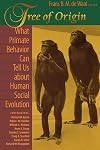
This is an anthology put together by Frans de Waal as the result of a 1997 conference on Human Evolution. De Waal asked that the authors write in a speculative mode about human evolution, and that they stick to a jargon-free style. The articles here are not original research papers — they are written for a less specialized audience. And, as a non-specialist, I found it very readable and fascinating.
The study of hominid evolution is remarkably speculative, even given de Waal’s direction show more to the authors. There is of course evidence to draw on. Fossil evidence (fossilized remains of human ancestors, tooth marks or cut marks on fossilized bones of other animals, remains of tools, etc.) can vary from conclusive to suggestive. We never know, when the evidence is scant, whether we are looking at outliers or norms.
Evidence drawn from observations of our closest relatives — great apes, especially chimpanzees and bonobos — can be incredibly suggestive. But it is not always easy to distinguish traits and behaviors that are distinctive to those species’ own evolutionary track rather than shared with our own.
The speculative nature of the study invites, as here, researchers to take up a variety of perspectives from which to offer hypotheses to answer such questions as why human-sized brains evolved, how early bipedal apes or pre-humans survived, what social groupings emerged among australopithecines and others of our ancestors, . . . Researchers look at what these hominids ate, what foods their teeth were optimized for, what their skeletal features can tell us about how fast or far they could travel, etc., all as clues to answering those critical evolutionary questions.
One very interesting perspective is that of cooking. When cooking emerged among our ancestors isn’t known, but it appears to be relatively recent, maybe 250,000 years ago (for which we have evidence of earthen ovens in use). Cooking could have changed almost everything. Diets at the time were primarily vegetarian, and, for that matter, meat still comprises a small part of apes’ diets. A diet of raw plants required large jaws, teeth, and a large gut for digestion. Post-Australopithecines, our most direct ancestors, by contrast, have remarkably small guts, teeth, and jaws.
A higher ratio of energy taken in from food relative to the energy spent to digest it could have freed energy for other uses — foraging over larger areas, or cognitive activity.
Cooking also could have introduced important social changes. Food gathering, along with mating, is a strong component of social life for apes and human ancestors. Cooking would have introduced a new element — a time delay between finding and consuming food. Raw foods would be gathered for cooking, maybe in another place and at a later time. It would need to be protected from theft from other animals, and a more explicit distribution would need to be devised at the cooking site.
You can see how this one change — cooking food — could enable or set in motion many other changes, either direct changes in behaviors or more long term opportunities for adaptive, evolutionary changes.
And cooking is just one perspective the authors take up. Other discussions address the evolution of “culture” in chimpanzees and other species besides our own, the role of hunting and meat-eating, the effect of group size on intelligence and behavior, and the evolution of brain size.
Conclusions are tentative. Conclusions may always have significant uncertainties. Researchers just can’t directly access enough evidence. We don’t, for example, have a definitive fossil example of the hypothesized common ancestor to chimpanzees and humans.
But understanding where we came from and looking in the mirror at our current close relatives are both instructive about ourselves and just plain entertaining. Having read several of de Waal’s works, especially the classic Chimpanzee Politics, has given me a new eye for watching and enjoying humans like myself. show less
The study of hominid evolution is remarkably speculative, even given de Waal’s direction show more to the authors. There is of course evidence to draw on. Fossil evidence (fossilized remains of human ancestors, tooth marks or cut marks on fossilized bones of other animals, remains of tools, etc.) can vary from conclusive to suggestive. We never know, when the evidence is scant, whether we are looking at outliers or norms.
Evidence drawn from observations of our closest relatives — great apes, especially chimpanzees and bonobos — can be incredibly suggestive. But it is not always easy to distinguish traits and behaviors that are distinctive to those species’ own evolutionary track rather than shared with our own.
The speculative nature of the study invites, as here, researchers to take up a variety of perspectives from which to offer hypotheses to answer such questions as why human-sized brains evolved, how early bipedal apes or pre-humans survived, what social groupings emerged among australopithecines and others of our ancestors, . . . Researchers look at what these hominids ate, what foods their teeth were optimized for, what their skeletal features can tell us about how fast or far they could travel, etc., all as clues to answering those critical evolutionary questions.
One very interesting perspective is that of cooking. When cooking emerged among our ancestors isn’t known, but it appears to be relatively recent, maybe 250,000 years ago (for which we have evidence of earthen ovens in use). Cooking could have changed almost everything. Diets at the time were primarily vegetarian, and, for that matter, meat still comprises a small part of apes’ diets. A diet of raw plants required large jaws, teeth, and a large gut for digestion. Post-Australopithecines, our most direct ancestors, by contrast, have remarkably small guts, teeth, and jaws.
A higher ratio of energy taken in from food relative to the energy spent to digest it could have freed energy for other uses — foraging over larger areas, or cognitive activity.
Cooking also could have introduced important social changes. Food gathering, along with mating, is a strong component of social life for apes and human ancestors. Cooking would have introduced a new element — a time delay between finding and consuming food. Raw foods would be gathered for cooking, maybe in another place and at a later time. It would need to be protected from theft from other animals, and a more explicit distribution would need to be devised at the cooking site.
You can see how this one change — cooking food — could enable or set in motion many other changes, either direct changes in behaviors or more long term opportunities for adaptive, evolutionary changes.
And cooking is just one perspective the authors take up. Other discussions address the evolution of “culture” in chimpanzees and other species besides our own, the role of hunting and meat-eating, the effect of group size on intelligence and behavior, and the evolution of brain size.
Conclusions are tentative. Conclusions may always have significant uncertainties. Researchers just can’t directly access enough evidence. We don’t, for example, have a definitive fossil example of the hypothesized common ancestor to chimpanzees and humans.
But understanding where we came from and looking in the mirror at our current close relatives are both instructive about ourselves and just plain entertaining. Having read several of de Waal’s works, especially the classic Chimpanzee Politics, has given me a new eye for watching and enjoying humans like myself. show less
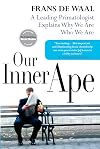
To study human nature is no easy feat! When Man isn't idealised to the extreme, described as the pinnacle of a divine creation (no less!) he is, on the contrary, often reduced to a beast among beasts, an animal that only the thin veneer of 'culture' protects against its most brutish instincts, from the utterly selfish to the cruellest. Here are two approaches, though, which are both... false. The first, because it denies our animality (or the 'humanity' of other species...); the second, show more because it is far too caricatural, and, well, crude!
Frans de Waal offers to be more balanced than that. And, to do so, he focuses here on those we have branched out about seven millions years ago: chimpanzees, and bonobos.
If chimpanzees are well known, bonobos, discovered only recently (the specie was named only in 1929) aren't so. De Waal, then, not only educates us about them, but shows, above all, that their behaviours, when put in parallel to that of chimps, are no less instructive when it comes to better understand us. Power, sex, violence, but, also, empathy and altruism, we learn about animals those culture challenge and revolutionise the view we hold upon ourselves. After all, aren't we apes having inherited from both?
Open minded, with a contagious passion, Frans de Waal delivers here a masterpiece as relevant as it is entertaining, and that deserves to be read. E.O. Wilson had already pointed to how biology too holds us on a leash... Well, this book makes the point! A fascinating insight. show less
Frans de Waal offers to be more balanced than that. And, to do so, he focuses here on those we have branched out about seven millions years ago: chimpanzees, and bonobos.
If chimpanzees are well known, bonobos, discovered only recently (the specie was named only in 1929) aren't so. De Waal, then, not only educates us about them, but shows, above all, that their behaviours, when put in parallel to that of chimps, are no less instructive when it comes to better understand us. Power, sex, violence, but, also, empathy and altruism, we learn about animals those culture challenge and revolutionise the view we hold upon ourselves. After all, aren't we apes having inherited from both?
Open minded, with a contagious passion, Frans de Waal delivers here a masterpiece as relevant as it is entertaining, and that deserves to be read. E.O. Wilson had already pointed to how biology too holds us on a leash... Well, this book makes the point! A fascinating insight. show less
Lists
Science: Zoology (1)
Awards


You May Also Like


Associated Authors
Statistics
- Works
- 33
- Also by
- 10
- Members
- 6,068
- Popularity
- #4,056
- Rating
- 4.0
- Reviews
- 138
- ISBNs
- 280
- Languages
- 18
- Favorited
- 10
