
Desmond Morris (1928–2026)
Author of The Naked Ape: A Zoologist's Study of the Human Animal
About the Author
Desmond Morris was born January 24, 1928 in Purton, North Wiltshire, United Kingdom. He is a British zoologist, ethologist, author, and surrealist painter. After Morris' military service, he attended the University of Birmingham and graduated in 1951 with a First Class Honours Degree in Zoology. In show more 1954, he received a D.Phil from Oxford University. After graduation, Morris was a Curator of Mammals at the London Zoo until 1966. Morris was a presenter of the ITV television program "Zoo Time" in the 1950s, but may be best-known for his 1967 best-selling book, The Naked Ape, which describes the evolution of human behavior from a zoological point-of-view. Morris has authored nearly fifty scientific publications. show less
Works by Desmond Morris
Man and Apes 1 copy
Evolution 1 copy
Nahá žena 1 copy
Desmond Morris - 2004 1 copy
Mistérios do Natal Livro 1 1 copy
Associated Works
Chimpanzee Politics: Power and Sex Among Apes (1982) — Foreword, some editions — 397 copies, 3 reviews
Tagged
Common Knowledge
- Canonical name
- Morris, Desmond
- Legal name
- Morris, Desmond John
- Birthdate
- 1928-01-24
- Date of death
- 2026-04-19
- Gender
- male
- Education
- Dauntsey's School
University of Birmingham (BA|1951)
Magdalen College, Oxford University (D.Phil|1954) - Occupations
- artist
zoo curator
zoologist
author
ethologist - Organizations
- Zoological Society of London
British Army - Awards and honors
- Fellow honoris causa, Linnean Society of London (2006)
Honorary Fellow, Zoological Society of London (2012) - Relationships
- Baulch, Ramona (wife)
Morris, Jason (son) - Short biography
- [from Horsewatching]
Desmond Morris, an accomplished artist, TV presenter, film maker and writer, was born in 1928. Educated at Birmingham and Oxford universities, he became the Curator of Mammals at London Zoo in 1959, a post he held for eight years. In 1967 he published The Naked Ape which has sold over 10 million copies worldwide and has changed the way we view our own species forever. Morris's books have been published in over thirty-six countries. - Nationality
- UK
- Birthplace
- Purton, Wiltshire, England, UK
- Places of residence
- Purton, Wiltshire, England, UK
Swindon, Wiltshire, England, UK
London, Middlesex, England, UK
North Oxford, Oxfordshire, England, UK
Malta
Newbridge, County Kildare, Ireland - Place of death
- Naas, County Kildare, Irlande
- Map Location
- England, UK
Members
Reviews
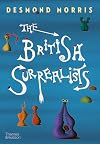
Call this an exercise in bearing witness, as Morris provides an overview of a constellation of artists that, once you get past Francis Bacon and Henry Moore, you probably haven't heard of. It doesn't hurt that Morris knew a lot of these folks personally, and generally remembers them with affection and sympathy. If you want to point to an overarching trend it's the perversity of having an organization for people who were mostly "non-joiners," mostly united by their hatred of the failure of show more recognized authority. show less
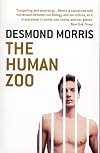
We often compare the urban lifestyle to that of a jungle. We're wrong. It's not to a jungle that we ought to compare it, but, to a zoo.
Desmond Morris exposes here why by tackling our city-dwellers' behaviours, that he puts in perspective against that of our fellow animals when caged in zoos. The other great apes, our closest kins, are on that point an enlightening mirror...
Cities might be a good thing indeed when it comes to reduce the problems associated to life in the wild and a natural show more environment (access to food, health care...), like zoos are for animals, then, but such a life in such a habitat also comes with a price. Such price, in fact, comes from, well, the fact that cities are, like zoos, unnatural! These are artificial enclosures, where we are compelled to live alongside each other, and to lead lives going from one extreme to the next (hectic activities or, on the contrary, unhealthy boredom).
Is it any surprising, asks the author, that such dysfunctional environments lead to no less dysfunctional behaviours? Violence becomes endemic, both against others (including our own offspring) and others; diseases of all sorts are developing (stress, obesity...); and even our sexuality isn't spared (masturbation, fetichism, homosexuality...), all kinds of comportments that we witness only in caged animals.
Desmond Morris, simply yet brilliantly, exposes how modifying our environment leads to a modifying of our behaviours, a fact that should leave us to ponder on how and why we modify it in the first place! Here's a striking read, offering a different view upon urban life (without condemning nor denouncing it) and the malaise that comes with it. Very, very interesting. show less
Desmond Morris exposes here why by tackling our city-dwellers' behaviours, that he puts in perspective against that of our fellow animals when caged in zoos. The other great apes, our closest kins, are on that point an enlightening mirror...
Cities might be a good thing indeed when it comes to reduce the problems associated to life in the wild and a natural show more environment (access to food, health care...), like zoos are for animals, then, but such a life in such a habitat also comes with a price. Such price, in fact, comes from, well, the fact that cities are, like zoos, unnatural! These are artificial enclosures, where we are compelled to live alongside each other, and to lead lives going from one extreme to the next (hectic activities or, on the contrary, unhealthy boredom).
Is it any surprising, asks the author, that such dysfunctional environments lead to no less dysfunctional behaviours? Violence becomes endemic, both against others (including our own offspring) and others; diseases of all sorts are developing (stress, obesity...); and even our sexuality isn't spared (masturbation, fetichism, homosexuality...), all kinds of comportments that we witness only in caged animals.
Desmond Morris, simply yet brilliantly, exposes how modifying our environment leads to a modifying of our behaviours, a fact that should leave us to ponder on how and why we modify it in the first place! Here's a striking read, offering a different view upon urban life (without condemning nor denouncing it) and the malaise that comes with it. Very, very interesting. show less
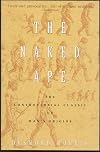
A fascinating read by a great thinker. Virtually no aspect of human nature and physiognomy escapes his keen zoologist eyes; even responses such as smiling, laughing and crying. However, be warned: not only is this book nearly 50 years old and therefore outdated, but one must ingest his words with a large heaping of salt. As a scientific treatise it fails. The best way to read it is to consider this the personal musings of a biologist/anthropologist, not the findings of an expert researcher. show more It's greatest value is in instigating thought on the subject. It is the step-back-and look-at-ourselves approach which is of real value here, not his (sometimes hilarious)conclusions.
His explanation of the protuberance and shape of female breasts developing as a frontal sexual display resulting from our upright posture, rather than for increased efficiency of nursing, is presented as a credible argument. Mmm, maybe that explains the human male's fascination with them.
Most of his observations are comparative, highlighting similarities and differences between other mammals, notably the chimpanzee. In all cases, Morris makes us think about many aspects of ourselves that we normally take for granted.
One criticism I have is his over-emphasis on genetic origins - for example, he claims the pair-bond formation between sexes (i.e monogamy) is genetic rather than cultural - afraid I disagree there. Also his treatment of warfare is incomplete and not entirely satisfactory for me.
I know others will attack the author as chauvinistic (not only in regards the sexes, but cultures as well), but still, hey, the book can just be considered food for thought.
All in all, a stimulating read, one so rich that I have marked it for a second time around in the future. It helped me to come up with my own thoughts on the subject show less
His explanation of the protuberance and shape of female breasts developing as a frontal sexual display resulting from our upright posture, rather than for increased efficiency of nursing, is presented as a credible argument. Mmm, maybe that explains the human male's fascination with them.
Most of his observations are comparative, highlighting similarities and differences between other mammals, notably the chimpanzee. In all cases, Morris makes us think about many aspects of ourselves that we normally take for granted.
One criticism I have is his over-emphasis on genetic origins - for example, he claims the pair-bond formation between sexes (i.e monogamy) is genetic rather than cultural - afraid I disagree there. Also his treatment of warfare is incomplete and not entirely satisfactory for me.
I know others will attack the author as chauvinistic (not only in regards the sexes, but cultures as well), but still, hey, the book can just be considered food for thought.
All in all, a stimulating read, one so rich that I have marked it for a second time around in the future. It helped me to come up with my own thoughts on the subject show less

As Morris says in the Introduction, “There are one hundred and ninety-three living species of monkeys and apes. One hundred and ninety-two of them are covered with hair. The exception is a naked ape self-named Homo sapiens.
And so begins an examination of mankind as if from a disinterested third party, a representative of another species who can objectively make observations and draw conclusions about man, his social customs, learning, and sexual behavior. For man, to Morris, is an animal. show more An erudite animal, yes, but one who has only been “civilized” for a few thousand years, not enough time to drop his evolutionary genetic legacy so quickly – despite the thoughts of the members of its species to the contrary.
This is the strength of the work: it was a real challenge to mankind’s cherished views, and an attempt to scientifically study man to better explain why we are as we are. The chapter on sex was controversial in 1966 when the book was published, and is still very interesting today. As an example, he wonders why females of the human species have such large breasts in comparison to other apes, as this isn’t necessary for nursing babies (other apes do that, without the accoutrement). His explanation is that they serve as a sexual display, similar to the backside, but in front to motivate frontal entry during sex, which in turn promotes stronger pair-bonding.
Unfortunately the science behind it is sometimes weak. Morris was a zoologist, but this is borderline “pop science”, and unfortunately too many statements come across as fact when they are conjecture. Interesting conjecture, mind you, but conjecture. Morris said he wrote the book in four exhausting weeks, and while the passion and inspiration come through, sometimes he sounds hopelessly dated and wrong today. For example, he says that homosexuality may be influenced by an effeminate father and/or a dominant mother.
For all that, it’s a good read. The perspective he took was often fascinating. He’s not right on all things, but puts forth plausible explanations, rooted in biology and the natural word and more plausible than those stemming from our religious ‘origin stories’, and which provoke thought and debate. show less
And so begins an examination of mankind as if from a disinterested third party, a representative of another species who can objectively make observations and draw conclusions about man, his social customs, learning, and sexual behavior. For man, to Morris, is an animal. show more An erudite animal, yes, but one who has only been “civilized” for a few thousand years, not enough time to drop his evolutionary genetic legacy so quickly – despite the thoughts of the members of its species to the contrary.
This is the strength of the work: it was a real challenge to mankind’s cherished views, and an attempt to scientifically study man to better explain why we are as we are. The chapter on sex was controversial in 1966 when the book was published, and is still very interesting today. As an example, he wonders why females of the human species have such large breasts in comparison to other apes, as this isn’t necessary for nursing babies (other apes do that, without the accoutrement). His explanation is that they serve as a sexual display, similar to the backside, but in front to motivate frontal entry during sex, which in turn promotes stronger pair-bonding.
Unfortunately the science behind it is sometimes weak. Morris was a zoologist, but this is borderline “pop science”, and unfortunately too many statements come across as fact when they are conjecture. Interesting conjecture, mind you, but conjecture. Morris said he wrote the book in four exhausting weeks, and while the passion and inspiration come through, sometimes he sounds hopelessly dated and wrong today. For example, he says that homosexuality may be influenced by an effeminate father and/or a dominant mother.
For all that, it’s a good read. The perspective he took was often fascinating. He’s not right on all things, but puts forth plausible explanations, rooted in biology and the natural word and more plausible than those stemming from our religious ‘origin stories’, and which provoke thought and debate. show less
Lists
Awards


You May Also Like


Associated Authors
Statistics
- Works
- 82
- Also by
- 9
- Members
- 10,051
- Popularity
- #2,363
- Rating
- 3.7
- Reviews
- 133
- ISBNs
- 642
- Languages
- 27
- Favorited
- 13


