
About the Author
Kris Vallotton is the senior associate leader of Bethel Church and cofounder of Bethel School, of Ministry, where he has served with Bill Johnson for more than three decades. Kris and his wife, Kathy, make their home in Redding, CA.
Image credit: Jesus Culture
Works by Kris Vallotton
The Supernatural Ways of Royalty: Discovering Your Rights and Privileges of Being a Son or Daughter of God (2006) 247 copies, 6 reviews
Developing a Supernatural Lifestyle: A Practical Guide to a Life of Signs, Wonders, and Miracles (2007) 87 copies
Destined To Win: How to Embrace Your God-Given Identity and Realize Your Kingdom Purpose (2017) 53 copies
Outrageous Courage: What God Can Do with Raw Obedience and Radical Faith (2013) 51 copies, 5 reviews
The Supernatural Power of Forgiveness: Discover How to Escape Your Prison of Pain and Unlock a Life of Freedom (2011) 50 copies
Revolução Moral. A Verdade Nua e Crua Sobre a Pureza Sexual (Em Portuguese do Brasil) (2011) 4 copies
El Poder Sobrenatural del Perdon = The Supernatural Power of Forgiveness (Spanish Edition) (2012) 2 copies
A Call To War 2004 2 copies
Poverty, Riches and Wealth Workbook: Moving from a Life of Lack into True Kingdom Abundance (2018) 2 copies
KRÓLEWSKI STYL 2 copies
Chuva abundante: Como podemos transformar o mundo que nos cerca (Em Portugues do Brasil) (2013) 1 copy
榮耀恩雨 1 copy
君尊皇族的覺醒 1 copy
C- MISSION APOSTLE 1 copy
Against All Odds (DVD) 1 copy
From Paupers to Princes (CD) 1 copy
Poverty, Riches and Wealth Leader's Guide: Moving from a Life of Lack into True Kingdom Abundance (2018) 1 copy
Córki tego samego Boga 1 copy
spiritual intelligence 1 copy
Associated Works
Tagged
Common Knowledge
- Gender
- male
Members
Reviews
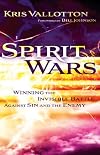
As I am reflecting on the nature of sin this season, I thought it would be worthwhile to read a book from a Charismatic/Pentecostal perspective. This book talks about the invisible battle we face as we seek to live holy lives. As someone who’s diabolic imagination has been set aflame by Screwtape Letters I accept the world that Kris Vallotton describes in Spirit Wars: Winning the invisible Battle Against Sin and the Enemy. I have attended charismatic churches and been around when people show more were praying over others for demonic deliverance. A lot of these ‘deliverances’ seem more psychosomatic than real, in the same way that divine healing can sometimes be attributed to the placebo effect. Still I have seen enough, and have thoughtful friends with enough discernment that I know that some of it is real and there is a real spiritual battle being fought. Therefore a book helping Christians better wage this war makes sense to me.
And Kris Vallotton does not disappoint. He shares from his own experience of demonic oppression, physical depression (or in his case a hormonal issue), experience in praying with people and his reading of scripture. He argues that for those who are in Christ, victory over sin and the powers is not only possible, it is the norm (explaining at one point that he can go several weeks without sin). Vallotton does not discount that there could be psychological causes for struggles and advocates that those struggling with long term depression or anxiety see a physician, get a proper diagnosis and medication. He also avoids the spirit-flesh dualism of some Pentecostal preachers by urging that physical, emotional and spiritual causes for our struggle are intermingled inside the human person and cannot be easily separated.
I don’t endorse everything that Vallotton says here. He oversimplifies at some points and takes fanciful leaps. I would question his interpretation of the Bible. People who self-describe as prophets (as Vallotton does) often take an imaginative approach in biblical exegesis, which provides keen insights as well as abysmal errors. So I affirm some of what he says but have serious questions about other portions of this book. For example, he uses Nehemiah and Joshua as exemplars of how we can resist “the enemy” and carry out the task that God gives us. This spiritualizes and allegorizes the biblical history of the Old Testament, which is legitimate to a point, but Vallotton’s approach means an uncritical view of both Nehemiah and Joshua. Contrary to leadership and popular accounts, the hero of the books of Joshua and Nehemiah are not the men the book is named for, but Yahweh himself. Joshua and Nehemiah do some things well and also make horrid missteps along the way ( i.e. Joshua is told to be strong and courageous, but instead sends spies and sits on his hands for several chapters, fails to call on God; Nehemiah ends with the sending away of foreign wives). I think if Vallotton was attentive to the ways these leaders failed, his insights for spiritual warfare would be more incisive.
Also, Vallotton makes errors in his interpretation of passages by drawing distinctions that are not in the text. He makes the common error of drawing a strong distinction between spirit and soul (within the human person), but the biblical material neither supports this nor warrants it. Likewise, he distinguishes terms (such as a distinction between prisoner and captive in Isaiah 61:1) which betray an amateur understanding of Hebrew poetics and parallelism.
I think this book is more useful as describing one person’s experience of the spiritual battle and his personal insights into the nature of it. When it comes to Biblical interpretation I do not think Vallotton is a trustworthy guide though he does provide and interesting window on individual texts. I would recommend this book to the discerning charismatic Christian who can separate the good from the bad, truth from error. While I have my reservations about parts of this book (some of which I failed to mention here), I will likely refer back to sections.
Thank you to Chosen books for providing a copy of this book in exchange for this fair and honest review. show less
And Kris Vallotton does not disappoint. He shares from his own experience of demonic oppression, physical depression (or in his case a hormonal issue), experience in praying with people and his reading of scripture. He argues that for those who are in Christ, victory over sin and the powers is not only possible, it is the norm (explaining at one point that he can go several weeks without sin). Vallotton does not discount that there could be psychological causes for struggles and advocates that those struggling with long term depression or anxiety see a physician, get a proper diagnosis and medication. He also avoids the spirit-flesh dualism of some Pentecostal preachers by urging that physical, emotional and spiritual causes for our struggle are intermingled inside the human person and cannot be easily separated.
I don’t endorse everything that Vallotton says here. He oversimplifies at some points and takes fanciful leaps. I would question his interpretation of the Bible. People who self-describe as prophets (as Vallotton does) often take an imaginative approach in biblical exegesis, which provides keen insights as well as abysmal errors. So I affirm some of what he says but have serious questions about other portions of this book. For example, he uses Nehemiah and Joshua as exemplars of how we can resist “the enemy” and carry out the task that God gives us. This spiritualizes and allegorizes the biblical history of the Old Testament, which is legitimate to a point, but Vallotton’s approach means an uncritical view of both Nehemiah and Joshua. Contrary to leadership and popular accounts, the hero of the books of Joshua and Nehemiah are not the men the book is named for, but Yahweh himself. Joshua and Nehemiah do some things well and also make horrid missteps along the way ( i.e. Joshua is told to be strong and courageous, but instead sends spies and sits on his hands for several chapters, fails to call on God; Nehemiah ends with the sending away of foreign wives). I think if Vallotton was attentive to the ways these leaders failed, his insights for spiritual warfare would be more incisive.
Also, Vallotton makes errors in his interpretation of passages by drawing distinctions that are not in the text. He makes the common error of drawing a strong distinction between spirit and soul (within the human person), but the biblical material neither supports this nor warrants it. Likewise, he distinguishes terms (such as a distinction between prisoner and captive in Isaiah 61:1) which betray an amateur understanding of Hebrew poetics and parallelism.
I think this book is more useful as describing one person’s experience of the spiritual battle and his personal insights into the nature of it. When it comes to Biblical interpretation I do not think Vallotton is a trustworthy guide though he does provide and interesting window on individual texts. I would recommend this book to the discerning charismatic Christian who can separate the good from the bad, truth from error. While I have my reservations about parts of this book (some of which I failed to mention here), I will likely refer back to sections.
Thank you to Chosen books for providing a copy of this book in exchange for this fair and honest review. show less
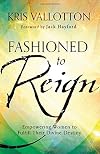
Biblical Feminism? I'm in! I didn't agree with EVERYthing Vallotton said, but I think part of the point was for the reader to form his or her own opinion based on his argument. He did a wonderful job of dispelling the stereotypical view of women in the church: subservient to men, complacent, and mostly voiceless. He used references from different translations of the bible to back up his point, and dissected verses that I have taken offense to in the past.
His point can be summed up from a show more quote on p.74: "Women are to be equally powerful and yet distinctly different."
It gives me hope that books like this exist; there are people writing about these issues, which are almost always viewed as taboo within a church setting especially, who may give hope, power, and confidence to women everywhere to rise to their potential. show less
His point can be summed up from a show more quote on p.74: "Women are to be equally powerful and yet distinctly different."
It gives me hope that books like this exist; there are people writing about these issues, which are almost always viewed as taboo within a church setting especially, who may give hope, power, and confidence to women everywhere to rise to their potential. show less
I liked the simplicity of this book and how it got right to the point without fluff or filler. Vallotton was humble, honest, and passionate in these pages and it was inspiring to hear his heart for God's people. His words weren't trying to manipulate or change people's minds, but rather gave permission to dig deeper into our own minds and paradigms and give God the room to uproot and replace with truth that which needs to be.
The Supernatural Ways of Royalty: Discovering Your Rights and Privileges of Being a Son or Daughter of God by Kris Vallotton
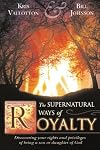
Vallotton explores an aspect of faith that was a new way of thinking to me in this book about supernatural royalty. The title is an apt description of the whole: we are royal sons and daughters of God through our faith in Jesus Christ, and should embrace our God-given heritage. In theory, many Christians would completely agree with this thesis, but the author argues that in practice we live our lives like paupers instead of princes. He presents the idea that the church has inculcated a false show more humility in its followers, that many believe we should tear ourselves down and belittle ourselves to be true to Jesus. Instead of celebrating our goodness, we call it pride and focus mainly on our sinful nature instead. He isn't dealing in absolutes; he doesn't claim that all of the church always acts this way, but in general terms, he feels that church history has created this type of culture.
I definitely encountered new ideas in reading this book. Frequently, when I read books about my faith, they are either on topics I want to know more about and therefore extend my knowledge of subjects I've already considered, or are on practical life applications with which I need help. Sometimes I read books that are designed to help me read the Bible at a deeper level. This book was chosen by a Bible study that I participate in, and was a departure from my typical reading choices. I tend to stay away from books that talk about the privileges of Christianity, because I have seen that idea abused all too often - people believe that being a Christian gives them a right to look down on others, judge, be self righteous, or just expect God to bless them with whatever they want. That way of thinking makes me shudder. Fortunately, this book was not aligned with that kind of doctrine. While it certainly talks about the privileges of Christianity, it keeps those blessings focused in Jesus, our relationship with him and the responsibilities that brings. In other words, Vallotton is not trying to sell books with just sweet news and promises, but really preaching about life changes that are uplifting but are centered in Jesus.
So I think it was a good thing that I read this, since my personal prejudice makes me turn away from books with this kind of empowering message, fearing that it will slide into extremes that I absolutely reject. Yet there is a need for this word to be spoken into believing communities. False humility, and focusing on our sin and guilt too much, is just as much of an error as false pride and pursuing faith for the good it will do for us. I agree with Vallotton's premise that when we are saved, our sin is erased, and we need to let it go. I also liked his ideas about royal responsibilities, like righteous indignation at injustice that motivates us to take action for change, or the responsibility of a ruler to look to the needs of family, friends, and community at large. We ought not to accept limitations to our authority but expect God to move in big ways all around us.
On the other hand, there were points to his argument that I didn't accept. His ideas about righteous indignation were linked to anger, that we could have a holy anger that is good, and that makes me extremely nervous. Far too many Christians think their anger is justified, even when they are acting contrary to what Jesus demonstrated in his own life. Some of the scriptures he interpreted bear different messages for me. In general, I agreed with this new premise that we should adopt more royal attitudes, but only as a component of our faith, balanced against other elements like humility and grace and mercy, and always forgiveness and forgiveness, and not to the total extent that he pushes in the book. show less
I definitely encountered new ideas in reading this book. Frequently, when I read books about my faith, they are either on topics I want to know more about and therefore extend my knowledge of subjects I've already considered, or are on practical life applications with which I need help. Sometimes I read books that are designed to help me read the Bible at a deeper level. This book was chosen by a Bible study that I participate in, and was a departure from my typical reading choices. I tend to stay away from books that talk about the privileges of Christianity, because I have seen that idea abused all too often - people believe that being a Christian gives them a right to look down on others, judge, be self righteous, or just expect God to bless them with whatever they want. That way of thinking makes me shudder. Fortunately, this book was not aligned with that kind of doctrine. While it certainly talks about the privileges of Christianity, it keeps those blessings focused in Jesus, our relationship with him and the responsibilities that brings. In other words, Vallotton is not trying to sell books with just sweet news and promises, but really preaching about life changes that are uplifting but are centered in Jesus.
So I think it was a good thing that I read this, since my personal prejudice makes me turn away from books with this kind of empowering message, fearing that it will slide into extremes that I absolutely reject. Yet there is a need for this word to be spoken into believing communities. False humility, and focusing on our sin and guilt too much, is just as much of an error as false pride and pursuing faith for the good it will do for us. I agree with Vallotton's premise that when we are saved, our sin is erased, and we need to let it go. I also liked his ideas about royal responsibilities, like righteous indignation at injustice that motivates us to take action for change, or the responsibility of a ruler to look to the needs of family, friends, and community at large. We ought not to accept limitations to our authority but expect God to move in big ways all around us.
On the other hand, there were points to his argument that I didn't accept. His ideas about righteous indignation were linked to anger, that we could have a holy anger that is good, and that makes me extremely nervous. Far too many Christians think their anger is justified, even when they are acting contrary to what Jesus demonstrated in his own life. Some of the scriptures he interpreted bear different messages for me. In general, I agreed with this new premise that we should adopt more royal attitudes, but only as a component of our faith, balanced against other elements like humility and grace and mercy, and always forgiveness and forgiveness, and not to the total extent that he pushes in the book. show less
You May Also Like


Associated Authors
Statistics
- Works
- 68
- Also by
- 1
- Members
- 1,196
- Popularity
- #21,486
- Rating
- 4.1
- Reviews
- 26
- ISBNs
- 100
- Languages
- 6
