
Jon J. Muth
Author of Zen Shorts
About the Author
Jon J. Muth is a children's author and illustrator. His books have received numerous awards and critical acclaim. Stone Soup, a familiar tale set in China won a National Parenting Book Award. Books he has illustrated include Come On, Rain!, which won the Gold Medal from the Society of Illustrators show more in 1999, Gershon's Monster, and No Dogs Allowed. Zen Shorts is a New York Times Bestseller, a Quill Award nominee, and was awarded the 2006 Caldecott Honor. Zen Ghosts was published in September 2010 by Scholastic Press. His title, Hi, Koo!, is a New York Times Bestseller for 2014 and was published by Scholastic Press, as well. (Bowker Author Biography) show less
Series
Works by Jon J. Muth
Silver Surfer [1987] #142 1 copy
Silver Surfer [1987] #140 1 copy
Zin Shorts: Book w/ Puppet 1 copy
Zen Shorts 1 copy
The Crow 1 copy
Il mistero di Dio 1 copy
Associated Works
Gershon's Monster: A Story for the Jewish New Year (2000) — Illustrator, some editions — 340 copies, 16 reviews
Seekers Into the Mystery # 15 — Illustrator — 2 copies
Tagged
Common Knowledge
- Canonical name
- Muth, Jon J.
- Birthdate
- 1960-07-28
- Gender
- male
- Occupations
- comic book artist
- Nationality
- USA
- Birthplace
- Cincinnati, Ohio, USA
- Places of residence
- Cincinnati, Ohio, USA
New York, New York, USA - Associated Place (for map)
- USA
Members
Reviews

Based upon a story of the same name, written by the celebrated 19th-century Russian novelist and moral philosopher, Leo Tolstoy, this lovely picture-book from author/illustrator Jon J. Muth imagines a young boy named Nikolai and his quest to answer the three eponymous questions: What is the best time to do things?, Who is the most important one?, and What is the right thing to do? When Nikolai's animal friends - Sonya the heron, Gogol the monkey and Pushkin the dog - cannot give him show more satisfactory answers, he sets out to the mountain home of Leo the turtle. Once there, his actions in helping Leo to garden, and in rescuing a panda mother and son from a storm, preclude him from getting his answers. Or do they...?
Although I am sorry to say that I have never read the original by Tolstoy - I certainly hope to, now! - I nevertheless enjoyed The Three Questions immensely. Having read author/illustrator Jon J. Muth's books about Stillwater the panda (Zen Shorts, etc.), it came as no surprise to discover that this was a teaching tale. As is so often the case in stories such as this, the hero's journey is what provides him with the answers in the end, and through the aid he offers others, Nikolai does indeed get the answers he's seeking. Simple but profound - the time to do things is now, the most important people are the ones you are with now, and the right thing to do is to help those people - these answers feel right, and have the feeling almost of self-evidence, once one has read them. A thoughtful book, one that satisfies both as a story and a teaching tale, this is one that can be used to strike up a more philosophical discussion with children. The artwork, done in watercolor, is vintage Muth: beautiful and light-infused. Highly recommended, both to Muth fans and to anyone seeking more philosophical children's books. show less
Although I am sorry to say that I have never read the original by Tolstoy - I certainly hope to, now! - I nevertheless enjoyed The Three Questions immensely. Having read author/illustrator Jon J. Muth's books about Stillwater the panda (Zen Shorts, etc.), it came as no surprise to discover that this was a teaching tale. As is so often the case in stories such as this, the hero's journey is what provides him with the answers in the end, and through the aid he offers others, Nikolai does indeed get the answers he's seeking. Simple but profound - the time to do things is now, the most important people are the ones you are with now, and the right thing to do is to help those people - these answers feel right, and have the feeling almost of self-evidence, once one has read them. A thoughtful book, one that satisfies both as a story and a teaching tale, this is one that can be used to strike up a more philosophical discussion with children. The artwork, done in watercolor, is vintage Muth: beautiful and light-infused. Highly recommended, both to Muth fans and to anyone seeking more philosophical children's books. show less

Gorgeous artwork illuminates this children's adaptation of Tolstoy's classic story. In truth, I find this version more powerful and more convincing.
That being said...
While this story isn't without decent advice, it's mostly facile. In general, I have three reactions to this story (both this children's version and also Tolstoy's original):
1) I inherently distrust anyone who claims easy and obvious answers to life's challenges and problems.
2) I inherently distrust wise hermits / men living show more alone on mountain tops. What do they know about living in a society, about being a member of a community of people?
3) My biggest concern is how this could be read:
"The most important person is the one you are with" and "The most important thing is to do good for the one who is standing at your side" could just as easily justify discounting everyone who isn't close to you, who isn't part of your group. It implies that most people in the world aren't important. It could just as easily imply that you shouldn't bother to care about people distant from you, who aren't a part of your immediate life and experience.
"The most important time is now" seems awfully short-sighted. Actions have consequences and we have a responsibility to the future. This piece of wisdom could just a easily justify carelessness and not thinking things through.
I know none of that is the intention of this story: indeed, it wants to teach lessons of compassion and caring. I just worry about how easily it can be read to justify solipsism and short-sightedness. show less
That being said...
While this story isn't without decent advice, it's mostly facile. In general, I have three reactions to this story (both this children's version and also Tolstoy's original):
1) I inherently distrust anyone who claims easy and obvious answers to life's challenges and problems.
2) I inherently distrust wise hermits / men living show more alone on mountain tops. What do they know about living in a society, about being a member of a community of people?
3) My biggest concern is how this could be read:
"The most important person is the one you are with" and "The most important thing is to do good for the one who is standing at your side" could just as easily justify discounting everyone who isn't close to you, who isn't part of your group. It implies that most people in the world aren't important. It could just as easily imply that you shouldn't bother to care about people distant from you, who aren't a part of your immediate life and experience.
"The most important time is now" seems awfully short-sighted. Actions have consequences and we have a responsibility to the future. This piece of wisdom could just a easily justify carelessness and not thinking things through.
I know none of that is the intention of this story: indeed, it wants to teach lessons of compassion and caring. I just worry about how easily it can be read to justify solipsism and short-sightedness. show less

The classic European folktale - best known by its French variant, as seen in Marcia Brown's Stone Soup - is transplanted to China in this lovely picture-book from Jon J. Muth, whose popular Zen Shorts (and sequels) also explore Zen Buddhist beliefs. Following the wandering of three monks - Hok, Lok and Siew - who question what happiness is as they walk, the story sees a hostile village transformed, as the wise Siew sets out to teach its residents how to make stone soup...
I'm not always show more thrilled with titles that seek to transplant the stories of one culture into another - as if all cultures were interchangeable, and context were meaningless - but sometimes, when it is done with respect, and I feel that there is some reason for it (some reason that doesn't involve discomfort at the idea of a story coming from a specific culture, or the mistaken belief that multiculturalism requires stories to be racially "remade"), I am very pleased indeed. This is one of those cases, and I thought Muth's narrative, and his gorgeous watercolor illustrations, worked flawlessly together, producing a picture-book experience that was simply delightful!
I really appreciated the author/artist's afterword, in which he talked about the Chinese tradition involving these three wandering monks, who often bestow wealth and prosperity, and teach wisdom - it's easy to see how Muth might have thought of them, when reading the original! - and I loved the artwork, which had that luminous quality I have come to associate with Muth's paintings. The scene in which all the villagers are peering into the pot was particularly charming! All in all, this Stone Soup is one I would recommend to those readers who enjoy transplanted folktales (or even those who, like me, are normally leery of them), and to fans of the artist. show less
I'm not always show more thrilled with titles that seek to transplant the stories of one culture into another - as if all cultures were interchangeable, and context were meaningless - but sometimes, when it is done with respect, and I feel that there is some reason for it (some reason that doesn't involve discomfort at the idea of a story coming from a specific culture, or the mistaken belief that multiculturalism requires stories to be racially "remade"), I am very pleased indeed. This is one of those cases, and I thought Muth's narrative, and his gorgeous watercolor illustrations, worked flawlessly together, producing a picture-book experience that was simply delightful!
I really appreciated the author/artist's afterword, in which he talked about the Chinese tradition involving these three wandering monks, who often bestow wealth and prosperity, and teach wisdom - it's easy to see how Muth might have thought of them, when reading the original! - and I loved the artwork, which had that luminous quality I have come to associate with Muth's paintings. The scene in which all the villagers are peering into the pot was particularly charming! All in all, this Stone Soup is one I would recommend to those readers who enjoy transplanted folktales (or even those who, like me, are normally leery of them), and to fans of the artist. show less
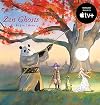
In this beautiful picture book, Stillwater the panda tells a typical Chinese ghost story. In terms of British folklore, we might call the appearance of the missing young woman a changeling or "stock"... an ailing, not-quite-human replacement for a vanished daughter... but in Chinese folklore, it's a ghost story. This is a lovely tale, that unlike the other Stillwater tales, does not undertake to teach us how to live; but like the rest, it causes us to ponder a bit about the nature of life. show more And in this case, about identity. Was one of the women more "real" than the other, and if so, which one? show less
Lists
Precious People (1)
One Letter Books (1)
Awards


You May Also Like


Associated Authors
Statistics
- Works
- 51
- Also by
- 32
- Members
- 13,753
- Popularity
- #1,686
- Rating
- 4.3
- Reviews
- 630
- ISBNs
- 163
- Languages
- 11
- Favorited
- 5