
Tite Kubo
Author of Bleach, Volume 1: Strawberry and the Soul Reapers
About the Author
Series
Works by Tite Kubo
BLEACH SHONENJUMP MANGA Lot of 14 Books - Vol. 19 to 30 32 & 33 By Tite Kubo - English (2007) 25 copies
Bleach, Vol. 44: Vice It 2 copies
Bleach 12 13 14 1 copy
Bleach 12 al 15 28 29 1 copy
Shonen JUMP; Volume 4 1 copy
Bleach Català Nº03 1 copy
Bleach Remix - Vol. 9 1 copy
Bleach Remix - Vol. 3 1 copy
Bleach 1 copy
Bleach, Tome 1 & 2 : 1 copy
Bleach Short Story Edition 1 copy
Bleach Remix - Vol. 2 1 copy
Bleach, Volume 1-35 1 copy
Tagged
Common Knowledge
- Canonical name
- Kubo, Tite
- Legal name
- Kubo, Noriaki
- Other names
- 久保 帯人
- Birthdate
- 1977-06-26
- Gender
- male
- Occupations
- mangaka
- Short biography
- Noriaki Kubo, known professionally as Tite Kubo, is a Japanese manga artist and character designer. He is best known for his manga series Bleach, which had over 120 million copies in circulation as of 2018.
- Nationality
- Japan
- Birthplace
- Aki, Hiroshima, Japan
- Associated Place (for map)
- Japan
Members
Reviews
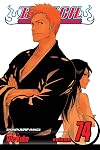
I’ll be the first to admit it—when I was younger, I didn’t care much for Bleach. I watched it here and there, maybe read a few chapters in the Shonen Jump Magazine, but it never stuck with me. I couldn’t get into the story, I didn’t connect with the characters, and the messaging behind it all? Completely missed me. In all honesty, I was one of those people who dogged on this series. I thought it was repetitive, slow, and full of less-than-flashy characters that just didn’t stand show more out next to other shounen I was into at the time.
But when the anime adaptation for the Thousand-Year Blood War arc was announced, I decided to give the series another chance. I went back and reread the manga from the beginning—and what I discovered was nothing short of transformative. The story I once brushed off turned out to be a masterpiece overflowing with complexity, emotional weight, and quiet, poetic brilliance. I found layers I had never seen before—philosophy, symbolism, trauma, and personal growth all woven seamlessly into the narrative.
As an adult, I connected with Ichigo on an entirely different level. He’s not just the abrasive, bad-attitude orange-haired protagonist swinging a giant sword. He’s the eldest child of a single-parent household, someone who had to grow up quickly and take care of his younger siblings. That kind of responsibility, that kind of emotional pressure, hit me hard—especially now that I can relate to what it feels like to carry your family on your back and try to protect them from a world that doesn’t always make sense. It’s a dynamic I rarely see explored in shounen, and seeing it in Ichigo made him feel so much more real, more grounded, and more human.
His journey isn’t just about strength—it’s about identity, grief, and the painful process of figuring out who you are when everyone else is trying to define you. And that emotional weight is reflected in so many of the characters. Rukia’s quiet resilience, Urahara’s hidden guilt, Byakuya’s complicated sense of duty, Aizen’s obsession with control—they all feel like pieces of a larger conversation about loss, acceptance, and the burden of choice.
And then there’s Orihime. I’ll be honest, younger me didn’t pay her much attention and in a different life, I was definitely an IchiRukia defender. But revisiting Bleach now, her character—and especially her romance with Ichigo—completely redefined what love looks like in a battle shonen series for me. Their relationship isn’t flashy or dramatic. It’s not about loud declarations or constant flirting. It’s about deep understanding, quiet support, and choosing each other over and over again. Orihime sees Ichigo—not just the warrior, but the person, the boy who tries so hard to carry everyone’s burdens alone. And Ichigo, in turn, protects her not just physically, but emotionally—never demanding anything from her, but always appreciating her presence. Their romance is tender. It’s mature. And it’s beautiful.
No one can tell me Tite Kubo is a bad writer. This man is a poet. His storytelling is subtle and emotional, filled with layers that don’t always jump out at first glance. The dialogue is often minimal, but meaningful. The symbolism is everywhere. The emotional undercurrents run deep. You can’t binge-read this story without missing things—because Bleach is a series that rewards you for slowing down and feeling.
It’s not just about battles and Bankais. It’s about finding your place in the world. It’s about identity, loneliness, and the quiet pain of growing up. Kubo explores all of that with elegance and grace—and even though the series isn’t perfect, its imperfections are what make it feel real.
Bleach is a story that matures with you. What felt flat and boring to me as a kid now resonates with a kind of emotional depth I never expected. It’s a series that lingers long after you close the final chapter, and I’m still unpacking its meaning to this day. show less
But when the anime adaptation for the Thousand-Year Blood War arc was announced, I decided to give the series another chance. I went back and reread the manga from the beginning—and what I discovered was nothing short of transformative. The story I once brushed off turned out to be a masterpiece overflowing with complexity, emotional weight, and quiet, poetic brilliance. I found layers I had never seen before—philosophy, symbolism, trauma, and personal growth all woven seamlessly into the narrative.
As an adult, I connected with Ichigo on an entirely different level. He’s not just the abrasive, bad-attitude orange-haired protagonist swinging a giant sword. He’s the eldest child of a single-parent household, someone who had to grow up quickly and take care of his younger siblings. That kind of responsibility, that kind of emotional pressure, hit me hard—especially now that I can relate to what it feels like to carry your family on your back and try to protect them from a world that doesn’t always make sense. It’s a dynamic I rarely see explored in shounen, and seeing it in Ichigo made him feel so much more real, more grounded, and more human.
His journey isn’t just about strength—it’s about identity, grief, and the painful process of figuring out who you are when everyone else is trying to define you. And that emotional weight is reflected in so many of the characters. Rukia’s quiet resilience, Urahara’s hidden guilt, Byakuya’s complicated sense of duty, Aizen’s obsession with control—they all feel like pieces of a larger conversation about loss, acceptance, and the burden of choice.
And then there’s Orihime. I’ll be honest, younger me didn’t pay her much attention and in a different life, I was definitely an IchiRukia defender. But revisiting Bleach now, her character—and especially her romance with Ichigo—completely redefined what love looks like in a battle shonen series for me. Their relationship isn’t flashy or dramatic. It’s not about loud declarations or constant flirting. It’s about deep understanding, quiet support, and choosing each other over and over again. Orihime sees Ichigo—not just the warrior, but the person, the boy who tries so hard to carry everyone’s burdens alone. And Ichigo, in turn, protects her not just physically, but emotionally—never demanding anything from her, but always appreciating her presence. Their romance is tender. It’s mature. And it’s beautiful.
No one can tell me Tite Kubo is a bad writer. This man is a poet. His storytelling is subtle and emotional, filled with layers that don’t always jump out at first glance. The dialogue is often minimal, but meaningful. The symbolism is everywhere. The emotional undercurrents run deep. You can’t binge-read this story without missing things—because Bleach is a series that rewards you for slowing down and feeling.
It’s not just about battles and Bankais. It’s about finding your place in the world. It’s about identity, loneliness, and the quiet pain of growing up. Kubo explores all of that with elegance and grace—and even though the series isn’t perfect, its imperfections are what make it feel real.
Bleach is a story that matures with you. What felt flat and boring to me as a kid now resonates with a kind of emotional depth I never expected. It’s a series that lingers long after you close the final chapter, and I’m still unpacking its meaning to this day. show less

Kubo has worldbuilding ideas and style to spare. He does not knit these ideas together into anything substantial. The characters are underdeveloped paper puppets. The plot progresses through contrived twists rather than emerging from character actions or thematic threads. For example (avoiding spoilers), an perfectly normal coincidence advances both a character's backstory and the current plot. Kubo later reveals that event was not a coincidence but the result of absurd (not in a fun way) show more sequence of events that exposes inconsistencies at the heart of the setting.
The setting is fun. The book is a quick read. That offsets these shortcomings somewhat. show less
The setting is fun. The book is a quick read. That offsets these shortcomings somewhat. show less

Another great manga series that inserts itself nicely among my other reading, giving me a surprisingly enjoyable taste of action, characters, humor, and story.
Ichigo Kurosaki has always been able to see ghosts. It's been an unusual, useful, and slightly annoying talent to him, but otherwise the life he lives above his father's clinic with his two sisters is normal.
And then a strange girl, who calls herself Rukia and claims to be something called a Soul Reaper, comes through his window in show more the middle of the night. And when a nightmarish spirit called a Hollow attacks Ichigo's family, it doesn't take him long to realize that Rukia has brought a whole new world along with her; the world of spirits and souls, swords and energy from beyond the realm of the living.
From Ichigo's quiet Japanese hometown, to the perilous realm of the Soul Society and beyond, this story is amazingly well-crafted for something I originally expected to be nothing more than fights. The art is sharp and bold, the characters drawn so uniquely that despite the massive cast it's easy to tell them apart. More than that, the characters are each well-developed with their own histories, motives, and personality quirks, from Ichigo and his assorted group of friends to the Soul Reapers of the spirit world.
Overall, a well-balanced manga that includes both bloody fights and comedy, touching relationships and epic confrontations. In essence, something for everyone. show less
Ichigo Kurosaki has always been able to see ghosts. It's been an unusual, useful, and slightly annoying talent to him, but otherwise the life he lives above his father's clinic with his two sisters is normal.
And then a strange girl, who calls herself Rukia and claims to be something called a Soul Reaper, comes through his window in show more the middle of the night. And when a nightmarish spirit called a Hollow attacks Ichigo's family, it doesn't take him long to realize that Rukia has brought a whole new world along with her; the world of spirits and souls, swords and energy from beyond the realm of the living.
From Ichigo's quiet Japanese hometown, to the perilous realm of the Soul Society and beyond, this story is amazingly well-crafted for something I originally expected to be nothing more than fights. The art is sharp and bold, the characters drawn so uniquely that despite the massive cast it's easy to tell them apart. More than that, the characters are each well-developed with their own histories, motives, and personality quirks, from Ichigo and his assorted group of friends to the Soul Reapers of the spirit world.
Overall, a well-balanced manga that includes both bloody fights and comedy, touching relationships and epic confrontations. In essence, something for everyone. show less

It's hard to recover from an opening scene that has a creepy character trying to peek up the skirt of one of the main characters. It's even harder when that creep becomes the ongoing comic relief and possible romantic interest. Ugh.
I didn't realize this was part of the Bleach universe when I got it from the library. I tried that series once a long time ago and dropped it fairly quickly. This one is no improvement -- it's all bickering and battles -- and I'm dropping it now.
Actually, I'm just show more realizing there may not be anything to drop. It's been five years since this first volume, and there is currently no sign of a second on the horizon. Same difference to me.
FOR REFERENCE:
Contents: #0.8. Don't Judge A Book By Its Cover -- #1. Witches Blow A New Pipe -- #2. Ghillie Suit -- #3. She Makes Me Special -- #4. If A Lion Could Speak, We Couldn't Understand show less
I didn't realize this was part of the Bleach universe when I got it from the library. I tried that series once a long time ago and dropped it fairly quickly. This one is no improvement -- it's all bickering and battles -- and I'm dropping it now.
Actually, I'm just show more realizing there may not be anything to drop. It's been five years since this first volume, and there is currently no sign of a second on the horizon. Same difference to me.
FOR REFERENCE:
Contents: #0.8. Don't Judge A Book By Its Cover -- #1. Witches Blow A New Pipe -- #2. Ghillie Suit -- #3. She Makes Me Special -- #4. If A Lion Could Speak, We Couldn't Understand show less
Lists
Awards

You May Also Like


Associated Authors
Statistics
- Works
- 181
- Members
- 31,594
- Popularity
- #626
- Rating
- 4.0
- Reviews
- 240
- ISBNs
- 1,078
- Languages
- 16
- Favorited
- 41

