
Arthur Quiller-Couch (1863–1944)
Author of The Oxford Book of English Verse, 1250-1918
About the Author
Works by Arthur Quiller-Couch
The Oxford Book of English Verse, Part 1: Medievals to Marlowe (Yesterday's Classics) (2023) 24 copies
The Oxford Book of English Verse, Part 2: Shakespeare to the Restoration (Yesterday's Classics) (2024) 9 copies
Q anthology 6 copies
Select English Classics. Edited by A. T. Quiller-Couch. Lord Tennyson. Poems selected by A. T. Quiller-Couch. pp. 48. [1908.] (1909) 4 copies
Oxford Book of English Verse 1250-1918 & The Oxford Book of Modern Verse 1892-1935, The, — Editor — 2 copies
Napoleonic War Stories - Tales of Soldiers, Spies, Battles & Sieges from the Peninsular & Waterloo Campaigns (2005) 2 copies, 1 review
Es spukt nicht nur um Mitternacht 2 copies
Old Ballads 2 copies
The Seventh Man 2 copies
The World's Heroes; A Storehouse of Heroic Actions, Golden Deeds, and Stirring Chronicles. (1901) 2 copies
Cornish Magazine June 1962 1 copy
Cornish Magazine May 1962 1 copy
Cornish Magazine July 1962 1 copy
Cornish Magazine March 1962 1 copy
Cornish Magazine August 1962 1 copy
Cornish Magazine April 1962 1 copy
Los amantes malditos 1 copy
A Bible Anthology 1 copy
The Black Adventure Book 1 copy
Modern Plays 2nd Series 1 copy
Junior Modern Poetry 1 copy
Keats and Shelley — Editor — 1 copy
Early English lyrics 1 copy
My Best Book by Q 1 copy
The Rider In The Dawn 1 copy
Poems and Ballads 1 copy
The Collected Supernatural and Weird Fiction of Sir Arthur Quiller-Couch: Forty-Two Short Stories of the Strange and Unusual (2013) 1 copy
Celtic Legends 1 copy
Poems by Q 1 copy
London in Literature 1 copy
NEW METHOD REDERS 1 copy
La peña del muerto 1 copy
Associated Works
The Chronicles of the Holy Grail: The Ultimate Quest from the Age of Arthurian Literature (1996) — Contributor — 79 copies, 1 review
The House of the Nightmare and Other Eerie Tales (1967) — Contributor; Author, some editions — 54 copies, 2 reviews
Tales of the Wandering Jew: A Collection of Contemporary and Classic Stories (1991) — Contributor — 29 copies
English Short Stories from the Fifteenth Century to the Twentieth Century; #743 (1921) — Contributor — 29 copies
The Third Ghost Story Megapack: 26 Classic Ghost Stories (2013) — Contributor — 18 copies, 2 reviews
Phantoms of Kernow: Classic Tales of Haunted Cornwall: 62 (British Library Tales of the Weird) (2025) — Contributor — 15 copies
Best-in-Books: Dream of Mansions / Castle Dor / Lilies of the Field / Me and the Liberal Arts / Ripley, the Modern Marco Polo (1962) — Contributor — 5 copies
Cornwall: A Survey of Its Coast, Moors, and Valleys, with Suggestions for the Preservation of Amenities (1930) — Preface — 4 copies
Shadows from a Veiled Creation: Classic Tales of Supernatural Fiction in the Christian Tradition (2006) — Contributor — 2 copies
Wakacje Wśród Duchów — Contributor — 2 copies
Stories for girls — Contributor — 1 copy
Short Stories: Old and New — Contributor — 1 copy
Hamlet (The New Clarendon Shakespeare) — Editor, some editions — 1 copy
Tagged
Common Knowledge
- Canonical name
- Quiller-Couch, Arthur
- Legal name
- Quiller-Couch, Arthur Thomas (birth name)
- Other names
- Q (pseudonym)
Quiller-Couch, A. T. - Birthdate
- 1863-11-21
- Date of death
- 1944-05-12
- Gender
- male
- Education
- Trinity College, Oxford University (BA|1886)
- Occupations
- university professor
poet
novelist
anthologist
critic - Organizations
- Jesus College, Cambridge University
- Awards and honors
- Knight Bachelor (1910)
Bard of the Cornish Gorseth (1928)
Commodore, Royal Fowey Yacht Club (1911) - Relationships
- Quiller-Couch, Mabel (sister)
Quiller-Couch, Lillian (sister)
Cooke, Alistair (student)
Leavis, F. R. (student)
Couch, Jonathan (grandfather)
Quiller-Couch, Bevil Brian (son) - Nationality
- UK
- Birthplace
- Bodmin, Cornwall, England, UK
- Places of residence
- Fowey, Cornwall, England, UK
Bodmin, Cornwall, England
Oxford, England, UK
Cambridge, England, UK - Place of death
- Fowey, Cornwall, England, UK
- Burial location
- St. Fimbarrus Churchyard, Fowey, Cornwall, England, UK
- Map Location
- England, UK
Members
Reviews

Dear Miss Hanff,
First off, let me say that I adore your books. 84, Charing Cross Road is my favorite, but I also enjoyed learning about the origins of your love of Literature in Q's Legacy. You made me want to read the lectures of Sir Arthur Quiller-Couch - "Q" - and love them as much as you did.
I confess I did not. I read On the Art of Reading first. It was slow going, but I gave him the benefit of 80 plus years' change in the English language for what I didn't understand and liked what I show more did. Then I came to On the Art of Writing, the lectures you fell in love with.
Miss Hanff, were we reading the same book? In nearly one hundred years, these lectures have not aged well. Q comments about such neologisms as "antibody" - he deplores the word as incorrect - a statement that is reduced to humor now that it has become such an acceptable word in our language. His argument that Beowulf was not the beginning of English Literature, then 30 years out of vogue (as he admits in his lecture), is now 120 years out of date.
He had a tendency to quote Greek, Latin, and myriads of authors. Actually, I freely take the fall for that issue. The scholars of that time undoubtedly had a different mental library from my own, and studied Greek and Latin as a matter of course. I am much more familiar with works that were printed after Q's lectures, such as Death of a Salesman and Beloved than I am with the Iliad.
Finally, he is short on practical advice (though what he advises is practical and practicable, I grant you) yet long-winded. I admire you, Miss Hanff, for having the stamina to go back and read the many works from which he quotes. I certainly could not. Most of the time I was trying so hard to decode his point and how a given quote illustrated it that I neglected to admire the Literature you were so taken with.
Please be assured that this will not diminish my enjoyment of your books; I will, however, refrain from reading any more of Q's lectures. show less
First off, let me say that I adore your books. 84, Charing Cross Road is my favorite, but I also enjoyed learning about the origins of your love of Literature in Q's Legacy. You made me want to read the lectures of Sir Arthur Quiller-Couch - "Q" - and love them as much as you did.
I confess I did not. I read On the Art of Reading first. It was slow going, but I gave him the benefit of 80 plus years' change in the English language for what I didn't understand and liked what I show more did. Then I came to On the Art of Writing, the lectures you fell in love with.
Miss Hanff, were we reading the same book? In nearly one hundred years, these lectures have not aged well. Q comments about such neologisms as "antibody" - he deplores the word as incorrect - a statement that is reduced to humor now that it has become such an acceptable word in our language. His argument that Beowulf was not the beginning of English Literature, then 30 years out of vogue (as he admits in his lecture), is now 120 years out of date.
He had a tendency to quote Greek, Latin, and myriads of authors. Actually, I freely take the fall for that issue. The scholars of that time undoubtedly had a different mental library from my own, and studied Greek and Latin as a matter of course. I am much more familiar with works that were printed after Q's lectures, such as Death of a Salesman and Beloved than I am with the Iliad.
Finally, he is short on practical advice (though what he advises is practical and practicable, I grant you) yet long-winded. I admire you, Miss Hanff, for having the stamina to go back and read the many works from which he quotes. I certainly could not. Most of the time I was trying so hard to decode his point and how a given quote illustrated it that I neglected to admire the Literature you were so taken with.
Please be assured that this will not diminish my enjoyment of your books; I will, however, refrain from reading any more of Q's lectures. show less
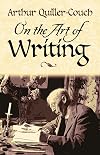
This most congenial introduction and summary to writing English Verse and Prose is replete with hard won insights, presented like gifts. Among the insights, for example, are the following: the connection of Verse to Music, --its nature of the tonal (in literature "tonal" means attitude of the author and/or his/her subject), rhythm ( accentual word, phrase, verse), and metrical/non-metrical line), as well as issues of narrative in poems and prose. Thereʻs an engaging old world charm in the show more presentation of this often felt stolid grind of a subject. Quiller-Couchʻs quiet, personable reasoning tone causes one to forget the presentation is in lecture form. "The Practice of Writing" (Lecture 2), "On the Difference between Verse and Prose" (Lecture 3), "On the Capital Difficulty of Verse," (Lecture 4), "On the Capital Difficulty of Prose," (Lecture 6), "On the Lineage of English Literature, I, II," (Lectures 8, 9), "On Style," (Lecture 12) are superb distillations of his life long experiences with the English language and its forms. He is courtly from long years of intimate concourse. The effect is a talk, not lecture, delivered out of a deceptively simple, quiet life, taken from the cold stones of the best of Oxfordian scholarship and set in warm sunlight for reflection. It welcomes neophytes and the seasoned. Itʻs an experience. Almost of an age long gone yet delivered as fresh, true --the findings are inspirited, yet concrete, mellow, yet abiding. Like old, fine wine. The questions asked remain pertinent today. Except for the late Modern and the Post-Modern in English literature. This is a scholarly work, originally published in l916 (Cambridge), re-published in 2006 (Dover). An old voice, strong. A style, elegant. An Unforgettable discourse. show less

I decided to read these century-old lectures because I was curious to check out the source of the dictum “murder your darlings,” made famous by Stephen King. The lectures contained some interesting insights mixed with stretches of what struck me as benign babbling.
Most jarring is Quiller-Couch’s invariable address to his listeners as “gentlemen.” A stark reminder that, although Cambridge had begun to permit women to attend lectures a decade or two previously, they were not allowed show more to sit for exams or take a degree. So they are not among Quiller-Couch’s addressees. No, he speaks to elite males in the making, whom Quiller-Couch will form by exposure to the “masculine, objective writers” he admires.
Not that I have much to quibble about with the authors he holds up for admiration and emulation, such as Chaucer, Shakespeare, and Thomas Wyatt (which Quiller-Couch spells with one “t”). There are others he admires less, for example, Samuel Johnson and Wordsworth, but Jane Austen rates no mention and George Eliot but one, a passing mention not as an author but as a responsive reader.
Equally risible is his survey, spread over two lectures, of the lineage of English literature. He is as allergic to the notion that Chaucer owed anything to Beowulf or other Anglo-Saxon poetry (other than the language, no small matter!) as he is to the suggestion that Great Britain should be reckoned among the Teutonic nations. Context, I remind myself. He gave these lectures in 1913, when the sound of saber-rattling filled the air. And he is reacting to the equally suspect Romantic Nationalism of the generation before him.
Nevertheless, it strikes me as nothing less than cranky that he devotes a lengthy portion of one of twelve lectures to speculation that some Romans who settled in Britain may still have descendants. The fact that newest DNA evidence confirms this suspicion doesn’t change Quiller-Couch’s lack of demonstration that this has anything to do with the influence of the Greek-Roman tradition on English literature.
Balanced against these oddities are other things I did like. These include Quiller-Couch's instinctive mistrust of the “-isms” often used to lump writers into categories and his emphasis that language is living, ever-changing, and that therefore good style can’t be reduced to rules. On the other hand, it is a bit of a letdown to hear in the final lecture that good style is merely a matter of politeness toward your reader.
From the outset, he declares that he will aim to have students read great literature “absolutely,” by which he means the texts themselves in preference to commentary and other secondary literature. He does allow that, with certain highly allusive writers such as Milton, notes on the references might be necessary for beginning students.
Quiller-Couch seems confident that in this “absolute” encounter with the texts it will be possible to discern authorial intent. A century on, we are less sure, but he also seems to recognize the role of what is now called reader-response: “the success of [literature] depends on personal persuasiveness, on the author’s skill to give as on ours to receive.”
Quiller-Couch’s aim is not only that his students will learn to appreciate great literature, but that they will become, if not great, at least good writers. Although chary of rules, he does set out four hallmarks of good writing. Aim to write, he urges, with accuracy, perspicuity, persuasion, and appropriateness. He might have helped his case had he said “lucidity” or “clarity” instead of perspicuity. Perhaps he thought his formula would be more memorable if two words began with the prefix “per-” alongside two that began with “a.”
I also liked his suggestion that the key to the Dark Ages was the suppression of literature. This was not done because the church had something against it as literature, nor—at first—because it was voluptuous, but because it was imbued with the polytheistic religion of the Greeks and Romans, something the church had only recently and narrowly overcome.
His fifth lecture, on jargon, is lamentably as relevant now as it was then. He decries it not because it is ugly, but because it is “a dead thing, leading no-whither, meaning naught. There is wickedness in human speech, sometimes. You will detect it all the better for having ruled out all that it naughty.”
One of the things I liked most about these lectures: although Quiller-Couch has his favorites, as well as writers he doesn’t admire, he is charitable toward all. It is not easy to write, he stresses, and all struggled to express themselves in language. This earns his respect and merits ours. In spite of my criticisms of parts of this book, this respect is something I’m glad to accord Quiller-Couch as well.
He seems to bristle that Chesterton, in a review of one of Quiller-Couch’s books, calls his tone “avuncular.” I smiled when I read this since that’s an adjective that already crossed my mind before I reached that point. But that’s not all bad. I think I would have enjoyed an evening and a sherry with him. These lectures, however, because of their unevenness, can be passed over in favor of other good books on writing. It’s not a bad book—I enjoyed much of it—but it’s not essential. show less
Most jarring is Quiller-Couch’s invariable address to his listeners as “gentlemen.” A stark reminder that, although Cambridge had begun to permit women to attend lectures a decade or two previously, they were not allowed show more to sit for exams or take a degree. So they are not among Quiller-Couch’s addressees. No, he speaks to elite males in the making, whom Quiller-Couch will form by exposure to the “masculine, objective writers” he admires.
Not that I have much to quibble about with the authors he holds up for admiration and emulation, such as Chaucer, Shakespeare, and Thomas Wyatt (which Quiller-Couch spells with one “t”). There are others he admires less, for example, Samuel Johnson and Wordsworth, but Jane Austen rates no mention and George Eliot but one, a passing mention not as an author but as a responsive reader.
Equally risible is his survey, spread over two lectures, of the lineage of English literature. He is as allergic to the notion that Chaucer owed anything to Beowulf or other Anglo-Saxon poetry (other than the language, no small matter!) as he is to the suggestion that Great Britain should be reckoned among the Teutonic nations. Context, I remind myself. He gave these lectures in 1913, when the sound of saber-rattling filled the air. And he is reacting to the equally suspect Romantic Nationalism of the generation before him.
Nevertheless, it strikes me as nothing less than cranky that he devotes a lengthy portion of one of twelve lectures to speculation that some Romans who settled in Britain may still have descendants. The fact that newest DNA evidence confirms this suspicion doesn’t change Quiller-Couch’s lack of demonstration that this has anything to do with the influence of the Greek-Roman tradition on English literature.
Balanced against these oddities are other things I did like. These include Quiller-Couch's instinctive mistrust of the “-isms” often used to lump writers into categories and his emphasis that language is living, ever-changing, and that therefore good style can’t be reduced to rules. On the other hand, it is a bit of a letdown to hear in the final lecture that good style is merely a matter of politeness toward your reader.
From the outset, he declares that he will aim to have students read great literature “absolutely,” by which he means the texts themselves in preference to commentary and other secondary literature. He does allow that, with certain highly allusive writers such as Milton, notes on the references might be necessary for beginning students.
Quiller-Couch seems confident that in this “absolute” encounter with the texts it will be possible to discern authorial intent. A century on, we are less sure, but he also seems to recognize the role of what is now called reader-response: “the success of [literature] depends on personal persuasiveness, on the author’s skill to give as on ours to receive.”
Quiller-Couch’s aim is not only that his students will learn to appreciate great literature, but that they will become, if not great, at least good writers. Although chary of rules, he does set out four hallmarks of good writing. Aim to write, he urges, with accuracy, perspicuity, persuasion, and appropriateness. He might have helped his case had he said “lucidity” or “clarity” instead of perspicuity. Perhaps he thought his formula would be more memorable if two words began with the prefix “per-” alongside two that began with “a.”
I also liked his suggestion that the key to the Dark Ages was the suppression of literature. This was not done because the church had something against it as literature, nor—at first—because it was voluptuous, but because it was imbued with the polytheistic religion of the Greeks and Romans, something the church had only recently and narrowly overcome.
His fifth lecture, on jargon, is lamentably as relevant now as it was then. He decries it not because it is ugly, but because it is “a dead thing, leading no-whither, meaning naught. There is wickedness in human speech, sometimes. You will detect it all the better for having ruled out all that it naughty.”
One of the things I liked most about these lectures: although Quiller-Couch has his favorites, as well as writers he doesn’t admire, he is charitable toward all. It is not easy to write, he stresses, and all struggled to express themselves in language. This earns his respect and merits ours. In spite of my criticisms of parts of this book, this respect is something I’m glad to accord Quiller-Couch as well.
He seems to bristle that Chesterton, in a review of one of Quiller-Couch’s books, calls his tone “avuncular.” I smiled when I read this since that’s an adjective that already crossed my mind before I reached that point. But that’s not all bad. I think I would have enjoyed an evening and a sherry with him. These lectures, however, because of their unevenness, can be passed over in favor of other good books on writing. It’s not a bad book—I enjoyed much of it—but it’s not essential. show less
On the art of reading; lectures delivered in the University of Cambridge, 1916-1917 by Sir Arthur Thomas Quiller-Couch

Not, as one might think from the title, a monograph on Berkshire biscuit-tin decoration, but Q's second series of lectures as Cambridge professor of English Literature. They were delivered during what must have been some of the bleakest and most depressing years in the history of the university, a time when many people would have been wondering whether we would ever again have room in our lives for educating young people in the humanities. Despite this, Q is unflaggingly positive in his show more conviction that it is possible to study "English literature" as an academic discipline (something that was by no means universally accepted in Cambridge in his day). In a fairly random-seeming progression, he sets out his thoughts on how literature should — and should not — be taught; how exams are a necessary evil; why the Latin and Greek heritage matters at least as much as (if not more than) Anglo-Saxon and Old Norse; how we as readers can cope with the sheer number of books that exist; how children's books should be directed at stretching the imagination, not at creating model citizens (two lectures); why the Authorised Version of the Bible should be treated as a key text of English literature (three magnificent lectures, concluding in a virtuoso exposition of Job); and tentatively explores the idea of a canon, first rubbishing the idea of "100 best books" and then accepting that there might be some sort of merit in it.
Whilst the battles he engages in were mostly won or lost the best part of a century ago, it's still a great pleasure to read his wonderful, clear prose and reflect on how and why we enjoy books. There's even a sort of guilty thrill for those of us brought up on feminist and post-colonial criticism to see that he unashamedly and routinely opens his lectures with "Gentlemen, ...". He does accept that women will be playing a big part in post-war society and will need full access to education, but he undermines this positive comment with a footnote quoting a Victorian young lady's summing up of her educational attainments.
I found myself wondering about what doors more recent ways of teaching literature have opened and closed for us. I'm sure Q would have welcomed the extension of the subject to cover very recent literature (in his day, and until at least the 1950s, Eng. Lit., as far as Oxford and Cambridge were concerned, was held to end in 1835), but I'm not sure that he would have been as happy about the way whole chunks of literary history fell off the syllabus in the process: the courses I took left rather an alarming gap between Shakespeare and Dickens, for instance. He does accept, though, that choices have to be made and no undergraduate can be expected to read through the entire canon from Chaucer to Byron in two years. show less
Whilst the battles he engages in were mostly won or lost the best part of a century ago, it's still a great pleasure to read his wonderful, clear prose and reflect on how and why we enjoy books. There's even a sort of guilty thrill for those of us brought up on feminist and post-colonial criticism to see that he unashamedly and routinely opens his lectures with "Gentlemen, ...". He does accept that women will be playing a big part in post-war society and will need full access to education, but he undermines this positive comment with a footnote quoting a Victorian young lady's summing up of her educational attainments.
I found myself wondering about what doors more recent ways of teaching literature have opened and closed for us. I'm sure Q would have welcomed the extension of the subject to cover very recent literature (in his day, and until at least the 1950s, Eng. Lit., as far as Oxford and Cambridge were concerned, was held to end in 1835), but I'm not sure that he would have been as happy about the way whole chunks of literary history fell off the syllabus in the process: the courses I took left rather an alarming gap between Shakespeare and Dickens, for instance. He does accept, though, that choices have to be made and no undergraduate can be expected to read through the entire canon from Chaucer to Byron in two years. show less
Lists
Ambleside Year 7 (1)
Poetry Corner (1)
Awards


You May Also Like


Associated Authors
Statistics
- Works
- 154
- Also by
- 93
- Members
- 4,063
- Popularity
- #6,194
- Rating
- 3.9
- Reviews
- 35
- ISBNs
- 355
- Languages
- 6
- Favorited
- 6

