

Gordon Burn (1948–2009)
Author of Happy Like Murderers
About the Author
Gordon Burn was born in Newcastle upon Tyne on January 16, 1948. He began work as a journalist and wrote for several publications including the Guardian, Rolling Stone and Esquire. His novel, Alma Cogan, was published in 1991 and won the Whitbread Award for Best First Novel. During his lifetime he show more wrote four novels and several non-fiction books including Fullalove, The North of England Home Service, Somebody's Husband, Somebody's Son, Happy Like Murderers, Pocket Money, and Best and Edwards. He died of bowel cancer on July 17, 2009 at the age of 61. (Bowker Author Biography) show less
Works by Gordon Burn
Associated Works
Tagged
Common Knowledge
- Canonical name
- Burn, Gordon
- Legal name
- Burn, Gordon
- Birthdate
- 1948-01-16
- Date of death
- 2009-07-16
- Gender
- male
- Education
- Aston University
Rutherford Grammar
Birmingham College of Commerce - Occupations
- novelist
- Awards and honors
- 1991 Whitbread Prize
- Relationships
- Gorner, Carol (wife)
- Nationality
- England
UK - Places of residence
- Newcastle-upon-Tyne, UK (birth)
- Associated Place (for map)
- Newcastle-upon-Tyne, UK
Members
Reviews

Gordon Burn puts a pen in the hands of Alma Cogan and she, obligingly, gives us her ‘memoir’. Cogan was a ’50’s hitmaker in Britain known as much for her gowns, as for her music. Her popularity waned with the advent of rock.
Burn uses Cogan’s story to meditate on fame and fandom, on notoriety and the impulse that drives people to seek at least a reflection of the public spotlight. Burn interweaves Alma’s story with that of a mass murderer from the same period in England, Myra show more Hindley. Burn leaves it for the reader to mull over the loose connection between the two.
Intermittently interesting as it was, and as successful in tackling an important and contemporary topic as Burn is here, I was put off by his writing style. show less
Burn uses Cogan’s story to meditate on fame and fandom, on notoriety and the impulse that drives people to seek at least a reflection of the public spotlight. Burn interweaves Alma’s story with that of a mass murderer from the same period in England, Myra show more Hindley. Burn leaves it for the reader to mull over the loose connection between the two.
Intermittently interesting as it was, and as successful in tackling an important and contemporary topic as Burn is here, I was put off by his writing style. show less
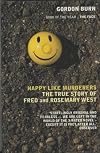
This is a true crime book, which details the crimes of Rose and Fred West, depraved murderers who killed more than a dozen girls and young women over about 20 years, including some of their own children. The book describes in lurid and graphic detail, the monstrous acts of torture, sexual depravity, molestation and murder engaged in by Fred and Rose. The book is charactered with "monsters and beasts and thugs and vandals and child-molesters and weirdos and alkies and addicts and scroungers show more and thieves and liars and cheats and hooligans and drop-outs and no hopers." There is no telling how long Fred and Rose could have continued their rampage undetected. Their crimes were only discovered when a tenacious policewoman began to search for one of their daughters who she wanted to question as a potential witness to a case of child abuse. Only when the police were unable to get satisfactory answers as to her whereabouts, and when they learned of a "family joke" that the daughter was buried under the patio that was laid about the time of her disappearance, did they begin to consider that more serious crimes might have occurred. Even when they began an excavation at the West's house, and discovered body after body, the police were still not looking for particular victims, since most of the victims ultimately discovered were of the nameless underclass.
This book is not for everyone. For me, its value is in its matter-of-fact depiction of a society in which poverty is all-pervasive, and families well beyond dysfunctional are the norm. These are the people, especially children and teenagers, who were the victims, and the perpetrators, of the violence and abuse, the people who slipped beneath the net of social services--the throw-away people. I found it amazing how long the Wests were able to brutalize their own children with no one noticing, or reporting it. Not only were the visible signs of abuse and the children's frequent absences ignored at school, there were frequent police visits to their home for drug arrests of the West's lodgers during which the plight of the children might easily have been noticed.
On the other hand, I found Burns' writing style to be extremely annoying. The book contains numerous repetitions--of sentences and even whole paragraphs, some separated by many pages, but some occurring with a few pages. This was so ubiquitous that I have to assume it was purposeful, but had I been the editor it certainly would not have remained. show less
This book is not for everyone. For me, its value is in its matter-of-fact depiction of a society in which poverty is all-pervasive, and families well beyond dysfunctional are the norm. These are the people, especially children and teenagers, who were the victims, and the perpetrators, of the violence and abuse, the people who slipped beneath the net of social services--the throw-away people. I found it amazing how long the Wests were able to brutalize their own children with no one noticing, or reporting it. Not only were the visible signs of abuse and the children's frequent absences ignored at school, there were frequent police visits to their home for drug arrests of the West's lodgers during which the plight of the children might easily have been noticed.
On the other hand, I found Burns' writing style to be extremely annoying. The book contains numerous repetitions--of sentences and even whole paragraphs, some separated by many pages, but some occurring with a few pages. This was so ubiquitous that I have to assume it was purposeful, but had I been the editor it certainly would not have remained. show less
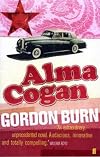
This is a weirdly compelling book mixing up an imagined life of Alma Cogan (who in real life died in 1966, but in this book lives on in an isolated cottage) and the history of the Moors Murders. Vivid imagery, lurid descriptions of concerts, events and people. It builds up to quite a crescendo.
I believe I can see what Burns is trying to do here - Proust for a more mediated age - but he doesn't quite pull it off. Still, a good effort, which is nevertheless intelligent, diverting and (an underestimated quality in books) short.
Defintely worth a punt. In an age when more and more of our celebrated "literature" is little more than re-worked MA projects from creative writing courses, from writers who have nothing to say, Burns is at least having a pop at doing something serious. Had he show more succeeded in his ambitions, I have no doubt this would have been hailed (at least eventually) as a truly great work. show less
Defintely worth a punt. In an age when more and more of our celebrated "literature" is little more than re-worked MA projects from creative writing courses, from writers who have nothing to say, Burns is at least having a pop at doing something serious. Had he show more succeeded in his ambitions, I have no doubt this would have been hailed (at least eventually) as a truly great work. show less
Lists
Awards


You May Also Like


Associated Authors
Statistics
- Works
- 12
- Also by
- 1
- Members
- 722
- Popularity
- #35,165
- Rating
- 3.6
- Reviews
- 11
- ISBNs
- 53
- Languages
- 2
- Favorited
- 2