
Jimmy Santiago Baca
Author of A Place to Stand
About the Author
Jimmy Santiago Baca was born in Santa Fe, New Mexico. He is the author of the acclaimed memoir A Place to Stand and several collections of poetry, including Healing Earthquakes and C-Train and Thirteen Mexicans. His awards and honors include the National Endowment of Poetry Award, Pushcart Prize, show more Southwest Book Award, American Book Award, and the International Prize show less
Image credit: Larry D. Moore
Works by Jimmy Santiago Baca
Working in the Dark: Reflections of a Poet of the Barrio (Red Crane Literature Series) (1994) 49 copies
I Am Offering This Poem 1 copy
Swords of Darkness 1 copy
Associated Works
Against Forgetting: Twentieth-Century Poetry of Witness (1993) — Contributor — 378 copies, 2 reviews
From Totems to Hip-Hop: A Multicultural Anthology of Poetry Across the Americas 1900-2002 (2002) — Contributor — 182 copies
Bullets Into Bells: Poets and Citizens Respond to Gun Violence (2017) — Contributor — 69 copies, 3 reviews
Currents from the Dancing River: Contemporary Latino Fiction, Nonfiction, and Poetry (1994) — Contributor — 55 copies
A Bell Ringing in the Empty Sky: The Best of the Sun (Vols. I & II) (1987) — Contributor — 15 copies
Tagged
Common Knowledge
- Canonical name
- Baca, Jimmy Santiago
- Birthdate
- 1952-01-02
- Gender
- male
- Nationality
- USA
- Birthplace
- Santa Fe, New Mexico, USA
- Places of residence
- Santa Fe, New Mexico, USA
Estancia, New Mexico, USA
Albuquerque, New Mexico, USA
San Diego, California, USA - Associated Place (for map)
- New Mexico, USA
Members
Reviews
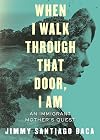
*I received a free copy of this book from the publisher through LibraryThing’s Early Reviewers in exchange for an honest review.*
TW: violence, death, rape,
This is a heart-wrenching epic poem of a mother who finds herself desperate to find a safe place for her child, so risks crossing the border to the US to keep her son from being killed by gangs. It’s a raw, honest look at the conditions people have to go through in the current situation to escape a life and death situation.
Baca’s show more imagery is powerful and his message is clear: these people need compassion, not detention camps. I was heartbroken at the story because while it’s a work of fiction, it’s all too real. I can’t say that this is something that everyone should read, because it has content that is tough to deal with, but it’s a beautifully written, relevant story that made me feel so much empathy for what immigrants are facing right now.
Also posted on Purple People Readers. show less
TW: violence, death, rape,
This is a heart-wrenching epic poem of a mother who finds herself desperate to find a safe place for her child, so risks crossing the border to the US to keep her son from being killed by gangs. It’s a raw, honest look at the conditions people have to go through in the current situation to escape a life and death situation.
Baca’s show more imagery is powerful and his message is clear: these people need compassion, not detention camps. I was heartbroken at the story because while it’s a work of fiction, it’s all too real. I can’t say that this is something that everyone should read, because it has content that is tough to deal with, but it’s a beautifully written, relevant story that made me feel so much empathy for what immigrants are facing right now.
Also posted on Purple People Readers. show less
 This review was written for LibraryThing Early Reviewers.
This is a heart-wrenching poem about a refugee woman seeking asylum in the United States. She travels from far away, crossing many borders after her husband is murdered by a gang after he refused to give in to their extortion. Taking her young son with her, she hopes to find a safe place to live and work.
Her journey is brutal. She is frequently beaten and raped. At the border she is detained and her son is taken from her. She is routinely raped by ICE officers. Eventually she is released show more into America, but her son is lost. The government doesn't know where they put him. She finds a job and makes a small life for herself, but in many ways she is still travel, still walking up mountains as she waits for her son to be returned. show less
Her journey is brutal. She is frequently beaten and raped. At the border she is detained and her son is taken from her. She is routinely raped by ICE officers. Eventually she is released show more into America, but her son is lost. The government doesn't know where they put him. She finds a job and makes a small life for herself, but in many ways she is still travel, still walking up mountains as she waits for her son to be returned. show less
This review was written for LibraryThing Early Reviewers.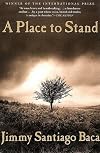
Admittedly, I could have Baca all wrong... I was intrigued enough by the documentary A Place to Stand to get the book, read it and re-watch the doc. While Baca had little to live for when he entered Arizona State Prison, the modern fairy tale of his unearthed new center ("the quiet strength of poetry") feels a bit too much like a self-serving portrayal. His published success and acclaim and prison background makes for a memoir worth reading, but I expected more revelations of character show more defects - revealed and triumphed. Mentor Bonafide comes across as darker and more dangerous and may be closer to what Baca is really, for all I know. Also, a plastic prison-made blowgun dart that passes through a human torso strains credulity and emphasized the lingering doubts I have that much of this may be smoke and mirrors. Also, this could be a reflection of my inability to appreciate the sentimental metaphor of his free verse. show less
When I walk through that door, I am : an immigrant mother's quest for freedom by Jimmy Santiago Baca
On the back of this work, there's a quote from Richard Blanco which perfectly sums up why this book is so important, and why it is so timely and painful: "Jimmy Baca's new book brilliantly reimagines the epic poem--and reshapes the epic hero as a young immigrant woman struggling to escape violence and find the child that has been taken away from her. A work that speaks strikingly and passionately of our times."
This epic poem is indeed both brilliant and brutal, and I'm not sure any reader show more can face it without feeling pain, but the author has done an admirable job of parceling out jumps in time, hard reality, and gorgeous imagery and character in a way that put life to what is hiding behind news stories and being allowed to unfold below, along, and above the border.
As there are moments of beauty, there are moments when the time and the narrative are overtaken by the reality of what is happening, and so it feels dangerous to call this a poem so much as a document in some ways. But, there is no doubt that it should be read---it should be read, and read, and shared and read again until what's in these pages can be seen as fiction vs. something we believe in so heart-breakingly easily.
Absolutely recommended. show less
This epic poem is indeed both brilliant and brutal, and I'm not sure any reader show more can face it without feeling pain, but the author has done an admirable job of parceling out jumps in time, hard reality, and gorgeous imagery and character in a way that put life to what is hiding behind news stories and being allowed to unfold below, along, and above the border.
As there are moments of beauty, there are moments when the time and the narrative are overtaken by the reality of what is happening, and so it feels dangerous to call this a poem so much as a document in some ways. But, there is no doubt that it should be read---it should be read, and read, and shared and read again until what's in these pages can be seen as fiction vs. something we believe in so heart-breakingly easily.
Absolutely recommended. show less
This review was written for LibraryThing Early Reviewers.Lists
Reading list (1)
Awards


You May Also Like


Associated Authors
Statistics
- Works
- 34
- Also by
- 14
- Members
- 1,050
- Popularity
- #24,543
- Rating
- 4.1
- Reviews
- 29
- ISBNs
- 53
- Languages
- 1
- Favorited
- 1
