
Frank Viola
Author of Pagan Christianity?: Exploring the Roots of Our Church Practices
About the Author
Frank Viola has helped thousands of people around the world to deepen their relationship with Jesus Christ and enter into a more vibrant and authentic experience of church. He has written many books on these themes, including his signature work, Insurgence: Reclaiming the Gospel of the Kingdom. His show more blog, frankviola.org, has been ranked in the top ten of all Christian blogs on the web today. show less
Image credit: Publicity photo from author website
Series
Works by Frank Viola
The Untold Story of the New Testament Church: An Extraordinary Guide to Understanding the New Testament (2005) 221 copies, 4 reviews
Finding Organic Church: A Comprehensive Guide to Starting and Sustaining Authentic Christian Communities (2009) 135 copies
The Day I Met Jesus: The Revealing Diaries of Five Women from the Gospels (2015) 78 copies, 3 reviews
Who is Your Covering?: A Fresh Look at Leadership, Authority, and Accountability (2001) 70 copies, 1 review
So You Want to Start a House Church?: First-Century Styled Church Planting For Today (2005) 36 copies
Hang On, Let Go: What to Do When Your Dreams Are Shattered and Life Is Falling Apart (2021) 8 copies
Iglesia Reconfigurada: Cómo lograr el ideal de la iglesia orgánica (Spanish Edition) (2012) 5 copies
Paganismo, ¿en tu cristianismo?: Explora las raíces de las prácticas de la iglesia cristiana (Spanish Edition) (2011) 4 copies
Jesus: A Theography 4 copies
Beyond Evangelical 4 copies
Revisiting Wineskins 1 copy
Epic Jesus 1 copy
UNTOLD STORY, The 1 copy
Tagged
Common Knowledge
- Legal name
- Viola, Frank
- Other names
- 法蘭克.威歐拉
- Birthdate
- 1964-10-12
- Gender
- male
- Short biography
- He attended the University of South Florida, majoring in psychology, philosophy, and political science (social science ed.)
- Birthplace
- Englewood Cliffs, New Jersey. USA
- Associated Place (for map)
- Englewood Cliffs, New Jersey. USA
Members
Reviews
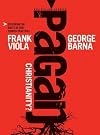
No, this isn't a "bash the Christians" book. It's a "bash the church" book (lowercase “c”). The authors' goal is to redirect Christians back to the original teachings of the New Testament, where the “Church” was never a building.
"Pagan," as used by the authors, pretty much just means "different from what the New Testament teaches." Their goal is to encourage Christians to embrace the original New Testament church.
Church buildings are wrong. Sacraments are wrong. Collection plates are show more wrong. Pulpits are wrong. You’ll get a earful, and if “wrong” means “not the way it was first done,” then the authors have a well-researched point. But an important distinction needs to be made: The New Testament church, in this book, should not be confused with the “first century church.” No extraneous Christian teachings are acceptable to Viola and Barna, who either ignore or condemn them. Even if some of these teachings are contemporary with New Testament writings. For example, church fathers Ignatius, Clement of Rome and Tertullian are criticized for introducing a clergy, and the Didache’s instructions are never mentioned by the authors, who insist that early Christian worship sessions had no structure. Perhaps the authors subscribe to the view that all of the New Testament Gospels and epistles were written in Paul’s time.
Part of the intrigue of this book, for me, is that I grew up in a nondenominational church similar to what the authors approve of as "organic," and that ignores all Christian instruction outside the Bible. This church has a bit more structure to their worship than what Viola and Barna recommend, but it does meet in homes and all members participate equally in the service. It's a "back to Jesus" movement patterned after the New Testament.
So, my church background may qualify me more than many reviewers to address both the pros and cons of the book's arguments. And as such, I do have one criticism, which drops it from a 5-star to a 4-star rating: The passion of the authors overflows, which should be a good thing, but here it's overwhelming. While they convincingly show that many Christian church customs differ from the first Christians, their underlying assumption that this is somehow bad gets pushed a little too hard for my taste, simply because in my experience, different church atmospheres and practices are appropriate for different people. We're all unique, and different things bring us closer to God.
But enough nit-picking. The book has a serious message for all who wish to pattern their manner of worship after the Bible. show less
"Pagan," as used by the authors, pretty much just means "different from what the New Testament teaches." Their goal is to encourage Christians to embrace the original New Testament church.
Church buildings are wrong. Sacraments are wrong. Collection plates are show more wrong. Pulpits are wrong. You’ll get a earful, and if “wrong” means “not the way it was first done,” then the authors have a well-researched point. But an important distinction needs to be made: The New Testament church, in this book, should not be confused with the “first century church.” No extraneous Christian teachings are acceptable to Viola and Barna, who either ignore or condemn them. Even if some of these teachings are contemporary with New Testament writings. For example, church fathers Ignatius, Clement of Rome and Tertullian are criticized for introducing a clergy, and the Didache’s instructions are never mentioned by the authors, who insist that early Christian worship sessions had no structure. Perhaps the authors subscribe to the view that all of the New Testament Gospels and epistles were written in Paul’s time.
Part of the intrigue of this book, for me, is that I grew up in a nondenominational church similar to what the authors approve of as "organic," and that ignores all Christian instruction outside the Bible. This church has a bit more structure to their worship than what Viola and Barna recommend, but it does meet in homes and all members participate equally in the service. It's a "back to Jesus" movement patterned after the New Testament.
So, my church background may qualify me more than many reviewers to address both the pros and cons of the book's arguments. And as such, I do have one criticism, which drops it from a 5-star to a 4-star rating: The passion of the authors overflows, which should be a good thing, but here it's overwhelming. While they convincingly show that many Christian church customs differ from the first Christians, their underlying assumption that this is somehow bad gets pushed a little too hard for my taste, simply because in my experience, different church atmospheres and practices are appropriate for different people. We're all unique, and different things bring us closer to God.
But enough nit-picking. The book has a serious message for all who wish to pattern their manner of worship after the Bible. show less
A book of comfort. A book of challenge.
I had never realized the amount of time Jesus spent in Bethany prior to reading Viola's newest release, 'God's Favorite Place on Earth'. Viola presents a good case for Jesus' attachment to the people and the place that captured his favour. People who welcomed and received Christ, providing hospitality, honour, friendship and love. All responses we are encouraged to offer as our own Bethany invitation to Christ.
To move past performance mentality of show more serving as exemplified by Martha at our initial glimpse into this home in Bethany. To pursue relational living with the Lord as seen in Mary 's response. Casting aside gender and cultural restraints to be who she is called to be, Mary leaves propriety to wholeheartedly invest herself, her time, her efforts for the worth that is Christ. A worth that increased in her relational pursuit, culminating in the ointment poured upon the object of her affection, her heart's desire, her Lord. Viola would that we recognize Mary's 'waste' and make it our own. Recognize that what religion and religious of our day consider service or ministry is often the real 'waste' when worship is God's heart cry for his 'friends' to follow...
This particular point also spoke to a recent conversation on property ownership
vs communal living where all things are shared.
Christ never suggested personal property ownership was sin. Mary's fragrant offering was hers to give, revealing a heart of generosity. She owned the perfume; the perfume, valuable as it undeniably was, did not own her. There's the heart of the issue. For the rich young ruler, his personally owned property owned his heart. Thus, Jesus' solution to his particular issue wasn't a wholesale solution or command to every follower. We're called to have Mary hearts of worth and worship toward our Saviour, whatever our financial situation.
A beautifully novelized telling from Lazarus, brother of Mary and Martha, of their times spent with their friend, Yeshua Jesus. Insights gained from those times, his own death and resurrection foretelling Christ's own. The deathbed counsel of his so-called friends reminiscent of Job's counsellors; there's definitely got to be some sin in there somewhere Lazarus! Or some lack of God's abilities or God's heart isn't toward you. How common to the religious minded to confront and affront another, all, supposedly, in service to God.
But not in the truth of Christ's Spirit of Love and Compassion.
Mercy that fails not...
Thought provoking and life changing challenges from Viola, if allowed to search and cleanse our own heart; to move us toward becoming a Bethany that welcomes and creates sanctuary for Christ and His nature to become our self-image.
Rich with narrative, scripture background to each chapter, and practical applications such as our position in prayer.
Beggars coming before God?
Or from the place of ascendancy provided through Christ's ascension?
Are we seated with Christ in heavenly places?
Or still lacking boldness to enter God's throne of Grace
through the completed work of Christ in His death, resurrection and
Ascension?
A book to inspirit new perspectives in living out the Bethany experience as well as invitation to make our churches Bethany communities that welcome and promote Christ in relation and reality.
Highly recommended for those who are pursuing more than religious form and function,
those who desire to live an ascendant life,
or those who are curious.
*David C Cook provided an ebook copy to read and review without obligation. Thank you for the opportunity. show less
I had never realized the amount of time Jesus spent in Bethany prior to reading Viola's newest release, 'God's Favorite Place on Earth'. Viola presents a good case for Jesus' attachment to the people and the place that captured his favour. People who welcomed and received Christ, providing hospitality, honour, friendship and love. All responses we are encouraged to offer as our own Bethany invitation to Christ.
To move past performance mentality of show more serving as exemplified by Martha at our initial glimpse into this home in Bethany. To pursue relational living with the Lord as seen in Mary 's response. Casting aside gender and cultural restraints to be who she is called to be, Mary leaves propriety to wholeheartedly invest herself, her time, her efforts for the worth that is Christ. A worth that increased in her relational pursuit, culminating in the ointment poured upon the object of her affection, her heart's desire, her Lord. Viola would that we recognize Mary's 'waste' and make it our own. Recognize that what religion and religious of our day consider service or ministry is often the real 'waste' when worship is God's heart cry for his 'friends' to follow...
This particular point also spoke to a recent conversation on property ownership
vs communal living where all things are shared.
Christ never suggested personal property ownership was sin. Mary's fragrant offering was hers to give, revealing a heart of generosity. She owned the perfume; the perfume, valuable as it undeniably was, did not own her. There's the heart of the issue. For the rich young ruler, his personally owned property owned his heart. Thus, Jesus' solution to his particular issue wasn't a wholesale solution or command to every follower. We're called to have Mary hearts of worth and worship toward our Saviour, whatever our financial situation.
A beautifully novelized telling from Lazarus, brother of Mary and Martha, of their times spent with their friend, Yeshua Jesus. Insights gained from those times, his own death and resurrection foretelling Christ's own. The deathbed counsel of his so-called friends reminiscent of Job's counsellors; there's definitely got to be some sin in there somewhere Lazarus! Or some lack of God's abilities or God's heart isn't toward you. How common to the religious minded to confront and affront another, all, supposedly, in service to God.
But not in the truth of Christ's Spirit of Love and Compassion.
Mercy that fails not...
Thought provoking and life changing challenges from Viola, if allowed to search and cleanse our own heart; to move us toward becoming a Bethany that welcomes and creates sanctuary for Christ and His nature to become our self-image.
Rich with narrative, scripture background to each chapter, and practical applications such as our position in prayer.
Beggars coming before God?
Or from the place of ascendancy provided through Christ's ascension?
Are we seated with Christ in heavenly places?
Or still lacking boldness to enter God's throne of Grace
through the completed work of Christ in His death, resurrection and
Ascension?
A book to inspirit new perspectives in living out the Bethany experience as well as invitation to make our churches Bethany communities that welcome and promote Christ in relation and reality.
Highly recommended for those who are pursuing more than religious form and function,
those who desire to live an ascendant life,
or those who are curious.
*David C Cook provided an ebook copy to read and review without obligation. Thank you for the opportunity. show less
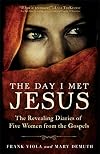
Frank Viola enlisted the help of Mary Demuth for his follow up to God's Favorite Place on Earth. The earlier book focused on the city of Bethany, a place where Jesus was accepted and loved and where Mary, Martha and Lazarus lived. That book told stories from Jesus' life, narrated by Lazarus. In Viola's follow up, he wanted to present some of the significant interactions Jesus had with women he encountered but didn't feel, as a man, he should write the narrative sections from their show more perspective. So he enlisted DeMuth to bring these women to life.
The Day I met Jesus profiles five women: the woman caught in adultery, the prostitute who washed Jesus' feet, the woman at the well, the hemorrhaging woman and Mary of Bethany (a story in three acts). The first three of these women struggled in the area of sexuality, the hemorrhaging woman struggled with a physical problem. Mary of Bethany is exemplary in her devotion to Jesus. All of them are transformed by their encounter with Christ. These women give us a window into the power of God to set us free and fill us with Joy.
Demuth's narrative sections are the heart of the book and she does a really good job of telling these stories. I didn't necessarily envision each story as she did, but in storytelling you make your exegetical choice and commit. I think she gave these women life and made their choices understandable. Demuth did a fantastic job. Following the narrative sections were a section that explored the meaning of the biblical passage, offering some exegetical insights and some practical takeaways. I think generally this was the work of VIola but there are some creative elements here too. These are also interesting but I was less enamored with them.
To me, I wish the book did one or the other. If story is powerful and evocative then tell the story. If you need to explain the significance of the story you just told, then you don't really trust the power of story. This might be my own hobbyhorse, and I will happily admit as much. A number of readers do appreciate the mix of fictional and non-fictional elements that Demoth and Viola bring. But for my money, I want the narrative told without an editorial essay on the 'moral of the story.' I think Viola said some great things in his commentary sections, I just wished those were more thoroughly encapsulated in the stories they shared. Story is show and not tell. This book was more than half tell. I give it three stars.
Notice of material connection: I received this book from Baker Books in exchange for my honest review. show less
The Day I met Jesus profiles five women: the woman caught in adultery, the prostitute who washed Jesus' feet, the woman at the well, the hemorrhaging woman and Mary of Bethany (a story in three acts). The first three of these women struggled in the area of sexuality, the hemorrhaging woman struggled with a physical problem. Mary of Bethany is exemplary in her devotion to Jesus. All of them are transformed by their encounter with Christ. These women give us a window into the power of God to set us free and fill us with Joy.
Demuth's narrative sections are the heart of the book and she does a really good job of telling these stories. I didn't necessarily envision each story as she did, but in storytelling you make your exegetical choice and commit. I think she gave these women life and made their choices understandable. Demuth did a fantastic job. Following the narrative sections were a section that explored the meaning of the biblical passage, offering some exegetical insights and some practical takeaways. I think generally this was the work of VIola but there are some creative elements here too. These are also interesting but I was less enamored with them.
To me, I wish the book did one or the other. If story is powerful and evocative then tell the story. If you need to explain the significance of the story you just told, then you don't really trust the power of story. This might be my own hobbyhorse, and I will happily admit as much. A number of readers do appreciate the mix of fictional and non-fictional elements that Demoth and Viola bring. But for my money, I want the narrative told without an editorial essay on the 'moral of the story.' I think Viola said some great things in his commentary sections, I just wished those were more thoroughly encapsulated in the stories they shared. Story is show and not tell. This book was more than half tell. I give it three stars.
Notice of material connection: I received this book from Baker Books in exchange for my honest review. show less
Jesus: A Theography is based on a bold assumption:
"The sixty-six books of the Bible are woven together by a single storyline. … It’s the story of Jesus Christ. … Every bit of Scripture is part of the same great story of that one person and that one story’s plotline of creation, revelation, redemption, and consummation" (ix-x).
This is a presupposition I happen to share (along with Karl Barth and many other Christian theologians). This idea serves as the foundation for the greatest show more strengths and weaknesses of this book.
My frustration with the book struck early and flows directly out of Sweet & Viola’s hermeneutic. They attempt to uncover details about Jesus by mining all 66 books, confident that “the Holy Spirit often had an intention in Scripture that went beyond its author’s present knowledge” (xvi). They boldly follow the style of interpretation that the New Testament writers did when reinterpreting the Old Testament in light of Christ. This leads to some assertions that, at best, are a stretch.
One example of this is the schema Sweet and Viola create to relate the days of creation to Jesus. In their understanding, the third day of creation (dry ground and vegetation) points toward Jesus’ resurrection because of mere numerical synergy and the mention of “life”. While I appreciate the desire to relate the Old Testament to Christ, these sort of stretches feel more like Dan Brown code than legitimate foreshadowing.
Now that my frustration’s out of the way, I do have to praise Sweet and Viola for the sheer number of poignant connections and insight they display. Here are just a few to whet your appetite:
- “Eternal life is the life of God’s new age that has broken into the present one. It is Christ Himself in the Spirit” (157).
- “You can’t worship a book when the Founder didn’t give us a book, only Himself and stories from others about Him” (178).
- ”The ultimate issue in the universe is over who will be worshipped” (284).
- “What Torah is to Judaism, and the Qur’an is to Islam, Jesus is to Christianity.” (300)
- “In the first-century Roman world, however, the word gospel was used to describe the announcement that a new emperor had taken the throne” (306).
These insights are the result of many theologians whose ideas have been assimilated into the book. The footnotes take 83 pages, and that’s after 21 pages spent reviewing the lives of various “Post-Apostolic Witness,” from Augustine to Tim Keller.
This book will spark your sense of wonder at the glorious interconnectedness of scripture but some of the interpretive leaps may drive the theologian in your life crazy in the process. show less
"The sixty-six books of the Bible are woven together by a single storyline. … It’s the story of Jesus Christ. … Every bit of Scripture is part of the same great story of that one person and that one story’s plotline of creation, revelation, redemption, and consummation" (ix-x).
This is a presupposition I happen to share (along with Karl Barth and many other Christian theologians). This idea serves as the foundation for the greatest show more strengths and weaknesses of this book.
My frustration with the book struck early and flows directly out of Sweet & Viola’s hermeneutic. They attempt to uncover details about Jesus by mining all 66 books, confident that “the Holy Spirit often had an intention in Scripture that went beyond its author’s present knowledge” (xvi). They boldly follow the style of interpretation that the New Testament writers did when reinterpreting the Old Testament in light of Christ. This leads to some assertions that, at best, are a stretch.
One example of this is the schema Sweet and Viola create to relate the days of creation to Jesus. In their understanding, the third day of creation (dry ground and vegetation) points toward Jesus’ resurrection because of mere numerical synergy and the mention of “life”. While I appreciate the desire to relate the Old Testament to Christ, these sort of stretches feel more like Dan Brown code than legitimate foreshadowing.
Now that my frustration’s out of the way, I do have to praise Sweet and Viola for the sheer number of poignant connections and insight they display. Here are just a few to whet your appetite:
- “Eternal life is the life of God’s new age that has broken into the present one. It is Christ Himself in the Spirit” (157).
- “You can’t worship a book when the Founder didn’t give us a book, only Himself and stories from others about Him” (178).
- ”The ultimate issue in the universe is over who will be worshipped” (284).
- “What Torah is to Judaism, and the Qur’an is to Islam, Jesus is to Christianity.” (300)
- “In the first-century Roman world, however, the word gospel was used to describe the announcement that a new emperor had taken the throne” (306).
These insights are the result of many theologians whose ideas have been assimilated into the book. The footnotes take 83 pages, and that’s after 21 pages spent reviewing the lives of various “Post-Apostolic Witness,” from Augustine to Tim Keller.
This book will spark your sense of wonder at the glorious interconnectedness of scripture but some of the interpretive leaps may drive the theologian in your life crazy in the process. show less
You May Also Like


Statistics
- Works
- 46
- Members
- 2,869
- Popularity
- #8,935
- Rating
- 3.8
- Reviews
- 52
- ISBNs
- 90
- Languages
- 5
- Favorited
- 3