
Leonard I. Sweet
Author of SoulTsunami
About the Author
Leonard Sweet is a preacher, teacher, scholar, and bestselling author of more than 50 books, including SoulTsunami, From Tablet to Table, and Jesus: A Theography. He serves as the distinguished visiting professor at Tabor College and George Fox University and is regularly listed among the most show more influential Christians in the United States. show less
Disambiguation Notice:
Leonard I(ra) Sweet
Works by Leonard I. Sweet
AquaChurch: Essential Leadership Arts for Piloting Your Church in Today's Fluid Culture (1999) 334 copies
Jesus Manifesto: Restoring the Supremacy and Sovereignty of Jesus Christ (2010) 287 copies, 7 reviews
Out of the Question...Into the Mystery: Getting Lost in the GodLife Relationship (2004) 248 copies, 2 reviews
The Bad Habits of Jesus: Showing Us the Way to Live Right in a World Gone Wrong (2016) 20 copies, 2 reviews
Health and Medicine in the Evangelical Tradition: "Not by Might Nor Power" (Health/Medicine & the Faith Traditions) (1994) 18 copies
Strong in the Broken Places: A Theological Reverie on the Ministry of George Everett Ross (1995) 13 copies
Real Church in a Social Network World: From Facebook to Face-to-Face Faith (2011) 4 copies, 2 reviews
I don't do . . . 1 copy
Associated Works
Tagged
Common Knowledge
- Other names
- 雷奧納德.遂特
- Birthdate
- 1947-05-14
- Gender
- male
- Education
- Roberts Wesleyan College (1965-66)
University of Richmond (B.A., 1969)
Colgate Rochester Divinity School (M.Div., 1972)
University of Rochester (Ph.D., 1974) - Occupations
- minister
- Organizations
- United Methodist Church
Colgate Rochester/Bexley Hall/Crozer Divinity School
United Theological Seminary
Drew University
SpiritVenture Ministries - Awards and honors
- Honorary Doctorate (University of Richmond)
Honorary Doctorate (Baker University)
Honorary Doctorate (Otterbein College)
Honorary Doctorate (Coe College)
Honorary Doctorate (Lebanon Valley College)
One of the 50 Most Influential Christians in America (2006 & 2007, thechurchreport.com) - Relationships
- Karen Elizabeth Rennie
- Nationality
- USA
- Birthplace
- Gloversville, New York, USA
- Places of residence
- Rochester, New York, USA
New Jersey, USA - Map Location
- New York, USA
- Disambiguation notice
- Leonard I(ra) Sweet
Members
Reviews

Leonard Sweet writes like the silverback alpha male in a band of disciples who are squatting around a fire and just discovered semiotics. I love this writing style--filled with depth and sly puns, often venerating the unusual, requesting a sidebar, and wincing with us. The main content is in elaborations of four perspectives on Jesus as a Cosmic Christ: Logos (Fire of Energy) "The Word", Pathos (Land of Matter) "...made flesh", Ethos (Wind of Space) "...and dwelt among us", and Theos (Sea of show more Time) "..we beheld God's Glory".
See what he did there? From the Gospel of John, "The Word was made flesh and dwelt among us, we beheld God's glory".
LOGOS. Heraclitus (500 BC) was first we know of to use Logos as a term for the underlying coherence of the cosmos. He said "Everything becomes fire, and from fire everything is born." Here, Sweet introduces Process theology. "Stuff" is an activity, not just an aggregation. [61]
In PATHOS, the author finds weltering humanity mixed with a godhead. "Everything matters". We are created by our surround and we are the landscape. Citing the "major voice of 20th century Christianity" and process theologian, Teilhard de Chardin: "God makes things make themselves". Sweet empowers the human-scale small church of four hundred interconnected interactive members -- the "optimal" number. [144]
ETHOS is an elaboration of the church as a "spatial force", in which space and energymatter have coevolved. Exploring "geomancy" as the act of finding the right time and place for the right human activity. [167-168].
In THEOS, Sweet finds the Einstein/Minkowski secret that E=mc2 is really about Time. And can the infinity of the Present, fusing time and space where motion enables neither, be anything other than the place of basileia, the glory of God? [219]
This work is filled with explanations of the work done by the most significant theologians while at the same time diving into the post-modern perplexities and sciences. One of the Sweet additions to scholarship is that when he introduces another author, he uses identifying labels, often surprising, always helpful. For example, in quoting Honore de Balzac ("I feel in myself a life so luminous that it might enlighten a world, and yet I am shut up in a sort of mineral."), described as "Nineteenth-century French novelist/printer/typefounder". He cites Newton's story of playing on the seashore, and identifies him as "Mathematician/philosopher/botanist/ biblical commentator."
This robust work will be gratifying to those who have come to realize that we have spent too much time and energy on senseless "theology". Sweet adapts and adopts "new light" language and reveals a genuine skill and contagious interest with semiotics. It is ironic that the Evangelicals only recently got around to accusing Sweet of "false teaching". After the Evangelical Right has devoted itself to supporting a gambling hall swindler, they wildly attack the leaders of the Emergent church. How sad. show less
See what he did there? From the Gospel of John, "The Word was made flesh and dwelt among us, we beheld God's glory".
LOGOS. Heraclitus (500 BC) was first we know of to use Logos as a term for the underlying coherence of the cosmos. He said "Everything becomes fire, and from fire everything is born." Here, Sweet introduces Process theology. "Stuff" is an activity, not just an aggregation. [61]
In PATHOS, the author finds weltering humanity mixed with a godhead. "Everything matters". We are created by our surround and we are the landscape. Citing the "major voice of 20th century Christianity" and process theologian, Teilhard de Chardin: "God makes things make themselves". Sweet empowers the human-scale small church of four hundred interconnected interactive members -- the "optimal" number. [144]
ETHOS is an elaboration of the church as a "spatial force", in which space and energymatter have coevolved. Exploring "geomancy" as the act of finding the right time and place for the right human activity. [167-168].
In THEOS, Sweet finds the Einstein/Minkowski secret that E=mc2 is really about Time. And can the infinity of the Present, fusing time and space where motion enables neither, be anything other than the place of basileia, the glory of God? [219]
This work is filled with explanations of the work done by the most significant theologians while at the same time diving into the post-modern perplexities and sciences. One of the Sweet additions to scholarship is that when he introduces another author, he uses identifying labels, often surprising, always helpful. For example, in quoting Honore de Balzac ("I feel in myself a life so luminous that it might enlighten a world, and yet I am shut up in a sort of mineral."), described as "Nineteenth-century French novelist/printer/typefounder". He cites Newton's story of playing on the seashore, and identifies him as "Mathematician/philosopher/botanist/ biblical commentator."
This robust work will be gratifying to those who have come to realize that we have spent too much time and energy on senseless "theology". Sweet adapts and adopts "new light" language and reveals a genuine skill and contagious interest with semiotics. It is ironic that the Evangelicals only recently got around to accusing Sweet of "false teaching". After the Evangelical Right has devoted itself to supporting a gambling hall swindler, they wildly attack the leaders of the Emergent church. How sad. show less
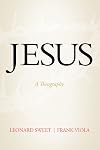
Jesus: A Theography is based on a bold assumption:
"The sixty-six books of the Bible are woven together by a single storyline. … It’s the story of Jesus Christ. … Every bit of Scripture is part of the same great story of that one person and that one story’s plotline of creation, revelation, redemption, and consummation" (ix-x).
This is a presupposition I happen to share (along with Karl Barth and many other Christian theologians). This idea serves as the foundation for the greatest show more strengths and weaknesses of this book.
My frustration with the book struck early and flows directly out of Sweet & Viola’s hermeneutic. They attempt to uncover details about Jesus by mining all 66 books, confident that “the Holy Spirit often had an intention in Scripture that went beyond its author’s present knowledge” (xvi). They boldly follow the style of interpretation that the New Testament writers did when reinterpreting the Old Testament in light of Christ. This leads to some assertions that, at best, are a stretch.
One example of this is the schema Sweet and Viola create to relate the days of creation to Jesus. In their understanding, the third day of creation (dry ground and vegetation) points toward Jesus’ resurrection because of mere numerical synergy and the mention of “life”. While I appreciate the desire to relate the Old Testament to Christ, these sort of stretches feel more like Dan Brown code than legitimate foreshadowing.
Now that my frustration’s out of the way, I do have to praise Sweet and Viola for the sheer number of poignant connections and insight they display. Here are just a few to whet your appetite:
- “Eternal life is the life of God’s new age that has broken into the present one. It is Christ Himself in the Spirit” (157).
- “You can’t worship a book when the Founder didn’t give us a book, only Himself and stories from others about Him” (178).
- ”The ultimate issue in the universe is over who will be worshipped” (284).
- “What Torah is to Judaism, and the Qur’an is to Islam, Jesus is to Christianity.” (300)
- “In the first-century Roman world, however, the word gospel was used to describe the announcement that a new emperor had taken the throne” (306).
These insights are the result of many theologians whose ideas have been assimilated into the book. The footnotes take 83 pages, and that’s after 21 pages spent reviewing the lives of various “Post-Apostolic Witness,” from Augustine to Tim Keller.
This book will spark your sense of wonder at the glorious interconnectedness of scripture but some of the interpretive leaps may drive the theologian in your life crazy in the process. show less
"The sixty-six books of the Bible are woven together by a single storyline. … It’s the story of Jesus Christ. … Every bit of Scripture is part of the same great story of that one person and that one story’s plotline of creation, revelation, redemption, and consummation" (ix-x).
This is a presupposition I happen to share (along with Karl Barth and many other Christian theologians). This idea serves as the foundation for the greatest show more strengths and weaknesses of this book.
My frustration with the book struck early and flows directly out of Sweet & Viola’s hermeneutic. They attempt to uncover details about Jesus by mining all 66 books, confident that “the Holy Spirit often had an intention in Scripture that went beyond its author’s present knowledge” (xvi). They boldly follow the style of interpretation that the New Testament writers did when reinterpreting the Old Testament in light of Christ. This leads to some assertions that, at best, are a stretch.
One example of this is the schema Sweet and Viola create to relate the days of creation to Jesus. In their understanding, the third day of creation (dry ground and vegetation) points toward Jesus’ resurrection because of mere numerical synergy and the mention of “life”. While I appreciate the desire to relate the Old Testament to Christ, these sort of stretches feel more like Dan Brown code than legitimate foreshadowing.
Now that my frustration’s out of the way, I do have to praise Sweet and Viola for the sheer number of poignant connections and insight they display. Here are just a few to whet your appetite:
- “Eternal life is the life of God’s new age that has broken into the present one. It is Christ Himself in the Spirit” (157).
- “You can’t worship a book when the Founder didn’t give us a book, only Himself and stories from others about Him” (178).
- ”The ultimate issue in the universe is over who will be worshipped” (284).
- “What Torah is to Judaism, and the Qur’an is to Islam, Jesus is to Christianity.” (300)
- “In the first-century Roman world, however, the word gospel was used to describe the announcement that a new emperor had taken the throne” (306).
These insights are the result of many theologians whose ideas have been assimilated into the book. The footnotes take 83 pages, and that’s after 21 pages spent reviewing the lives of various “Post-Apostolic Witness,” from Augustine to Tim Keller.
This book will spark your sense of wonder at the glorious interconnectedness of scripture but some of the interpretive leaps may drive the theologian in your life crazy in the process. show less
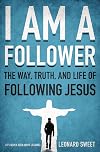
In general, I have mixed feelings about Len Sweet’s books. A decade or so ago I would have told you to read his books. His books were then in high circulation for those who were ‘emerging’ from the swamp of 20th century mega-church Protestantism. Len Sweet was thoughtfully engaged with some of the trends that were happening in the church, especially in regard to the then buzzword, post-modernity. I loved Soul Tsunami and yes, there is a special place in my heart for Soul Salsa.
And then show more I completely lost interest in his books. He basically put out a decade of books on Christian Spirituality with suspect titles which didn’t appeal to me (like The Gospel According to Starbucks). Occasionally I would hear from friends tell me something Len Sweet said at a conference which just sounded Bizarre to me. Like when he says Jesus would tweet (Really? We know this?).
Last year I picked up Jesus Manifesto, the book he co-wrote with Frank Voila and thought that the two of them had some great things to say, so I am back to reading Len Sweet with appreciation. I think Len Sweet at his best calls us to creative fidelity to the gospel. He offers a rich engagement with the Christian tradition and the gospel and explores how the kingdom can seep more into our present context. When I don’t like his writing, I find it too slick, too much acronyms and alliteration and it seems like he is trying too hard to be relevant.
This book is Len Sweet at his best. He creatively and courageously takes on the Christian preoccupation with leadership (a preoccupation which he has contributed to, I might add) and rightly points out that the Christian life is more about followership than leadership. This is a sorely needed and overdue critique on the church in USAmerica and Sweet makes some great points. He challenges that the best-selling ‘Christian’ books are about leadership. He indicts the leadership culture for its glitz and chutzpah and glorification of people’s’ strengths when Jesus’s power is made perfect in our weakness. He gives practical advice on how to enter into the way of Jesus.
After introducing the theme of followership, Len Sweet organizes his meditations into three sections which explore what it means to follow Jesus: The Way, The Truth, The Life. The chapters are short and pithy, probably about 50 chapters if you total up the chapters in each section (they are not numbered). As you may expect, Sweet offers some interactive reflections at the end of each section in order for his readership to internalize his message more.
I found myself really liking this book and think it offers a good critique on how we Christians can sometimes want to lead, but are less thoughtful about how to follow Jesus. The brevity of each chapter makes this book ideal for devotional use. It may be an especially good devotional book for your bathroom.
The image that Sweet opens his book with, is this viral video from 2009, of a lone dancing man, another man who decides to dance with him and the impromptu big-crowd dance party which ensues. Sweet suggests that Jesus is the lone crazy dancer, but the one who incites the crowd to join in the dance, was the ‘first-follower,’ not the leader but one who followed. He suggests that if we want to see a new movement of God, we do not need the silver-bullet of leadership, as much as passionate followers.
Good point.
Thank you to booksneeze for a copy of this book in exchange for this review. I was not asked to write a positive review, just an honest one. This review is a little of both and you can decide which. show less
And then show more I completely lost interest in his books. He basically put out a decade of books on Christian Spirituality with suspect titles which didn’t appeal to me (like The Gospel According to Starbucks). Occasionally I would hear from friends tell me something Len Sweet said at a conference which just sounded Bizarre to me. Like when he says Jesus would tweet (Really? We know this?).
Last year I picked up Jesus Manifesto, the book he co-wrote with Frank Voila and thought that the two of them had some great things to say, so I am back to reading Len Sweet with appreciation. I think Len Sweet at his best calls us to creative fidelity to the gospel. He offers a rich engagement with the Christian tradition and the gospel and explores how the kingdom can seep more into our present context. When I don’t like his writing, I find it too slick, too much acronyms and alliteration and it seems like he is trying too hard to be relevant.
This book is Len Sweet at his best. He creatively and courageously takes on the Christian preoccupation with leadership (a preoccupation which he has contributed to, I might add) and rightly points out that the Christian life is more about followership than leadership. This is a sorely needed and overdue critique on the church in USAmerica and Sweet makes some great points. He challenges that the best-selling ‘Christian’ books are about leadership. He indicts the leadership culture for its glitz and chutzpah and glorification of people’s’ strengths when Jesus’s power is made perfect in our weakness. He gives practical advice on how to enter into the way of Jesus.
After introducing the theme of followership, Len Sweet organizes his meditations into three sections which explore what it means to follow Jesus: The Way, The Truth, The Life. The chapters are short and pithy, probably about 50 chapters if you total up the chapters in each section (they are not numbered). As you may expect, Sweet offers some interactive reflections at the end of each section in order for his readership to internalize his message more.
I found myself really liking this book and think it offers a good critique on how we Christians can sometimes want to lead, but are less thoughtful about how to follow Jesus. The brevity of each chapter makes this book ideal for devotional use. It may be an especially good devotional book for your bathroom.
The image that Sweet opens his book with, is this viral video from 2009, of a lone dancing man, another man who decides to dance with him and the impromptu big-crowd dance party which ensues. Sweet suggests that Jesus is the lone crazy dancer, but the one who incites the crowd to join in the dance, was the ‘first-follower,’ not the leader but one who followed. He suggests that if we want to see a new movement of God, we do not need the silver-bullet of leadership, as much as passionate followers.
Good point.
Thank you to booksneeze for a copy of this book in exchange for this review. I was not asked to write a positive review, just an honest one. This review is a little of both and you can decide which. show less
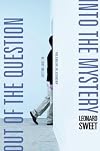
In the post-colonial, emergent, postmodern, whatever-the-hell-we're-calling-it-this-week era there are few writers who really express the worldview as well as Leonard Sweet. His writing style is reflective of the narrative, organic communication that the emergent church leaders have begun to employ. Sweet unpacks the Abraham/Isaac story in such a way that you are left wondering why it is that God made a covenant with him in the first place. The subtle manner in which Sweet massages and show more reorients the reader toward a relational approach to life is refreshing. Where many authors limit relationships to God, family, and our church Sweet opens up the possibility of having a relationship with nature, art, and even your food. Sweet will definitely help you see your faith in a different light. Of course, maybe you like the light you're in now. Read it anyway. show less
You May Also Like


Associated Authors
Statistics
- Works
- 67
- Also by
- 1
- Members
- 5,447
- Popularity
- #4,569
- Rating
- 3.6
- Reviews
- 40
- ISBNs
- 132
- Languages
- 2
- Favorited
- 5