
Dan Kimball (1) (1960–)
Author of The Emerging Church
For other authors named Dan Kimball, see the disambiguation page.
About the Author
Dan Kimball is pastor of Vintage Faith Church in Santa Cruz, California
Image credit: Photo courtesy of Dan Kimball (Wikipedia)
Works by Dan Kimball
How (Not) to Read the Bible: Making Sense of the Anti-women, Anti-science, Pro-violence, Pro-slavery and Other Crazy-Sounding Parts of Scripture (2020) 230 copies, 1 review
Sacred Space: A Hands-On Guide to Creating Multisensory Worship Experiences for Youth Ministry (Soul Shaper) (2008) 69 copies
They Like Jesus but Not the Church Participant's Guide: Six Sessions Responding to Culture's Objections to Christianity (2008) 55 copies
Adventures in Churchland: Finding Jesus in the Mess of Organized Religion (2012) 33 copies, 2 reviews
Associated Works
Tagged
Common Knowledge
- Birthdate
- 1960
- Gender
- male
- Occupations
- pastor
- Nationality
- USA
- Places of residence
- Santa Cruz, California, USA
New Jersey, USA
London, England, UK - Associated Place (for map)
- USA
Members
Reviews
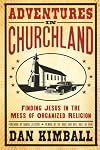
Adventures in Churchland' is a thoughtful look at what we call 'church', including the author's own experiences with some most unhelpful Christians and church styles. He contrasts what he calls 'Churchland' (the typical culture and traditions that often go with church congregations) with 'Graceland', the ideal church as Body of Christ.
He writes with clarity and honesty about the horrors of judgemental and rigid church leaders, of the rejection of those who are perceived as 'different', of show more the worst kind of controlling religious stereotypes who may be rare, but, alas, do exist. He also writes of his warm welcome by a small group in London. He began to relate to people very different from himself, who encouraged him to ask questions and didn't criticise the way he dressed or the habits he indulged in, but offered him love and acceptance as a person made in God's image.
I don't know that it's particularly helpful for followers of Jesus who are currently 'called out' of the local structured church. But it's a thought-provoking book, which could be useful for anyone who has been hurt or attacked by Christians, or who had one bad experience with a local congregation and then reject them all (understandably) in reaction. I thought it very readable and it certainly made me think. show less
He writes with clarity and honesty about the horrors of judgemental and rigid church leaders, of the rejection of those who are perceived as 'different', of show more the worst kind of controlling religious stereotypes who may be rare, but, alas, do exist. He also writes of his warm welcome by a small group in London. He began to relate to people very different from himself, who encouraged him to ask questions and didn't criticise the way he dressed or the habits he indulged in, but offered him love and acceptance as a person made in God's image.
I don't know that it's particularly helpful for followers of Jesus who are currently 'called out' of the local structured church. But it's a thought-provoking book, which could be useful for anyone who has been hurt or attacked by Christians, or who had one bad experience with a local congregation and then reject them all (understandably) in reaction. I thought it very readable and it certainly made me think. show less
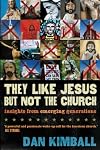
He thinks: Kimball effortlessly weaves his community's personal stories and his own anecdotal support into his work. It clearly points to some key areas where the church (specifically the people in it) have misinformed the rest of the world about what it means to follow Christ. Great sections at the end of each chapter with questions challenging the reader to really wrestle with the topic at hand, both internally and then practically.
An exploration of Evangelical Christian subculture through the author's life story and experiences.
The author presents his themes according to his experiences from an "unchurched" lifestyle among many who were hostile to Evangelical Christianity toward becoming a Christian and a minister himself. Through his own story he explains the challenges often posed by Evangelical subculture which he subsumes under the rubric of "churchland." He also highlights the positives and great experiences he show more shared with others in the faith, subsumed under the rubric of "graceland" based upon the idea of God's grace in action.
Through this contrast the author explores many subjects relating to Christianity: level of comfort/acceptance of others with whom Evangelicals may disagree, judgmentalism regarding matters of importance and unimportance, the nature of Christianity, salvation, the church, and the faith, along with a thoroughgoing critique of Evangelical subculture and its challenges.
While there are the standard challenges present with all books written by Evangelicals with this work, the author nevertheless writes in a winsome and engaging manner, highlighting his points and critiques with his own experiences as well as the experiences of others, and unlike many other such writers maintains a charitable attitude toward those with whom he had challenges for whatever reason, seeking to see the best intentions in them even though the end result may not have been as productive.
A major critique of the author might involve his view of the role of the church, which he says is not for itself but for the benefit of others, whereas Paul declares that the church is to build itself up in love, and by building itself up it can empower its individual members to be of service and benefit to others so those "others" may be led to God in Christ and thus become part of the Body (Acts 2:42-48, Ephesians 4:11-16). Otherwise much of the author's critiques of Evangelical subculture are spot on, and many of his theological emphases are important to consider in terms of what the Scriptures teach and how the faith should be practiced and communicated in the twenty-first century.
Not a hard-hitting theological treatise by any means but a good book for Christians to consider, especially those who have become so thoroughly enmeshed in Christian subculture that they do not seem able to effectively communicate with those outside that realm.
**--book received as part of early review program show less
The author presents his themes according to his experiences from an "unchurched" lifestyle among many who were hostile to Evangelical Christianity toward becoming a Christian and a minister himself. Through his own story he explains the challenges often posed by Evangelical subculture which he subsumes under the rubric of "churchland." He also highlights the positives and great experiences he show more shared with others in the faith, subsumed under the rubric of "graceland" based upon the idea of God's grace in action.
Through this contrast the author explores many subjects relating to Christianity: level of comfort/acceptance of others with whom Evangelicals may disagree, judgmentalism regarding matters of importance and unimportance, the nature of Christianity, salvation, the church, and the faith, along with a thoroughgoing critique of Evangelical subculture and its challenges.
While there are the standard challenges present with all books written by Evangelicals with this work, the author nevertheless writes in a winsome and engaging manner, highlighting his points and critiques with his own experiences as well as the experiences of others, and unlike many other such writers maintains a charitable attitude toward those with whom he had challenges for whatever reason, seeking to see the best intentions in them even though the end result may not have been as productive.
A major critique of the author might involve his view of the role of the church, which he says is not for itself but for the benefit of others, whereas Paul declares that the church is to build itself up in love, and by building itself up it can empower its individual members to be of service and benefit to others so those "others" may be led to God in Christ and thus become part of the Body (Acts 2:42-48, Ephesians 4:11-16). Otherwise much of the author's critiques of Evangelical subculture are spot on, and many of his theological emphases are important to consider in terms of what the Scriptures teach and how the faith should be practiced and communicated in the twenty-first century.
Not a hard-hitting theological treatise by any means but a good book for Christians to consider, especially those who have become so thoroughly enmeshed in Christian subculture that they do not seem able to effectively communicate with those outside that realm.
**--book received as part of early review program show less
NCLA Review -Dan Kimball interviewed twenty- and thirty-year-olds, the largest segment missing from our churches, and learned that they are spiritual but don’t care for organized religion. What are their misunderstandings and negative impressions of our churches? “The church is just organized religion that is politically motivated.” “The church is homophobic.” “It takes the entire Bible literally.” “The church represses women.” “It is judgmental and negative.” “It show more arrogantly thinks that all other religions are wrong.” This provocative book provides positive examples of churches that are connecting with emerging generations without compromising truth. Jesus wasn’t into right wing politics and organized religion, he did not oppress females, he was not homophobic, he didn’t disrespect other people and their faiths, and he was not a fundamentalist who took the whole Bible literally. Includes study questions making this an ideal choice for lively group discussions. Rating: 4—BM show less
Awards

You May Also Like


Associated Authors
Statistics
- Works
- 12
- Also by
- 2
- Members
- 2,212
- Popularity
- #11,593
- Rating
- 3.7
- Reviews
- 17
- ISBNs
- 35
- Languages
- 4