
Mike Yaconelli (1942–2003)
Author of Messy Spirituality
About the Author
Works by Mike Yaconelli
The Core Realities of Youth Ministry: Nine Biblical Principles That Mark Healthy Youth Ministries (2004) 113 copies
Getting Fired for the Glory of God: Collected Words of Mike Yaconelli for Youth Workers (Youth Specialties) (2008) 56 copies
Far-out ideas for youth groups 4 copies
Ideas, Number Eighteen, 1976 1 copy
Spiritual Challenge Journal 1 copy
Ideas 1 copy
The Heart of Youth Ministry 1 copy
Proyecto Discípulo Guía del Líder: 6 Seccion to help youth find their faith (Especialidades Juveniles) (2004) 1 copy
Proyecto Discípulo Guía del Alumno: Un Devocional de Crecimiento Personal en Accion (Especialidades Juveniles) (2004) 1 copy
Ideas, Number 27, 1981 1 copy
By Mike Yaconelli - The Core Realities of Youth Ministry: Nine Biblical Principles That Mark Healthy Youth Ministries (2003) 1 copy
在不完美中與神相遇 1 copy
Associated Works
Tagged
Common Knowledge
- Birthdate
- 1942-07-24
- Date of death
- 2003-10-30
- Gender
- male
- Occupations
- satirist
- Organizations
- Youth Specialties
The Wittenburg Door (editor) - Relationships
- Yaconelli, Mark (son)
- Nationality
- USA
- Associated Place (for map)
- USA
Members
Reviews
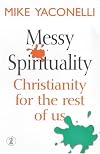
A refreshingly honest look at how ordinary people can connect with God, without having to go through the hoops and trappings that are so often associated with ‘spirituality’. Yaconelli was a pastor, yet he struggled at times to pray. He made mistakes, he messed up. He explains that the spiritual life does not have to be a neat progression of steps but is often disorganised and messy.
Specific chapters look at hindrances to the spiritual life. The author encourages us to let go of the show more past, whether it was traumatic or not, and to move on with God into our future.
He explodes some of the myths that some apparently super-spiritual people hold to; he encourages his readers to encounter Jesus for themselves. He looks at the importance of love, and of doing whatever we’re supposed to do, day by day, with examples of how little bits of grace occur when we least expect them.
Peppered with anecdotes, the book is quite thought-provoking. It’s not a difficult read, and I found it immensely encouragingl
I would recommend it highly to anyone, whatever stage they are on the Christian path. show less
Specific chapters look at hindrances to the spiritual life. The author encourages us to let go of the show more past, whether it was traumatic or not, and to move on with God into our future.
He explodes some of the myths that some apparently super-spiritual people hold to; he encourages his readers to encounter Jesus for themselves. He looks at the importance of love, and of doing whatever we’re supposed to do, day by day, with examples of how little bits of grace occur when we least expect them.
Peppered with anecdotes, the book is quite thought-provoking. It’s not a difficult read, and I found it immensely encouragingl
I would recommend it highly to anyone, whatever stage they are on the Christian path. show less
A common sentiment in Christian circles is that our spirituality or the love of God is conditional on how good we are, how "spiritual" we are, how much we do for God or for the church. Michael Yaconelli tackles this problematic belief in Messy Spirituality, and although a short book, it is a challenging read. Unlike popular belief, being a Christian does not mean one is perfect or that one has it all figured out; rather, the Christian is constantly under construction, "being renewed in show more knowledge after the image of its creator" (Colossians 3:9).
Yaconelli claims that the real face of Christianity is not found in the perfectly ordered and regimented lives of perfect Christians because they do not exist - we are all messy, frail people who desperately need Jesus. This is a powerful antidote to the dangers of spiritual perfectionism; our shortcomings are not hindrances to a more perfect faith but an integral part of our mortal life - when we acknowledge that, we are free to start living as God has called us.
This is a challenging book for both individuals and churches - it encourages to act and love wildly and widely, without hindrance because that is exactly what Jesus did. show less
Yaconelli claims that the real face of Christianity is not found in the perfectly ordered and regimented lives of perfect Christians because they do not exist - we are all messy, frail people who desperately need Jesus. This is a powerful antidote to the dangers of spiritual perfectionism; our shortcomings are not hindrances to a more perfect faith but an integral part of our mortal life - when we acknowledge that, we are free to start living as God has called us.
This is a challenging book for both individuals and churches - it encourages to act and love wildly and widely, without hindrance because that is exactly what Jesus did. show less
The Christian walk is messy – yet grace hides around every corner. Yaconelli contends that Christians spend too much time faking spirituality and churches are often more concerned with pretending that everything is ok than living the faith in all its vulnerability and pain. Walking through the gospel accounts (especially John), Yaconelli offers an account of discipleship that acknowledges the pain, ignorance, and weakness of disciples, yet celebrates the “annoying” tenacity of God’s show more love and grace. Full of powerful life stories, Messy Spirituality provides an oft-needed reminder of the God’s grace in discipleship and calls us to a life of “little graces.” Great encouragement A show less
Each chapter contains the story of one individual’s journey, mostly from some form of modernist/evangelical Christianity via a crisis of some kind through to a broader, more relationship-based faith. It could have been rather dull; the plot of each story is, essentially, the same albeit with different details. But this is not a book to read at one sitting. I dipped into it irregularly over the course of a few weeks, and found much to ponder.
The book is divided into three sections, show more grouping the writers by those who had a crisis in ministry, those who had a crisis in worldview, and those who simply had a crisis in faith. Each individual describes openly and honestly how he or she become disillusioned in some way with the church or other belief system of their youth, and how they eventually found a new and vibrant faith that embraced postmodernist culture while staying true to Jesus.
Some of the stories are fascinating, some of the childhood churches staggeringly rigid or oppressive. One writer describes his childhood as a committed Communist, and one as an ardent feminist. They are all careful not to condemn their earlier views or their upbringing, instead explaining how their eyes were opened at some point, usually due to some dramatic circumstances. The writing styles are quite different; I found some a bit heavy-going, others light and more personal. There were things to ponder in almost every chapter.
Out of print and not easy to find second-hand, but I would certainly recommend this to those asking questions about the relevance of the church in the 21st century, and also to those who are suspicious of the 'emerging church' movement. show less
The book is divided into three sections, show more grouping the writers by those who had a crisis in ministry, those who had a crisis in worldview, and those who simply had a crisis in faith. Each individual describes openly and honestly how he or she become disillusioned in some way with the church or other belief system of their youth, and how they eventually found a new and vibrant faith that embraced postmodernist culture while staying true to Jesus.
Some of the stories are fascinating, some of the childhood churches staggeringly rigid or oppressive. One writer describes his childhood as a committed Communist, and one as an ardent feminist. They are all careful not to condemn their earlier views or their upbringing, instead explaining how their eyes were opened at some point, usually due to some dramatic circumstances. The writing styles are quite different; I found some a bit heavy-going, others light and more personal. There were things to ponder in almost every chapter.
Out of print and not easy to find second-hand, but I would certainly recommend this to those asking questions about the relevance of the church in the 21st century, and also to those who are suspicious of the 'emerging church' movement. show less
Lists
You May Also Like


Associated Authors
Statistics
- Works
- 81
- Also by
- 2
- Members
- 2,729
- Popularity
- #9,411
- Rating
- 4.0
- Reviews
- 19
- ISBNs
- 61
- Languages
- 6
- Favorited
- 2
