
Debbie Rix
Author of The Secret Letter
Works by Debbie Rix
Tagged
Common Knowledge
There is no Common Knowledge data for this author yet. You can help.
Members
Reviews
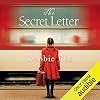
What a hypnotic and transporting experience! No matter how many stories I read about the second world war, I never leave unscathed, the inhumanities that the Nazi’s bestowed uncompromising and unimaginable, and The Secret Letter is no exception.
The Secret Letter is the dual memoirs of Imogen Mitchell in England, and Magda Maier in Germany. Both are youths at the beginning of World War II in 1939, telling about their unique experiences as teens and young adults during one of the worst wars show more in history. This story brought a fresh perspective that I haven’t read much in historical fiction, especially during this era, showing what the beginning of the war was like for young adolescence, especially in Germany. There is an assumption that all Germans were for the Nazi party, but there were so many that were apart of the resistance, and I loved seeing this fresh perspective.
There are come cringing moments, including an instance of rape, but luckily, the details are not graphic, though the details do not need to be graphic in order to highlight such a horrific act. Sadly, this was another part of this senseless war that was a regular occurrence, so I was not surprised that it was included in this novel, especially when you find out who committed this abuse, and to whom.
I was fascinated and engrossed the entire time I read, the author having an incredible knack for putting me right there amid the angst and anger of this outrageous conflict. Seeing the parallels between what Imogen and Magda endured, and seeing how their stories would eventually intersect, was so powerful. I felt all waves of emotion as each girl went deeper into the war, feeling all the feels, including pride at how each of them were determined to do their part to help end this war.
I’ll admit I’ve been a little burned out with all of the World War II historical fictions that are saturating the market right now, but The Secret Letter stood out to me. It wasn’t overly graphic, yet it still conveyed the dark tone that shrouds this era. This is the first book that I’ve read by this author, but she now has a new fan in me. Such powerful writing, with rich character development, and strong female heroines, I enjoyed The Secret Letter immensely, and I know you will too.
*I have voluntarily reviewed a copy of this book which I received from Forever (Grand Central Publishing) through NetGalley. All views and opinions expressed are completely honest, and my own. show less
The Secret Letter is the dual memoirs of Imogen Mitchell in England, and Magda Maier in Germany. Both are youths at the beginning of World War II in 1939, telling about their unique experiences as teens and young adults during one of the worst wars show more in history. This story brought a fresh perspective that I haven’t read much in historical fiction, especially during this era, showing what the beginning of the war was like for young adolescence, especially in Germany. There is an assumption that all Germans were for the Nazi party, but there were so many that were apart of the resistance, and I loved seeing this fresh perspective.
There are come cringing moments, including an instance of rape, but luckily, the details are not graphic, though the details do not need to be graphic in order to highlight such a horrific act. Sadly, this was another part of this senseless war that was a regular occurrence, so I was not surprised that it was included in this novel, especially when you find out who committed this abuse, and to whom.
I was fascinated and engrossed the entire time I read, the author having an incredible knack for putting me right there amid the angst and anger of this outrageous conflict. Seeing the parallels between what Imogen and Magda endured, and seeing how their stories would eventually intersect, was so powerful. I felt all waves of emotion as each girl went deeper into the war, feeling all the feels, including pride at how each of them were determined to do their part to help end this war.
I’ll admit I’ve been a little burned out with all of the World War II historical fictions that are saturating the market right now, but The Secret Letter stood out to me. It wasn’t overly graphic, yet it still conveyed the dark tone that shrouds this era. This is the first book that I’ve read by this author, but she now has a new fan in me. Such powerful writing, with rich character development, and strong female heroines, I enjoyed The Secret Letter immensely, and I know you will too.
*I have voluntarily reviewed a copy of this book which I received from Forever (Grand Central Publishing) through NetGalley. All views and opinions expressed are completely honest, and my own. show less

I received an e-arc of this book from the publisher in exchange for my honest review.
I have been to Pisa several times over the years, and I absolutely love the city and, of course, its wonderful monuments. So, when I read the blurb for this book, I was at once delighted and scared to see it was set in one of my favourite cities. But, to be honest, I was mostly scared, because in my experience, foreign writers setting their books in Italy tend to get our country very, very wrong. I often show more find myself reading books set in Italy, or featuring Italian characters and thinking "That would just never happen!". So I was very relieved when I found that Debbie Rix's Pisa is actually very realistic, as are her Italian characters. There is no stereotypical nonsense, but real, relatable characters who act and talk like real human beings. And I think no one mentions eating pasta throughout the book, so HURRAH for an author who finally recognises that there are other foods in Italy beyond pasta!
The story itself was captivating. Starting from the present-day question of who built the Tower of Pisa, the book moves back and forth in time to show us both the modern research and what actually happened in the past. Of course, most of it is fiction, but still the author put in an amazing amount of research to make all the historical bits feel realistic. And it really pays off. If I didn't know that the story of Berta and Gerardo probably didn't go quite like it is told in this book, I may just have believed it completely. I loved getting to know the characters, especially Berta. I adore strong, independent women who challenge their predetermined role in society, so Berta, with her desire to become a patron of the arts and leave her mark on the city of Pisa, was right up my alley.
There were a few things that didn't quite work for me, mainly the love triangle. Even though this one was constructed pretty well, it just bothered me that it existed at all, and just made me really angry with the characters involved, especially Gerardo. A few times, I wanted to shake him and shout "Just make up your mind already!". I also had a bit of trouble connecting with Aurelia, as I failed to see her role in the story for most of the book, except as a rival in love for Berta. I'm not sure if she could have had any other role though, so maybe my dislike for her was only due to the fact that she made the love triangle a reality. Mmm, I still have to make up my mind on that one. I also liked the way snippets of the present were inserted to show us the research that Sam carries out in modern Pisa to unearth the mystery of the Tower. I was definitely more invested in the story of Berta than in that of Sam though, but that may just be because I had more time to get myself attached to the character, since the past is given considerably more space than the present.
Overall, this is a really solid read, perfect for those who like a good historical mystery with interesting characters and a beautiful setting. And if you're anything like me, it might prompt you to do a little bit of your own research into the history of the Leaning Tower of Pisa (READ: I googled it) and find out more great trivia about this architectural masterpiece, which can then be used to dazzle your friends with your knowledge at the next dinner party (I know I might just do that). show less
I have been to Pisa several times over the years, and I absolutely love the city and, of course, its wonderful monuments. So, when I read the blurb for this book, I was at once delighted and scared to see it was set in one of my favourite cities. But, to be honest, I was mostly scared, because in my experience, foreign writers setting their books in Italy tend to get our country very, very wrong. I often show more find myself reading books set in Italy, or featuring Italian characters and thinking "That would just never happen!". So I was very relieved when I found that Debbie Rix's Pisa is actually very realistic, as are her Italian characters. There is no stereotypical nonsense, but real, relatable characters who act and talk like real human beings. And I think no one mentions eating pasta throughout the book, so HURRAH for an author who finally recognises that there are other foods in Italy beyond pasta!
The story itself was captivating. Starting from the present-day question of who built the Tower of Pisa, the book moves back and forth in time to show us both the modern research and what actually happened in the past. Of course, most of it is fiction, but still the author put in an amazing amount of research to make all the historical bits feel realistic. And it really pays off. If I didn't know that the story of Berta and Gerardo probably didn't go quite like it is told in this book, I may just have believed it completely. I loved getting to know the characters, especially Berta. I adore strong, independent women who challenge their predetermined role in society, so Berta, with her desire to become a patron of the arts and leave her mark on the city of Pisa, was right up my alley.
There were a few things that didn't quite work for me, mainly the love triangle. Even though this one was constructed pretty well, it just bothered me that it existed at all, and just made me really angry with the characters involved, especially Gerardo. A few times, I wanted to shake him and shout "Just make up your mind already!". I also had a bit of trouble connecting with Aurelia, as I failed to see her role in the story for most of the book, except as a rival in love for Berta. I'm not sure if she could have had any other role though, so maybe my dislike for her was only due to the fact that she made the love triangle a reality. Mmm, I still have to make up my mind on that one. I also liked the way snippets of the present were inserted to show us the research that Sam carries out in modern Pisa to unearth the mystery of the Tower. I was definitely more invested in the story of Berta than in that of Sam though, but that may just be because I had more time to get myself attached to the character, since the past is given considerably more space than the present.
Overall, this is a really solid read, perfect for those who like a good historical mystery with interesting characters and a beautiful setting. And if you're anything like me, it might prompt you to do a little bit of your own research into the history of the Leaning Tower of Pisa (READ: I googled it) and find out more great trivia about this architectural masterpiece, which can then be used to dazzle your friends with your knowledge at the next dinner party (I know I might just do that). show less
The German Wife: An absolutely gripping and heartbreaking WW2 historical novel, inspired by true events by Debbie Rix
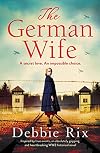
Yes yes, I see you rolling your eyes. Yet another WWII novel! But this is a bit different from the rest and if you enjoy historical fiction and flawed characters that you love to hate, you’ll probably enjoy this one.
Story:
Where the book worked for me: show less
Story:
Annaliese is the young wife of a German doctor named Hans Vogel, who works as a medical researcher in the concentration camp at Dachau. While their marriage started off lovingly, her husband has become more secretive and distanced ever since his Dachau assignment. Whenshow more
he hires Alexander, a Russian prisoner of war, as a gardener for their house, Annaliese finds herself becoming increasingly drawn to the strong and intelligent man. It is Alexander who reveals to Annaliese the truth of what’s happening at Dachau. Torn between the two men in her life, Annaliese finds herself in a quandary as the war gets closer and closer to home in Munich.
While the prologue is set in 1989, the actual story begins in 1932 and works its way to the mid-1940s before coming back to 1989. The book is written in a third person omniscient narrative.
Where the book worked for me: show less
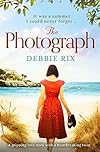
The Photograph has two things that I love in a book. The first is a dual timeline story and the other is an Italian setting. So I was sold, as they say.
In the 1950s Rachael flees her home in Hungary with her father. They end up in a camp in Austria before moving to London where her father takes an archaeology post. His work then takes them to Sardinia, a beautiful Italian island, where Rachael falls in love with a local man.
Then in 2017, Rachael's granddaughter, Sophie, has all that she show more could wish for except for one thing: a child. As is often the case, her intense desire for a baby causes fissures to appear in other aspects of her life. But she's an anthropologist and she starts to take comfort in looking into her great-grandfather's work.
I found Rachael's story much stronger than Sophie's. I often tend to prefer the more current story in books such as this as I like the way that secrets of the past can be uncovered, but Sophie's story, for me, didn't get going until quite a long way into the book when she starts to find out more about her great-grandfather's work and discovers the photograph in the title. Rachael's story, however, was quite tragic, really moving and she really went through the mill. I liked her character a lot, as well as her father, George. If I'm honest, I would have liked the two strands to be more closely woven together, but I still enjoyed reading both women's stories and found their experiences interesting.
I loved the author's descriptions of Sardinia. I want to go there now! It really captured my imagination and sounded idyllic. The time that Rachael and George spent there was probably my favourite part of the book.
Towards the end I was really moved by a couple of events and a tear came to my eye. The Photograph is a bittersweet story of love and loss which will most definitely appeal to the romantics amongst us. show less
In the 1950s Rachael flees her home in Hungary with her father. They end up in a camp in Austria before moving to London where her father takes an archaeology post. His work then takes them to Sardinia, a beautiful Italian island, where Rachael falls in love with a local man.
Then in 2017, Rachael's granddaughter, Sophie, has all that she show more could wish for except for one thing: a child. As is often the case, her intense desire for a baby causes fissures to appear in other aspects of her life. But she's an anthropologist and she starts to take comfort in looking into her great-grandfather's work.
I found Rachael's story much stronger than Sophie's. I often tend to prefer the more current story in books such as this as I like the way that secrets of the past can be uncovered, but Sophie's story, for me, didn't get going until quite a long way into the book when she starts to find out more about her great-grandfather's work and discovers the photograph in the title. Rachael's story, however, was quite tragic, really moving and she really went through the mill. I liked her character a lot, as well as her father, George. If I'm honest, I would have liked the two strands to be more closely woven together, but I still enjoyed reading both women's stories and found their experiences interesting.
I loved the author's descriptions of Sardinia. I want to go there now! It really captured my imagination and sounded idyllic. The time that Rachael and George spent there was probably my favourite part of the book.
Towards the end I was really moved by a couple of events and a tear came to my eye. The Photograph is a bittersweet story of love and loss which will most definitely appeal to the romantics amongst us. show less
You May Also Like
Associated Authors
Statistics
- Works
- 10
- Members
- 237
- Popularity
- #95,613
- Rating
- 3.8
- Reviews
- 21
- ISBNs
- 28
- Languages
- 1