
Victor H. Mair
Author of The Tarim mummies
About the Author
Victor H. Mair is professor of Chinese languages and literature in the Department of Asian and Middle Eastern Studies at the University of Pennsylvania
Works by Victor H. Mair
Painting and Performance: Chinese Picture Recitation and Its Indian Genesis (1988) 8 copies, 1 review
Reconfiguring the Silk Road: New Research on East-West Exchange in Antiquity (2014) — Editor — 5 copies
T'ang Transformation Texts: A Study of the Buddhist Contribution to the Rise of Vernacular Fiction and Drama in China (1989) 4 copies
Associated Works
Wandering on the Way: Early Taoist Tales and Parables of Chuang Tzu (1994) — Translator, some editions — 172 copies, 1 review
Tagged
Common Knowledge
- Birthdate
- 1943
- Gender
- male
- Occupations
- Professor of Chinese Language & Literature, University of Pennsylvania
- Nationality
- USA
- Birthplace
- East Canton, Ohio, USA
- Map Location
- Ohio, USA
Members
Reviews
The Tarim Mummies: Ancient China and the Mystery of the Earliest Peoples from the West by J. P. Mallory
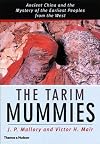
Beautifully illustrated and well-researched, this is in many ways an excellent introduction to the archaeology of the Tarim Basin (aka eastern Central Asia, present-day East Turkestan or Xinjiang). Chapters 1-3 are particularly worth reading for those interested in ancient Central Asia and so-called Silk Road cultures. The book is perhaps trying to do too much, and in a rather disjointed manner as different chapters are devoted to specific disciplines (archaeology, textile studies, show more linguistics, genetics, and even craniology) in order to solve, step-by-step, "the mystery" of the origin and identity of the Tarim mummies.
Now the origin of the mummies discovered in the Tarim Basin is not a mystery at all: they are from the Tarim Basin. As they were not mummified on purpose by a specific culture (like for instance the Egyptian mummies were), but were preserved as a result of natural circumstances, the Tarim mummies represent several peoples and cultures in different regions of eastern Central Asia over a period of 2,500 years. But the authors are not really interested in these cultures. In their repeated description of the region as "in between" East and West, they seem to deny the Tarim region a culture, or cultures, of its own. What they are primarily interested in, is the presumed ancestry of the mummies, and their professed aim is to prove that these ancestors were Europeans. Not only are they unaware of the fact that ‘Europe’ is a cultural construct that has no relevance whatsoever for premodern Eurasian history (in fact, when speaking of "Europe" they often mean Inner Asia's western steppe zone north of the Caspian and Black Sea), their efforts are rooted in some alarming notions of racial difference and ethnic purity. They distinguish sharply between the representatives of a "Caucasoid" (or "Europoid") and "Mongoloid" race among the mummies, even if the alleged representatives of these groups were found in the same cemetery. Needless to say that any human population on earth has ancestors from the outside, and even Mair and Mallory have to admit that migrants entered the Tarim Basin from several directions. But that still tells us nothing about the identity of the mummies. Mair and Mallory, however, associate DNA with identity.
DNA research may have been the flavor of the month in ancient migration studies over the past decades (and in itself is a respectable field), but what is disturbing, is that Mallory and Mair constantly link ‘race’ to culture and even language. As this book was published in 2000, its racialism is both terribly outdated (to say the least) and a foreshadowing of the return of racial thinking in our own time.
Another problem, is that the authors repeatedly equate ancient and modern China, and thereby seem to endorse the claims of the current Chinese regime that Xinjiang has been part of China since time immemorial. The book’s title summarizes what is wrong with it. It both locates the Tarim Basin incorrectly in "Ancient China" and tendentiously identifies its earliest inhabitants as "peoples from the west". show less
Now the origin of the mummies discovered in the Tarim Basin is not a mystery at all: they are from the Tarim Basin. As they were not mummified on purpose by a specific culture (like for instance the Egyptian mummies were), but were preserved as a result of natural circumstances, the Tarim mummies represent several peoples and cultures in different regions of eastern Central Asia over a period of 2,500 years. But the authors are not really interested in these cultures. In their repeated description of the region as "in between" East and West, they seem to deny the Tarim region a culture, or cultures, of its own. What they are primarily interested in, is the presumed ancestry of the mummies, and their professed aim is to prove that these ancestors were Europeans. Not only are they unaware of the fact that ‘Europe’ is a cultural construct that has no relevance whatsoever for premodern Eurasian history (in fact, when speaking of "Europe" they often mean Inner Asia's western steppe zone north of the Caspian and Black Sea), their efforts are rooted in some alarming notions of racial difference and ethnic purity. They distinguish sharply between the representatives of a "Caucasoid" (or "Europoid") and "Mongoloid" race among the mummies, even if the alleged representatives of these groups were found in the same cemetery. Needless to say that any human population on earth has ancestors from the outside, and even Mair and Mallory have to admit that migrants entered the Tarim Basin from several directions. But that still tells us nothing about the identity of the mummies. Mair and Mallory, however, associate DNA with identity.
DNA research may have been the flavor of the month in ancient migration studies over the past decades (and in itself is a respectable field), but what is disturbing, is that Mallory and Mair constantly link ‘race’ to culture and even language. As this book was published in 2000, its racialism is both terribly outdated (to say the least) and a foreshadowing of the return of racial thinking in our own time.
Another problem, is that the authors repeatedly equate ancient and modern China, and thereby seem to endorse the claims of the current Chinese regime that Xinjiang has been part of China since time immemorial. The book’s title summarizes what is wrong with it. It both locates the Tarim Basin incorrectly in "Ancient China" and tendentiously identifies its earliest inhabitants as "peoples from the west". show less
The Tarim Mummies: Ancient China and the Mystery of the Earliest Peoples from the West by J. P. Mallory
The Tarim Mummies is an excellent book for anyone travelling to China's western regions in so many regards--its short introductions and sidebars to a variety of topics (language, archaeology, history, explorers, migrations, art history, textiles, animal husbandry) are excellent and make this book far more readable than many available 'introductions' to the region. Yes, the focus is on the Tarim mummies (of which there are/were thousands), but in addressing the question of who they were, one show more first has to understand the geology, history (human and non-), languages, cultures of the region, etc. And so regardless of your actual interest in mummies, if you're looking for a good introduction to Xinjiang, the ancient Silk Road, and related topics, grab this book. In fact, I've recommended it to many friends as a "very out-of-the-ordinary travel guide" to western China. It's well-written (OK, some parts, particularly the linguistics chapter I admit to finding a bit dry--more on this below), but the authors little insertions of dry humour humanize the topic and text and when you finish the last page, you will be delightfully well-informed of this fascinating part of China and its many histories.
If you're interested in the ancient languages of Central Asia/Western China, the former Russian steppes and beyond, this is also an excellent introduction, and although I'm personally less interested in this area, each time I read this book I do hover in these sections a little longer. It's a well organized and basic introduction to both the languages of the region and some of the daunting linguistic questions specialists are still struggling over. I hope search engines turn up this book for those searching for information on the topic; hopefully the subtitle "Ancient China and the Mystery of the Earliest Peoples from the West" highlights the breadth of information covered in the text.
And of course, if you're interested in mummies--go no further. show less
If you're interested in the ancient languages of Central Asia/Western China, the former Russian steppes and beyond, this is also an excellent introduction, and although I'm personally less interested in this area, each time I read this book I do hover in these sections a little longer. It's a well organized and basic introduction to both the languages of the region and some of the daunting linguistic questions specialists are still struggling over. I hope search engines turn up this book for those searching for information on the topic; hopefully the subtitle "Ancient China and the Mystery of the Earliest Peoples from the West" highlights the breadth of information covered in the text.
And of course, if you're interested in mummies--go no further. show less

"The Columbia Anthology..." or as I like to call it, The Baby Blue Annihilator, contains 1,300 pages of Chinese literature in translation spanning everything from the 17th-century B.C.E. oracle bones right up to the end of the Qing dynasty. The strengths of this anthology are its massive scope, the inclusion of heretofore-unpublished translations and works not usually considered "literature," and the copious footnoting of references, translation difficulties, usage, and so forth. The show more weaknesses are also numerous. The works are only roughly organized by timeline, and there is no index of authors or the works themselves, necessitating that readers first guess into what genre a specific piece might have been included, then search for it there. The inclusion of many different translators has as its corollary the inclusion of their individual styles: some translate place- and personal names into English, some transliterate; some translate every word, others pepper their texts with transliterations, and of these transliterations, not all are footnoted. Finally, there is the fact that the book's editor is a bit kooky. And dear god above, why did he choose Wade-Giles over Pinyin for the anthology's romanization system? That said, all the goodies are here: the Classic of Odes, two versions of Saiyuki, Suikoden with contemporary footnotes, Du Fu and Li Bo, and a lot of really great stuff of which I hadn't been aware. show less
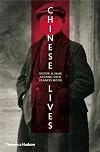
This book is pleasing upon every level. It is beautifully, and copiously, illustrated, a pleasure to hold and browse, even before one reads a word.
The book contains ninety-six biographies of Chinese people, from the very earliest times (13th Century BC) to 1997 and becomes something of a broad-brush overview of China. The people chosen, range from the expected, such as Confucius and Mo Zi, to 'the wife of Mang', a lady whose name isn't even known! The stories of these people are much more show more the story of human beings, rather than the history of the great. They are superbly written and, I do not know how the authors manage to cram so much into such short biographical notes.
Naturally, in 232 pages, including index, one is not going to get an in depth picture of such a long standing and little understood culture. If you are an expert on the country and its culture, then this book is probably not for you: everybody else: you'll love it!
Never mind becoming wiser (which I am sure that you will - I certainly did!), this book is a thoroughly good read: MOST enjoyable! show less
The book contains ninety-six biographies of Chinese people, from the very earliest times (13th Century BC) to 1997 and becomes something of a broad-brush overview of China. The people chosen, range from the expected, such as Confucius and Mo Zi, to 'the wife of Mang', a lady whose name isn't even known! The stories of these people are much more show more the story of human beings, rather than the history of the great. They are superbly written and, I do not know how the authors manage to cram so much into such short biographical notes.
Naturally, in 232 pages, including index, one is not going to get an in depth picture of such a long standing and little understood culture. If you are an expert on the country and its culture, then this book is probably not for you: everybody else: you'll love it!
Never mind becoming wiser (which I am sure that you will - I certainly did!), this book is a thoroughly good read: MOST enjoyable! show less
Awards

You May Also Like


Associated Authors
Statistics
- Works
- 33
- Also by
- 7
- Members
- 509
- Popularity
- #48,720
- Rating
- 3.9
- Reviews
- 8
- ISBNs
- 58
- Languages
- 1
- Favorited
- 1