
Lexham Press
Author of The Lexham English Septuagint: A New Translation
About the Author
Works by Lexham Press
1Q13 Phylactery 10 copies
4Q19 Exodus h 6 copies
4Q98g Psalms x, Reconstruction 5 copies
4Q99 Job a 5 copies
4Q107 Canticles b, Reconstruction 5 copies
4Q101 paleoJob c 5 copies
4Q102 Proverbs a 5 copies
4Q103 Proverbs b 5 copies
4Q104 Ruth a 5 copies
4Q98g Psalms x 5 copies
4Q105 Ruth b 5 copies
4Q106 Canticles a 5 copies
4Q107 Canticles b 5 copies
4Q100 Job b 5 copies
4Q112 Daniel a 5 copies
4Q108 Canticles c 5 copies
4Q109 Qohelet a 5 copies
4Q110 Qohelet b 5 copies
4Q111 Lamentations 5 copies
4Q98e Psalms v 5 copies
4Q113 Daniel b 5 copies
4Q114 Daniel c 5 copies
4Q115 Daniel d 5 copies
4Q116 Daniel e 5 copies
4Q117 Ezra 5 copies
4Q118 Chronicles 5 copies
4Q119 Septuagint Leviticus a 5 copies
4Q120 Septuagint Leviticus b 5 copies
4Q98f Psalms w 5 copies
4Q98 Psalms q 5 copies
4Q98d Psalms u 5 copies
4Q86 Psalms d 5 copies
4Q73 Ezekiel a 5 copies
4Q74 Ezekiel b 5 copies
4Q75 Ezekiel c 5 copies
4Q76 Minor Prophets a 5 copies
4Q77 Minor Prophets b 5 copies
4Q78 Minor Prophets c 5 copies
4Q79 Minor Prophets d 5 copies
4Q80 Minor Prophets e 5 copies
4Q81 Minor Prophets f 5 copies
4Q82 Minor Prophets g 5 copies
4Q83 Psalms a 5 copies
4Q84 Psalms b 5 copies
4Q87 Psalms e 5 copies
4Q98c Psalms t 5 copies
4Q88 Psalms f 5 copies
4Q89 Psalms g 5 copies
4Q90 Psalms h 5 copies
4Q91 Psalms j 5 copies
4Q92 Psalms k 5 copies
4Q93 Psalms l 5 copies
4Q95 Psalms n 5 copies
4Q96 Psalms o 5 copies
4Q97 Psalms p 5 copies
4Q122 Septuagint Deuteronomy 5 copies
4Q98a Psalms r 5 copies
4Q98b Psalms s 5 copies
4Q121 Septuagint Numbers 5 copies
4Q132 Phylactery E 5 copies
4Q128 Phylactery A 5 copies
8Q2 Psalms 5 copies
5Q5 Psalms 5 copies
5Q6 Lamentations a 5 copies
5Q7 Lamentations b 5 copies
6Q1 paleoGenesis 5 copies
6Q2 paleoLeviticus 5 copies
6Q3 papDeuteronomy? 5 copies
6Q4 papKings 5 copies
6Q5 papPsalm 78 (?) 5 copies
6Q6 Canticles 5 copies
6Q7 papDaniel 5 copies
7Q1 Exodus 5 copies
8Q1 Genesis 5 copies
8Q3 Phylactery 5 copies
5Q3 Isaiah 5 copies
8Q4 Mezuzah 5 copies
11Q1 paleoLeviticus a 5 copies
11Q2 Leviticus b 5 copies
11Q3 Deuteronomy 5 copies
11Q4 Ezekiel 5 copies
11Q5 Psalms a 5 copies
11Q6 Psalms b 5 copies
11Q7 Psalms c 5 copies
11Q8 Psalms d 5 copies
11Q9 Psalms e? 5 copies
11Q11 Apocryphal Psalms 5 copies
5Q4 Amos 5 copies
5Q2 Kings 5 copies
4Q129 Phylactery B 5 copies
4Q142 Phylactery O 5 copies
4Q130 Phylactery C 5 copies
4Q131 Phylactery D 5 copies
4Q72a Jeremiah d 5 copies
4Q133 Phylactery F 5 copies
4Q134 Phylactery G 5 copies
4Q135 Phylactery H 5 copies
4Q136 Phylactery I 5 copies
4Q137 Phylactery J 5 copies
4Q138 Phylactery K 5 copies
4Q139 Phylactery L 5 copies
4Q140 Phylactery M 5 copies
4Q141 Phylactery N 5 copies
4Q143 Phylactery P 5 copies
5Q1 Deuteronomy 5 copies
4Q144 Phylactery Q 5 copies
4Q145 Phylactery R 5 copies
4Q146 Phylactery S 5 copies
4Q149 Mezuzah A 5 copies
4Q150 Mezuzah B 5 copies
4Q151 Mezuzah C 5 copies
4Q152 Mezuzah D 5 copies
4Q153 Mezuzah E 5 copies
4Q154 Mezuzah F 5 copies
4Q155 Mezuzah G 5 copies
4Q483 Genesis or Jubilees? 5 copies
4Q522 Prophecy of Joshua, Psalm 122 5 copies
4Q576 Genesis n 5 copies
4Q72b Jeremiah e 5 copies
4Q85 Psalms c 5 copies
4Q72 Jeremiah c 5 copies
4Q71 Jeremiah b 5 copies
2Q17 Ruth b 5 copies
3Q1 Ezekiel 5 copies
3Q2 Psalms 5 copies
3Q3 Lamentations 5 copies
4Q1 Genesis-Exodus a 5 copies
4Q2 Genesis b 5 copies
4Q3 Genesis c 5 copies
4Q4 Genesis d 5 copies
4Q5 Genesis e 5 copies
4Q6 Genesis f 5 copies
4Q7 Genesis g 5 copies
4Q8 Genesis h1 5 copies
4Q8a Genesis h2 5 copies
4Q9 Genesis j 5 copies
2Q15 Job 5 copies
4Q10 Genesis k 5 copies
4Q11 paleoGenesis-Exodus l 5 copies
4Q12 paleoGenesis m 5 copies
4Q13 Exodus b 5 copies
4Q13 Exodus b, Reconstruction 5 copies
4Q14 Exodus c 5 copies
4Q15 Exodus d 5 copies
4Q16 Exodus e 5 copies
4Q17 Exodus-Leviticus f 5 copies
4Q18 Exodus g 5 copies
4Q21 Exodus k 5 copies
2Q16 Ruth a 5 copies
2Q14 Psalms 5 copies
4Q23 Leviticus-Numbers a 5 copies
1Q12 Psalms c 5 copies
1Q Isaiah a 5 copies
1Q Isaiah b 5 copies
1Q1 Genesis 5 copies
1Q2 Exodus 5 copies
1Q3 paleoLeviticus-Numbers 5 copies
1Q4 Deuteronomy a 5 copies
1Q5 Deuteronomy b 5 copies
1Q6 Judges 5 copies
1Q7 Samuel 5 copies
1Q8 Isaiah 5 copies
1Q9 Ezekiel 5 copies
1Q10 Psalms a 5 copies
1Q11 Psalms b 5 copies
1Q71 Daniel a 5 copies
2Q13 Jeremiah 5 copies
1Q72 Daniel b 5 copies
2Q1 Genesis 5 copies
2Q2 Exodus a 5 copies
2Q3 Exodus b 5 copies
2Q4 Exodus c 5 copies
2Q5 paleoLeviticus 5 copies
2Q6 Numbers a 5 copies
2Q7 Numbers b 5 copies
2Q8 Numbers c 5 copies
2Q9 Numbers d 5 copies
2Q10 Deuteronomy a 5 copies
2Q11 Deuteronomy b 5 copies
2Q12 Deuteronomy c 5 copies
4Q22 paleoExodus m 5 copies
4Q8b Genesis h Paraphrase 5 copies
4Q24 Leviticus b 5 copies
4Q59 Isaiah e 5 copies
4Q49 Judges a 5 copies
4Q50 Judges b 5 copies
4Q51 Samuel a 5 copies
4Q52 Samuel b 5 copies
4Q53 Samuel c 5 copies
4Q54 Kings 5 copies
4Q54 Kings, Reconstruction 5 copies
4Q55 Isaiah a 5 copies
4Q56 Isaiah b 5 copies
4Q57 Isaiah c 5 copies
4Q58 Isaiah d 5 copies
4Q25 Leviticus c 5 copies
4Q61 Isaiah g 5 copies
4Q62 Isaiah h 5 copies
4Q62a Isaiah i 5 copies
4Q63 Isaiah j 5 copies
4Q64 Isaiah k 5 copies
4Q65 Isaiah l 5 copies
4Q66 Isaiah m 5 copies
4Q67 Isaiah n 5 copies
4Q68 Isaiah o 5 copies
4Q69 papIsaiah p 5 copies
4Q69a Isaiah q 5 copies
4Q69b Isaiah r 5 copies
4Q70 Jeremiah a 5 copies
4Q60 Isaiah f 5 copies
4Q37 Deuteronomy j 5 copies
4Q27 Numbers b 5 copies
4Q26b Leviticus g 5 copies
4Q28 Deuteronomy a 5 copies
4Q26a Leviticus e 5 copies
4Q29 Deuteronomy b 5 copies
4Q30 Deuteronomy c 5 copies
4Q31 Deuteronomy d 5 copies
4Q32 Deuteronomy e 5 copies
4Q33 Deuteronomy f 5 copies
4Q34 Deuteronomy g 5 copies
4Q35 Deuteronomy h 5 copies
4Q36 Deuteronomy i 5 copies
4Q38 Deuteronomy k1 5 copies
4Q38a Deuteronomy k2 5 copies
4Q26 Leviticus d 5 copies
4Q47 Joshua a 5 copies
4Q46 paleoDeuteronomy s 5 copies
4Q45 paleoDeuteronomy r 5 copies
4Q44 Deuteronomy q 5 copies
4Q43 Deuteronomy p 5 copies
4Q42 Deuteronomy o, Fragment 7 5 copies
4Q42 Deuteronomy o, Fragment 6 5 copies
4Q42 Deuteronomy o 5 copies
4Q41 Deuteronomy n 5 copies
4Q40 Deuteronomy m 5 copies
4Q39 Deuteronomy l 5 copies
4Q38b Deuteronomy k3 5 copies
4Q48 Joshua b 5 copies
4Q123 paleoParaphrase of Joshua 4 copies
4Q8c Genesis h Title 4 copies
4Q482 Jubilees? 4 copies
Wadi Murabaat 4 copies
Wadi Sdeir Genesis 4 copies
4Q94 Psalms m 4 copies
Biblical Dead Sea Scrolls 3 copies
Logos Bible Software Infographics 3 copies
Naḥal Ḥever Phylacteries 2 copies
Nah?al H?ever Deuteronomy 2 copies
Naḥal Ḥever Psalms 2 copies
Naḥal Ḥever Numbers b 2 copies
Naḥal Ḥever Numbers a 2 copies
Naḥal Ḥever Deuteronomy 2 copies
Nah?al H?ever Numbers a 2 copies
Nah?al H?ever Numbers b 2 copies
Lexham Hebrew Bible 2 copies
Nah?al H?ever Phylacteries 2 copies
Nah?al H?ever Psalms 2 copies
Na?al ?ever Numbers a 1 copy
Na?al ?ever Psalms 1 copy
Na?al ?ever Phylacteries 1 copy
Na?al ?ever Numbers b 1 copy
XJoshua 1 copy
Na?al ?ever Deuteronomy 1 copy
The Lexham Hebrew Bible 1 copy
Naḥal Ḥever Numbers b 1 copy
Naḥal Ḥever Psalms 1 copy
Naḥal Ḥever Phylacteries 1 copy
Naḥal Ḥever Numbers a 1 copy
Naḥal Ḥever Deuteronomy 1 copy
Tagged
Common Knowledge
There is no Common Knowledge data for this author yet. You can help.
Members
Reviews
I was quite excited when I saw that a new English translation of the Septuagint was coming out. I'm always interested in new Septuagint resources.
The Septuagint is an old, Greek translation of the Hebrew Old Testament. Some (or all?) of the manuscripts of the Septuagint that we have today are much older than the Hebrew manuscripts on which most of our English Old Testaments are based so it can be pretty useful in textual criticism and Bible study as well (Some quotations that the Apostles show more made, from the Septuagint, are significantly different than our current Hebrew Old Testament text).
If an English speaking person says they're quoting from "the Bible", we don't associate "the Bible" as only referring to one particular translation (unless you're KJV only). When we talk about the "Septuagint", it's sort of like saying "the Greek translation of the Old Testament", it's just a shorter way of saying it. There were several old, Greek translations of the Bible and we don't know which one is the 'original' one that was around in the Apostles' time and that they would have utilized. Also, there doesn’t seem to be a reason to think that there was only one Greek translation during the time of the Apostles, there may have been more than one, and good and bad translations, just like we have today with good and bad English translations. Since we don't know exactly which Greek Version(s) the Apostles used, it's good to have a variety of copies of the LXX, the English translation of the Greek translation in my case, since I don't really know Koine Greek.
This translation is a nice one to add to this list, it is particularly interesting because of the way they give more, unique translations that you may not have otherwise considered. For instance, in the Psalms, one of the "headers" I'm used to seeing is usually something like, "To the Chief Musician: A Psalm of David". In one of the other English LXXs I have, the NETS Bible, it is translated, "Regarding Completion. A Psalm. Pertaining to Dauid." Well, this new translation, has, "For the End: A Psalm of David". When I saw that it was a like a lightbulb turned on. "For THE END?" As in, the "End times", "last days", the end of the world?
I mentioned it to one of my sisters (who loves studying and learning koine Greek), and she looked up the word for "end" and it was telos, which is used in some other places in the Bible to refer to the end times (For instance, Matt. 24:13-14). That sort of put a whole new perspective on the Psalms, not that we didn't think any of them were prophetic before (obviously the Messianic ones were), it's just that, if this view is correct, many of these Psalms are directly said to be speaking about the end times. Some of them certainly sound eschatological, for instance, "Our God is a place of refuge and strength, a helper when afflictions find us very much. On account of this, we will not fear when the earth is troubled and the mountains are transferred in the hearts of the seas…Come, see the works of the Lord, which he set as wonders upon the earth. Removing wars until the ends of the earth, he will crush bow and shatter weapon…." (Psalm 45: 1-10)
Another interesting nuance in translation is Amos 9:1. The ASV (Using the Masoretic text) reads: "I saw the Lord standing beside the altar: and he said, Smite the capitals, that the thresholds may shake…"
Brenton's English LXX reads: "I saw the Lord standing on the altar: and he said, Smite the mercy-seat, and the porch shall be shaken"
The LEX reads, "I saw the Lord standing by the alter, and he said, 'Strike upon the lid of the Ark of the Covenant and the gateway will be shaken…"
That's interesting in that, if it is the Ark of the Covenant, then that would (If I remember correctly)be a later reference to it in the Old Testament, than in the current Hebrew Old Testament we use. I don't remember the Ark of the Covenant being mentioned again after the fall of Jerusalem to Nebuchadnezzar. Just an interesting thing.
You'll notice some significant/interesting differences between this text and the Masoretic. If you grab a Hebrew based Old Testament and turn to Daniel 11:1-2, I'll quote it from the ASV: "And as for me, in the first year of Darius the Mede, I stood up to confirm and strengthen him. And now will I show thee the truth. Behold, there shall stand up yet three kings in Persia; and the fourth shall be far richer than they all: and when he is waxed strong through his riches, he shall stir up all against the realm of Greece."And then compare it to this English Septuagint: "And in the first year of King Cyrus, he spoke to me to strengthen me and to make me act valiantly. And now I have come to impart the truth to you. Look, three kings have arisen in Persia, and a fourth will arise…." That's a rather significant difference as it changes who the coming Kings are. Are we supposed to count starting from Darius or Cyrus? Makes for some interesting eschatological problems.
One of the main reasons the Septuagint is so interesting is that there are places in the New Testament where, when Christ and the Apostles quote certain texts from the Old Testament and their quotations line up significantly more with the LXX than with the Masoretic text. And that's where I want to explain a part in this translation that I didn't particularly like. In Psalm 39 (Psalm 40 in a 'regular' Bible) vs 7 is translated, "You did not want sacrifice and offering, but you restored a body to me." "Restored", instead of, "prepared" or "made" a body for me as English translators often render that word in translating the author of Hebrews' quotation of that verse in 10:5. Now some may point out that it's still better than the Masoretic text (the Hebrew text recension pretty much all of our Old Testaments are based on now), which doesn't say anything similar. The problem I have is that, to me, "Restored" sounds as though a body was had, taken away or lost, and then given back. It just seems to carry a different picture from how the author of Hebrews saw/read the text in Hebrews 10 (and the Greek word there seems to be the same as the one in Swete's Greek text for the Psalm). The author of Hebrews seemed to view that verse as indicating that a body was prepared for Christ to offer it as a sacrifice. Now I can see a way around it by saying, "well, look at it this way, 'restored' makes it seem as though He'd been given a body back that he'd had before, so maybe it could be referring to the resurrection of Christ." Ehh…maybe? But again, that's not how the writer of Hebrews seemed to read it.
Anyway, I felt like I had to get that out. Moving on now.
Be sure to read the Introduction to this translation, it's very interesting, telling about the translators'/editors' goal of making your experience in reading this translation like the experience of those originally reading the Greek translation. So instead of trying to bring the terminology to match today's culture, they "bring today's reader to the ancient culture", so if the language was originally not as gender inclusive as we would be today, they stick with the more gender exclusive language. If the original Greek translation of the Hebrew was a bit awkward, the English will read awkwardly, "The English translation should feel idiomatic where the Greek is idiomatic. It should feel formal where the Greek is formal. It should feel foreign where the Greek feels foreign. In other words, it is not only acceptable, it is positively desirable for the LES to feel like a translation, to the extent that the Greek readers would have been aware that they were reading a translation. Ideally, the translation should be as rough or as smooth as the Greek would have seemed to a Greek reader who knew no Hebrew…" I really appreciate that.
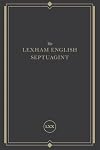
I like the format of this book as well. I don't want to check right now, but I’m pretty sure that all of my other English translations of the LXX have the text laid out in two columns on each page. This one only has one column of text, so it reads like a regular book. The cover is very beautiful as well, I was quite impressed just by its looks when I opened up the box.
I really like the LES overall. I own several English translations of the LXX, and I have never really found one that I prefer above the others, rather, I find all of them equally great study and reference resources to have around. This one is a great edition to any collection of Septuagints.
Many thanks to the folks at Lexham Press for sending me a free review copy of this book (My review did not have to be favorable). show less
The Septuagint is an old, Greek translation of the Hebrew Old Testament. Some (or all?) of the manuscripts of the Septuagint that we have today are much older than the Hebrew manuscripts on which most of our English Old Testaments are based so it can be pretty useful in textual criticism and Bible study as well (Some quotations that the Apostles show more made, from the Septuagint, are significantly different than our current Hebrew Old Testament text).
If an English speaking person says they're quoting from "the Bible", we don't associate "the Bible" as only referring to one particular translation (unless you're KJV only). When we talk about the "Septuagint", it's sort of like saying "the Greek translation of the Old Testament", it's just a shorter way of saying it. There were several old, Greek translations of the Bible and we don't know which one is the 'original' one that was around in the Apostles' time and that they would have utilized. Also, there doesn’t seem to be a reason to think that there was only one Greek translation during the time of the Apostles, there may have been more than one, and good and bad translations, just like we have today with good and bad English translations. Since we don't know exactly which Greek Version(s) the Apostles used, it's good to have a variety of copies of the LXX, the English translation of the Greek translation in my case, since I don't really know Koine Greek.
This translation is a nice one to add to this list, it is particularly interesting because of the way they give more, unique translations that you may not have otherwise considered. For instance, in the Psalms, one of the "headers" I'm used to seeing is usually something like, "To the Chief Musician: A Psalm of David". In one of the other English LXXs I have, the NETS Bible, it is translated, "Regarding Completion. A Psalm. Pertaining to Dauid." Well, this new translation, has, "For the End: A Psalm of David". When I saw that it was a like a lightbulb turned on. "For THE END?" As in, the "End times", "last days", the end of the world?
I mentioned it to one of my sisters (who loves studying and learning koine Greek), and she looked up the word for "end" and it was telos, which is used in some other places in the Bible to refer to the end times (For instance, Matt. 24:13-14). That sort of put a whole new perspective on the Psalms, not that we didn't think any of them were prophetic before (obviously the Messianic ones were), it's just that, if this view is correct, many of these Psalms are directly said to be speaking about the end times. Some of them certainly sound eschatological, for instance, "Our God is a place of refuge and strength, a helper when afflictions find us very much. On account of this, we will not fear when the earth is troubled and the mountains are transferred in the hearts of the seas…Come, see the works of the Lord, which he set as wonders upon the earth. Removing wars until the ends of the earth, he will crush bow and shatter weapon…." (Psalm 45: 1-10)
Another interesting nuance in translation is Amos 9:1. The ASV (Using the Masoretic text) reads: "I saw the Lord standing beside the altar: and he said, Smite the capitals, that the thresholds may shake…"
Brenton's English LXX reads: "I saw the Lord standing on the altar: and he said, Smite the mercy-seat, and the porch shall be shaken"
The LEX reads, "I saw the Lord standing by the alter, and he said, 'Strike upon the lid of the Ark of the Covenant and the gateway will be shaken…"
That's interesting in that, if it is the Ark of the Covenant, then that would (If I remember correctly)be a later reference to it in the Old Testament, than in the current Hebrew Old Testament we use. I don't remember the Ark of the Covenant being mentioned again after the fall of Jerusalem to Nebuchadnezzar. Just an interesting thing.
You'll notice some significant/interesting differences between this text and the Masoretic. If you grab a Hebrew based Old Testament and turn to Daniel 11:1-2, I'll quote it from the ASV: "And as for me, in the first year of Darius the Mede, I stood up to confirm and strengthen him. And now will I show thee the truth. Behold, there shall stand up yet three kings in Persia; and the fourth shall be far richer than they all: and when he is waxed strong through his riches, he shall stir up all against the realm of Greece."And then compare it to this English Septuagint: "And in the first year of King Cyrus, he spoke to me to strengthen me and to make me act valiantly. And now I have come to impart the truth to you. Look, three kings have arisen in Persia, and a fourth will arise…." That's a rather significant difference as it changes who the coming Kings are. Are we supposed to count starting from Darius or Cyrus? Makes for some interesting eschatological problems.
One of the main reasons the Septuagint is so interesting is that there are places in the New Testament where, when Christ and the Apostles quote certain texts from the Old Testament and their quotations line up significantly more with the LXX than with the Masoretic text. And that's where I want to explain a part in this translation that I didn't particularly like. In Psalm 39 (Psalm 40 in a 'regular' Bible) vs 7 is translated, "You did not want sacrifice and offering, but you restored a body to me." "Restored", instead of, "prepared" or "made" a body for me as English translators often render that word in translating the author of Hebrews' quotation of that verse in 10:5. Now some may point out that it's still better than the Masoretic text (the Hebrew text recension pretty much all of our Old Testaments are based on now), which doesn't say anything similar. The problem I have is that, to me, "Restored" sounds as though a body was had, taken away or lost, and then given back. It just seems to carry a different picture from how the author of Hebrews saw/read the text in Hebrews 10 (and the Greek word there seems to be the same as the one in Swete's Greek text for the Psalm). The author of Hebrews seemed to view that verse as indicating that a body was prepared for Christ to offer it as a sacrifice. Now I can see a way around it by saying, "well, look at it this way, 'restored' makes it seem as though He'd been given a body back that he'd had before, so maybe it could be referring to the resurrection of Christ." Ehh…maybe? But again, that's not how the writer of Hebrews seemed to read it.
Anyway, I felt like I had to get that out. Moving on now.
Be sure to read the Introduction to this translation, it's very interesting, telling about the translators'/editors' goal of making your experience in reading this translation like the experience of those originally reading the Greek translation. So instead of trying to bring the terminology to match today's culture, they "bring today's reader to the ancient culture", so if the language was originally not as gender inclusive as we would be today, they stick with the more gender exclusive language. If the original Greek translation of the Hebrew was a bit awkward, the English will read awkwardly, "The English translation should feel idiomatic where the Greek is idiomatic. It should feel formal where the Greek is formal. It should feel foreign where the Greek feels foreign. In other words, it is not only acceptable, it is positively desirable for the LES to feel like a translation, to the extent that the Greek readers would have been aware that they were reading a translation. Ideally, the translation should be as rough or as smooth as the Greek would have seemed to a Greek reader who knew no Hebrew…" I really appreciate that.
I like the format of this book as well. I don't want to check right now, but I’m pretty sure that all of my other English translations of the LXX have the text laid out in two columns on each page. This one only has one column of text, so it reads like a regular book. The cover is very beautiful as well, I was quite impressed just by its looks when I opened up the box.
I really like the LES overall. I own several English translations of the LXX, and I have never really found one that I prefer above the others, rather, I find all of them equally great study and reference resources to have around. This one is a great edition to any collection of Septuagints.
Many thanks to the folks at Lexham Press for sending me a free review copy of this book (My review did not have to be favorable). show less

Logos Hymnal includes hundreds of hymns for playback or reading, including fully searchable lyrics. This resource contains classic favorites, such as “Christ the Lord is Risen Today, “O For a Thousand Tongues,” “O Worship the King,” “When I Survey the Wondrous Cross,” and more. Use them for devotions, or have them playing in the background while you study God’s Word.


You May Also Like


Statistics
- Works
- 289
- Members
- 1,533
- Popularity
- #16,782
- Rating
- 3.8
- Reviews
- 4
- ISBNs
- 2