

Bob Hartman
Author of The Wolf Who Cried Boy
About the Author
Bob Hartman knows how to captivate an audience, and regularly entertains children and adults around the world as a performance storyteller. He is perhaps best known for the widely acclaimed Lion Storyteller Bible. When he is not writing, Bob enjoys entertaining his grandchildren.
Image credit: via Lion Hudson
Series
Works by Bob Hartman
The Prisoners, the Earthquake, and the Midnight Song: A True Story About How God Uses People to Save People (2020) 331 copies, 1 review
The One and Only Delgado Cheese: A Tale of Talent, Fame and Friendship (Picture Storybooks) (1993) 31 copies, 1 review
Lily, the Lemur and the Lamb King: The Me Tree and Other Adventures (Jesus-themed children's fiction chapter book for bedtime or read-aloud times.) (2025) 18 copies
The Kingdom and the King Storybook Bible (70 Illustrated Children’s Bible Stories from the Old & New Testaments for Girls and Boys Ages 4-8) (2025) 13 copies
Bible Stories Through the Year: Lectionary Readings For Year A, Retold For Maximum Effect (2013) 4 copies
The Tell-It-Together Gospel: Mark: Bible Translation by Paula Gooder; Interactive Storytelling Tips by Bob Hartman (2019) 3 copies
Echte maatjes! 1 copy
The Impossible Promise 1 copy
Yr Addewid Amhosib 1 copy
Grumblebunny 1 copy
Popeth Am Y Pasg 1 copy
The Lion Storyteller Book of Family Values: Over 30 world stories with links to Bible verses and engaging discussion ideas (2021) 1 copy
Storybook Children's Bible in Turkish Language / Çocuklar için Kutsal Kitap Uygulaması - Öykü Kitabı (2018) 1 copy
The Christmas poem 1 copy
Silly Stories 1 copy
Fábulas de Esopo 1 copy
Christian Apologetics 101 1 copy
Christian Apologetics 201 1 copy
It Begins in Bethlehem 1 copy
Associated Works
Tagged
Common Knowledge
- Birthdate
- 1955-10-12
- Gender
- male
- Birthplace
- Pittsburgh, Pennsylvania, USA
- Places of residence
- Pittsburgh, Pennsylvania, USA
Wiltshire, England, UK - Map Location
- USA
Members
Reviews

Indian author Shobha Viswanath and artist Dileep Joshi join forces in this rhyming picture-book retelling of a tale from The Panchatantra, an ancient Sanskrit collection of animal fables dating back to the second century BCE. The narrative follows the much-bullied Jumo the jackal as his fortunes rise and fall. Bullied by the other jackals, and constantly hungry, Jumo finds himself approaching a human village one night, and is chased by the dogs until he seeks refuge in a dyer's hut. Here he show more falls into a pot of indigo dye, and emerges a bright blue shade. Made king of the animals in the nearby forest, he banishes all of the jackals who tormented him, only to find himself joining in their howling one night. His true identity revealed, Jumo himself is chased from the jungle, but revels in the fact that he once was king...
Although I am familiar with The Panchantantra, also known in the English-speaking world as The Fables of Bidpai, as well as with its Arabic/Persian adaptation, Kalīla wa-Dimna, I have never actually read any translation of the collection, and this despite my interest in folklore and fable. Clearly, this will need to be remedied! I found Viswanath's retelling here engaging, and think that her rhyming text would make for an excellent read-aloud, whether at story-time, or during a bedtime reading session. The accompanying artwork from Joshi, done in the style of the Warli people, with white painting on a maroon or purple background, was very striking, and is sure to hold the reader's attention. I myself found it lovely, and really appreciated the folk-art aesthetic of it, and the sense, almost of pictograms, that it was a language of its own kind. Recommended to picture-book readers looking for animal fables and/or stories with an Indian cultural setting. show less
Although I am familiar with The Panchantantra, also known in the English-speaking world as The Fables of Bidpai, as well as with its Arabic/Persian adaptation, Kalīla wa-Dimna, I have never actually read any translation of the collection, and this despite my interest in folklore and fable. Clearly, this will need to be remedied! I found Viswanath's retelling here engaging, and think that her rhyming text would make for an excellent read-aloud, whether at story-time, or during a bedtime reading session. The accompanying artwork from Joshi, done in the style of the Warli people, with white painting on a maroon or purple background, was very striking, and is sure to hold the reader's attention. I myself found it lovely, and really appreciated the folk-art aesthetic of it, and the sense, almost of pictograms, that it was a language of its own kind. Recommended to picture-book readers looking for animal fables and/or stories with an Indian cultural setting. show less
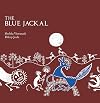
The Blue Jackal is a traditional Indian fable about a bullied jackal that falls into some indigo dye and is made king because the jungle had never seen a blue animal and they were afraid. His deception was uncovered when he began howling at the moon with the other jackals. The story is very much like one of Aesop's fables written in poetry; however, unlike Aesop, the moral of others will find out your lies is not directly spelled out.
Eerdmans Publishing Company was/is a Reformed Dutch show more religious publisher and loyal Eerdmans customers may be wary of this new interfaith dialogue book. The only religious content in the book is the afterword: "The Blue Jackal is a retelling of a story from The Panchatantra, a collection of animal fables that is one of the oldest texts of Indian literature (3rd century BCE). The book's illustrations were inspired by traditional Warli painting. Hailing from western India, the Warli tribe is known for its artwork, which is believed to have originated in the 10th century CE. Stylistically, Warli artwork can be recognized by white paintings in rice flour on an austere mud base. Very repetitive and highly symbolic, these paintings are believed to invoke the powers of the gods." You can judge for yourself if this afterword offends your sensibilities. It can easily be skipped when read aloud to children.
My brother-in-law (who is from Bangalore, India) says this story is authentic to what he learned as a child. He is not familiar with Warli art, since there are few, if any, Warli in Bangalore. (And the Indian education system is much more interested in pumping out computer professionals and doctors than art historians.) The art may or may not be interesting to small children; it is made of highly stylized white drawings/paintings on purple or reddish-brown backgrounds, with blue added while the jackal is blue, and the vats of dye are blue, orange, green, and red on 3 pages. It is monochromatic if you don't count white as a color, bichromatic if you do. The front cover is very representative of the artwork inside.
FYI, the book is actually an American reprint of a book originally published in India by a different publisher.
I like this book and would recommend it to my fellow homeschoolers teaching a lesson on ancient Indian civilizations, such as the Indus River Valley civilizations of Mohenjo-Daro and Harappa and the Mauryan Empire. It would also be good for literary analysis comparing with Aesop's Fables and other cultures' fables. It could also be used to foster discussion of the negative consequences of bullying--the other jackals would hardly allow him to eat any food they caught because they didn't like him--or the consequences of lying or that things that are new or different aren't necessarily something to be afraid of. show less
Eerdmans Publishing Company was/is a Reformed Dutch show more religious publisher and loyal Eerdmans customers may be wary of this new interfaith dialogue book. The only religious content in the book is the afterword: "The Blue Jackal is a retelling of a story from The Panchatantra, a collection of animal fables that is one of the oldest texts of Indian literature (3rd century BCE). The book's illustrations were inspired by traditional Warli painting. Hailing from western India, the Warli tribe is known for its artwork, which is believed to have originated in the 10th century CE. Stylistically, Warli artwork can be recognized by white paintings in rice flour on an austere mud base. Very repetitive and highly symbolic, these paintings are believed to invoke the powers of the gods." You can judge for yourself if this afterword offends your sensibilities. It can easily be skipped when read aloud to children.
My brother-in-law (who is from Bangalore, India) says this story is authentic to what he learned as a child. He is not familiar with Warli art, since there are few, if any, Warli in Bangalore. (And the Indian education system is much more interested in pumping out computer professionals and doctors than art historians.) The art may or may not be interesting to small children; it is made of highly stylized white drawings/paintings on purple or reddish-brown backgrounds, with blue added while the jackal is blue, and the vats of dye are blue, orange, green, and red on 3 pages. It is monochromatic if you don't count white as a color, bichromatic if you do. The front cover is very representative of the artwork inside.
FYI, the book is actually an American reprint of a book originally published in India by a different publisher.
I like this book and would recommend it to my fellow homeschoolers teaching a lesson on ancient Indian civilizations, such as the Indus River Valley civilizations of Mohenjo-Daro and Harappa and the Mauryan Empire. It would also be good for literary analysis comparing with Aesop's Fables and other cultures' fables. It could also be used to foster discussion of the negative consequences of bullying--the other jackals would hardly allow him to eat any food they caught because they didn't like him--or the consequences of lying or that things that are new or different aren't necessarily something to be afraid of. show less
 This review was written for LibraryThing Early Reviewers.
This is a retelling of a folk tale from India. While the story is told in simple, clear language appropriate for any age (the story is about identity, sense of self and self-worth), the artwork is what makes this special. The darker palette reinforces the night setting of the story, and the drawings are suggestive of cave drawings. They seem to float, crawl, and fly across the page. Based on Indian Warli artwork of white rice flour painting on a mud background, according to the inside blurb, show more the drawings are reduced to complex patterns of lines that come alive in swirls and repetitive motions and counter-motions. As an adult, I must admit I was far more interested in the artwork, but the story and art are well integrated.
Highly recommended for children, and any adults interested in modern re-use of ancient art-forms. This title expands the current folk lit area to include India, which I rarely find in an illustrated format for children. show less
Highly recommended for children, and any adults interested in modern re-use of ancient art-forms. This title expands the current folk lit area to include India, which I rarely find in an illustrated format for children. show less
This review was written for LibraryThing Early Reviewers.
This is a hilarious retelling of the traditional tale of The Boy who Cried Wolf. In the story, Little Wolf hates everything his mother cooks for dinner including Chocolate Moose, Three Pig Salad and Lamb burgers. All he wants to eat is BOY. But, as his father tells him, boy is hard to come by these days. In order to avoid eating his dinner, he starts shouting "Boy" on his walks home from school causing his parents to tire themselves out hunting for boys that aren't there. The father figures show more out that his son is lying so when a real live boy enters their house, Little Wolf is surprised that his parents no longer believe him. The illustrations, word play and story make for a great read aloud! show less
Lists
Awards


You May Also Like


Associated Authors
Statistics
- Works
- 174
- Also by
- 1
- Members
- 3,832
- Popularity
- #6,619
- Rating
- 4.1
- Reviews
- 76
- ISBNs
- 275
- Languages
- 15
