
Walter Wangerin (1944–2021)
Author of The Book of the Dun Cow
About the Author
Walter Wangerin Jr. is widely recognized as one of the greatest modern day writers on faith and spirituality. The author of over forty books including The Book of God and The Book of the Dun Cou, Wangerin is the recipient of the National Book Award and the New York Times Best Children's Book of the show more Year Award. He lives in Valparaiso, Indiana, where he is senior research professor at Valparaiso University. show less
Series
Works by Walter Wangerin
Thoughts on Parenthood - Transcripts of radio presentations of Lutheran Vespers - 1995 (1996) 1 copy
Live Long in the Land 1 copy
Arch books 1 copy
Sex Held Hostage 1 copy
Major Bible Prophesies 1 copy
What Is Hell? 1 copy
Peter's First Christmas 1 copy
Armageddon, Oil and Terror 1 copy
The Clory Story 1 copy
baby God promised (The) 1 copy
Associated Works
A Cross of Centuries: Twenty-five Imaginative Tales About the Christ (2007) — Contributor — 33 copies, 2 reviews
Tagged
Common Knowledge
- Legal name
- Wangerin Jr., Walter
- Birthdate
- 1944-02-13
- Date of death
- 2021-08-05
- Gender
- male
- Education
- Miami University of Ohio (MA - English Literature)
Concordia Seminary
Christ Seminary-Seminex (MDiv) - Occupations
- novelist
short story writer
professor
children's book author
playwright
essayist (show all 7)
pastor - Organizations
- Valparaiso University (professor)
- Cause of death
- lung cancer
- Nationality
- USA
- Birthplace
- Portland, Oregon, USA
- Places of residence
- Chicago, Illinois, USA
Fort Wayne, Indiana, USA
Valparaiso, Indiana, USA
Grand Forks, North Dakota, USA - Associated Place (for map)
- USA
Members
Reviews

A bizarre book: nursery story meets Hieronymus Bosch. I can tell that it is about the struggle of Good versus Evil, but I was frustrated by the sense that other aspects of the allegorical symbolism were eluding me. A group of farmyard characters have escaped from Chaucer's Canterbury Tales into an allegorical plot resembling that of some half-forgotten work of John Bunyan or William Blake. Apart from the aforementioned classics of English literature, the only books that came to mind as I show more read it were Russell Hoban's The Mouse and his Child and George Orwell's Animal Farm, with their anthropomorphized animal characters and recurrent sense of oppression and sorrow. The main figure of Chaunticleer veers oddly between pompous patriarch, solicitous priest, and sacred warrior-king, and some of his exchanges with his beloved hen Pertelote are the most moving and modern, the least allegorical and animal-like, of all the book's threads. Otherwise, there's a lot of death and destruction, mourning and misunderstanding, betrayal and sacrifice.
MB 26-iv-2013 show less
MB 26-iv-2013 show less

This novel captures the essence of oral traditions with its circular time line, sentence structure that matches the rhythm of the events being narrated. This is powerful writing by a white man who has absorbed Lakota frame-of-reference, but whether or not he has done it accurately is not for me to say.
We are given the story of Waskn Mani, who does not know his father, whose mother leaves without a word one year, who lives near the mountain with the pattern of a woman scorched upon it, who show more listens to a star which wants to be welcomed by the people.
We are given the daily lives of a village in the days when the people followed the buffalo, a village not always in peace but a village that continues to learn how to be a community of relationships.
We are given the story of a warrior who has been maimed but still is known as the best hunter, a warrior whose heart has been buried under unbearable pain, a warrior who silently ensures his mentally-different sister is taken care of. show less
We are given the story of Waskn Mani, who does not know his father, whose mother leaves without a word one year, who lives near the mountain with the pattern of a woman scorched upon it, who show more listens to a star which wants to be welcomed by the people.
We are given the daily lives of a village in the days when the people followed the buffalo, a village not always in peace but a village that continues to learn how to be a community of relationships.
We are given the story of a warrior who has been maimed but still is known as the best hunter, a warrior whose heart has been buried under unbearable pain, a warrior who silently ensures his mentally-different sister is taken care of. show less

Having had this book on my shelf for 30 years, I decided that I should finally read it, so took it on holiday. Why did I wait so long?! This is instantly one of my favourite books. By turns funny, frightening, sorrowful and uplifting, the book tells the story of Chauntecleer the rooster and his battle to uphold good against evil.
The Christian symbolism is laid on fairly thick, but not so much that it gets in the way of the story and its message, which obviously is a Christian one. However, show more as G -vs- E is a universal theme, it easily transcends its roots in a specific religious tradition.
Chauntecleer is portrayed as a very complex character: proud and arrogant,but also very loving and self-sacrificing. He's a monumental literary creation. I really liked Mundo Cani Dog, and he's my favourite of the supporting cast.
Despite living in an obviously human-made environment (wooden coop with doors and windows, bread and cracked corn to eat) people do not enter the story at all and the whole narrative focuses on the animals of Chantecleer's domain. Having said that, I suppose that the whole book is actually about people, but allegorically so.
I'm definitely going to track down [b:The Book of Sorrows|383618|The Book of Sorrows|Walter Wangerin Jr.|http://photo.goodreads.com/books/1174343134s/383618.jpg|373383], which continues the story where Dun Cow leaves off. show less
The Christian symbolism is laid on fairly thick, but not so much that it gets in the way of the story and its message, which obviously is a Christian one. However, show more as G -vs- E is a universal theme, it easily transcends its roots in a specific religious tradition.
Chauntecleer is portrayed as a very complex character: proud and arrogant,but also very loving and self-sacrificing. He's a monumental literary creation. I really liked Mundo Cani Dog, and he's my favourite of the supporting cast.
Despite living in an obviously human-made environment (wooden coop with doors and windows, bread and cracked corn to eat) people do not enter the story at all and the whole narrative focuses on the animals of Chantecleer's domain. Having said that, I suppose that the whole book is actually about people, but allegorically so.
I'm definitely going to track down [b:The Book of Sorrows|383618|The Book of Sorrows|Walter Wangerin Jr.|http://photo.goodreads.com/books/1174343134s/383618.jpg|373383], which continues the story where Dun Cow leaves off. show less
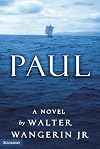
This is one of those books that just sucks me in and causes me to neglect my daily chores to read just one more chapter. I wasn't expecting this, really. I mean, I like Walt Wangerin's work, but I'm not a big fan of his. But then I just devoured this book. The reason, I suspect is the source material. Paul is a fictionalized tale of the life of the apostle Paul. As such, it naturally draws its plot from the Bible, from the book of Acts. In my opinion, Acts is the most readable book of show more scripture, so it makes sense that I would also enjoy reading this one. Mr. Wangerin embellishes the tale with appealing characters--fleshing out the names of those early saints into people whom you might encounter in your own church. Of course, the tale is also enhanced by liberal quotes from Paul's letters, dramatized to give a sense of how Paul's own understanding and teaching might have developed. Perhaps I should give this book another reading, and pay closer attention to the book's theology instead of just the literary aspects. Maybe it would make it less enjoyable. Either way, I think I'd like to get Paul on my shelf.
--J. show less
--J. show less
Lists
Awards


You May Also Like


Associated Authors
Statistics
- Works
- 97
- Also by
- 3
- Members
- 11,951
- Popularity
- #1,962
- Rating
- 3.9
- Reviews
- 94
- ISBNs
- 236
- Languages
- 17
- Favorited
- 10