
David Lapham
Author of Fables, Vol. 14: Witches
About the Author
David Lapham,award-winning creator, writer and artist of
Stray Bullets, he also wrote Harbinger and Daredevil/
Punisher, and has written extensively for Marvel Comics.
Series
Works by David Lapham
Caligula 06 (of 06) (2011) — Author — 5 copies
Caligula 05 (of 06) (2011) — Author — 5 copies
Caligula 04 (of 06) (2011) — Author — 5 copies
Detective Comics # 813 4 copies
Detective Comics # 814 4 copies
Detective Comics # 812 4 copies
Stray Bullets: Sunshine & Roses #1 4 copies
Detective Comics # 811 4 copies
Detective Comics # 807 4 copies
Detective Comics # 806 4 copies
Detective Comics # 805 4 copies
Detective Comics # 802 4 copies
Detective Comics # 803 4 copies
Detective Comics # 804 4 copies
Crossed: Badlands #69 3 copies
Crossed: Badlands #70 3 copies
Crossed: Badlands #67 3 copies
Crossed: Badlands #68 3 copies
Crossed: Badlands #66 3 copies
Crossed: Badlands #65 3 copies
Crossed: Badlands #64 3 copies
Crossed 3D 2 copies
Tales of the Unexpected: Complete Set - Number 1 Through 8 of 8 (Featuring Spectre) (Comic - 2006) (2006) 2 copies
The Strain: The Fall 2 1 copy
The Strain: The Fall 1 1 copy
The Strain: The Fall 3 1 copy
The Strain: The Fall 4 1 copy
The Strain: The Fall 5 1 copy
The Strain: The Fall 6 1 copy
The Strain: The Fall 7 1 copy
The Strain: The Fall 9 1 copy
Stray Bullets Volume 2 1 copy
Harbinger 1992 1 1 copy
Age of Apocalypse #1 1 copy
The Strain: The Fall 8 1 copy
Good As Dead #1 1 copy
Kull: The Hate Witch #4 1 copy
Kull: The Shadow Kingdom 1 copy
Kull: The Iron Fortress 1 copy
Stray Bullets (1995) # 33 1 copy
The Ends, Pro Edition 1 copy
Amy Racecar #s 1-2 1 copy
Bedsheets and Bloodstains 1 copy
The Darkness (2002) #20 1 copy
Stray Bullets 1 copy
The Strain: Mister Quinlan 1 1 copy
The Darkness #18 - Volume 2 1 copy
The Strain: Mister Quinlan 2 1 copy
The Strain: Mister Quinlan 3 1 copy
The Strain: Mister Quinlan 4 1 copy
The Strain: Mister Quinlan 5 1 copy
Harbinger #12 - Revenge! 1 copy
Modern Warfare 2 Ghost 2 #1 1 copy
Associated Works
Angel and Faith: Season Nine Library Edition Volume 2 (Angel & Faith) (2015) — Illustrator — 46 copies, 1 review
Avatar: The Last Airbender / Itty Bitty Hellboy / Juice Squeezers (Free Comic Book Day 2014) (2014) — Contributor — 29 copies, 1 review
Tagged
Common Knowledge
- Birthdate
- 1970
- Gender
- male
- Occupations
- comic book writer
artist
cartoonist - Nationality
- USA
- Associated Place (for map)
- USA
Members
Reviews
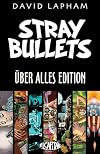
I began buying and reading Stray Bullets with the first comic book issue in 1995 and followed it over the next decade, but with its irregular schedule and a hiatus, I'm not sure I ever got the final issue of the first series. Thanks to this giant omnibus from the library, I am finally able to re-read the first 41 issues as one big ass and awesome graphic novel.
My thoughts on the first 14 issues from a review I wrote in 1998:
Though I'm sure Lapham must be sick of the comparison by now, the show more parallels to be drawn between STRAY BULLETS and PULP FICTION are irresistible to reviewers such as myself. How am I supposed to ignore the fact that two incredibly talented individuals have chosen the same genre and techniques to tell a slew of riveting stories? Both Tarantino and Lapham use non-linear chronology to tell closely interwoven tales of crimes and the people who perpetrate them. Just as Tarantino's three stories jumped hypnotically back and forth through time -- allowing a character killed in the middle of the movie to appear hale and hearty later in the film -- the fourteen issues of STRAY BULLETS skip all over the calendar: starting in 1997 with #1, jumping back to 1977 with #2, and erratically staggering through the late '70s and '80s as Lapham slowly works his way back to the '90s. That Lapham and Tarantino both write rat-a-tat dialogue, create vivid and complex characters, and use shocking violence to maintain a heightened tension simply clinches the comparison for me.
STRAY BULLETS began with a bang. Come to think of it, STRAY BULLETS #1 may be the one of the best first issues ever, telling a chilling and brutal tale of murder, insanity, and unrequited love. I don't want to tell any more about it, for fear of ruining it for any newbies in the audience. Suffice it to say, the story is set in 1997 and features a character, Joey, who appears as a boy throughout the rest of the series. In some ways, the series is about this lad and the unfortunate events that shape the man he becomes.
The main character of STRAY BULLETS, however, is Virginia Applejack. Introduced as a young girl, Virginia's life becomes a long sequence of escalating troubles after witnessing an alleyway murder. Schoolyard violence, sexual molestation, domestic abuse, and family tragedy all contribute to Virginia's need to run away from home. Her wanderings bring her into contact with Orson, Beth and Nina. This trio, whose backstory gets as much "screen time" as Virginia's, consists of three young, confused adults on the lam from a crime boss and his thugs with two suitcases of stolen cocaine. Obviously, involvement with the trio is not going to improve Virginia's quality of life. Virginia's only outlet from her awful reality is through stories she writes of her futuristic outlaw doppelganger, Amy Racecar. (Feature-length Amy Racecar stories appear in issues #6, #10 and a color special.) For me, the point of the series boils down to one question: Will Amy Racecar and Virginia's own sensibility keep Virginia from travelling the same troubled path as Joey?
Twenty-five years later, I think the book holds up pretty well. And reading it all together for the first time, I can see the through line clearly and tell all the characters apart and see the connections as they appear and reappear in the story. There's too much of the imaginary Amy Racecar and there are some digressions in the middle that weren't necessary, but the closing arc with an older and harder Virginia Applejack facing a truly awful high school experience sends the book out on a high note.
I need to catch up on the sequel series now, and ooh, there they are on Hoopla. Soon! show less
My thoughts on the first 14 issues from a review I wrote in 1998:
Though I'm sure Lapham must be sick of the comparison by now, the show more parallels to be drawn between STRAY BULLETS and PULP FICTION are irresistible to reviewers such as myself. How am I supposed to ignore the fact that two incredibly talented individuals have chosen the same genre and techniques to tell a slew of riveting stories? Both Tarantino and Lapham use non-linear chronology to tell closely interwoven tales of crimes and the people who perpetrate them. Just as Tarantino's three stories jumped hypnotically back and forth through time -- allowing a character killed in the middle of the movie to appear hale and hearty later in the film -- the fourteen issues of STRAY BULLETS skip all over the calendar: starting in 1997 with #1, jumping back to 1977 with #2, and erratically staggering through the late '70s and '80s as Lapham slowly works his way back to the '90s. That Lapham and Tarantino both write rat-a-tat dialogue, create vivid and complex characters, and use shocking violence to maintain a heightened tension simply clinches the comparison for me.
STRAY BULLETS began with a bang. Come to think of it, STRAY BULLETS #1 may be the one of the best first issues ever, telling a chilling and brutal tale of murder, insanity, and unrequited love. I don't want to tell any more about it, for fear of ruining it for any newbies in the audience. Suffice it to say, the story is set in 1997 and features a character, Joey, who appears as a boy throughout the rest of the series. In some ways, the series is about this lad and the unfortunate events that shape the man he becomes.
The main character of STRAY BULLETS, however, is Virginia Applejack. Introduced as a young girl, Virginia's life becomes a long sequence of escalating troubles after witnessing an alleyway murder. Schoolyard violence, sexual molestation, domestic abuse, and family tragedy all contribute to Virginia's need to run away from home. Her wanderings bring her into contact with Orson, Beth and Nina. This trio, whose backstory gets as much "screen time" as Virginia's, consists of three young, confused adults on the lam from a crime boss and his thugs with two suitcases of stolen cocaine. Obviously, involvement with the trio is not going to improve Virginia's quality of life. Virginia's only outlet from her awful reality is through stories she writes of her futuristic outlaw doppelganger, Amy Racecar. (Feature-length Amy Racecar stories appear in issues #6, #10 and a color special.) For me, the point of the series boils down to one question: Will Amy Racecar and Virginia's own sensibility keep Virginia from travelling the same troubled path as Joey?
Twenty-five years later, I think the book holds up pretty well. And reading it all together for the first time, I can see the through line clearly and tell all the characters apart and see the connections as they appear and reappear in the story. There's too much of the imaginary Amy Racecar and there are some digressions in the middle that weren't necessary, but the closing arc with an older and harder Virginia Applejack facing a truly awful high school experience sends the book out on a high note.
I need to catch up on the sequel series now, and ooh, there they are on Hoopla. Soon! show less
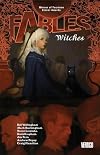
... and right back on form with all the magic at stake. inwhich Bufkin and Frau Totenkinder step up, the Barleycorn Brides make their mark, the Adversary makes his move, Mister Dark gets lonesome waiting for the Fables to retrace their steps, and King Fly makes an agonizing decision in his Haven Heaven. on one level a meditation on what makes a hero medal you get to keep. and on another a demonstration of why the reconciliation model's blanket amnesty has to trump vengeance if all sides need show more to live together afterwards. show less
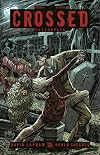
Not the first Crossed I read, but the easiest to review. Its bad.
The issue with the whole series/concept/world of Crossed (and this won't be the last time I bring it up) is that it came too late. We already had Hills Have Eyes, Saw, Hostel, and Cannibal Holocaust. We already had the dark, gritty, graphically gory torture porn. The entire Crossed series is an attempt to push boundaries, to shock. But its far, far too late to the party. We've seen all of this already. We've seen worse. It show more comes off like an edgy teen seeing Saw and telling his buddies "Duuuude, let's totally be grosser!" Its the comic equivalent of Scroty McBoogerballs, but without the cleverness.
The dialogue is clunky and made me roll my eyes. The characters are inconsistent and one-dimensional. It played a bit with misdirection, but was clumsy in its execution. It leans too heavily on profanity. Let me be clear - I'm not offended or scandalized by it. It lacks the creativity and variety to actually elicit a reaction. If you repeat the same curse words over and over, they just become noise. They lose their impact. In the hands of a really talented set of writers, I could see the Crossed or a psychopathic character saying some truly disturbing, creepy shit without using profanity like a crutch.
The psychopath felt like an off-brand Rorschach, and a caricature. It was a child's understanding of psychopathy. It reads like when a high schooler on Reddit comments in a RoastMe thread thinking he's the next Hannibal Lecter and you can't help but laugh.
(I know they aren't technically zombies. But the series embraces every. single. trope. found in the 'fast zombies' subgenre, so I'm just gonna toss it in with that category.) show less
The issue with the whole series/concept/world of Crossed (and this won't be the last time I bring it up) is that it came too late. We already had Hills Have Eyes, Saw, Hostel, and Cannibal Holocaust. We already had the dark, gritty, graphically gory torture porn. The entire Crossed series is an attempt to push boundaries, to shock. But its far, far too late to the party. We've seen all of this already. We've seen worse. It show more comes off like an edgy teen seeing Saw and telling his buddies "Duuuude, let's totally be grosser!" Its the comic equivalent of Scroty McBoogerballs, but without the cleverness.
The dialogue is clunky and made me roll my eyes. The characters are inconsistent and one-dimensional. It played a bit with misdirection, but was clumsy in its execution. It leans too heavily on profanity. Let me be clear - I'm not offended or scandalized by it. It lacks the creativity and variety to actually elicit a reaction. If you repeat the same curse words over and over, they just become noise. They lose their impact. In the hands of a really talented set of writers, I could see the Crossed or a psychopathic character saying some truly disturbing, creepy shit without using profanity like a crutch.
The psychopath felt like an off-brand Rorschach, and a caricature. It was a child's understanding of psychopathy. It reads like when a high schooler on Reddit comments in a RoastMe thread thinking he's the next Hannibal Lecter and you can't help but laugh.
(I know they aren't technically zombies. But the series embraces every. single. trope. found in the 'fast zombies' subgenre, so I'm just gonna toss it in with that category.) show less
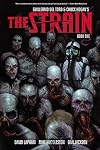
Having read the entire series when the books were first released, this reading of the graphic novel was nothing more than an opportunity to see the story in pictures, as Guillermo Del Toro imagined it to be as he was writing the novels. Anyone else looking to do the same will not be disappointed. Similarly, fans of horror will find much to love about the graphic rendering of this creepy story.
It must be stated that while Del Toro himself calls this a vampire story, the illustrations prove show more without a doubt that these nasty creatures are not vampires. The tentacles protruding from their mouths are all the visual proof one needs to realize this. Then there is the method by which the creatures reproduce. Again, this has nothing to do with the vampire mythology but more with the zombie myths. If anything, to call this series a vampire story does the series a disservice because the creatures are much nastier than any of the vampire iterations established throughout the years.
One other thing to strike readers perusing the graphic novel is the characters themselves. There is an otherworldly aspect about all of the illustrations that hints at the darkness to come, both literally as the story progresses and figuratively in the characters’ actions. All of the characters appear larger than life, more cartoonish than realistic, but rather than making them clownish, these details help showcase the stakes each character faces and the huge leaps of faith and development they must make if they stand a chance of survival.
The graphic novel version of The Strain is a faithful rendering of the original story with the added bonus of terrifying images sanctioned by the authors. These illustrations drive home the point that these things are no longer human and a true scourge on society. Having the visual cues to coincide with the written ones makes The Strain one of the scarier novels to read. In other words, it is something true horror fans should not miss. show less
It must be stated that while Del Toro himself calls this a vampire story, the illustrations prove show more without a doubt that these nasty creatures are not vampires. The tentacles protruding from their mouths are all the visual proof one needs to realize this. Then there is the method by which the creatures reproduce. Again, this has nothing to do with the vampire mythology but more with the zombie myths. If anything, to call this series a vampire story does the series a disservice because the creatures are much nastier than any of the vampire iterations established throughout the years.
One other thing to strike readers perusing the graphic novel is the characters themselves. There is an otherworldly aspect about all of the illustrations that hints at the darkness to come, both literally as the story progresses and figuratively in the characters’ actions. All of the characters appear larger than life, more cartoonish than realistic, but rather than making them clownish, these details help showcase the stakes each character faces and the huge leaps of faith and development they must make if they stand a chance of survival.
The graphic novel version of The Strain is a faithful rendering of the original story with the added bonus of terrifying images sanctioned by the authors. These illustrations drive home the point that these things are no longer human and a true scourge on society. Having the visual cues to coincide with the written ones makes The Strain one of the scarier novels to read. In other words, it is something true horror fans should not miss. show less
Lists
Awards


You May Also Like


Associated Authors
Statistics
- Works
- 411
- Also by
- 14
- Members
- 4,097
- Popularity
- #6,141
- Rating
- 3.9
- Reviews
- 93
- ISBNs
- 248
- Languages
- 7
- Favorited
- 1