
Katy Munger
Author of Legwork
About the Author
Series
Works by Katy Munger
A Sampling of Sleuths: Short Stories from Bingeworthy Mystery Authors (2023) — Editor — 16 copies, 3 reviews
Dead of Winter: Chilling New Tales of Crime — Editor; Contributor — 4 copies
Associated Works
Tagged
Common Knowledge
- Other names
- Gray, Gallagher (pen name)
McGee, Chaz (pen name) - Gender
- female
- Short biography
- Also writes under the pseudonyms Gallagher Gray and Chaz McGee.
- Nationality
- USA
- Associated Place (for map)
- USA
Members
Reviews

In Desolate Angel we meet Kevin Fahey, the dead detective. Killed in a drug bust gone bad, Kevin finds himself hanging around the scene of his former life. He doesn't understand why he hasn't gone elsewhere; perhaps he has unfinished business from his pitiful life. Fahey looks back on his life and his career with disgust. Blessed with a wonderful wife and two sons, he drank to the point of ignoring them and sabotaging his promising career as a detective. He can see the living world, and even show more experience its sounds and smells, but the living cannot see him.
Soon after his death, Fahey sees another ghost, that of Alissa Hayes, a young girl whose murder he and his partner Danny had investigated a few years ago. When she leads him to where another girl has been murdered in a similar fashion, Fahey realizes that he and Danny helped convict the wrong man for Alissa's murder, and her killer is still at large.
Detective Maggie Gunn has replaced Fahey as Danny's partner and comes to investigate the second murder. Fahey immediately becomes infatuated with Maggie, admiring her professionalism and caring for others, qualities that he realizes he lacked toward the end of his life and career. He follows Maggie, Danny, and others as they reopen Alissa's murder case and hunt for the killer. Fahey yearns to make a connection with Maggie and earn his own redemption by helping her to solve the case that he and Danny had bungled.
McGee uses the first-person point of view to let Fahey tell his own story. This enables the author to stay out of the way and not offer us a dissertation about what's happening to Fahey. We learn about his existence as he figures things out; some things are not resolved, including why he is in his current state, how he can possibly interact with the living and affect the course of events, and who the people are whom he sees on a couple of occasions, who apparently can see him. Fahey is the ultimate viewpoint character, in that he can go where he wants unobserved but seems unable to help determine the outcome. He gives us the play-by-play, but it's colored by his own situation and issues, giving us a fascinating mix of third-person-type reportage and first-person worries and hopes. He tries to influence people, but mostly he watches and wishes. He sees himself as a self-appointed guardian angel for Maggie, but we can also see him as an obsessed stalker who has more in common with the murderer than he would care to admit. This sort of ambiguity is one of the strengths of the book--McGee seems interested in poking at questions, not in providing answers.
Fahey's view of the world is interesting--it's rather simplistic and sentimental. There are fabulous people like Maggie and horrible people like the murderer. He seems to have quick insights into people's character and motivations, picking up emotional auras that they carry around and also leave in habitual places. This perceptivity seems somewhat at odds with the black-and-white morality he reflects. It's impossible to know how Fahey's worldview reflects the author's. I chose to regard it as the starting point for what I hope will turn out to be Fahey's maturing understanding of his new existence and what he must do with it.
We have a flood of books these days with paranormal elements. I've read a few and been largely disappointed. McGee's approach, featuring a person who must figure out his situation, capabilities, and purpose without the aid of an all-knowing mentor, posing more questions than it answers, is quite successful and leaves me eager for the next installment. show less
Soon after his death, Fahey sees another ghost, that of Alissa Hayes, a young girl whose murder he and his partner Danny had investigated a few years ago. When she leads him to where another girl has been murdered in a similar fashion, Fahey realizes that he and Danny helped convict the wrong man for Alissa's murder, and her killer is still at large.
Detective Maggie Gunn has replaced Fahey as Danny's partner and comes to investigate the second murder. Fahey immediately becomes infatuated with Maggie, admiring her professionalism and caring for others, qualities that he realizes he lacked toward the end of his life and career. He follows Maggie, Danny, and others as they reopen Alissa's murder case and hunt for the killer. Fahey yearns to make a connection with Maggie and earn his own redemption by helping her to solve the case that he and Danny had bungled.
McGee uses the first-person point of view to let Fahey tell his own story. This enables the author to stay out of the way and not offer us a dissertation about what's happening to Fahey. We learn about his existence as he figures things out; some things are not resolved, including why he is in his current state, how he can possibly interact with the living and affect the course of events, and who the people are whom he sees on a couple of occasions, who apparently can see him. Fahey is the ultimate viewpoint character, in that he can go where he wants unobserved but seems unable to help determine the outcome. He gives us the play-by-play, but it's colored by his own situation and issues, giving us a fascinating mix of third-person-type reportage and first-person worries and hopes. He tries to influence people, but mostly he watches and wishes. He sees himself as a self-appointed guardian angel for Maggie, but we can also see him as an obsessed stalker who has more in common with the murderer than he would care to admit. This sort of ambiguity is one of the strengths of the book--McGee seems interested in poking at questions, not in providing answers.
Fahey's view of the world is interesting--it's rather simplistic and sentimental. There are fabulous people like Maggie and horrible people like the murderer. He seems to have quick insights into people's character and motivations, picking up emotional auras that they carry around and also leave in habitual places. This perceptivity seems somewhat at odds with the black-and-white morality he reflects. It's impossible to know how Fahey's worldview reflects the author's. I chose to regard it as the starting point for what I hope will turn out to be Fahey's maturing understanding of his new existence and what he must do with it.
We have a flood of books these days with paranormal elements. I've read a few and been largely disappointed. McGee's approach, featuring a person who must figure out his situation, capabilities, and purpose without the aid of an all-knowing mentor, posing more questions than it answers, is quite successful and leaves me eager for the next installment. show less

Through five books, Casey Jones has been one of my favorite mystery protagtonists. I can't call her a detective or a private eye; having taken the fall for her ex-husband on a drug charge, Casey isn't eligible for such positions. However, she manages to act the part in one adventure after another, abetted by her large-and-in-charge boss, Bobby D, a man who puts away a box of Krispy Kreme donuts as a pre-dinner snack. Casey's forthright style and occasionally questionable judgment tend to get show more her into trouble, but she always comes through in the end. Hey, would you want this lusty, bodacious babe to grow up into Deborah Knott?
In Bad Moon on the Rise, Katy Munger's sixth Casey Jones mystery, Casey is up to her old tricks. She is approached by an elderly black woman, Corndog Sally, a fixture in downtown Raleigh. Sally begs Casey to locate her grandson, Trey, who has disappeared from his high school, along with his mother, who has been in prison on drug charges and has apparently resumed her old habits after her release. Casey begins her search for Trey and is shocked to find out that his father is one of her former lovers. This begins a pattern in the book: Casey's investigation leads her into contact with several former colleagues and lovers.
Casey finds out that Tonya, Trey's mother, served her sentence at Silver Top prison in fictional Bartow County, in the Appalachian mountains of western North Carolina. She and Bobby head to the area to investigate. Casey calls another former lover for a report on the local sheriff. By the time he calls back to tell her that Shep, the sheriff, is a stand-up guy, Casey has already determined, using her usual method, that he's one of the most standing-up guys she's met.
Shep finds out who Casey is and why she's there. He tells her that there's something ominous going on at Silver Top, but he hasn't been able to crack the case. She reluctantly agrees to go undercover as a prisoner, hoping to help Shep and also find out what happened to Tonya and Trey. She adopts the name Debbie Little, in honor of Bobby's favorite snack cakes. Not surprisingly, Casey remains herself, making friends and enemies with her bold, outspoken ways while trying to find out what is going on with the guards and some female prisoners. Her time on the inside gives us new information about her previous prison experience and its profound effect on her.
Fearful that Shep will be unable or unwilling to extricate her, Casey asks Bobby to get her out. He can't do so legally, but as always provides an ingenious, offbeat solution. Casey calls on yet another old flame for more assistance. To say more would entail spoilers. I will reveal that yes, we do learn the origin of Corndog Sally's name. I must confess to one disappointment: had I written this book, at some point one character would have said to another, "There's a bathroom on the right."
As the wag said, those who study history are doomed to knowing that they're repeating it. Casey is self-aware enough to recognize that once again she is getting a little too personally involved in her new case--and if she were to forget, Bobby would remind her--but that's part of her charm and arguably a big part of her success. She succeeds as she always has, by knowing her strengths and not being afraid to play to them.
As in the previous volumes, Casey tells her own story, and Munger's style fits well with her characterization. Humor and bawdiness are blended nicely with a serious adventure. There is definitely a valedictory sense to this novel, a revisiting of old relationships and settling of accounts. I wonder if we'll see Casey again. If not, Munger has given her a fine send-off, with appreciation for the experiences and relationships she has had and the suggestion of attractive new possibilities. Obviously, the book will be of more interest to those who have already met Ms. Jones and her well drawn cast of supporting characters. If you have not yet encountered Casey Jones, I suspect you will enjoy meeting her, and I suggest you do so by beginning with her first adventure, Legwork. show less
In Bad Moon on the Rise, Katy Munger's sixth Casey Jones mystery, Casey is up to her old tricks. She is approached by an elderly black woman, Corndog Sally, a fixture in downtown Raleigh. Sally begs Casey to locate her grandson, Trey, who has disappeared from his high school, along with his mother, who has been in prison on drug charges and has apparently resumed her old habits after her release. Casey begins her search for Trey and is shocked to find out that his father is one of her former lovers. This begins a pattern in the book: Casey's investigation leads her into contact with several former colleagues and lovers.
Casey finds out that Tonya, Trey's mother, served her sentence at Silver Top prison in fictional Bartow County, in the Appalachian mountains of western North Carolina. She and Bobby head to the area to investigate. Casey calls another former lover for a report on the local sheriff. By the time he calls back to tell her that Shep, the sheriff, is a stand-up guy, Casey has already determined, using her usual method, that he's one of the most standing-up guys she's met.
Shep finds out who Casey is and why she's there. He tells her that there's something ominous going on at Silver Top, but he hasn't been able to crack the case. She reluctantly agrees to go undercover as a prisoner, hoping to help Shep and also find out what happened to Tonya and Trey. She adopts the name Debbie Little, in honor of Bobby's favorite snack cakes. Not surprisingly, Casey remains herself, making friends and enemies with her bold, outspoken ways while trying to find out what is going on with the guards and some female prisoners. Her time on the inside gives us new information about her previous prison experience and its profound effect on her.
Fearful that Shep will be unable or unwilling to extricate her, Casey asks Bobby to get her out. He can't do so legally, but as always provides an ingenious, offbeat solution. Casey calls on yet another old flame for more assistance. To say more would entail spoilers. I will reveal that yes, we do learn the origin of Corndog Sally's name. I must confess to one disappointment: had I written this book, at some point one character would have said to another, "There's a bathroom on the right."
As the wag said, those who study history are doomed to knowing that they're repeating it. Casey is self-aware enough to recognize that once again she is getting a little too personally involved in her new case--and if she were to forget, Bobby would remind her--but that's part of her charm and arguably a big part of her success. She succeeds as she always has, by knowing her strengths and not being afraid to play to them.
As in the previous volumes, Casey tells her own story, and Munger's style fits well with her characterization. Humor and bawdiness are blended nicely with a serious adventure. There is definitely a valedictory sense to this novel, a revisiting of old relationships and settling of accounts. I wonder if we'll see Casey again. If not, Munger has given her a fine send-off, with appreciation for the experiences and relationships she has had and the suggestion of attractive new possibilities. Obviously, the book will be of more interest to those who have already met Ms. Jones and her well drawn cast of supporting characters. If you have not yet encountered Casey Jones, I suspect you will enjoy meeting her, and I suggest you do so by beginning with her first adventure, Legwork. show less
First Line: A man lies dying on the grime-encrusted floor of an abandoned house on the banks of the Delaware.
The man who lies dying on the dirty floor is Kevin Fahey, a second-rate cop, a mediocre husband and father, and the narrator of this book. As Fahey himself now says:
"I am a ghost haunted by my regrets, doomed to walk through a world that is neither here nor there, tasting my fate in my solitude, seeking a redemption I fear will never come."
When it is proved that a young man Fahey and show more his partner sent to prison for the death of his girlfriend is in fact innocent, this dead detective knows that his best shot at redemption lies with Detective Maggie Gunn, a gifted, empathetic investigator who's taken on the task of not only finding the real killer, but of going through all Fahey and Partner's old cases to see if there's anything else in the files that needs to be straightened out. Although ashamed of how he threw away his life, Fahey is determined to be of as much help to Gunn as he can. Complicating matters is that Fahey's partner, Danny Bonaventura, has yet to retire and isn't taking this examination of the old files very well.
For those who aren't big fans of paranormal mysteries, you'll be happy to note that Kevin Fahey does not become Super Cop on The Other Side. There's very little he can do in this first book to influence the living except by planting the occasional thought in someone's mind. It will be interesting to see if he acquires new skills the longer he remains a ghost.
Maggie Gunn is the type of police officer we wish they all were-- compassionate with the families of victims, respectful (but not obsequious) with her superior officers, Maggie seems able to channel the Energizer Bunny and the most tenacious bulldog as she searches for a truly scary serial killer. In Desolate Angel, the killer's identity is no secret; it's how they're going to find the evidence they need to put him in jail that fuels the action. Knowing the killer in this case ratchets up the suspense by several degrees, and Fahey's despair at being unable to help is palpable.
I ordered this book primarily because I liked the different approach. This time the main character is a failure, a screw-up who gets a second chance to correct his past mistakes, and the author (Katy Munger writing as Chaz McGee) uses that to excellent effect. Aren't there times when every single one of us has wished for a second chance? Kevin Fahey has the best real, live partner to help him with his quest. I really look forward to its continuation. show less
The man who lies dying on the dirty floor is Kevin Fahey, a second-rate cop, a mediocre husband and father, and the narrator of this book. As Fahey himself now says:
"I am a ghost haunted by my regrets, doomed to walk through a world that is neither here nor there, tasting my fate in my solitude, seeking a redemption I fear will never come."
When it is proved that a young man Fahey and show more his partner sent to prison for the death of his girlfriend is in fact innocent, this dead detective knows that his best shot at redemption lies with Detective Maggie Gunn, a gifted, empathetic investigator who's taken on the task of not only finding the real killer, but of going through all Fahey and Partner's old cases to see if there's anything else in the files that needs to be straightened out. Although ashamed of how he threw away his life, Fahey is determined to be of as much help to Gunn as he can. Complicating matters is that Fahey's partner, Danny Bonaventura, has yet to retire and isn't taking this examination of the old files very well.
For those who aren't big fans of paranormal mysteries, you'll be happy to note that Kevin Fahey does not become Super Cop on The Other Side. There's very little he can do in this first book to influence the living except by planting the occasional thought in someone's mind. It will be interesting to see if he acquires new skills the longer he remains a ghost.
Maggie Gunn is the type of police officer we wish they all were-- compassionate with the families of victims, respectful (but not obsequious) with her superior officers, Maggie seems able to channel the Energizer Bunny and the most tenacious bulldog as she searches for a truly scary serial killer. In Desolate Angel, the killer's identity is no secret; it's how they're going to find the evidence they need to put him in jail that fuels the action. Knowing the killer in this case ratchets up the suspense by several degrees, and Fahey's despair at being unable to help is palpable.
I ordered this book primarily because I liked the different approach. This time the main character is a failure, a screw-up who gets a second chance to correct his past mistakes, and the author (Katy Munger writing as Chaz McGee) uses that to excellent effect. Aren't there times when every single one of us has wished for a second chance? Kevin Fahey has the best real, live partner to help him with his quest. I really look forward to its continuation. show less
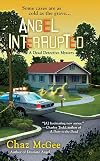
The dead detective, Kevin Fahey, is on the job again in this sequel to Desolate Angel (q.v.). Once again he watches over, and attempts to help, living detective Maggie Gunn, who is tackling two cases this time. A nurse has been murdered, while across the street a four-year-old boy has been abducted from a playground. Are the cases connected? And how can Fahey communicate the things that he is able to learn?
The self-loathing in which Fahey wallowed in the first book is toned down here; he show more still has regrets but seems to be turning his focus in the more positive directions that will presumably be required to enable him to to escape his limbo. He doesn't make much progress toward understanding his situation or how it works, but he might be growing in the right ways as he tries to help. He finds a creative way to pass information to Maggie. Will she be desperate enough to make use of it?
It takes a little longer in this sequel to solve the cases than it did in the first volume, so we got to do a little more investigating along with Kevin and Maggie, which I liked. McGee holds our interest by putting realistic pressures on the characters, and gives us a couple of unexpected twists that illustrate the assumptions we make as we think about problems. A final twist at the end suggests a new way for Kevin to interact with the world and redeem himself in future stories.
Several recurring secondary characters are nicely fleshed out and appealing. The pacing is appropriately frantic at times. I'm looking forward to seeing what McGee does next with Kevin and his odd situation. show less
The self-loathing in which Fahey wallowed in the first book is toned down here; he show more still has regrets but seems to be turning his focus in the more positive directions that will presumably be required to enable him to to escape his limbo. He doesn't make much progress toward understanding his situation or how it works, but he might be growing in the right ways as he tries to help. He finds a creative way to pass information to Maggie. Will she be desperate enough to make use of it?
It takes a little longer in this sequel to solve the cases than it did in the first volume, so we got to do a little more investigating along with Kevin and Maggie, which I liked. McGee holds our interest by putting realistic pressures on the characters, and gives us a couple of unexpected twists that illustrate the assumptions we make as we think about problems. A final twist at the end suggests a new way for Kevin to interact with the world and redeem himself in future stories.
Several recurring secondary characters are nicely fleshed out and appealing. The pacing is appropriately frantic at times. I'm looking forward to seeing what McGee does next with Kevin and his odd situation. show less
Lists
Awards


You May Also Like


Associated Authors
Statistics
- Works
- 25
- Also by
- 4
- Members
- 1,283
- Popularity
- #19,989
- Rating
- 3.5
- Reviews
- 28
- ISBNs
- 46
- Languages
- 2
- Favorited
- 4