
Kenneth D. S. Lapatin
Author of Mysteries of the Snake Goddess: Art, Desire, and the Forging of History
About the Author
Kenneth Lapatin studied Greek art and archacology at the University of California, Berkeley, at Oxford, and in Athens as a Fulbright Scholar. He is currently president of the Boston society of the Archacological Institute of America. He lives in Cambridge, Massachusetts, with his wife, Marina show more Belozerskaya, a writer of historical nonfiction show less
Works by Kenneth D. S. Lapatin
Mysteries of the Snake Goddess: Art, Desire, and the Forging of History (2002) 135 copies, 2 reviews
Associated Works
To Wake the Dead: A Renaissance Merchant and the Birth of Archaeology (2009) — Photographer, some editions — 83 copies
The Colors of Clay: Special Techniques in Athenian Vases (2006) — Contributor, some editions — 43 copies
The Gods of Ancient Greece: Identities and Transformations (Edinburgh Leventis Studies) (2010) — Contributor — 20 copies
A Companion to Roman Art (Blackwell Companions to the Ancient World) (2015) — Contributor — 14 copies
The Villa of the Papyri at Herculaneum archaeology, reception, and digital reconstruction (2010) — Contributor — 11 copies
Forgery Beyond Deceit: Fabrication, Value, and the Desire for Ancient Rome (2023) — Contributor — 4 copies
The Roman Villa in the Mediterranean Basin: Late Republic to Late Antiquity (2018) — Contributor — 3 copies
Visual Histories of the Classical World (Studies in Classical Archaeology) (English, French and German Edition) (2019) — Contributor — 1 copy
Arethusa (vol 43 no 2): The Art of Art History in Greco-Roman Antiquity — Contributor — 1 copy
Tagged
Common Knowledge
Members
Reviews
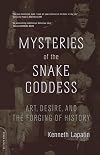
This is about much more than forged museum pieces. (We are belatedly recognizing the culpability of museums in archeological looting, so it's no surprise that institutional ability to avert ones eyes extends to more than just provenance.) Lapatin contends that much of what we think we know about Minoan civilization is a product of wishful thinking on the part of archaeologists and popularizers.
As Winston Churchill said, "History is written by the victors." A review of European history in show more the first half of the 20th century exposes the intentional rewriting of history by the Nazis to bolster their racialist agenda. Happily the Nazis were defeated, but how much of history has been written--perhaps unintentionally--by intellectual victors? show less
As Winston Churchill said, "History is written by the victors." A review of European history in show more the first half of the 20th century exposes the intentional rewriting of history by the Nazis to bolster their racialist agenda. Happily the Nazis were defeated, but how much of history has been written--perhaps unintentionally--by intellectual victors? show less
A history of art book which reads more like a 'tec novel; it certainly makes you sit up & take more notice of what's in the world's premier museums, and how the artefacts got there ... AND if they're genuine. The story, too, of Arthur Evans' Cretan excavations.
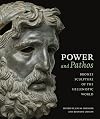
This book is the catalog of an exhibit put on by the J. Paul Getty Museum in Los Angeles. As a specialized publication it may be difficult to locate. However, it is worth the search if you are interested in the bronzes of this era. Used copies may be expensive, but interlibrary loan is a possibility for those who would like to read the essays and examine the excellent photos. Because the metal could be melted down for other purposes, bronze sculptures are less common than marble or other show more stone. In addition to a description of each piece in the exhibit, grouped by various themes, the book contains essays on the techniques, history, uses and materials. I had not realized that such sculptures usually had inlaid eyes and insets of copper, silver or different bronze alloys to give color to lips, wounds or bruised, or nipples. The authors also explore the idea that Greek artists created deliberate forgeries of classic and archaic works for the Roman market. show less
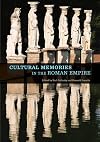
Reading this book formed part of research on memory retention and cultural memory through permanent objects over successive generations of human occupancy of the same geographic locations. This well-researched compilation explores bonds between humans with object intermediaries, the deep relationships between Greek and Roman daily life, how physical art and structures form part of daily interaction and conversation, and changing concepts and culture in both elite and average lives, as well show more as political and local social and private memories. Suggested reading for lessons from the past when creating public spaces for cultural memory, and spaces for cultural objects, and to provoke considerations of how time, changes in values and interpretations affect these efforts. A comprehensive and excellent bibliography. show less
Awards


You May Also Like


Associated Authors
Statistics
- Works
- 11
- Also by
- 17
- Members
- 257
- Popularity
- #89,244
- Rating
- 3.8
- Reviews
- 4
- ISBNs
- 12